


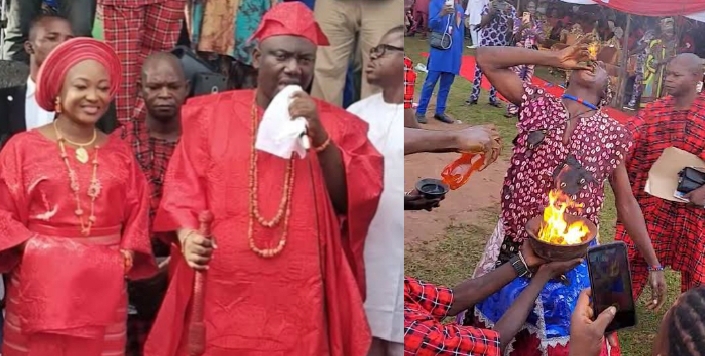
Before the sun crowned the horizon, Oyo stirred like a city remembering its own heartbeat. The streets, worn by centuries of emperors and ceremonies, carried the hum of anticipation, vibrating with the memory of drumbeats long silenced. Smoke from palm oil offerings rose in lazy spirals, coiling around the ancient walls of the palace, carrying prayers that had traveled generations.
At the center, Alaafin Abimbola Akeem Owoade I stepped onto the stage of history. The Sango Festival would not wait for preparation; it demanded presence, attention, and understanding. Every footstep he took was measured against the legacy of kings past, every gesture observed by elders whose eyes remembered more than written chronicles could tell. Tradition and expectation folded around him like a mantle heavier than cloth, yet invisible to those who only saw the procession.
The festival arrived like thunder, sudden and inevitable, shaking the air with batá rhythms and whispered incantations. Crowds pressed against barricades, the diaspora looked on, and even the wind seemed to lean closer, eager to hear what history would decide today. For the Alaafin, this day was more than ritual—it was the city’s first true test of his reign, a place where memory, authority, and the pulse of Oyo intertwined, and where the past watched as closely as the present.
The Coronation Aftermath and Preparation for the Sango Festival
Alaafin Owoade’s coronation earlier in April had already rewritten the rhythm of Oyo’s palace politics. For weeks, palace corridors had been alive with whispers: discussions about lineage, debates over ritual sequences, and negotiations among the Oyomesi—the traditional kingmakers of Oyo—had continued long after the public ceremonies ended. By August, the palace had transformed from a site of regal display into a command center for festival orchestration.
Preparation for the Sango Festival is no small undertaking. The palace staff coordinates with shrine custodians, civic authorities, and local artisans, ensuring that every batá drum, every ceremonial robe, every chanted invocation is aligned with tradition. This year, with Owoade’s first Sango Festival as Alaafin, attention to detail carried an added weight. Each step, from the timing of the ritual offerings to the sequence of masked dances, was monitored by the monarch’s advisors, elders, and cultural custodians. The festival schedule, long held as an oral tradition, had to be balanced against the expectations of visiting dignitaries, journalists, and members of the diaspora.
Even minor deviations in timing could carry significant meaning. For instance, the procession to the Koso shrine required precise alignment with sunrise to honor Sango’s celestial significance. Any misalignment could be interpreted by traditionalists as a breach of protocol or even an ominous sign. Thus, Alaafin Owoade spent hours consulting with his cultural advisers, tracing each ceremonial path, and personally observing rehearsals, ensuring that his first festival appearance would honor history while affirming his personal legitimacy.

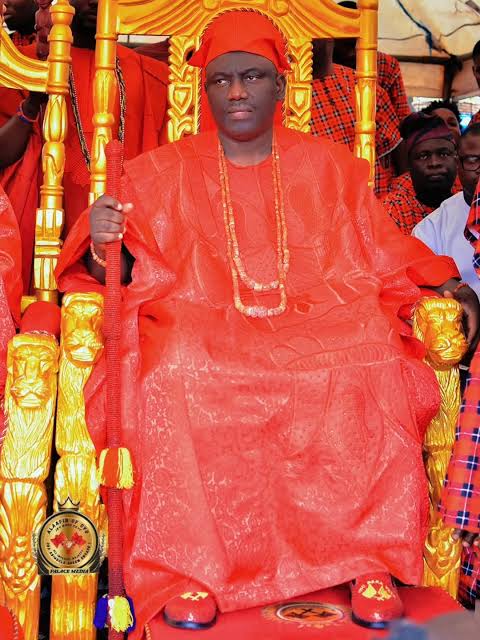
Behind the visible pomp, there were private, unscripted moments. Palace corridors hummed with anticipation, with advisors debating which dignitaries should lead certain ritual segments and whether adjustments in the batá rhythm might accommodate modern broadcasting without compromising tradition. These behind-the-scenes deliberations, invisible to the crowds, framed the day with tension: the festival was both a performance for the public and a quiet test of Owoade’s authority within the palace hierarchy.
The Rhythm of the Batá and the Pulse of the City
As the festival commenced, the batá drums emerged not merely as instruments but as narrators of Yoruba history. Each beat carried layered meaning: some rhythms invoked the legacy of Alaafin Lamidi Adeyemi III, the late monarch whose death had created the prolonged interregnum; others signaled ancestral guidance, a call for the new Alaafin to honor tradition while navigating contemporary governance.
The drummers’ hands moved with precision, but the real drama was in the pauses—the moments of silence that allowed the crowd to sense the weight of history. Alaafin Owoade, seated on his ceremonial throne during the initial offerings, watched closely. Every subtle shift in the dancers’ movements, every fleeting glance between elder custodians, informed his understanding of how the festival unfolded not just in the present but in memory and expectation.
Observers in Oyo town spoke of a tension that was almost physical. The city seemed to lean forward in anticipation, holding its breath with each invocation. Vendors selling festival wares paused mid-transaction, children stopped chasing one another in the streets, and elders murmured in reverence. In these moments, the festival ceased to be merely an event; it became a living archive of Yoruba culture, with the Alaafin as both participant and custodian.

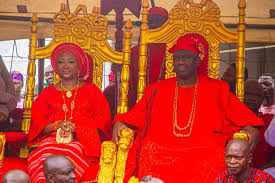
And yet, amidst this ritualized precision, there were small, humanizing breaks: a smile shared with a young apprentice drummer, a gesture toward an elder who had guided him through the rituals, the momentary catch of a breath as sunlight caught the brass of ceremonial staffs. These fleeting intervals offered insight into the human side of kingship, demonstrating that tradition is upheld not only through protocol but also through empathy and presence.
The Koso Shrine Procession: A Journey of Legacy
The procession to the Koso shrine marked the festival’s climactic phase. Here, Alaafin Owoade walked alongside the custodian priests and royal attendants, carrying symbols of kingship that had survived centuries. Each movement was deliberate, echoing the steps taken by monarchs long before him. The road was lined with citizens, their anticipation palpable, their voices a chorus of respect and inquiry.
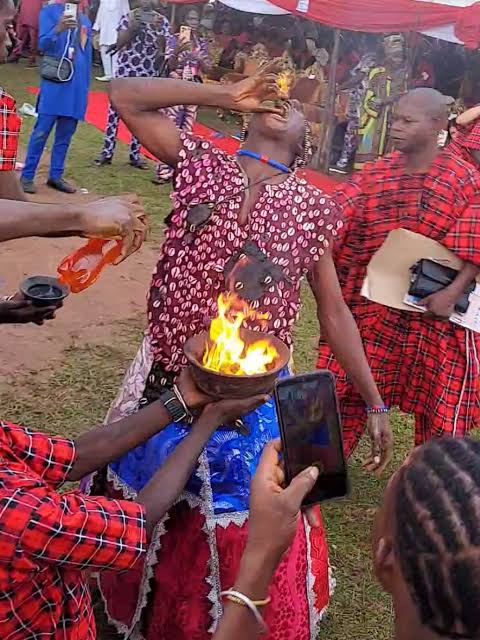
At the shrine, offerings were made to Sango: kola nuts, palm oil, and traditional incantations. The significance of the moment extended beyond ritual; it was a public acknowledgment of continuity, a reaffirmation that the Alaafin’s reign aligned with the spiritual and historical mandates of the Oyo Empire. For the first time in his reign, Owoade bore the dual responsibility of demonstrating reverence for tradition and embodying the authority that the monarchy commands in the present.
The visual spectacle of the procession—the flowing agbadas, the glittering crowns, the meticulously coordinated dance steps—was matched by its symbolic weight. Historians and cultural commentators noted that the festival’s choreography reinforced the hierarchical structure of the Oyo kingdom, subtly reminding all who watched that leadership in Yoruba culture is both public and sacred, performative and binding.

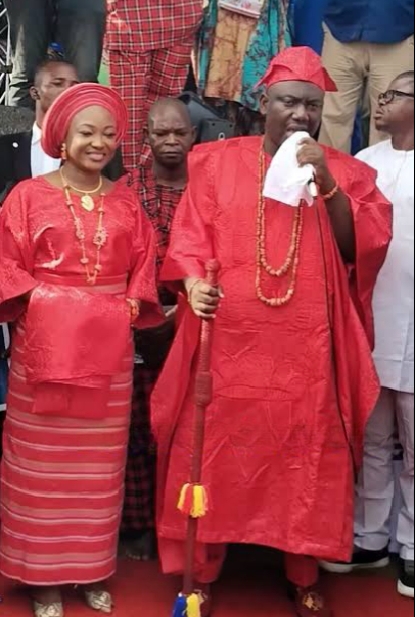
Even small deviations, such as the pause at a particular shrine corner or the way a drumbeat faltered momentarily, were subject to interpretation. These instances underscored the festival’s layered meanings: as much about the present monarch’s authority as about the expectations of ancestors, elders, and the community.
Diaspora and International Attention: Tradition Meets the World
The 2025 Sango Festival did not unfold in isolation. While the streets of Oyo teemed with local participants, representatives from the Yoruba diaspora, journalists, and foreign cultural organizations arrived in a steady stream. Their presence carried both admiration and expectation, a reminder that the festival now existed not only as a local ritual but as a marker of global heritage.
For Alaafin Owoade, this added scrutiny intensified the stakes. Beyond performing the traditional rites, he now represented a lineage that extended across continents, a living emblem of Yoruba identity whose influence rippled far beyond the city gates. The UNESCO recognition of Sango Festival earlier that year amplified these dynamics: every gesture, every ritual sequence, every public greeting would be interpreted through both cultural and international lenses.
As he walked among foreign dignitaries and members of the diaspora, Owoade’s demeanor reflected both ceremony and personal engagement. He nodded to visiting elders, exchanged brief words with cultural ambassadors, and allowed himself the occasional smile that bridged centuries of royal formality with human warmth. The subtle choreography of diplomacy and tradition underscored an essential truth: the Alaafin’s role was no longer merely ceremonial. He was both custodian and communicator, ensuring that the festival’s cultural resonance endured while engaging the world in dialogue about Yoruba heritage.


Observers noted how Owoade’s attention to these visitors mirrored his attention to the city itself. Each handshake, each glance, each nod seemed calculated not only for decorum but for understanding the layers of expectation resting on his young reign. It was a delicate balance: too much formality could alienate the crowd; too much informality could appear disrespectful. In every step and gesture, the Alaafin navigated the thin line between authority and accessibility, tradition and modernity.
Civic Implications and the City of Oyo
The Sango Festival is more than ritual—it is civic theater. Streets were closed for processions, vendors prepared stalls for local crafts, and security personnel coordinated with palace officials to maintain order. For the city’s government, the festival offered both opportunity and responsibility: a chance to showcase Oyo’s cultural capital and to support tourism while managing logistics, safety, and public services.
Alaafin Owoade’s presence elevated the festival’s civic significance. Local leaders, from government officials to community heads, engaged with the monarch to ensure that ceremonial and municipal goals aligned. Every parade route, every public address, every seating arrangement at the Koso shrine required delicate coordination between palace protocol and civic planning. The stakes were high; a misstep could compromise both tradition and public perception.
At one point, a sudden change in weather threatened to disrupt the batá procession. Yet palace advisors and civic organizers collaborated seamlessly, adjusting the route without compromising ritual integrity. Such moments revealed the festival’s dual nature: it was a living cultural heritage and a modern civic enterprise. Alaafin Owoade’s role extended beyond spiritual and ceremonial authority; he became a focal point for the city’s collective identity, a symbol around which both tradition and contemporary governance revolved.
Citizens watched closely. Every aspect of the festival—from the timing of drumbeats to the distribution of ceremonial offerings—was a subtle reinforcement of the Alaafin’s authority and the city’s cultural cohesion. The Sango Festival, under Owoade’s guidance, demonstrated that leadership in Oyo was not static but responsive, a negotiation between history and the expectations of a modern populace.
Human Moments: Alaafin Owoade Beyond the Throne
Even in the grandeur of ritual, Alaafin Owoade’s humanity surfaced in quiet moments. Between the public ceremonies and the carefully scripted parades, he paused to engage with apprentices, drummers, and young cultural custodians. A hand on a shoulder, a whispered word of encouragement, a glance shared with an elder—these small gestures conveyed as much authority as the ceremonial crown.
It was during one such pause, as he watched a young apprentice master the complex batá rhythms, that Owoade’s position became most palpable. He was a king observing the continuity of tradition, a mentor watching the next generation, a human being quietly navigating the immense expectations placed upon him. The festival was not merely a display of pomp; it was an intimate lesson in legacy, responsibility, and cultural stewardship.
The monarch also engaged in reflective observation, noting how the crowd responded to different ceremonial elements. Children’s faces lit with wonder at the dancers’ movements, elders nodded with recognition at specific ritual sequences, and visiting dignitaries scribbled notes or captured moments on cameras. Each observation became a mental ledger, informing how Owoade might refine future festivals and ceremonies to honor both ancestral directives and contemporary expectations.
These humanizing interludes were essential to the festival’s impact. They allowed the Alaafin to connect personally with the community, reinforcing his legitimacy not just through ritual authority but through lived presence, empathy, and careful attention to the rhythms of everyday life in Oyo.
Legacy, Memory, and the Weight of History
As the festival reached its climax, Alaafin Owoade stood before the Koso shrine, receiving the final offerings and acknowledgments from both priests and citizens. The city exhaled collectively. The drums fell silent, the crowds paused, and in that brief stillness, the weight of centuries pressed upon the young king.
This was the essential paradox of the Sango Festival: it is both celebration and reckoning, performance and meditation, public spectacle and intimate legacy. Alaafin Owoade’s first festival was not merely an introduction to ceremonial duties; it was a demonstration of continuity, a public affirmation that the crown’s authority extended beyond the throne into the hearts and consciousness of the people.
In the quiet aftermath, as lanterns flickered and the city gradually returned to its usual rhythm, historians, cultural commentators, and citizens alike reflected on the significance of the moment. The festival had reaffirmed Oyo’s place in Yoruba heritage, established Alaafin Owoade’s authority, and projected the kingdom’s cultural identity onto a global stage. It was a delicate, multilayered achievement—ritual and modernity intertwined in a single day.
The legacy of Alaafin Owoade’s first Sango Festival will be measured not in the hours of drumming or the steps of dancers alone, but in the way the event carried the past forward, honored the present, and gestured toward a future where tradition and modern leadership coexist in dialogue rather than tension.
Final Thoughts: When Sango Looked Back
Long after the chants dissolved and the crowd’s frenzy quieted into the cool breath of night, something still moved in Oyo’s air—an aftertaste of thunder, a shiver in the silence. The palace grounds were empty now, yet the soil still pulsed, faintly alive with the rhythm that had summoned gods and mortals to the same heartbeat.
Alaafin Abimbola Akeem Owoade I stood beneath the wide Oyo sky, the scent of burnt offerings and palm oil clinging faintly to the wind. For a moment, the horizon trembled—not with lightning, but with remembrance. This was no mere festival. It was Sango’s whisper, testing the weight of a new crown, asking the same unspoken question every Alaafin must one day answer: Can thunder trust you?
History had taught Oyo that Sango never truly leaves; he only retreats into the storm, watching, waiting, measuring kings by their silences as much as by their words. And on that night, it felt as though the deity had turned once more to see if this young ruler could carry not only the staff but the burden of memory—the roar, the justice, the flame of truth that outlives applause.
When dawn finally brushed the city awake, the sky was still heavy with that question. But somewhere in the heart of Oyo, between smoke and song, thunder smiled. Because for the first time in years, the spirit of Sango had not just been celebrated—it had been felt.
And as Alaafin Owoade walked back into his palace, the wind followed, carrying with it the oldest promise of Oyo: that as long as thunder answers, kings are never alone.