


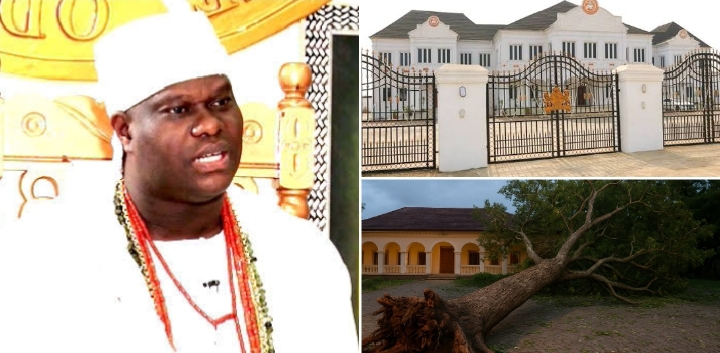
The wind that evening did not howl—it whispered. The courtyard lamps at the palace of Ile-Ife glowed against the drizzle, tracing light on the cobblestones that had carried generations of footsteps. Sentries stood by the gate, their silhouettes blurred by mist. Nothing in the air suggested danger. The night felt ordinary until a thunderous crack split the quiet, the sound of wood yielding to gravity. A tree older than memory, one that had shaded kings and processions, leaned once and surrendered to the earth.
The guards rushed toward the gate, but the tree had already fallen, its branches sprawled like open arms across the palace threshold. No one was hurt, yet the silence that followed was unnerving. For those who understood Yoruba history, certain trees in Ile-Ife are more than trees—they are witnesses, living markers of covenant and continuity. When such a guardian collapses, it is never dismissed as coincidence. Within minutes, the Ooni’s attendants reached the royal chambers to deliver the message.
Oba Adeyeye Enitan Ogunwusi listened without panic. His face, say those who were present, carried neither fear nor surprise, only a contemplative calm. He rose, requested a lantern, and walked toward the fallen trunk. It was then he ordered prayers—not as a ritual for fear, but as a call for gratitude and renewal. What might have been interpreted as an omen became, under his guidance, a lesson in the impermanence of all things.
The sacred fall that night in 2023 became a whispering chapter in the ongoing dialogue between Yoruba tradition and modern kingship. It was an accident of weather and a test of meaning. Yet it revealed something enduring about the Ooni’s reign: a leader standing at the crossroads of faith, history, and modern expectation, choosing reflection over spectacle.
The Palace That Breathes History
The palace of Ile-Ife does not simply house a monarch; it breathes the story of an entire civilization. Its courtyards are layered with echoes—war drums, wedding chants, coronation hymns. Beneath the earth lie foundations rebuilt across centuries, from the days of Oduduwa’s early dynasty to the colonial period when British administrators recorded the throne’s genealogy with a mix of awe and incomprehension. Every column, every wooden beam is both structure and story.


When Oba Ogunwusi ascended the throne in December 2015, he inherited more than a crown. He inherited the expectation that the Ooni must hold the center of Yoruba identity, balancing tradition with a restless, digital age. His tenure coincided with a Nigeria increasingly drawn toward technology, entrepreneurship, and public transparency—an environment where ancient institutions must prove their relevance without losing their dignity.
It was within this tension that the tree stood for years beside the main palace gate. Locals described it as a “silent elder,” part of the architecture of memory. Elders say it once shaded gatherings where palace emissaries recited history to younger chiefs. For years, the tree’s roots curled around stone relics that predated the current palace design. The fall of such a tree, therefore, was not a small matter of forestry—it was an event demanding interpretation.
That night, when lightning struck nearby and the rain began, the tree’s roots, softened by moisture, lost their hold. By dawn, news spread through the city: Igi mimọ ti ṣubu—The sacred tree has fallen. Within hours, the palace grounds were crowded with artisans, priests, journalists, and the curious. But the Ooni’s first directive, according to reports, was simple—“Pray and give thanks.”
The Night of Vigil
That night, the palace did not sleep. The atmosphere was thick, but not with panic — it was reverence, the kind that comes when people sense they are standing inside a lesson too large for words. The Ooni’s voice had travelled through the palace like a calm wind, steady and assured, commanding neither fear nor frenzy but focus. His instruction, according to historical accounts, was simple: “Let there be light, let there be prayer.”
And so lanterns were lit across the palace grounds. From the courtyards to the gate, flickers of yellow flame danced on walls that had seen generations of Oonis face storms of a different kind. The tree, now lying solemnly by the gate, looked almost peaceful under the glow, as if its fall had not been destruction but transition.
Within the inner chamber, Ooni Adeyeye Ogunwusi sat in reflective stillness. To his left were his chiefs, men seasoned by tradition; to his right were young palace aides, products of a digital world who still bowed before ancient wisdom. It was a rare composition — an intergenerational circle of power and learning, united by one event that neither textbook nor oracle could fully explain.
As chants began softly, the king’s thoughts were said to drift beyond the night — toward what leadership meant in moments like this. Every monarch faces a test that cannot be met by decree or diplomacy but by discernment. The sacred tree had not fallen to challenge his authority, but perhaps to deepen it. He understood that a king is measured not only by how he rules when everything stands, but by how he responds when something revered falls.

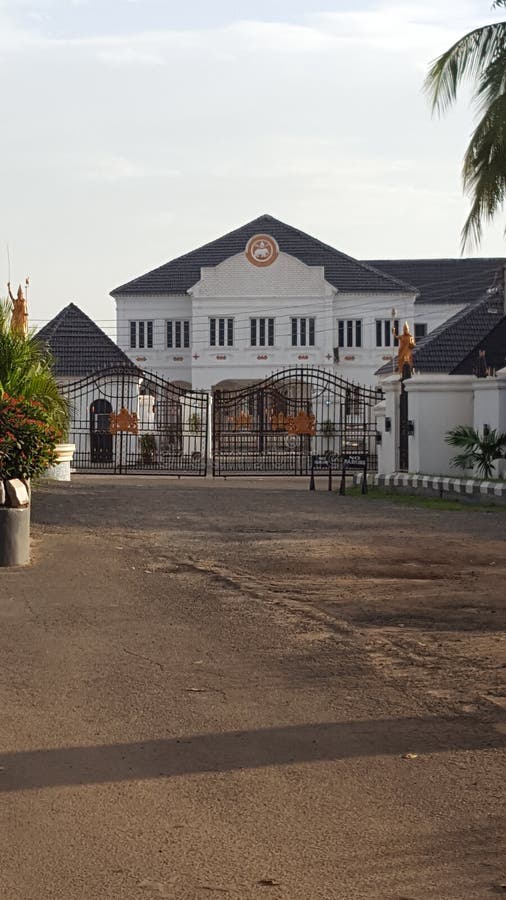
By dawn, the prayers continued. The palace air, once heavy, began to ease. Visitors from nearby compounds stood by the gates, whispering among themselves that something unseen had shifted. Tradition had spoken, and modernity had listened.
The Gate That Watched History
The palace gate at Ile-Ife has always been more than an architectural boundary; it is a living witness to centuries of arrivals and departures — of Oonis crowned and departed, of visitors who came seeking blessings or answers. That gate has heard the sound of bata drums announcing coronations and the silence that follows royal mourning. So, when a sacred tree that had stood near it for generations suddenly crashed one humid evening, it wasn’t only wood that hit the ground — it was history shaking hands with mystery.
Eyewitnesses recalled that the skies were oddly calm that day. There had been no storm, no gust of wind strong enough to bring down a tree whose roots had intertwined with the palace earth for as long as memory served. The guards stationed by the gate spoke later, with the soft tremor of men who had seen something not meant to be explained — they said the air felt different before the tree fell, dense with something unsaid.
By the time the dust settled, fragments of bark lay across the threshold where countless royal processions had passed. It was at that moment that Ooni Adeyeye Ogunwusi, custodian of the ancient dynasty, was informed. He did not rush; he listened. And then he did what kings of true depth often do — he paused long enough for discernment.
That pause became the defining silence of that night. Within the hush of the palace, the Ooni’s order came: prayers must be held. Not because he feared what had fallen, but because he understood what silence meant when broken by symbols.
The Return of Light
By morning, the palace was bathed in the gentle glow of the rising sun. The rain had stopped, leaving behind a mist that blurred the boundary between earth and sky. Courtyards that had felt heavy with tension the previous night now carried the scent of damp soil and fresh leaves. Birds, long silent during the vigil, began to chirp again, their songs weaving through the palace gates as if narrating the night’s events.
Ooni Adeyeye Ogunwusi walked the palace grounds slowly, surveying the fallen tree and the scattered branches. His attendants followed at a measured distance, giving space for both reflection and ceremony. Though the tree had been cleared partially to allow movement, the Ooni instructed that sections of its trunk be preserved as memorial benches, scattered throughout the compound for rest and contemplation. This act of preservation symbolized continuity; even in the wake of collapse, life and history could be carried forward.

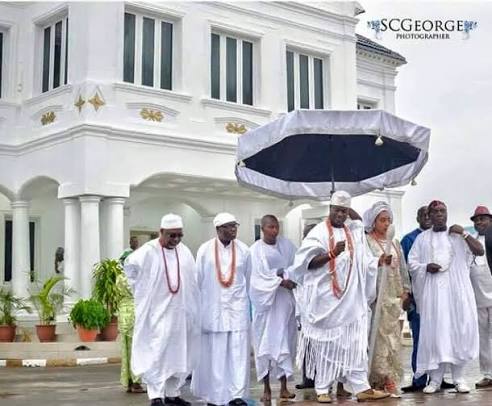
Journalists who visited later noted the subtle shift in energy. The palace, which the night before had felt solemn and anxious, now exuded quiet strength. For many, it became clear that the Ooni’s leadership was not measured by the grandeur of events but by how he engaged with the rhythms of change, whether a falling tree, a community dispute, or the pressures of a modern monarchy. The palace gates, once witnesses to panic, now bore witness to calm deliberation.
The symbolic illumination of the palace that morning echoed a wider lesson: leadership is often about translating disruption into opportunity. Where some might see omen or disaster, the Ooni saw a chance to reaffirm values, to engage citizens in reflection, and to reframe an unexpected event as a narrative of resilience.
When a Tree Speaks
In Yoruba understanding, trees are not mere flora — they are carriers of continuity, symbols of rootedness and stability. Every sacred tree in a royal compound has a lineage of meaning: it shelters memories, marks boundaries, and sometimes guards covenants older than the dynasty itself. The fall of such a tree has never been treated as accident or coincidence.
Ooni Ogunwusi, known for blending modern leadership with ancestral wisdom, interpreted the moment not as superstition but as signal. Those close to the palace later described his demeanor that night — steady, reflective, his white agbada flowing like the calm before dawn. He gathered his inner council, not for ritual, but for reflection. “Some things fall to remind us of what still stands,” he reportedly told them.
His decision to order prayers throughout the palace was both symbolic and strategic — a collective act of grounding, of reminding the people that even in a modern monarchy, spirituality and stewardship remain inseparable. As the palace staff gathered under the moonlight, they formed a circle where silence and supplication met. The chant of ancient hymns mingled with whispered verses of renewal, not bound by fear but by gratitude that no life had been lost.
The fallen tree, by morning, was already the talk of Ile-Ife. For elders, it was an omen to interpret. For the youth, it became a parable of leadership — how a modern monarch read meaning into mystery without losing composure or connection.
Lessons of Renewal
Days after the fall, artisans were brought in to clear the remains of the tree. The Ooni, however, gave a specific directive: no part of the wood should be discarded carelessly. The roots, he insisted, be preserved. In that act lay a profound metaphor — renewal without erasure.
For centuries, Yoruba philosophy has held that when a sacred structure falls, it is not the end of meaning but the beginning of renewal. The Ooni’s handling of the event reflected this ethos perfectly. Instead of dramatizing the incident, he turned it into a communal classroom. Religious leaders of different faiths were invited to join the palace in thanksgiving prayers. He spoke briefly that day, choosing words that lingered longer than any explanation could.
He reminded his people that tradition, when rightly understood, does not imprison the future but protects it. The fallen tree, he said, was a symbol of how societies must shed what is old to nourish what is new. Yet he also acknowledged the humility required to recognize signs in silence — a quality he often says leadership must reclaim in a noisy world.
The story spread quietly across Ile-Ife — and far beyond. To elders, it became another chapter in the long dialogue between man and mystery. To younger Nigerians, it became a case study in how cultural heritage can coexist with modern sensibility. It was not about superstition but stewardship, about the kind of awareness that distinguishes leaders who see from those who merely look.
For Ooni Adeyeye Ogunwusi, it was a moment that reaffirmed his personal philosophy — that tradition is not a relic to be displayed but a rhythm to be lived.
The Weight of Memory
As the day progressed, elders and palace historians gathered to recount the significance of the tree. They spoke of similar events in Yoruba history where natural occurrences at royal compounds were interpreted as calls to reflection and renewal. From fallen pillars at the palace of past Oonis to uprooted trees during succession disputes, these moments were remembered not as accidents but as catalysts for wisdom.
Ooni Ogunwusi, for his part, treated these stories not as relics but as mirrors. He reminded chiefs and aides that memory carries authority and responsibility. Every fallen branch, every crack in a ceremonial object, and every disruption of expected order offered insight into how monarchy and society could coexist in harmony with change.
The fallen tree also became a teaching tool for the palace staff and the city’s youth. Workshops and discussions were held to explore how tradition could inform modern leadership, how patience and observation could replace panic and reaction. Students of history and governance came to see that even small events, when approached with intentionality, could shape perspectives and influence decisions that affect entire communities.
By nightfall, the palace had returned to its usual rhythm. Yet the memory of the fallen tree lingered, not as a symbol of fear but as a reminder of the enduring cycle of growth, fall, and renewal. For Ooni Adeyeye Ogunwusi, the lesson was clear: the weight of memory is lighter when carried with reflection and humility, and the authority of the throne is greatest when tempered by wisdom.
Between Omen and Renewal
For the Yoruba, nature speaks a language older than alphabets. Trees, rivers, and stones are not silent; they carry meaning. Yet, within this belief lies a duality—signs can signify both warning and renewal. A fall may mark the end of one era and the beginning of another.
When the Ooni ordered prayers, he reframed the narrative from fear to gratitude. Palace officials later told reporters that His Majesty saw the fall as a symbol of transition. A sacred tree collapsing at the palace gate, he said, meant that an old burden had completed its cycle. “It is a reminder that even what stands tallest must one day return to the soil,” he remarked. The words spread across social media, often quoted without context, yet they carried the quiet wisdom of generational leadership.
By choosing reflection over alarm, the Ooni offered a lesson on perspective. Monarchs are often expected to command certainty; yet, true authority sometimes lies in humility—the ability to admit that not all signs are meant to be solved. The palace workers who cleared the fallen branches later said the Ooni instructed them not to destroy the trunk entirely but to carve part of it into a memorial bench. That gesture transformed loss into legacy.
Cultural historians noted that the act aligned with Yoruba philosophy: when nature withdraws, humanity must listen, not panic. Across Ife, elders used the event to teach younger generations that power must always bend, never break, before the mysteries of creation.
A Reign Defined by Reflection
From his coronation, Ooni Adeyeye Ogunwusi has been defined by bridges—between religion and reason, heritage and globalization, public charisma and private contemplation. The 2023 tree fall became one more emblem in this continuum. His decision to lead prayers rather than summon spectacle reflected his pattern of leadership: calm, conciliatory, forward-looking.
Those who have observed him closely note his ability to recast challenges as parables. Whether mediating Yoruba-Igbo cultural collaborations, hosting interfaith dialogues, or speaking at international summits, he approaches governance as a moral exercise rather than a power game. The fallen tree incident, viewed in that light, was not an isolated curiosity—it mirrored his reign’s deeper narrative: that renewal often demands surrender.
To the people of Ife, the episode reaffirmed something older than monarchy—the idea that resilience is a form of prayer. Buildings may burn, trees may fall, but a people’s identity remains if gratitude outlives fear.
Closeout: Leadership and Continuity
The story of the tree at Ile-Ife transcends the simple act of a branch falling. It encapsulates the delicate balance modern monarchs like Ooni Ogunwusi navigate daily — between public expectation and personal judgment, between tradition and the evolving demands of a globalized society. The night of prayers was not spectacle; it was pedagogy in motion, a demonstration of leadership that honors the past while preparing for the future.
For those who observed from within the palace walls and beyond, the episode offered insight into a principle central to governance: resilience is cultivated not through fear or control but through measured response and thoughtful interpretation. The Ooni’s handling of the incident reframed disruption as a lesson, showing that even in moments of uncertainty, leadership grounded in wisdom can transform apprehension into clarity.
Ultimately, the fallen tree serves as a metaphor for life itself — for the impermanence of structures, the inevitability of change, and the enduring power of reflection. For Ile-Ife, for the Yoruba people, and for Nigeria, it is a narrative that intertwines history, biography, and moral instruction in a single, unforgettable night.