


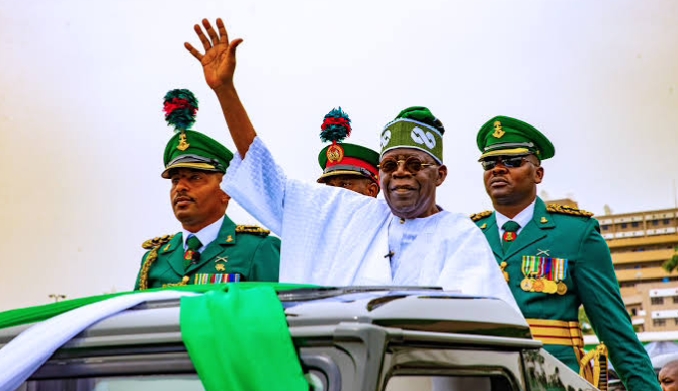
Understanding the exact earnings of Nigeria’s president is often clouded by rumors, misinformation, and a general lack of clarity. Bola Ahmed Tinubu, who assumed office as Nigeria’s 16th president in May 2023, commands a salary and benefits package that is shaped by constitutional mandates, government pay regulations, and the unique privileges of the office.
This article provides a comprehensive breakdown of President Tinubu’s official earnings, allowances, non-monetary benefits, and pension entitlements, based on credible sources including Nigeria’s Revenue Mobilisation Allocation and Fiscal Commission (RMAFC), government reports, and trusted media outlets.
1. The Legal Framework Governing Presidential Earnings
The Nigerian constitution and several laws empower the Revenue Mobilisation Allocation and Fiscal Commission (RMAFC) to determine salaries and allowances for political office holders, including the President.
The RMAFC Act establishes the commission’s authority to review and fix compensation for all public officers in Nigeria.
The commission meets periodically to review salary structures, ensuring they are in line with economic realities.
This legal framework ensures that the President’s pay is public knowledge and periodically adjusted.
2. President Tinubu’s Basic Salary
The basic monthly salary of Nigeria’s President is officially set by the RMAFC. Despite widespread assumptions that it is exorbitant, official data indicates otherwise:
According to RMAFC’s latest release in 2023, the President’s monthly basic salary is approximately ₦292,892.
This means an annual basic salary of about ₦3.5 million.
This figure is significantly less than the commonly rumored ₦1.5 million monthly salary, which has been debunked by official RMAFC statements
Comparison with Other Public Officers
Ministers earn less than ₦1 million monthly.
State governors have salaries ranging between ₦2 million and ₦3 million monthly depending on their state’s salary structures.
3. Allowances and Additional Financial Benefits
The President’s take-home pay is enhanced by statutory allowances that significantly increase his total earnings:
Major Allowances
Constituency Allowance: 250% of the basic salary. This is ₦8.7 million annually.
Hardship Allowance: 50% of the basic salary, or ₦1.7 million per year.
Leave Allowance: 10% of the basic salary, about ₦351,470 yearly.

4. Summary of President Tinubu’s Earnings
Component Amount (Naira) Frequency
Basic Salary- ₦3,514,705 Annual
Monthly Equivalent- ₦292,892 Monthly
Constituency Allowance- ₦8,786,762 Annual
Hardship Allowance- ₦1,757,350 Annual
Leave Allowance- ₦351,470 Annual
Total Annual Salary + Allowances ₦14,410,287 Annual
Monthly Equivalent- ₦1,200,857 Monthly
5. Non-Monetary Benefits and Perks
President Tinubu’s remuneration package is not limited to cash payments. The office of the President comes with extensive perks that have significant financial value:
Official Residence and Maintenance
Occupies the Aso Rock Presidential Villa, which is fully maintained by the government at no personal cost.
The residence includes housing, maintenance staff, utilities, and security arrangements.
Transportation
Access to government-owned luxury vehicles, helicopters, and private jets.
Transportation costs including fuel, maintenance, and pilot crews are covered by the government budget.
Healthcare
Comprehensive medical coverage domestically and abroad, including emergency medical evacuation.
Access to top-tier hospitals and specialist healthcare services at no personal cost.
Security
Presidential security provided by the State Security Service (SSS), Nigerian Police Force, and military units.
This includes personal bodyguards, secure transport, and 24/7 surveillance.
6. Post-Presidency Benefits
Under Nigerian law, former Presidents continue to enjoy benefits funded by the government after their tenure:
A pension equal to the salary of a sitting President (about ₦3.5 million annually).
Free healthcare, housing, transport, and security for life.
These benefits ensure former Presidents maintain a high standard of living post-office.
Final Thoughts
While President Bola Tinubu’s official salary may appear modest compared to global standards for heads of state, it is important to consider Nigeria’s economic context and the significant allowances and benefits that supplement his earnings.
Understanding his compensation requires looking beyond just the monthly paycheck to the full package of statutory allowances, government-funded benefits, and lifetime pensions.
This comprehensive breakdown should provide clarity and dispel misconceptions about how much Nigeria’s President really earns.