


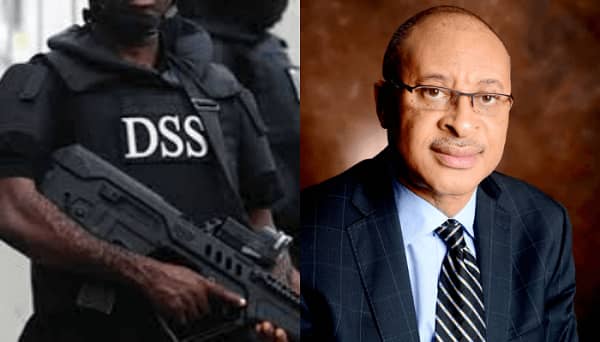
- Pat Utomi’s coalition faces scrutiny over its opaque structure, raising concerns of unintended shadow governance.
- Recall that the APC threatened to form parallel government if 2015 presidential poll was rigged.
In democratic systems, governance is ideally driven by the will of the people, expressed through elections and the rule of law.
However, in many political landscapes, including Nigeria’s, another force operates discreetly — the influence of shadow governments and political godfathers.
These actors, though often unelected, wield significant influence over the elected officials, directing policy decisions and political alignments from behind the scenes.
Godfatherism in Nigerian politics refers to the control exerted by influential individuals, often referred to as “godfathers,” who use their financial, political, or social power to sponsor candidates for public office.
In return, these candidates, once elected, are expected to remain loyal to their sponsors, implementing policies and decisions that align with the godfather’s interests.
This phenomenon has permeated both federal and state levels of governance, significantly impacting democratic transparency and accountability.
Godfathers typically operate through informal networks. Their influence manifests in the selection of candidates, award of government contracts, manipulation of party structures, and control of key appointments.
Although not holding a formal office, godfathers often have significant say in decisions that affect entire populations. This unofficial structure can result in the sidelining of democratic institutions and the undermining of constitutional processes.
Shadow governments are often difficult to detect and harder to prove because their influence is rarely documented.
Nevertheless, their presence is felt in the form of political patronage, coercion of public office holders, and engineered policy outcomes that serve a narrow set of interests rather than the wider public good.
THE PAT UTOMI SHADOW GOVERNMENT SAGA
A recent development illustrating the undercurrents of shadow governance is the involvement of Professor Pat Utomi in discussions around political restructuring and leadership selection.
Utomi, an economist and political activist, has been a vocal critic of godfatherism and has advocated for a system that promotes transparency and performance-based leadership.
On May 5, Utomi launched the ‘Big Tent Coalition Shadow Government’ — a platform aimed at serving as a credible opposition to the President Bola Tinubu administration.
A shadow government is a structure established by opposition groups to act as a check on the official government, critiquing policies and providing alternative solutions.
Utomi described the initiative as a “national emergency response” to the policies of the federal government.
The shadow cabinet is composed of various professionals and public figures, including Dele Farotimi, the human rights advocate, who oversees the ombudsman and good governance portfolio.
The federal government and the All Progressives Congress (APC) criticised the initiative.
On May 14, the DSS filed a suit against Utomi over the initiative.
However, critics have raised concerns over his role in facilitating a political coalition that some argue operates in a shadowy, kingmaking capacity.
While Utomi’s actions have largely been presented as reformist, the ambiguity surrounding the structure and decision-making of his coalition raises questions about the potential creation of a parallel influence structure akin to a shadow government.
Though Utomi has not been directly linked to traditional forms of godfatherism, his participation in leadership selection processes that lack full transparency has reignited debates about informal power structures in Nigerian politics.
It reflects a broader trend where political actors, even those with reformist intent, can inadvertently perpetuate the cycle of non-transparent influence if institutional mechanisms are weak or inadequately enforced.
APC PARALLEL GOVERNMENT THREAT
The concept of shadow or parallel governments also featured prominently during Nigeria’s 2013–2014 political crisis, particularly in the build-up to the 2015 general elections.
During this period, a group of governors under the New PDP (nPDP) faction broke away from the ruling People’s Democratic Party (PDP), citing marginalization and autocratic tendencies within the party.
This group later formed the foundation of the All Progressives Congress (APC), a coalition that eventually won the 2015 election.
What made this situation critical was the accusation that the nPDP was functioning as a “parallel government.”
Their meetings, declarations, and unofficial activities paralleled those of the constitutionally recognized government, raising alarms about dual authorities and divided loyalties within the political structure.
Although no formal alternate government was established, the implications were significant: it highlighted the fragility of party discipline and the susceptibility of the political system to dual command structures, fueled by godfather-driven coalitions and personal political ambitions.
At a town hall meeting in Washington DC, former Vice-President Yemi Osinbajo was asked if the APC was indeed planning a “parallel government” should the party feel aggrieved by the 2015 presidential election result.
Osinbajo replied that the PDP had a history of mismanaging elections and APC had indeed insisted that if such happened in the 2015 election, then a parallel government would be established.
AMAECHI: IF YOU RIG US OUT, WE WILL RIG OURSELVES IN
Rotimi Amaechi, former governor of Rivers state, had joined APC from PDP and was one of the political stalwarts poached by the opposition to clinch power in the 2015 election.
According to TheNation, Amaechi also threatened that the APC would resort to constituting its own parallel government if PDP failed to deliver a “free and fair election”.
On November 24, 2014, the former Rivers governor spoke in Abuja and said APC had met and agreed to “install our own government” should the party sense any foul play.
“What is the essence of going to court when the federal government doesn’t obey the law? That’s why the APC says we won’t go to court any longer,” Amaechi said.
“If you rig us out, we will rig ourselves in. This means if you think you can rig us out in 2015, we will form our own government. We have met on that and we have agreed on that. We will install our own government and there will be two governments.
“The only way to avoid a parallel government is to have a free and fair election. You can’t continue to use the police as if it is a private agency or company of the government.”
IMPLICATIONS FOR DEMOCRATIC DEVELOPMENT
The persistent influence of shadow governments and godfatherism undermines democratic consolidation.
Elected officials often face divided loyalty — between the electorate and their sponsors. This not only affects policy continuity and good governance but also erodes public trust in democratic institutions.
Moreover, it constrains the political space, making it difficult for independent and capable candidates without political benefactors to emerge.
While the actions of reformers like Pat Utomi suggest a desire to reshape the system, it remains essential that such reforms are institutionalized and transparent.
Nigeria’s experience with shadow influences — from godfatherism to informal coalitions and parallel structures — underlines the urgent need for stronger political institutions, intra-party democracy, and accountability mechanisms.
As the political landscape evolves, especially in anticipation of future elections, addressing the root causes of shadow governance remains critical.
Only through systemic reform and citizen awareness can the hold of godfatherism on state politics be meaningfully reduced.