


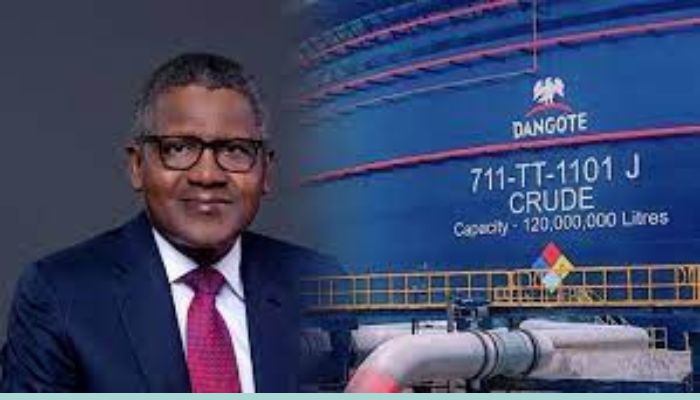
- Speaking on the topical issue, Dangote said figures bandied by the government as the actual volume of daily petrol consumption in the country are fake as they are highly inflated
The Dangote Group president, Alhaji Aliko Dangote, has weighed in on the raging controversy surrounding the actual volume of Nigeria’s daily petrol consumption.
For years on end, experts, stakeholders and regulatory agencies have differed over the real litres of petrol consumption in the country every day.
Speaking on the topical issue, Dangote said figures bandied by government agencies as the volume of daily petrol consumption in the country are fake as they are highly inflated.
The Nigerian Midstream and Downstream Petroleum Regulatory Authority (NMDPRA) estimates the nation’s petrol consumption at around 50 million litres daily.
However, Dangote stated that Nigeria does not consume anywhere near what the NMDPRA claimed.
The richest man in Africa asserted that the true figure of Nigeria’s daily petrol use is closer to 33 million litres, 17 million litres less than the figure of the NMDPRA.
He alleged that previous data were inflated for corrupt gains, especially during the fuel subsidy era.
He spoke during a recent visit to the Dangote Petroleum Refinery by Global CEO Africa members.
He also bemoaned the deep and pervasive corruption in the petroleum sector, describing it as a “mafia business” he initially hesitated to enter, Punch reports.
He insisted that Nigeria does not consume up to 40 million litres daily as officially reported and said highly inflated consumption figures were used to siphon funds when fuel was subsidised, at times purportedly up to 90 million litres daily—far beyond the capacity implied by Nigeria’s vehicle population.
Though the primary source of data rests on the Nigerian Midstream and Downstream Petroleum Regulatory Authority (NMDPRA), the Nigerian Bureau of Statistics (NBS) and the Central Bank of Nigeria (CBN) issue data regarding import and consumption rates.
Also, crude oil refiners said there should be fresh findings to determine the country’s real consumption figure; otherwise, the debate and argument would persist.