


- NAPTIP strengthened its cybercrime squad and partnered with the justice ministry to counter online exploitation and trafficking schemes.
- Bello cited emerging trends like fake jobs, organ harvesting, baby factories, and social media lures used by traffickers.
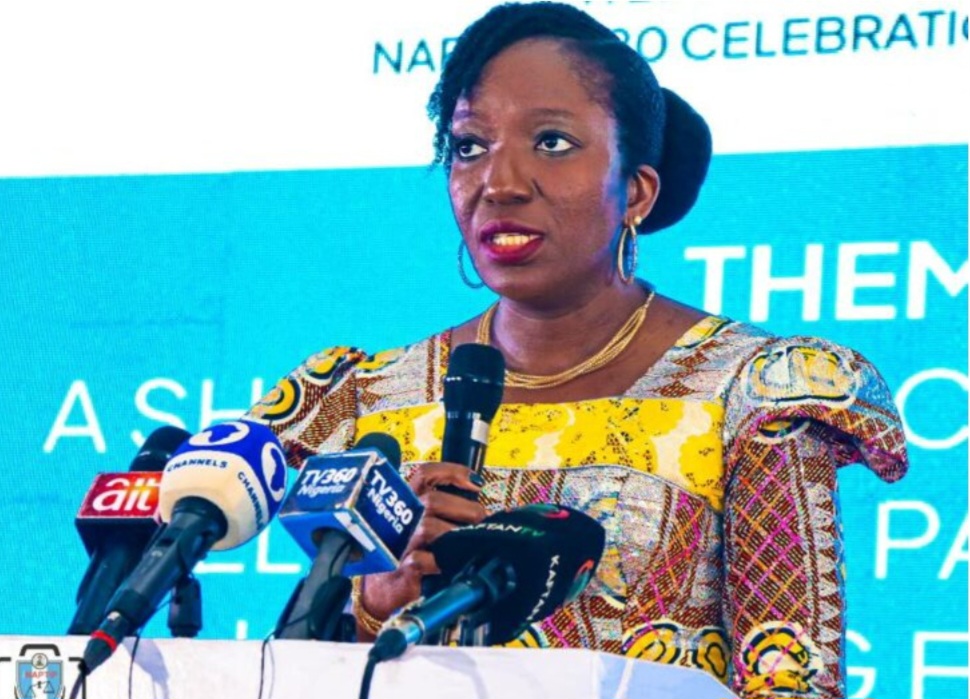
The director-general of the National Agency for the Prohibition of Trafficking in Persons (NAPTIP), Binta Adamu Bello, has declared a tougher era for human traffickers in Nigeria.
Bello said the agency was intensifying its crackdown on trafficking syndicates, including those operating across borders and on digital platforms.
She spoke during a press conference in Abuja to flag off the 2025 World Day Against Trafficking in Persons.
“It will be very challenging for human traffickers in the country from now,” Bello stated. “We shall increase our coordination mechanisms to empower all state and non-state actors to detect and report issues of human trafficking anywhere in the country.”
The NAPTIP boss said the agency has strengthened its cybercrime squad and linked it with the joint case team on cybercrime under the Federal Ministry of Justice to respond to online exploitation.
Bello said the agency is collaborating with the intelligence community and law enforcement agencies to enhance surveillance, rescue operations, and interception of traffickers and victims.
She highlighted emerging trends such as fake job and scholarship offers, online loan scams that lead to sexual exploitation, organ harvesting, baby factories, and the use of social media to lure victims.
According to her, Nigerian youths are increasingly being recruited into online scams in Nigeria, Ghana and other West African countries, while sextortion and revenge porn are on the rise.
Despite these challenges, Bello said NAPTIP is making progress using its five-point strategy: prevention, protection, policy, partnership and prosecution.
She added that the agency is conducting nationwide awareness campaigns, rescuing and rehabilitating victims, and collaborating with international and local partners to ensure traffickers face justice.
The country representative for the United Nations Office on Drugs and Crime in Nigeria, Cheikh Toure, reaffirmed the UNODC’s commitment to supporting Nigeria in combating human trafficking.
Toure said this year’s theme, “Human Trafficking is Organised Crime: End the Exploitation,” recognises trafficking as a calculated, transnational enterprise profiting from the vulnerability of women, children and men.
Esther Michael Sawa, representing the United Nations High Commission for Human Rights, said the commission’s support for NAPTIP is grounded in respect, accountability and the protection of every individual.
Bello announced activities to mark the 2025 World Day Against Trafficking in Persons on July 30, including sensitisation walks, digital conversations and a national stakeholders’ consultative forum.
She appreciated the support of the federal government, the Office of the First Lady, the National Security Adviser, the National Assembly, and international partners including the European Union and the governments of Switzerland and the Netherlands.
“Human trafficking is a crime that targets the foundation of our future,” Bello said. “We cannot afford to work in silos or allow rivalries to weaken our collective resolve. Together, let us kick human traffickers out of Nigeria.”