


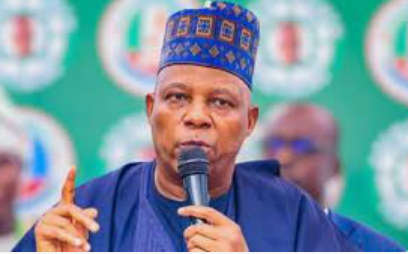
- Shettima told QU Dongyu that the Lake Chad region needs urgent intervention to address food insecurity and environmental degradation.
- The vice-president called on FAO to support all-year farming and revitalisation efforts in the Lake Chad basin.
Vice President Kashim Shettima has reaffirmed the federal government’s commitment to boosting smallholder farmers’ productivity through improved input, finance, and mechanisation.
Shettima stated this during a meeting with the president of the International Fund for Agricultural Development, Álvaro Lario.
He explained that the government was shifting focus from food handouts to empowering rural communities through increased agricultural output and commercialisation.
“We are focusing on increased productivity, resilience, and commercialisation, not handouts,” Shettima said.
He added that the plan includes expanding existing IFAD-backed projects to benefit more rural farmers across Nigeria.
The vice-president also met with the director-general of the Food and Agriculture Organisation, QU Dongyu, and the executive director of the World Food Programme, Cindy McCain.
During his engagement with the FAO chief, Shettima sought the organisation’s support in reviving the Lake Chad region and promoting year-round farming.
“The revival of the Lake Chad region, which is being threatened by multidimensional challenges such as environmental degradation, climate change, humanitarian crises, and conflict, requires a multi-pronged approach, development initiatives, conflict resolution, regional cooperation, and large-scale infrastructure,” he said.
He described the region as agriculturally rich and called on the FAO to take a leading role in restoring its economic value.
In a statement by his media aide, Stanley Nkwocha, Dongyu commended the Tinubu-led administration’s political will, calling it a sign of strong leadership.
The FAO boss promised technical backing and enhanced collaboration with the Nigerian government on food system reforms.
Shettima also held talks with WFP’s executive director, Cindy McCain, where he praised the group’s humanitarian efforts in Nigeria.
However, he emphasised that the government was adopting a sustainable, long-term approach to food and nutrition security.
McCain assured of the WFP’s continued support for Nigeria, particularly in areas like school feeding, nutrition, and aid for displaced persons.