


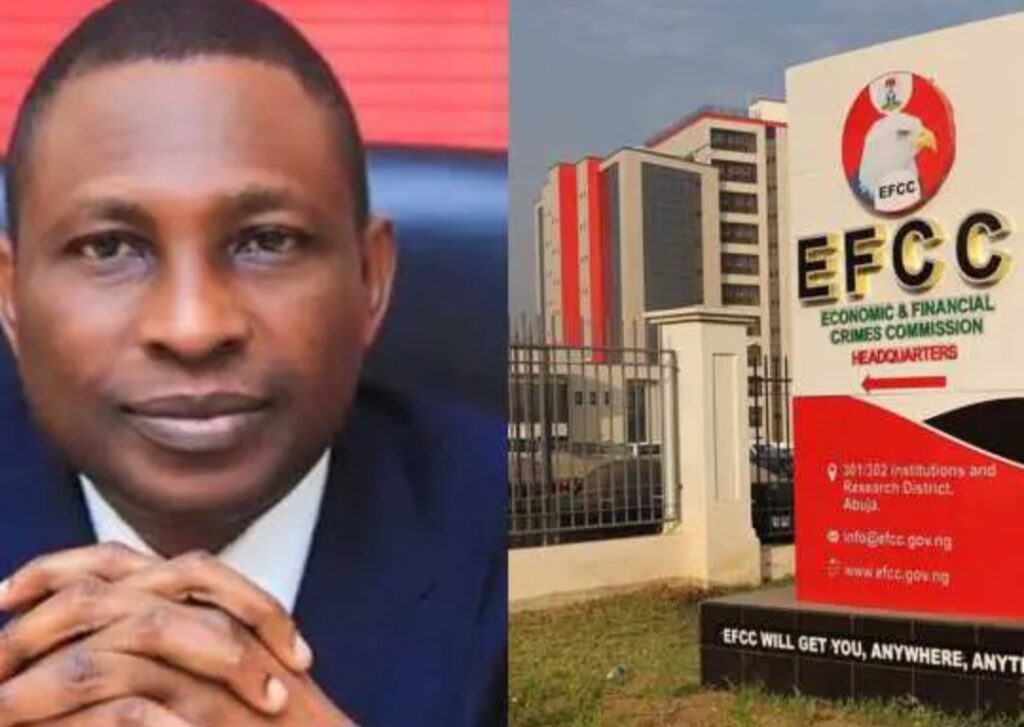
- Olukoyede warned that some estates, abandoned for over 20 years, were funded by civil servants who diverted public money.
- The EFCC chairman threatened to prosecute individuals suspected of owning abandoned estates built with stolen wealth from government service.
The chairman of the Economic and Financial Crimes Commission, Ola Olukoyede, has alleged that several abandoned estates in Abuja were funded with looted public funds.
Olukoyede made the remark in Abuja on Wednesday during a policy dialogue on real estate organised by the Law Corridor.
He said some of the housing projects had been deserted for over a decade, raising suspicion about their source of financing.
According to him, the EFCC has established a special unit that will begin inspecting such properties in Abuja and other states.
“I have set up the team. We will start visiting all the estates, not only in Abuja but across Nigeria. We want to know who owns what,” he said.
The EFCC boss added that many of the projects were initiated by civil servants who channelled stolen money into construction.
“It will shock you that some of these estates have been abandoned for 10 to 20 years,” he said.
“They just take it to a level, and they abandon it. What we have been able to gather is that most of these estates were funded by civil servants who have stolen money.
“The moment they leave public service, and the money is no longer coming, they abandon the estate. Then, the developer will start looking for investors to support them to complete the project.”
Olukoyede disclosed that the commission had already approached the courts to seek forfeiture orders on about 15 estates linked to suspicious funds.
He warned lawyers and property developers against offering themselves as conduits for money laundering in the sector.
“We have gotten more intelligence, too. Some of you sitting in this room, probably some of those estates belong to you,” he added.
“But very soon, we expect to meet you in court because there is no way we will develop this sector if we continue with that attitude. I know some of you have your genuine source of capital.”
Also speaking at the event, the president of the Nigerian Bar Association, Afam Osigwe, called for a central database to verify ownership of properties.
He cautioned that the indiscriminate cancellation of land titles due to unpaid ground rent could discourage foreign investors.
Ayokunle Erin, practice lead for real estate, construction and infrastructure at Law Corridor, said Nigeria faces a housing shortfall of between 17 and 20 million units.
He explained that the country needs 700,000 housing units annually to meet demand but produces far below this target.
“In Abuja, for example, only about 5,000 units were constructed in 2024, satisfying less than 10 per cent of the city’s needs,” Erin said.
“These gaps reflect deep‑rooted policy failures, regulatory lapses, and legal ambiguities that continue to embolden fraudsters, quacks, and unlicensed agents.”