


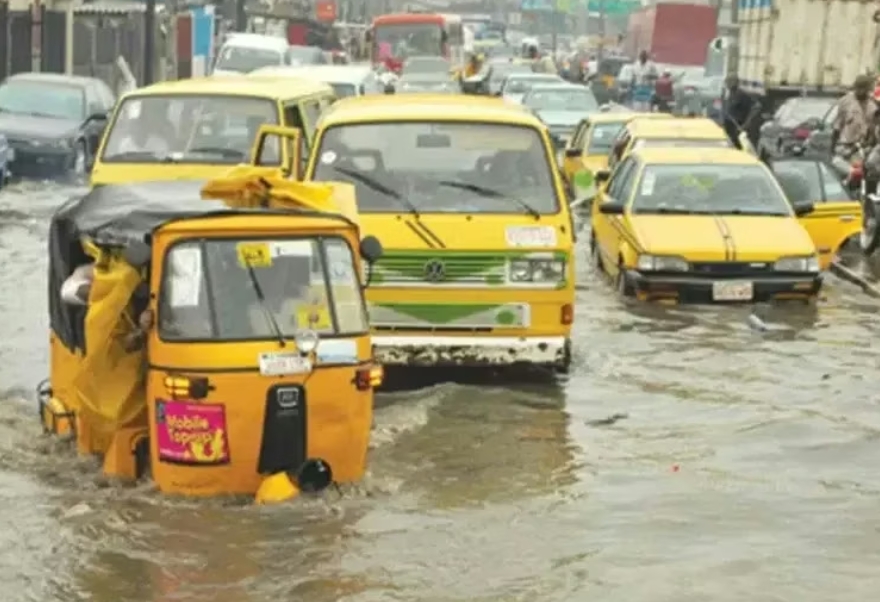
- Viral footages show Lagosians wading through flooded streets following overflow from clogged drainages and canals.
- Wahab assures residents that Lagos government is clearing water channels to mitigate the devastating impact of floods.
The Lagos State Government has issued an urgent advisory, urging residents in parts of Lekki, Ikorodu, and Ajegunle to relocate from flood-prone zones.
The state’s commissioner for environment, Tokunbo Wahab, gave the warning on Tuesday during an appearance on Channels Television’s Politics Today programme.
Wahab listed Ajilete in Ajegunle, Majidun in Ikorodu, and some sections along the Lekki corridor as areas of concern.
“Those around the Ajilete axis of Lagos, that’s Ajegunle, they have to move. Those around the coastline of Ikorodu; Majidu, have to move. Some areas around the Lekki corridor, too, not all,” Wahab said.
He mentioned that places like Epe, Mushin, and Ikeja would remain safe despite the expected heavy rainfall.
The commissioner specifically warned residents living in the Isheri area of OPIC to stay vigilant and prepare for possible evacuation.
He explained that Lagos, being a coastal city, is vulnerable to climate change effects and will face flash floods this year.
Wahab said forecasts from the Nigerian Meteorological Agency (NiMet) indicate that the state will experience significantly more rainfall compared to last year.
“For those who stay in the lowland of Lagos, they have to move to the upland pending when the rain recedes,” Wahab added.
Several areas across Lagos were submerged on Monday following continuous rainfall that started on Sunday night and persisted till the following evening.
Videos circulating online captured scenes of flooded streets, submerged vehicles, and stranded residents navigating the waterlogged roads.
The flooding, worsened by blocked drainage systems and overflowing canals, disrupted commercial activities in Nigeria’s economic nerve centre.
Despite the havoc, Wahab appealed for calm, assuring residents that the government had intensified efforts to clear drainage channels and widen flood paths.
“We won’t tell Lagosians lies. Lagos will be exposed to the vagaries of climate change, and that means Lagos will have flash flooding, but as a state, we have to provide resilient infrastructure, and we have to tell our people to be responsible.
“If nature takes its course, what we can do is to mitigate its impact,” the commissioner stated.
Wahab reiterated that the state government is committed to reducing the impact of flooding through proactive measures and infrastructural upgrades.