


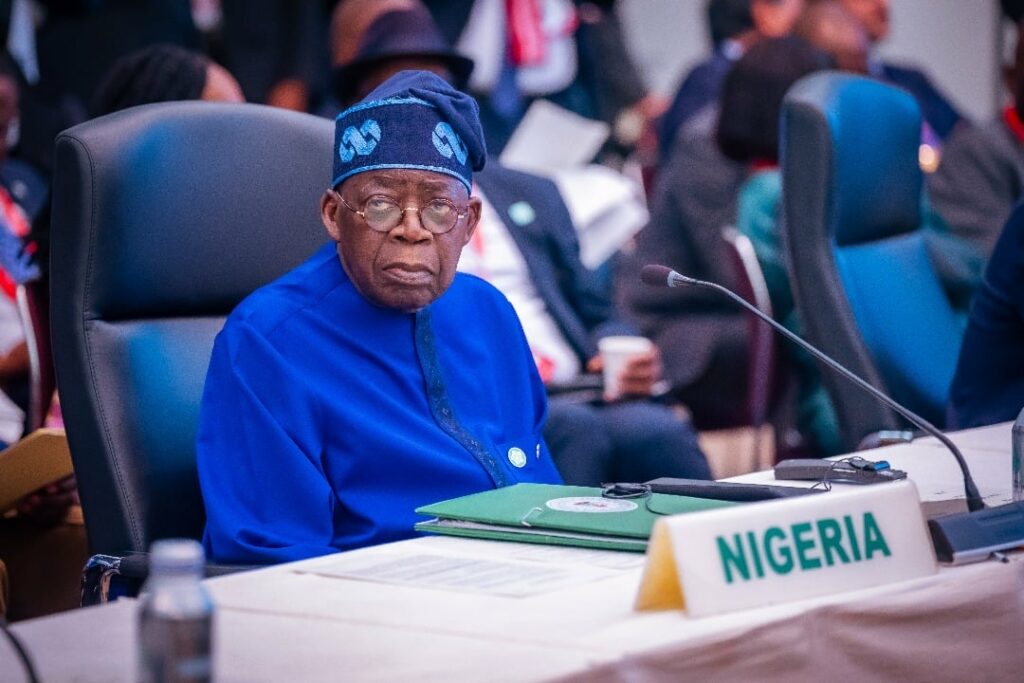
- The president praised Congo’s peace deal strategy, highlighting how mediation linked with investment demonstrated Africa’s need for fresh thinking.
- Tinubu warned that repeating old methods would only recycle instability, insisting Africa’s leaders must prioritise inclusive and sustainable solutions.
President Bola Tinubu has renewed calls for sweeping reforms at the United Nations to give Africa permanent representation on the security council.
Speaking on Wednesday at the 9th Tokyo International Conference on African Development (TICAD) in Yokohama, Japan, Tinubu said Africa’s exclusion was unjust.
The president declared that the continent deserves two permanent seats with veto power, alongside additional non-permanent seats on the council.
“It is the view of Nigeria that Africa’s quest for fair and equitable representation in the UN Security Council is a just and fair demand,” Tinubu said.
He argued that Africa must be given full privileges in line with the Ezulwini consensus and the Sirte declaration.
Tinubu praised the Nigerian armed forces for gains against insurgency and criminality, describing their momentum as a “springboard for national development and stability.”
He warned, however, that military victories alone could not guarantee peace unless governments tackled poverty, inequality and political exclusion.
“Nigeria’s brave armed forces can win any number of battles, but we do justice to their heroism only when we, as government, are courageous in tackling not just terror but also the underlying causes,” he said.
The president called for fresh approaches to peace-building across Africa, citing Congo’s mediation efforts tied to direct investment as an encouraging example.
“In the past, competition for resources has weakened states and triggered conflict. Now, we see mediators directly linking outcomes to investment in Congo,” he added.
He insisted that the method showed why leaders must embrace new strategies that link peace agreements with sustainable development.
Tinubu also urged African countries to embrace market-driven partnerships instead of “hackneyed appeals for aid and handouts.”
Japanese prime minister, Shigeru Ishiba, used the forum’s opening to announce $5.5bn financing for Africa through Japan’s international cooperation agency.
He said the facility, in collaboration with the African Development Bank, would target growth driven by private sector investment.
According to Ishiba, the programme will focus on youth, women, regional integration, and sustainable industries across the continent.
“In 75 years from now, the population of Japan would have been halved. In the local communities, the population continues to decline; this is one big challenge Japan is facing,” he said.
He contrasted Japan’s demographic problems with Africa’s youthful population, urging the creation of industries that could harness the continent’s workforce.