


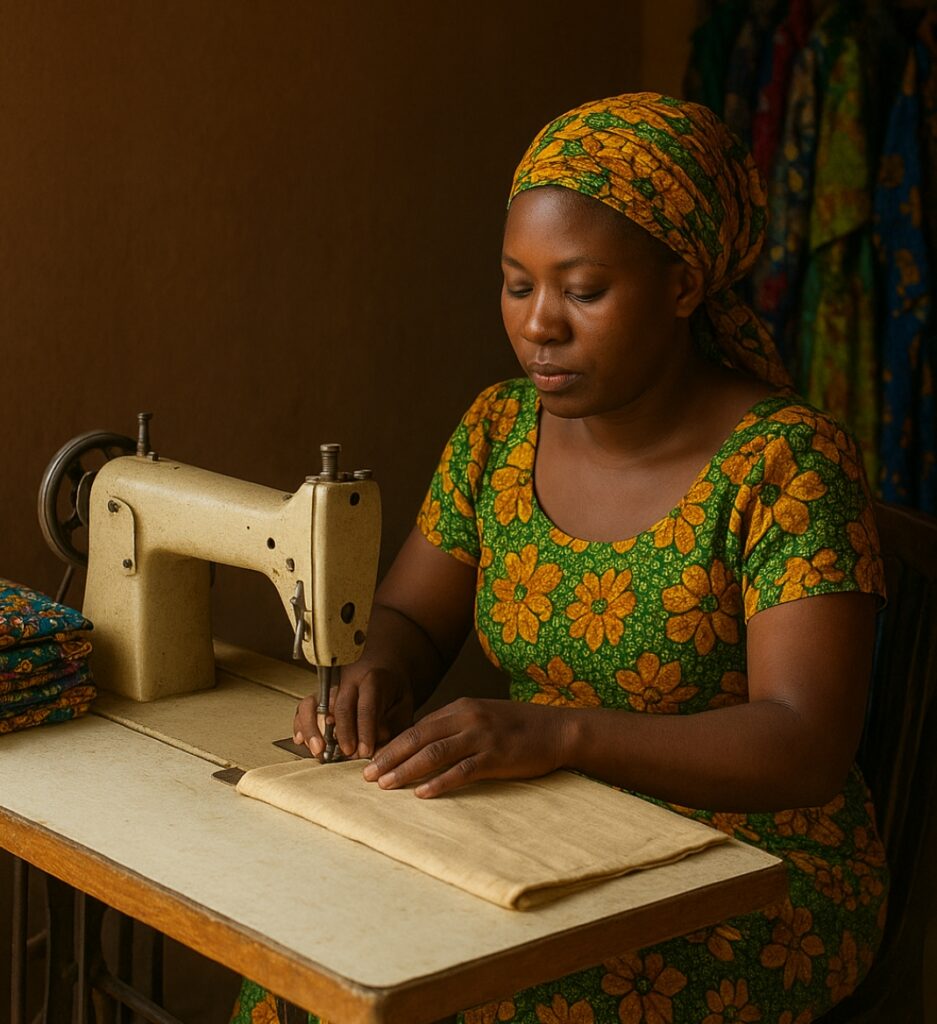
Small and Medium Enterprise (SMEs)are often described as the backbone of Nigeria’s economy.
Despite their modest size, they contribute nearly 80 per cent of the nation’s employment and a significant share of its Gross Domestic Product (GDP).
From the bustling open markets of Lagos to the quiet workshops in Kano, SMEs provide millions of Nigerians with daily livelihoods.
The National Bureau of Statistics (NBS) reports that Nigeria is home to over 39 million small businesses.
These enterprises range from tailoring shops and food processing ventures to tech start-ups and agro-allied firms.
The sheer number highlights their importance as silent giants shaping the country’s socio-economic landscape.
According to the Small and Medium Enterprises Development Agency of Nigeria, (SMEDAN) SMEs account for almost half of Nigeria’s GDP.
They are also responsible for 96 per cent of businesses operating in the country.
This dominance underlines their role in providing opportunities, fostering innovation and supporting community development.
Analysts point out that SMEs thrive in sectors where large corporations rarely venture.
In rural communities, local entrepreneurs supply essential goods, process agricultural products and provide basic services.
In urban centres, they dominate retail trade, hospitality, creative industries and digital innovation.
The director-general of SMEDAN, Charles Odii, described SMEs as critical to national growth.
He said, “The survival of Nigeria’s economy depends heavily on the resilience and contributions of small and medium enterprises across the country.”
Experts emphasise that beyond employment creation, SMEs nurture entrepreneurship culture and self-reliance.
For many Nigerians, starting a small business remains the most practical path out of poverty.
Micro retailers, artisans and service providers contribute daily to household incomes and community stability.
Banking sector reports confirm that SMEs account for the majority of loan requests, even though access to credit remains limited.
Financial institutions often cite lack of collateral, high risks and informal operations as reasons for rejecting applications.
This has left many businesses relying on personal savings, family support and cooperative societies for funding.
A fashion entrepreneur in Aba explained how small businesses operate under such conditions.
She said, “We rarely get bank loans, so most of us use our savings to buy fabrics and pay workers.”
Despite funding challenges, SMEs continue to dominate the labour market.
The International Labour Organisation notes that the sector absorbs both skilled and unskilled labour across multiple industries.
From apprenticeships in mechanic workshops to tech jobs in start-ups, SMEs remain the biggest employers of Nigeria’s youth.
The federal government has recognised their impact and launched various schemes to support their growth.
Interventions such as the Survival Fund, TraderMoni, and the Bank of Industry loans aim to ease access to capital.
Some state governments also run programmes to assist small-scale farmers, artisans and digital entrepreneurs.
However, reports suggest that bureaucracy, corruption and inadequate awareness limit the reach of these initiatives.
Another major barrier is inadequate infrastructure.
Erratic electricity supply forces many businesses to rely on costly alternative power sources.
Poor road networks hinder movement of goods from farms to markets.
Limited internet connectivity also affects technology-based start-ups in rural areas.
These obstacles increase operational costs and reduce competitiveness compared to peers in other developing economies.
In spite of the hurdles, Nigerian entrepreneurs have shown remarkable resilience.
Many SMEs adapt through innovation, community networks and creative use of digital platforms.
Social media has become a lifeline for businesses promoting goods and reaching wider audiences.
Online payment systems also enable small traders to expand customer bases beyond their immediate neighbourhoods.
The rise of e-commerce platforms has further supported visibility and access to new markets.
SMEs in the agricultural value chain have equally taken advantage of digital tools.
Farmers now link with buyers through mobile apps, while processors use technology to track supply chains.
This shift underscores the capacity of Nigerian entrepreneurs to evolve even with limited support.
Experts note that women play a dominant role in the SME space.
A SMEDAN survey shows that about 43 per cent of micro-enterprises are owned by women.
These range from food vending and textiles to beauty, fashion and small-scale farming.
Gender participation highlights the inclusive nature of the sector and its importance in household welfare.
Young people also find expression in SMEs.
Tech hubs in Lagos, Abuja and Port Harcourt continue to produce start-ups that are gaining international attention.
Innovations in fintech, agritech and creative industries have positioned Nigerian SMEs as emerging players in Africa’s digital economy.
SMEs are equally essential to rural survival.
For farming communities, small-scale processors, traders and cooperatives provide income stability and reduce rural-urban migration.
These activities keep many young people engaged in agricultural production.
Development experts argue that empowering rural SMEs would help reduce unemployment and improve food security.
Global comparisons show that countries with strong SME sectors experience faster economic diversification.
For instance, small firms in Europe and Asia contribute significantly to exports, industrialisation and innovation.
Nigeria has yet to fully unlock this potential due to persistent structural challenges.
Stakeholders believe that improving access to finance, infrastructure and market linkages would significantly enhance SME performance.
Digitalisation, better training and targeted government incentives could also help bridge gaps.
Regional integration within Africa’s Continental Free Trade Area presents additional opportunities.
SMEs stand to benefit from wider markets if Nigeria strengthens its competitiveness and product standards.
Economists warn, however, that poor regulation and inconsistent policies could undermine these opportunities.
They call for sustained reforms that create a more enabling environment for entrepreneurs.
The Central Bank of Nigeria has announced special interventions to support SMEs with low-interest loans and capacity building.
The bank explained that such measures are designed to expand employment and promote inclusive growth.
Development partners, including the World Bank and African Development Bank, are also involved in SME-focused programmes.
Collaborations with non-governmental organisations continue to promote skills training, mentorship and business incubation.
These collective efforts underscore global recognition of the importance of Nigerian SMEs.
The road ahead remains challenging, but analysts say progress is possible if reforms are consistent and inclusive.