


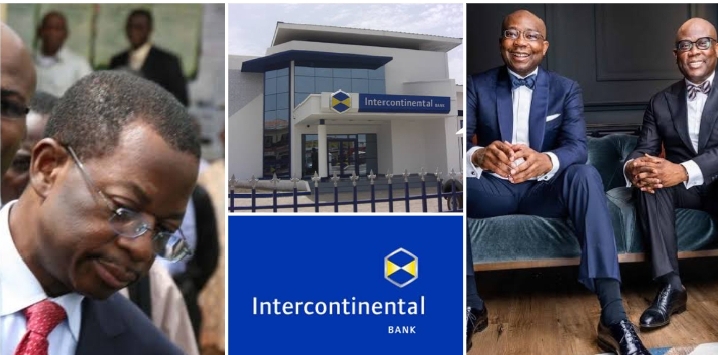
For over two decades, Intercontinental had been a symbol of rapid success—a banking powerhouse that had absorbed smaller rivals and expanded aggressively across West Africa. But, in 2009, behind polished façades and glossy annual reports, a storm was forming.
Dr. Erastus Akingbola, the CEO, walked briskly through the corridors. Staff sensed tension in his stride—meetings were longer, memos cryptic, and rumors spread faster than the Naira was depreciating.


Investors murmured, employees speculated, and regulators prepared to act. By the end of 2009, the Central Bank of Nigeria (CBN) stepped in, forever reshaped Nigeria’s banking sector that marked the beginning of the end for Intercontinental Bank.
From Merchant Bank to Commercial Titan
Founded in 1989 as Nigerian Intercontinental Merchant Bank Limited, Intercontinental Bank quickly established itself as a forward-looking institution. By the early 2000s, the bank had aggressively expanded its reach, positioning itself among Nigeria’s top commercial banks.
The strategy was audacious: merge with smaller banks, diversify its portfolio, and stake a claim across West Africa. By 2005, Intercontinental had absorbed Equity Bank of Nigeria, Gateway Bank, and Global Bank, creating one of the largest banking networks in the country.
Employees remembered the sense of optimism during those merger years. Branches buzzed with activity, and market analysts hailed the bank’s bold vision.
“We were part of something historic,” recalls a former branch manager in Lagos. “Intercontinental wasn’t just growing—it was dominating.” But beneath this veneer of success lay structural fragility: high-risk lending, aggressive credit policies, and weak oversight sowed the seeds of an eventual collapse.
The Illusion of Strength
By 2008, Intercontinental’s shareholder equity reportedly stood at $1.7 billion (NGN 261 billion). The bank celebrated its aggressive growth strategy, but the 2008 global financial crisis began to expose weaknesses. As international markets trembled, Nigerian banks faced liquidity pressures and mounting non-performing loans. Intercontinental, despite its size, was no exception.
Audit reports would later reveal that a significant portion of the bank’s loan book consisted of insider loans—funds extended to connected parties with minimal collateral. Many of these loans were never serviced. Risk management systems, intended to detect and prevent such exposures, were either ineffective or bypassed. “It was a classic case of ambition outpacing prudence,” says a former regulatory official. “The bank was expanding faster than its governance structures could manage.”
Warning Signs and Regulatory Red Flags

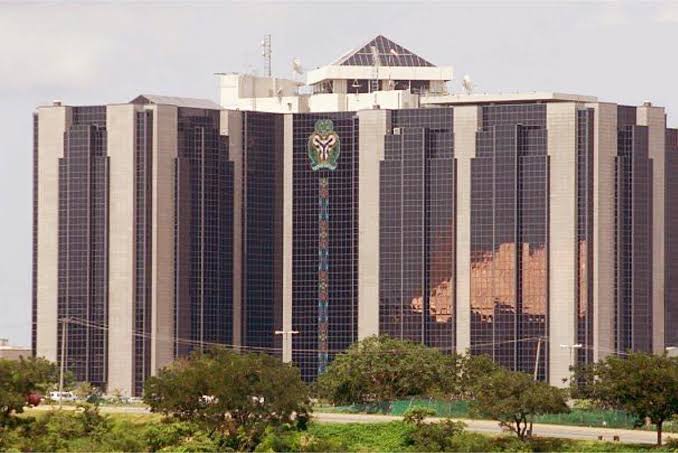
The Central Bank of Nigeria, aware of systemic risks, launched a series of special audits in 2009 to assess the health of the country’s financial institutions. The findings were damning: Intercontinental Bank was undercapitalized, its board lacked proper oversight, and non-performing loans were rising at an alarming rate.
Internally, employees sensed the strain. Branch managers struggled to cover liquidity gaps, while mid-level executives reported late payments and questionable loan approvals.
Investors grew anxious as the bank’s stock performance wavered. Rumors swirled: government intervention was imminent. The air in Lagos financial circles was thick with speculation, as the bank’s once-stable image began to crumble.
The Fall – CBN Steps In


In late 2009, the CBN made a decisive move. Dr. Erastus Akingbola was removed from his post, and Intercontinental Bank was placed under the control of the Asset Management Corporation of Nigeria (AMCON). The intervention was necessary to prevent a wider banking crisis, as the failure of one major institution could trigger systemic instability.
The revelation of unsecured insider loans shocked the public. For ordinary depositors, confidence wavered; for investors, the collapse raised alarms about the governance standards of Nigerian banks. Across Lagos, the city’s financial pulse quickened—every headline seemed to ask, “Which bank will be next?”
Leadership Under Scrutiny
Akingbola’s removal was not just a personnel change—it symbolized accountability in a sector long criticized for opaque operations. Yet questions persisted about how a bank of such size could accumulate billions in non-performing loans without detection. Some analysts cited cultural factors: in Nigeria, familial and personal networks often influence corporate decisions. When combined with weak internal controls, these networks can amplify financial risk.


AMCON, tasked with stabilizing the bank, faced immediate challenges. It needed to inject capital, manage toxic assets, and restore public confidence. Employees feared layoffs; regulators feared contagion; the government feared political fallout. Every decision was scrutinized, every move weighed against the potential for systemic disruption.
The Acquisition Dance
By 2011, Intercontinental Bank required a long-term solution. Access Bank, under CEO Aigboje Aig-Imoukhuede, presented a rescue plan: acquire a 75% stake in the troubled institution for N53.47 billion. The acquisition promised capital injection, operational restructuring, and restoration of stakeholder confidence.


However, the deal was controversial. Aig-Imoukhuede and Herbert Wigwe, key Access Bank executives, had previously borrowed significant sums from Intercontinental. Critics raised conflict-of-interest concerns, questioning whether the acquisition was purely strategic or also an avenue to recover outstanding debts.
Despite scrutiny, the merger proceeded. In October 2011, Access Bank completed the acquisition, and Intercontinental Bank became a subsidiary. By 2012, the integration was complete, creating one of Nigeria’s largest banking entities.
The Human Cost
While financial analysts dissected balance sheets and regulatory reports, ordinary employees and depositors bore the real cost. Many branch employees faced uncertainty—some left voluntarily, others were absorbed by Access Bank. Customers feared for their deposits, particularly in branches outside Lagos. Stories emerged of families delaying business transactions, worried about accessing funds in a bank undergoing upheaval.
“I couldn’t sleep for weeks,” recalls a former Intercontinental customer in Port Harcourt. “I had my salary account there, my children’s school fees. Every day brought a new rumor about the bank’s stability.”
The psychological impact was mirrored in Lagos offices. Boardrooms and corridors, once vibrant with ambition, became muted. Meetings focused not on expansion or innovation but on risk mitigation, asset recovery, and regulatory compliance.
Regulatory Lessons
The Intercontinental Bank collapse prompted the CBN to re-evaluate its oversight frameworks. Strengthening risk assessment, monitoring insider loans, and ensuring capital adequacy became top priorities. The crisis reinforced the importance of corporate governance, auditable internal controls, and transparency.
For AMCON, the case demonstrated the complexity of managing distressed assets while safeguarding public trust. The agency’s role in stabilizing the bank without triggering broader panic became a model for intervention in emerging markets facing similar banking crises.
Economic and Cultural Context
Nigeria’s banking landscape in the 2000s was defined by rapid liberalization, aggressive growth, and the interplay of personal networks in business. Intercontinental’s trajectory reflected both opportunity and risk:
Opportunity: Rapid expansion, mergers, and network effects created market dominance.
Risk: Weak oversight, insider lending, and cultural tendencies toward informal influence increased vulnerability.
The global financial crisis amplified these vulnerabilities. Institutions that appeared stable on paper were exposed by liquidity shortages and poor risk management. Intercontinental Bank became a cautionary tale not just about mismanagement but also about the structural and cultural dynamics in Nigeria’s financial sector.
Long-Term Implications
The merger with Access Bank ultimately stabilized the situation. The combined entity leveraged economies of scale, restructured loan portfolios, and restored depositor confidence. Intercontinental’s collapse also influenced broader reforms:
- Stricter capital adequacy requirements
- Mandatory risk management committees at board level
- Enhanced transparency and reporting standards
Investors and regulators alike became more vigilant. The episode also sparked debate on ethical banking practices and the role of personal networks in corporate decision-making.
Closing Reflection: A Cautionary Tale

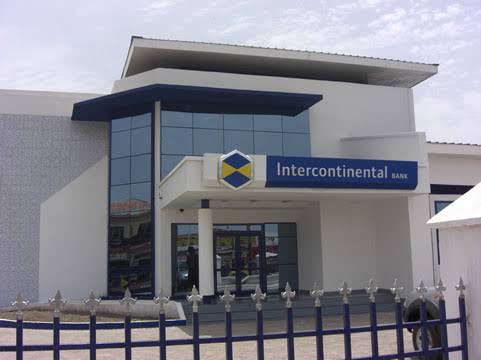
The story of Intercontinental Bank illustrates how unchecked ambition, weak governance, and inadequate risk management can bring down even the most prominent institutions. It highlights the delicate balance between growth and oversight in emerging economies.
For Nigeria, the episode served as a wake-up call: financial innovation must be paired with strong regulation, transparency, and ethical leadership. For the world, it stands as a reminder that behind every financial headline lies a complex web of human decisions, systemic pressures, and cultural realities.
As Lagos’ skyline continues to shimmer with ambition, the lessons of Intercontinental Bank remain: even giants can fall, and the cost of mismanagement is measured not just in money, but in trust, livelihoods, and the reputation of an entire banking sector.