


A green note slips through a vendor’s fingers, carried by a sudden gust along the crowded streets of Lagos. Traders shout, shoppers gasp, and the bill flutters like a fragment of a storm. Outside, digital notifications ping endlessly—prices, exchanges, balances—all shifting faster than anyone can track.
In Nigeria, money is more than currency. It is anxiety, hope, survival, and identity. From markets to mobile screens, from wallets to WhatsApp groups, it touches every life, yet it is never fully trusted. One moment, it buys abundance; the next, it betrays.
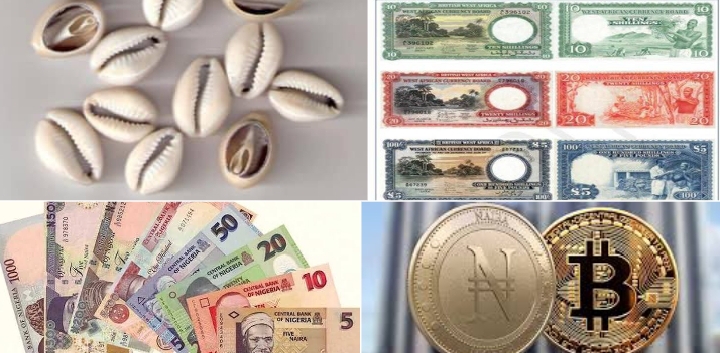
The country has seen coins forged from copper, shells that glittered in the sun, notes stamped with the faces of leaders, and now, numbers in a ledger that exist nowhere tangible. Each change leaves marks on the people who use it, shaping how they save, spend, and even dream.
It is in these rustles, flickers, and unsteady numbers that the story of Nigerian money quietly unfolds.
Cowries, Manillas, and the Currency of Trust


Long before banks and printing presses, Nigeria’s economy thrived on trade. In the riverine south, traders exchanged salt, textiles, and fish with northern merchants who brought leather, kola nuts, and livestock. The currency was not paper but cowries—small, glossy shells that had traveled across the Indian Ocean from the Maldives. They glittered in market stalls, worn smooth by fingers, and became the earliest unit of trust in commerce.
For larger exchanges, there were manillas: bronze or copper bracelets shaped like horseshoes. Their gleam carried a darker history, as manillas were also used as currency in the transatlantic slave trade. A human life, at one time, could be priced in copper.
The symbolism was clear—money was never neutral. It was power, faith, and memory all at once.
The Colonial Imprint: Pounds, Shillings, and the WACB

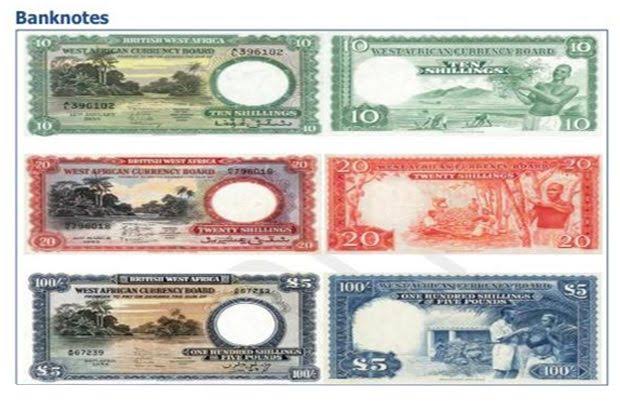
By the late 19th century, Britain had extended its authority over Nigeria, and with it came a foreign financial system. In 1880, British authorities declared shillings and pence as the only legal tender in West Africa. By 1912, the West African Currency Board (WACB) began issuing standardized coins and notes for Nigeria, Ghana, Sierra Leone, and Gambia.
The notes were drab, adorned with the portrait of the British monarch. There was no Nigerian face, no indigenous symbol—just a reminder of subjugation. The economy itself became tethered to London. Any profit earned in Lagos or Kano was effectively recycled into Britain’s coffers.
Still, the notes carried weight, and they brought order to a growing colonial economy. For the first time, Nigeria shared a uniform system of value—though not one it controlled.
The Birth of the Naira: A Symbol of Independence
Independence in 1960 brought political pride but not yet financial autonomy. The Nigerian pound, pegged to the British pound, remained in circulation. That changed dramatically on January 1, 1973, when the government introduced a new currency—the naira.
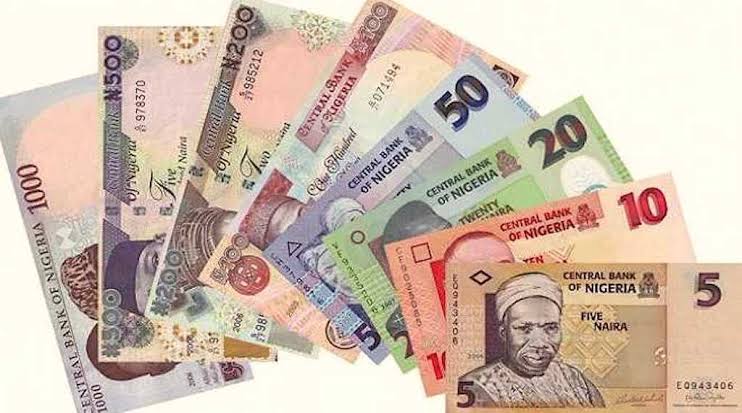
The naira replaced the pound at a rate of two naira to one pound. It was the first major currency outside Britain to adopt a decimal system, divided into 100 kobo. Chief Obafemi Awolowo, then Minister of Finance, coined the name “naira,” a contraction of “Nigeria.” The new money bore the faces of national heroes rather than colonial rulers.
The naira was not just paper—it was identity, sovereignty, and ambition. In the oil boom of the 1970s, it was strong enough to rival the dollar. A Nigerian could travel abroad with confidence, armed with a currency respected globally.
The Decline: Inflation and Distrust
But money is only as strong as the system that supports it. By the 1980s, military rule, corruption, and collapsing oil prices cracked the naira’s foundation. The Structural Adjustment Programme (SAP) of 1986, introduced under IMF pressure, forced Nigeria to devalue its currency and liberalize trade.
The naira began to slide. Once stronger than the dollar, it fell into a spiral of depreciation. By the 1990s, queues formed at banks as citizens scrambled for foreign exchange. A shadow economy bloomed: the parallel market or “black market,” where dollars were traded on Lagos street corners at rates far above the official price.
Trust in the naira weakened. Savings evaporated. A people once proud of their national symbol began to look elsewhere for security.
Crisis and Creativity in the 21st Century
The 2000s brought higher denominations—₦100, ₦200, ₦500, and ₦1,000 notes—as inflation made smaller bills obsolete. Redesigns aimed at preventing counterfeiting often did little to restore faith. By 2009, the Central Bank introduced polymer notes, yet their durability was overshadowed by the naira’s dwindling purchasing power.

Everyday Nigerians adapted. Traders priced goods in dollars. Families urged children abroad to send remittances in foreign currency. And young entrepreneurs began experimenting with something new: Bitcoin.
The Bitcoin Entry: From Ponzi to Promise
Bitcoin’s first major introduction to Nigerians was not through Wall Street, but through MMM, a Ponzi scheme that swept the country in 2016. The scheme collapsed, leaving millions in ruins—but not before teaching many how to set up Bitcoin wallets.
Out of that ruin, an idea took root: money that was not printed, not manipulated by government decrees, not chained to corruption. By 2017, Nigerians were trading Bitcoin peer-to-peer, using platforms like Paxful and LocalBitcoins.
Bitcoin was no longer speculation. It was survival.
#EndSARS and the Crypto Awakening
In October 2020, as young Nigerians marched against police brutality under the banner of #EndSARS, the state struck back—not just with force, but financially. Protesters’ bank accounts were frozen. Donations were blocked.
Then came Bitcoin. Protest organizers set up wallets and began receiving funds globally. Jack Dorsey tweeted support. The protest’s lifeline was encrypted, borderless, unstoppable.
For many, this was the turning point. Bitcoin had moved from investment to instrument of resistance, from abstract technology to lifeblood of democracy.
The State Strikes Back: Bans and the eNaira
Alarmed by the surge, the Central Bank of Nigeria (CBN) moved in February 2021 to ban banks from servicing crypto exchanges. Accounts were closed. Yet peer-to-peer transactions only grew stronger.
Later that year, the government launched the eNaira, Africa’s first central bank digital currency. It was meant to modernize money, but the public shunned it. Adoption hovered around 0.5% within its first year. Nigerians preferred Bitcoin, not because it was digital, but because it was free from state control.
The government’s suspicion deepened in 2024, when the naira hit new lows. Officials blamed crypto platforms like Binance for fueling currency speculation. Binance executives were arrested, websites blocked, and Nigerians once again faced a government attempting to police their wallets.
Bitcoin Villages and New Financial Frontiers
Yet where the state saw threat, citizens saw opportunity. In Lagos, a project called Bitcoin Village emerged—a community powered by solar panels, where shops, schools, and even hospitals accepted Lightning payments. Here, Bitcoin was not rebellion but infrastructure, a way of creating an economy beyond the naira’s volatility.
Across Nigeria, freelancers demanded to be paid in Bitcoin, sidestepping the collapsing naira. Families stored savings in stablecoins, shielding themselves from inflation. Farmers used crypto to bypass middlemen and sell directly to buyers abroad.
Money was being reimagined not by policy, but by people.
The Meaning of Money in Nigeria
The changing face of money in Nigeria is not just about currency—it is about trust. Cowries once held value because communities believed in them. Colonial pounds worked because the empire enforced them. The naira began as a symbol of sovereignty, only to become a marker of lost confidence.

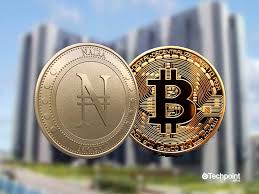
Bitcoin, for all its volatility, offers something Nigerians crave: freedom. Freedom from inflation, from arbitrary devaluation, from bureaucratic chokeholds. But it also comes with risk, from scams to state crackdowns.
Still, the very act of choosing it says something profound about Nigeria. Money is not just paper or code—it is a mirror of resilience, a measure of survival, and a canvas on which a nation sketches its dreams.
Closing Thoughts: The Faces We Trust
A note folds in a hand, a number blinks on a screen, a coin clinks in a jar—small gestures that ripple far beyond their size. In Nigeria, money is never just a tool; it is a testament. It measures faith and fear, ambition and survival, rebellion and ingenuity.
Every exchange, every transaction, is a quiet negotiation with history itself. Cowries once carried the weight of communities, colonial pounds imposed foreign order, the naira bore national pride, and now digital currencies challenge the very idea of control. Yet, across centuries, Nigerians have adapted, resisted, and imagined new ways to assign value.
The story of money here is unfinished, its next chapter unwritten. What remains constant is the human pulse beneath it—the choices, the risks, the cleverness, and the stubborn hope that one day, value will feel tangible, secure, and fair. Money may change, its form may shift, but the people who give it meaning endure.