


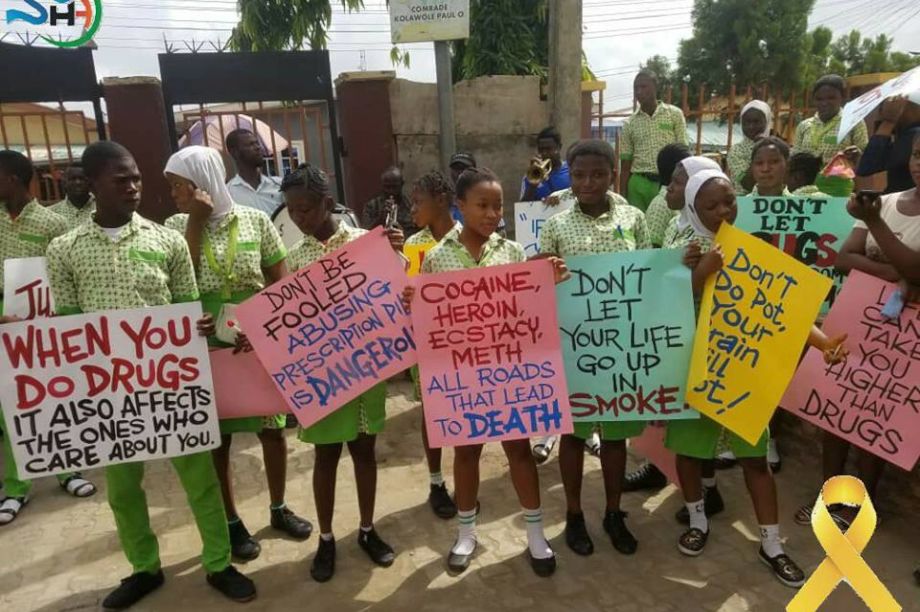
Nigeria is facing an escalating challenge of drug use among young people, with communities, schools, and workplaces now reporting cases once considered rare.
Recent surveys by local health authorities and international agencies reveal that millions of Nigerian youths between the ages of 15 and 35 have experimented with drugs, ranging from cannabis and codeine to synthetic substances that are often produced in informal settings.
Cannabis remains the most commonly used illicit drug, with reports indicating that its use has spread across both urban and rural areas.
Prescription medications, especially cough syrups with codeine and painkillers, have also become widely misused, creating dependence and health complications.
The availability of these drugs is being driven by unregulated sales in open markets, community chemists, and even through online platforms that make access easier for young people.
Law enforcement agencies have continued to intercept shipments of narcotics at borders, airports, and seaports, yet demand among the youth population remains strong.
The economic cost of drug misuse has been highlighted by multiple institutions, pointing to reduced productivity, higher health care expenses, and social instability linked to criminal activities associated with substance use.
Communities report that drug misuse has contributed to a rise in petty theft, violent behaviour, and the breakdown of family structures, as users often resort to desperate measures to fund their habits.
In schools, educators note a growing pattern of absenteeism, poor performance, and in extreme cases, dropouts linked to substance dependence.
Universities and technical institutions have also reported cases of organised networks supplying students with drugs during examinations or social events, raising concerns about the erosion of discipline in educational environments.
Medical professionals warn that the impact on health is severe, with users at risk of liver damage, kidney failure, and mental health disorders including depression, anxiety, and psychosis.
Treatment facilities exist across Nigeria, but they remain inadequate for the scale of the problem.
Rehabilitation centres, both government-owned and private, often face overcrowding, underfunding, and limited specialised staff to address the complex medical and psychological needs of patients.
Public health experts emphasise that addiction is not simply a criminal issue but a health crisis requiring preventive education, early intervention, and long-term support.
Government agencies, including the National Drug Law Enforcement Agency, have stepped up awareness campaigns, especially in secondary schools and community centres, to highlight the dangers of drug misuse.
Faith-based organisations and civil society groups have also introduced rehabilitation and counselling services, though these initiatives reach only a fraction of those in need.
The scale of the challenge has been amplified by Nigeria’s demographic profile, with more than 60 percent of its population under the age of 25.
Analysts suggest that the high unemployment rate, poverty, and limited recreational opportunities make young people vulnerable to drug experimentation as a form of escape or peer validation.
The entertainment industry has also been linked to rising exposure, as lyrics, films, and social media often glamourise drug use, reinforcing risky behaviour among impressionable audiences.
Nigeria is not alone in this struggle, as drug misuse among young people has become a global issue, with the United Nations identifying West Africa as a major transit hub for narcotics destined for Europe and North America.
This position has exposed local communities to substances that once only passed through the region, creating both a supply challenge and a domestic consumption problem.
Despite rising arrests and seizures, experts caution that enforcement alone cannot stem the crisis without parallel investment in treatment, education, and youth empowerment.
Programmes promoting vocational training, sports, and creative industries have shown potential to reduce the lure of drugs by offering alternatives that engage and inspire young people.
Policy analysts argue that a stronger focus on school-based campaigns, stricter regulation of pharmaceuticals, and improved coordination among agencies could slow the growth of substance abuse.
Parents and guardians also play a central role, with studies showing that open communication at home and active supervision can deter experimentation and misuse.
As the country seeks to confront this growing concern, the future of millions of young Nigerians remains tied to the ability of society to provide support, opportunities, and healthier paths to fulfilment.
Without coordinated action, the current trajectory suggests that an entire generation could be at risk of losing its potential to drugs.