



Paper has always been both shield and sword in Nigeria’s corridors of wealth. It builds empires when stamped with bank seals and signatures, and it topples them when scrutinized under fluorescent courtroom lights. In 2025, the Economic and Financial Crimes Commission chose paper as its weapon. What began as a quiet review of bank files grew into a probe that shook one of the country’s most celebrated billionaires.
At first, the documents looked unremarkable—loan applications, collateral notes, credit memos shuffled through First Bank’s records. But once the EFCC pulled the threads, the paper stack began to resemble a map of excess.
Each line, each mismatched entry, became a clue. Slowly, the commission built its case not through raids or spectacle, but through ink and arithmetic. The strength of the billionaire’s fortress was tested by the weakness of his paperwork.
The courtroom became the stage where those documents spoke. Prosecutors laid them out like puzzle pieces, showing a trail of loans, companies, and signatures that no longer aligned with the narrative of stability. For months, the hearings dragged on—adjournments, objections, rebuttals—yet the paper never lost its voice. It accused in silence, as reputations trembled under its weight.

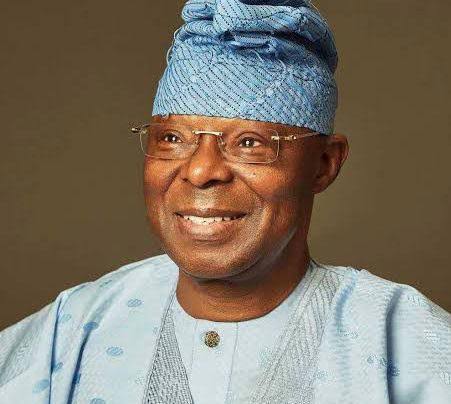
Even the mightiest of businessmen can find their legacy questioned, not by force or fury, but by the quiet rustle of documents. At the center of it all was Chief Oba Otudeko, forced to answer to the language of ink.
The Rise of Oba Otudeko
Chief Oba Otudeko’s trajectory in Nigerian business was not accidental. From the mid-twentieth century, he built Honeywell Group into one of Nigeria’s largest conglomerates, with interests spanning foods, real estate, infrastructure, and energy. His public image was carefully cultivated: a seasoned boardroom player, a man who held the chairmanship of First Bank Nigeria Holdings, a respected elder in corporate governance circles, someone who embodied stability in a nation where fortunes often rose and fell with political tides.
Unlike the brash new-money billionaires whose wealth was tied to oil windfalls or government contracts, Otudeko’s profile suggested tradition. He was the sort of tycoon invited to chair presidential advisory councils, someone who could stand beside global leaders without raising eyebrows. For many younger entrepreneurs, his career was the model: play long, play quiet, and build structures that outlive immediate storms.
But beneath every empire lies the scaffolding of debt, credit, and risk. Nigerian business is inseparable from its banks, and banks, in turn, are inseparable from politics. No empire grows without access to credit facilities, restructuring of loans, and sometimes, the creative engineering of balance sheets. Otudeko’s rise was no different. And it was precisely within those delicate transactions that the EFCC would later find its opening.
The EFCC and Nigeria’s New Appetite for Accountability
The Economic and Financial Crimes Commission was born in 2003, during an era when Nigeria faced blacklisting from the Financial Action Task Force for failing to combat money laundering. At first, many Nigerians saw the EFCC as a political weapon, used selectively against opponents. But over time, it developed teeth in banking and financial matters. High-profile convictions—Diepreye Alamieyeseigha, James Ibori, Cecilia Ibru—cemented its relevance.
By the 2020s, EFCC investigations had become sharper. Courtrooms in Lagos and Abuja often heard cases based on meticulous bank statements, wire transfers, credit memos, and loan agreements. Unlike earlier corruption probes that leaned on confessions or whistleblower testimony, the EFCC increasingly relied on paper trails—documents that, once verified, carried the weight of proof harder to discredit.


This was the climate in which Otudeko’s troubles surfaced. And while many Nigerians assumed he was too entrenched, too polished to be cornered, the EFCC showed that even the most careful tycoon could be ensnared if the right document crossed the right desk.
The Triggering Allegation
In January 2025, the EFCC filed a 13-count charge against Oba Otudeko, former First Bank Managing Director Stephen Olabisi Onasanya, Honeywell associate Soji Akintayo, and Anchorage Leisure Limited. The allegations were stark: together, they conspired to fraudulently obtain 12.3 billion naira in credit facilities from First Bank, using forged documents and misleading information.
At the heart of the case were two little-known companies, V-Tech Dynamic Links Limited and Stallion Nigeria Limited. According to EFCC filings, these entities were fronts through which credit was secured. The bank, relying on documentation provided at the time of application, disbursed billions in tranches. EFCC’s charge was that the documents were fabricated or altered, and that the loans were obtained under false pretenses.


For months, rumors swirled in Lagos’ financial district. Was First Bank complicit? Did its credit committee knowingly approve the facilities under pressure from Otudeko’s immense influence? Or was the bank itself misled by cleverly forged paperwork? Regardless of which story held more truth, the EFCC made clear in its filings: the bank records would be their evidence, and in the margins of those documents lay the billionaire’s undoing.
The Bank Document at the Center
Every corruption case has its linchpin. In the Otudeko saga, that role was played by a series of bank documents—credit facility application forms, account-opening records, collateral verification notes, and internal memos from First Bank. These papers, often dry and procedural, became dynamite once presented in court.
The EFCC argued that forged signatures and misrepresented collateral were embedded within the credit documents. Tranches of money—five billion here, six billion there—were shown to have moved through companies that, on deeper inspection, had questionable ownership structures. Statements of account revealed that funds flowed in directions inconsistent with the purpose for which they were allegedly borrowed.
What made the evidence compelling was its mundanity. These were not secret offshore accounts uncovered in Panama Papers leaks. They were not hidden suitcases of cash intercepted at airports. They were bank forms, stamped and filed, the sort of documents that clerks handle every day. Yet in their ordinariness lay their strength. In a courtroom, a single mismatched signature or inconsistent entry can outweigh a dozen rumors.
The Courtroom Battles
Otudeko’s legal team moved swiftly. They challenged jurisdiction, questioned the validity of service, and argued procedural irregularities. Their strategy was clear: stall, contest, and undermine the legitimacy of the charges before evidence could fully surface.
In early hearings, much of the drama revolved around whether the billionaire had even been properly served. Adjournments followed, giving his lawyers breathing space to negotiate behind closed doors. Meanwhile, EFCC prosecutors pressed the court to admit the bank documents as exhibits. Slowly, piece by piece, the paper trail entered the public record.
Journalists reported on the tension. Each adjournment sparked speculation: was the case crumbling, or was a deal in the making? Each admitted document deepened intrigue: which account numbers were tied to which companies, whose signatures appeared, which memos bore whose initials? The once-invisible machinery of high finance was being dragged, line by line, into public view.
Settlements and the Striking Out
By July 2025, the drama reached its climax. In a surprise twist, the EFCC announced it was withdrawing the charges, citing an amicable resolution between First Bank and Otudeko. Court filings confirmed that the funds at issue had been repaid. Justice Chukwujekwu Aneke struck out the charges, closing the case.
No conviction. No prison sentence. For Otudeko, a reprieve. For EFCC, a mixed victory: the money recovered, but no guilty verdict to crown their effort. For the public, a lingering question: had justice been served, or had influence again bent the arc of accountability?
The settlement underscored a recurring feature of Nigeria’s financial scandals. Often, the law’s fiercest blow is not imprisonment but exposure, the dragging of elite names into headlines, the forcing of repayment. In this case, the EFCC’s bank documents did not topple the billionaire into jail, but they compelled a settlement he might otherwise never have entertained.

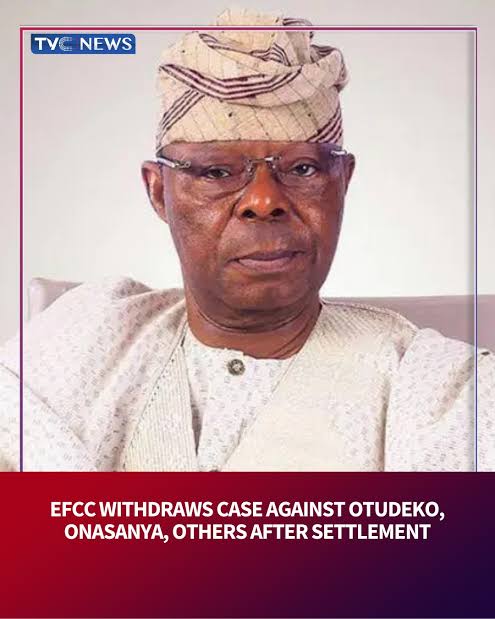
The Human Cost of Exposure
Even without conviction, the ordeal left scars. For a man whose career was built on prestige, simply being charged in court with fraud was reputational damage. Investors reconsidered partnerships. Boards grew cautious. Competitors seized opportunities to whisper. Family members endured the glare of headlines.
In Nigeria’s elite circles, reputation is as valuable as capital. To be tainted by EFCC charges, even if later struck out, is to lose the aura of invulnerability. The paper armor cracks. The tycoon remains wealthy, but never again untouchable.
EFCC’s Document Revolution
Beyond the personal story, the Otudeko case reflected a broader shift in EFCC strategy. For years, critics accused the commission of relying too heavily on dramatic raids and televised arrests. But here, as in other cases around the same time, bank documents carried the fight. Subpoenas to financial institutions produced account-opening packages, detailed statements, credit memos. These were tendered in court, authenticated by bank officials, and admitted as exhibits.
This was no small shift. It signaled EFCC’s growing sophistication. In an era when digital banking leaves permanent trails, when compliance units keep meticulous records, and when regulators demand documentation, corruption cases increasingly rise or fall on paper. In such an environment, no tycoon is fully shielded.
Lessons from Other Billionaire Falls
Otudeko’s ordeal echoes earlier billionaire scandals. Cecilia Ibru, the former Oceanic Bank chief, was brought down by internal loan records showing billions in unsecured insider lending. Jimoh Ibrahim’s empire shrank after documentation revealed unpaid loans across multiple banks. Orji Uzor Kalu, a governor-turned-tycoon, was convicted (before his conviction was later nullified) on the basis of bank transfer records and contract files.
Each case reinforces the same lesson: fortunes that look unassailable can unravel when documents speak. In Nigeria, where oral rumor and political gossip often cloud truth, bank paperwork has become the most unforgiving witness.
What the Document Meant for Nigeria
The document that haunted Otudeko was more than evidence in a fraud case. It was a symbol of a larger tension in Nigeria: between wealth and accountability, between influence and law. It showed that banks, long thought to be safe havens for elite maneuvering, could also become vulnerabilities when regulators compel disclosure.
For ordinary Nigerians, weary of seeing scandals fade into silence, the case was bittersweet. Yes, the EFCC forced repayment of billions. But no, there was no conviction. The cycle seemed familiar. And yet, the visibility of the documents—printed in newspapers, argued in court—kept alive a sense that even the most powerful could be made to sweat.
The Courtroom’s Double Lesson
The courtroom drama did not end with a thunderous verdict but with a quiet fade, like a play whose actors leave the stage before the last line is spoken. Yet even in its unfinished script, lessons lingered.
For the EFCC, the lesson was patience without closure is not enough. They discovered that to summon a billionaire into the dock is to open a spectacle, but unless the case is carried to its last breath, the spectacle risks becoming shadow instead of substance. The commission learned that reputation is built not on charges filed but on cases finished. Their reach was proven, but their grip was tested.
For Oba Otudeko, the lesson was subtler but sharper. The courtroom showed him that a billionaire may command companies, banks, and boardrooms, but once arraigned, he becomes only a name on a charge sheet. Influence may soften outcomes, but it cannot rewrite the memory of standing before a judge. His ordeal revealed that the wealthiest armour can still be pierced by the simple recital of counts in open court.
Thus the trial, though seemingly unresolved, carved its own warning. For the EFCC, endurance must match ambition. For the billionaire, reputation bends faster than balance sheets. And for Nigeria, the lesson remains: even without convictions, the theatre of accountability leaves marks that no settlement can erase.