


Several Nigerian politicians have distanced themselves from long-time benefactors in the years following the 2023 general elections.
Observers say these ruptures often stem from disagreements over appointments, control of party structures, allocation of resources, and perceived attempts to assert independence.
Although political fallout between patrons and proteges is not new, analysts note that the frequency and intensity of such disputes have increased markedly in recent years.
Historically, these rifts often emerged during election periods when both parties sought to assert dominance. Today, conflicts surface months into office, sometimes reshaping entire state and party dynamics.
A case in point is Governor Ahmadu Umaru Fintiri of Adamawa State and former Vice President Atiku Abubakar. Fintiri, widely regarded as having benefitted from Atiku’s networks and resources during his 2023 re-election campaign, has gradually consolidated political authority within the state.
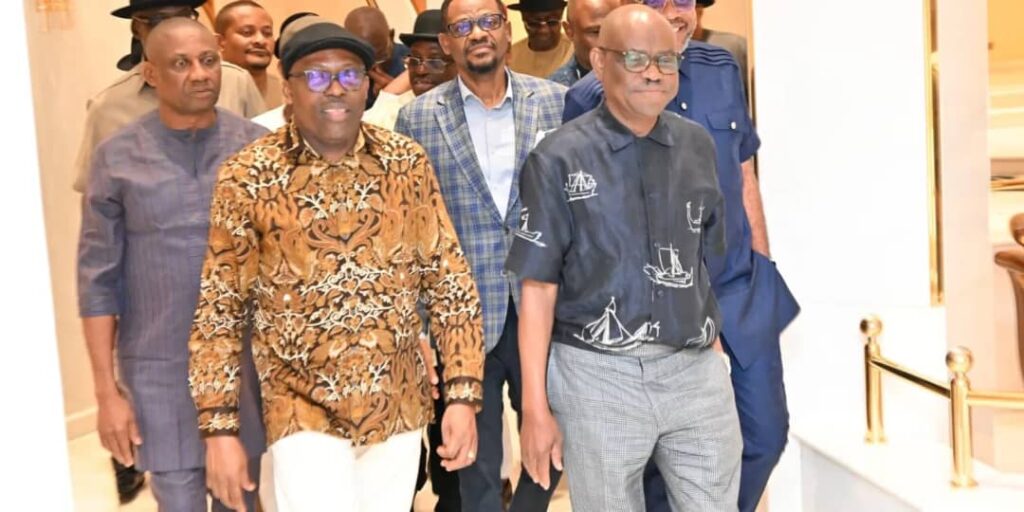
Observers note that Fintiri’s reforms and party restructuring are interpreted as moves to assert his leadership over Atiku’s longstanding influence. Strategic alignments with other political figures, including former Rivers State governor Nyesom Wike, have reinforced this independence.
Speaking on the dynamics, Bello Jada, Assistant National Organizing Secretary for the ADC, said, “Northern governors, particularly from the North East, have sought alternative paths to assert influence rather than remaining under Atiku’s shadow.”
The Adamawa State Commissioner of Information and Strategy, James Iliya, however, dismissed claims of discord, insisting that Atiku remains respected and that his relationship with the state government is intact.
In Kaduna, the relationship between Governor Uba Sani and former governor Nasir El-Rufai has similarly shifted. Sani’s previous tenure as El-Rufai’s adviser and subsequent support for the former governor’s family members underscored their political closeness.
However, tensions emerged over nominations and state probes into El-Rufai’s administration, including allegations of misappropriation. El-Rufai publicly referred to Sani as a mentee, rather than a friend, while Sani cited other national figures as his mentors, marking a clear distancing.
In Kano, former NNPP leaders have also experienced high-profile splits. Abdulmumin Jibrin Kofa, once a key party figure, faced suspension for acting independently of party directives. Similarly, Abdulrahman Kawu Sumaila, influential in mobilising support for the NNPP in Kano South, switched allegiance due to disagreements with party leadership.
Kabiru Alhassan Rurum and Aliyu Sani Madakin Gini, both of whom played critical roles in strengthening the NNPP, have also severed ties with the party after citing marginalisation and lack of recognition for their political contributions.
In the South West, the political fallout between President Bola Tinubu and former Osun State governor Rauf Aregbesola illustrates another dimension of such severances. Once close allies, their relationship deteriorated following the 2022 governorship elections and disputes over party strategy.
Aregbesola now heads the African Democratic Congress (ADC) in the region, actively positioning himself against Tinubu in the lead-up to the 2027 elections. Prof. Olusola Adeyeye, an elder statesman, lamented the breakdown, saying, “Power can be a terrible thing. It is treacherous in Nigeria.”
Benue State provides a similar example. Governor Hyacinth Alia, once a protégé of SGF Senator George Akume, diverged early in office over sensitive appointments. Analysts describe these moves as clear signs that Alia intends to establish autonomy, moving beyond his benefactor’s shadow.
Experts, including Prof. Ezekiel Adeyi of the University of Jos, argue that past political loyalty was more closely tied to ideology, whereas modern political actors increasingly prioritise personal influence over traditional patronage networks.
The recent spate of rifts underscores the evolving nature of Nigerian politics, where former godsons now seek greater autonomy, reshaping party structures, state governance, and broader political alignments.
While some relationships remain publicly cordial, underlying tensions continue to shape political strategies, alliances, and the balance of power ahead of future elections.
Analysts suggest that these dynamics reflect a maturing political landscape, where independent actors challenge entrenched hierarchies while navigating both opportunity and risk.