


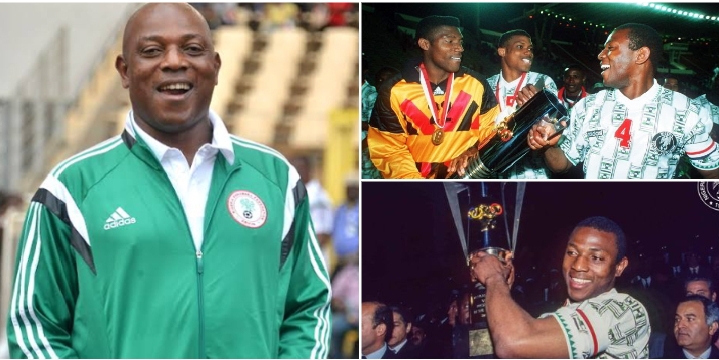
The stadium was never just a field of grass for Stephen Okechukwu Keshi. It was a battlefield disguised in white chalk lines, where the cheers of thousands masked the quieter wars being waged behind dressing-room doors and in the shadowed offices of Nigeria’s football federation.
The armband he wore was not simply stitched cotton; it was a crown contested, a symbol heavy enough to draw envy, resistance, and the kind of scrutiny no ordinary captain would dare invite.
To many, the Super Eagles of the late 1980s and early 1990s were about dazzling goals, iconic celebrations, and a nation’s rise onto the global stage. But for those inside the camp, there was another story — one of whispered alliances, hardened administrators, and a captain who refused to bow to tradition. In a football culture where captains were expected to be mouthpieces of the generals above them, Keshi’s voice rang differently. Louder. Sharper. Unyielding.

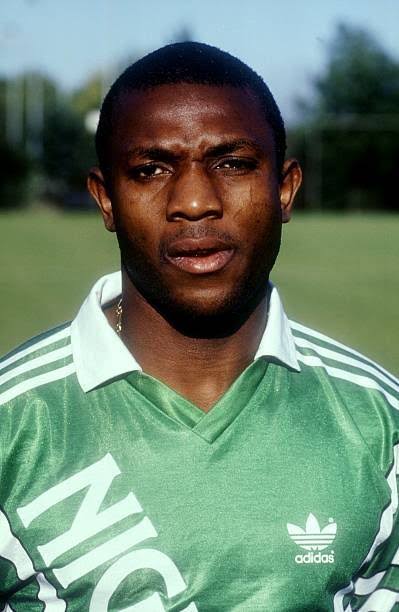
This is the story of how Stephen Keshi transformed the captain’s armband from a token of obedience into a weapon of defiance, a tale of rebellion against football’s established order — and how the man they called the Big Boss forced Nigeria to reckon with a new kind of leadership..
The Young Giant: Origins of the Big Boss
Born in Azare, Bauchi State in 1962, Keshi’s early life was multi-layered: northern roots, schooling among different cultures, fluency in multiple languages, early exposure to Lagos’s competitive environment. From St. Finbarr’s College in Akoka, through New Nigerian Bank (NNB) in Benin, Keshi showed early leadership: not in pomp, but in voice. He did not shy away from speaking what he saw as wrong.
His club form in Nigeria was excellent. But crucially, Keshi’s sense of self was never fully contained by club loyalties or by politics of favour. When the Nigeria Football Association (NFA) under Tony Ikhazoboh punished Keshi (and four others) in 1985 for reporting late to camp, the underlying issue was not just tardiness, but protest — the players from NNB felt they had been wronged: their club match had been scheduled in a way that disadvantaged them; Rangers, their rivals, had no such conflict. Keshi’s stand led to both punishment and opportunity.
In exile of sorts, Keshi moved to Cote d’Ivoire (Stade d’Abidjan), immediately becoming captain despite not speaking French. Language did not stop him. Leadership did not wait for perfect credentials. He took them anyway. That early moment presaged what would come: authority not granted, but seized.
Ascendance on the National Stage: Westerhof and the “Eagles Mafia”
By the late 1980s and early 1990s, Keshi was part of a core group of players who held the Super Eagles together through both triumph and crisis.

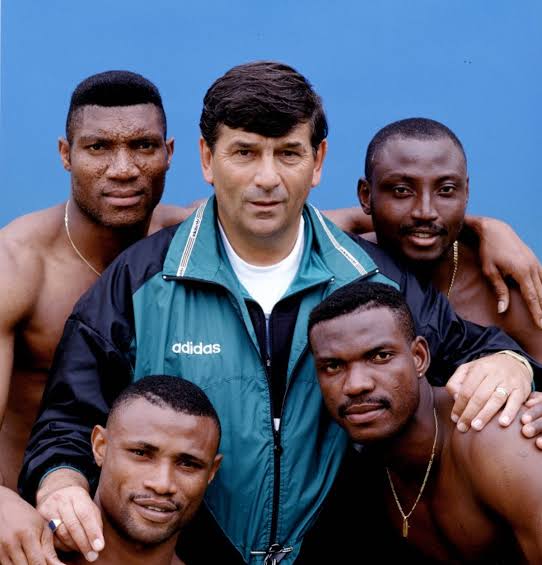
Under coach Clemens Westerhof, this was the golden generation: Jay-Jay Okocha, Rashidi Yekini, Daniel Amokachi, Sunday Oliseh, Finidi George, etc. Keshi’s role, however, went beyond being one of them; he became first among equals, someone whose opinion carried weight. Some observers later claimed that Westerhof consulted Keshi on squad selections, benching decisions, or approach. It earned him the nickname “Big Boss.”
That arrangement was fraught: it blurred lines. It gave rise to tensions: the “old guard” vs. younger players; the administrators who believed player selection and authority rested with them; and the federation, watching this unspoken power structure with equal parts admiration and suspicion. Keshi was more than a captain in name — he was a locus of loyalty, a moral centre for many players, a challenge to any who believed that hierarchy lay only in titles.
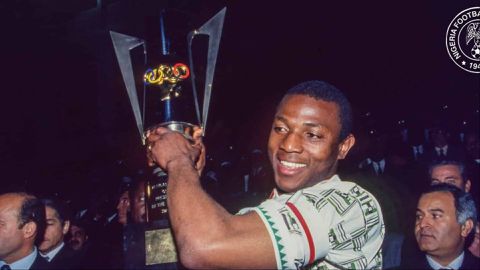
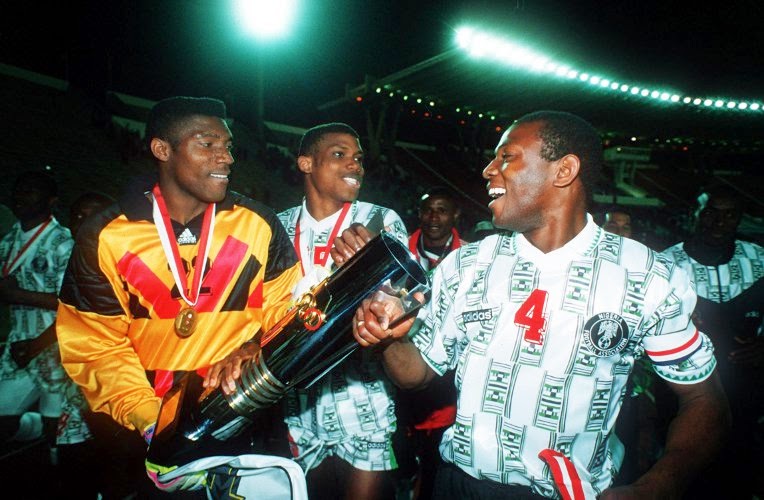
As player-captain, he led Nigeria to the 1994 Africa Cup of Nations in Tunisia. He led them into the World Cup the same year. When Nigeria played, Keshi’s words, his gestures, his very presence carried meaning: responsibility, dignity, sometimes confrontation.

The Tension Holds: Battles with Authority
Every coup, even symbolic ones, requires pressure. Keshi’s was built from many small ones. His refusal to accept all decisions silently, his demand for better preparation or treatment for players, his willingness to clash with coaches or administrators when he believed injustice loomed.
Some episodes stand out. One is the 1985 ban for reporting late — which also exposed how punishing dissent could backfire by pushing talent out, rather than humbling it. Another is his reaction during qualifiers: e.g. in matches where he felt preparation was slack or where players’ welfare was neglected.
Reports suggest that some senior figures in the federation believed Keshi held too much sway — that his “Eagles Mafia” of core players could veto picks, that he was “untouchable.”
Fans also contributed pressure: sometimes cheering, sometimes jeering. There were matches where Estadio Lagos (or other homes) erupted not just against the opponents but at perceived mismanagement. Keshi, as captain, found himself between the roar and the boardroom. Reflection of a larger struggle: who belongs in deciding Nigeria’s football path? The federals, or the field generals?
The Coup as Transition: From Captain to Coach
After hanging up his boots, Keshi did not vanish. Many expected him to fade into nostalgia. But he transitioned into coaching at the international level: Togo, Mali, then Nigeria. That move would prove decisive: he now had formal authority, but past conflicts, past alliances, past expectations travelled with him. The federation’s skepticism, the assumption that he would challenge authority, or demand more, remained.
When he became head coach of Nigeria in 2011, the stage was already set. Nigeria had been underperforming; public frustrations were high. Keshi’s credibility with players, with many fans, was strong. But so was the resistance: from within the NFF, from parts of the media, from rival power centres who saw in Keshi both hope and threat.
Keshi’s 2013 Africa Cup of Nations campaign is illustrative. Early results had been mixed; rumors circulated mid-tournament that the federation wanted to replace him with a foreign coach. That Keshi survived that storm — not because he yielded, but because he stood firm — was a signal.

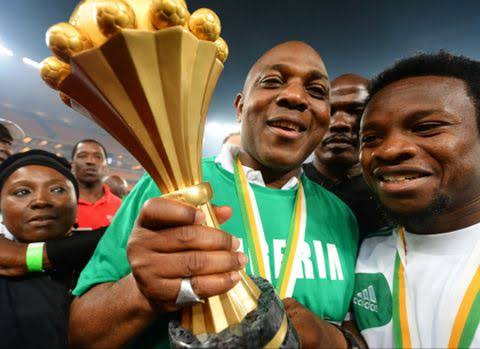
When Nigeria lifted the trophy, they were also vindicating a different kind of authority: not one that bows to bureaucratic pressure, but one that demands respect.
Defining Moments: The Showdowns
To understand Keshi’s captaincy coup in full, a few specific episodes deserve close attention — the moments when things might have broken, when the struggle for power was most visible.
A. The 1985 Ban and the New Nigerian Bank Incident
Keshi and four teammates were suspended by the NFA after arriving late to camp ahead of crucial World Cup qualifiers. They claimed the scheduling of club games had disadvantaged them. The ban was punitive. Keshi left Nigeria, playing in Ivory Coast. Zero compensation, zero apology. But he gained something more: belief from others that resistance mattered.
B. The “Eagles Mafia” Label and Westerhof’s Regime
Under Westerhof, Keshi’s influence grew. Some claimed he functioned as a de facto co-coach: advising on selection, raising concerns, pushing for merit rather than favour. To some administrators, this looked like a parallel power structure. To players, it was sanctuary. The tension never became outright explosive (in public) during those playing years — but the undercurrents were always there.
C. The 2013 AFCON Tournament: Federation vs Coach
Midway through AFCON 2013 in South Africa, with results uncertain, there were reports the Nigeria Football Federation (NFF) was considering replacing Keshi. Perhaps as confidence waned. Keshi, however, defended his position, went on to win the tournament.
After lifting the cup, he announced his resignation briefly — a move that put the federation in a corner. The message was loud: that he would not be toyed with. He got recognition, but not without pushing back.
D. The 2014-15 Power Struggles and the Exit
After the World Cup in 2014, things unraveled. Keshi’s strong personality, clashes over administrative decisions (vacations, meeting attendance, technical committee oversight), and his requests for what he believed was respect and fairness brought him into repeated conflict with the NFF. Eventually his contract was terminated; there were attempts to bring him back. But the damage was done. The Big Boss had defied the tent, but the tent retaliated.

Anatomy of Power: What He Challenged
What made Keshi’s captaincy coup more than just about personality or ambition was what it represented: a challenge to Nigeria’s football power structures. Several features of those structures:
Centralised authority in administrators and senior players: Decisions about selection, funding, training, travel, even welfare were often made behind closed doors by federation officials. Keshi pushed for transparency, fairness, merit.
Deference over dissent: In many societies (including Nigeria), authority is respected; speaking up risks being labelled insubordinate. But Keshi’s leadership meant dissent was sometimes necessary. He offered models of accountability.
Merit vs favoritism: Players and clubs often believed selections were based on influence, not performance. Keshi, both as captain and coach, leaned towards giving chances (when he could) to those who showed performance over pedigree. This naturally disturbed those used to “knights” of patronage.
Player welfare and conditions: From travel to accommodation, from scheduling to pay – many former Nigeria players recount times when they had to beg or fight for what seemed basic. Keshi’s advocacy was not always smooth, but it was consistent.
Cultural identity and boldness: Keshi was openly proud, unafraid to say aloud what many players thought in whispers: that Nigeria could and should do better; that African coaches deserve more respect; that politics should not always dictate football. This voice itself was a kind of power.
The Legacy of the Coup: Gains, Costs, and Paradoxes
When one thinks of a coup, there are winners and losers; there is change, but also price.
Gains:
Cultural shift: Keshi’s captaincy, then his coaching, pushed Nigeria (and often, the NFF, however reluctantly) to consider demands for better standards. Many players who followed him felt empowered to speak up, to demand justice.
Performance: It is not only rhetoric. Under Keshi’s captaincy Nigeria won the AFCON in 1994; under his coaching in 2013. He qualified Nigeria for the 2014 World Cup and took them to the Round of 16. These are real markers.
Opening pathways: He was one of the earlier Nigerians to succeed in Europe, to mentor younger players; to show that a voice from within matters. In his coaching stints abroad (Togo, Mali) and home, his approach influenced a generation.


Costs:
Personal conflict: Many relationships broke. Keshi was often at odds with the federation, with senior figures, with even teammates. The loyalty he commanded among some came with jealousy from others. He was sometimes isolated.
Instability: His coaching periods were marked by abrupt removals, firings, reappointments. This instability hampered consistency. For example, in 2014 he was sacked, then reappointed, then contract disputes, etc.
Public criticism: Some fans found him too difficult, too proud. Some believed he placed ego over unity. Others thought he could have been more diplomatic. But more often, those criticisms reflect the tension created when someone challenges entrenched power.
Paradoxes:
- He needed to work within the structures even as he challenged them. As coach, he was still bound by NFF rules, funding, stakeholders, presidents.
- Some of the qualities that gave him authority also fed the distrust: assertiveness, forthrightness, sometimes what opponents called “ego.” Without those traits, he might have been more easily embraced by all; with them, he became a polarizing figure.
- His successes were sometimes used by his adversaries: they pointed to them to say “look what he’s done,” but also used them to excuse how he handled dissent: “if only he was more humble” or “if only he didn’t challenge us.” So even victory did not always bring peace.
Closing Thoughts: The End of an Era, and Its Echoes
Stephen Keshi died in 2016, aged 54. His passing provoked waves of grief and reflection. His life stands as both an emblem of what leadership under pressure can achieve, and of what can get lost when institutions resist change.
In the years since, echoes of his captaincy coup linger. Players today see what is possible: to push back, to demand better. Administrators (some of them) try to plan more carefully, to dialogue more. And fans remember not only his goals and trophies, but his voice: loud in the locker room, frank in the press, fearless in defining what was acceptable.
Nigeria’s football generals may still have power; the hierarchy may still exist. But Keshi showed that power without legitimacy — without the trust and moral authority that comes with respect — is always liable to challenge. His life is a case study: holding the armband isn’t the end; it’s the beginning of responsibility, of negotiation, of sometimes conflict, and of the chance to reshape the game.