



In Nigeria, the courtroom is more than a room with benches and gavels—it is a battlefield. Here, law is the sword, justice is a fragile flame, and the stakes are often the rights, freedoms, and lives of ordinary citizens. Few families have wielded that sword as fearlessly as the Falanas.
Femi Falana, a human rights lawyer, and his wife Funmi, a women’s rights advocate, have turned legal advocacy into a mission. Across decades, they have confronted security agencies, lawmakers, traditional rulers, and even government policies, seeking to uphold the law where others see risk or impossibility. Their battles have shaped Nigeria’s legal and social consciousness.
This article traces the Falana family’s legal legacy, from their early years to landmark victories, notable setbacks, and their multigenerational influence on Nigerian society.
It is a story of courage, persistence, and moral conviction—a family that treats law not just as a profession, but as a shield for the vulnerable and a beacon for democracy.
Origins of the Falana Legal Legacy
Femi Falana was born in 1958 in Lagos, a city pulsing with energy, contradictions, and opportunity. From an early age, he displayed a sharp mind and a deep sense of justice. Law, for him, was never just a profession—it was a tool to confront oppression and protect the vulnerable.

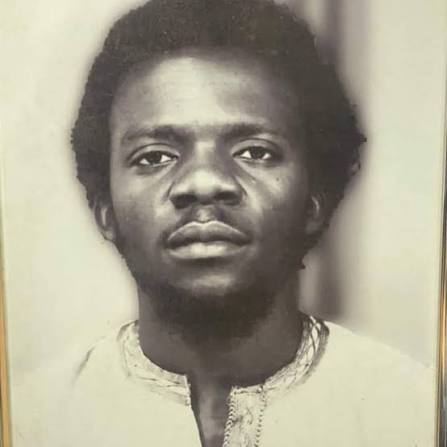
He studied law at the University of Lagos, graduating in 1978, and was called to the Nigerian Bar in 1979. His early career coincided with a turbulent period in Nigeria’s history: military rule, political repression, and widespread human rights violations. The environment was harsh, but it forged a lawyer determined to hold power accountable.
Key elements shaped his philosophy:
Human rights advocacy: Femi Falana saw the law as a shield for citizens against arbitrary detention, abuse, and injustice.
Moral courage: He was unafraid to confront governments or institutions, even at personal risk.
Strategic litigation: His cases were often carefully selected to set legal precedents and influence public policy.
Alongside Femi, Funmi Falana emerged as a formidable advocate for women’s rights. Educated in law, she dedicated herself to cases of domestic abuse, gender discrimination, and social justice. Together, they became a partnership of intellect and principle, a force in Nigerian legal circles.


Their early cases reflected both the risks and rewards of challenging entrenched power:
- Representing citizens detained without trial by military authorities.
- Advocating for press freedom against government censorship.
- Addressing police misconduct and abuses of authority.
The Falana household became more than a home—it was an incubator for ideas, strategies, and activism. Discussions about law, ethics, and society were part of everyday life. This environment would later influence their children, instilling in them a sense of responsibility toward justice and civic engagement.
By the late 1980s, Femi Falana had already earned a reputation as a lawyer who combined legal expertise with moral clarity. His victories and setbacks were both shaping forces, teaching lessons about persistence, strategy, and the realities of Nigeria’s judicial system.
The early years of the Falana legacy can be seen as the forging of a sword: hammering through adversity, tempering skill with principle, preparing for battles that would define Nigerian law for decades.
This chapter sets the stage for the next: Major Legal Victories, where the Falana family’s advocacy made history, reshaping courtrooms and society alike.
Major Legal Victories
Femi Falana’s courtroom career is a chronicle of courage and meticulous advocacy. Over decades, he has transformed the legal landscape in Nigeria, holding governments, security agencies, and institutions accountable. These victories are not just wins on paper—they ripple through society, shaping public consciousness and reinforcing citizens’ rights.
Here are some of the most notable cases that cemented the Falana legacy:
1. Jones Abiri v. Department of State Services (DSS)


Year: 2016–2018
Challenge: Journalist Jones Abiri was detained without trial for over two years.
Strategy: Femi Falana filed a fundamental rights enforcement suit, arguing the detention violated constitutional guarantees.
Outcome: The court ordered Abiri’s release.
Impact: Reinforced press freedom in Nigeria and highlighted the limits of state power.
2. Hon. Abdulmumin Jibrin v. House of Representatives


Year: 2016
Challenge: Suspension of Jibrin after he exposed alleged corruption in the House of Representatives.
Strategy: Emphasized procedural irregularities and constitutional protections for legislators.
Outcome: Suspension nullified; withheld salaries restored.
Impact: Reinforced due process and accountability within legislative bodies.
3. Senator Ali Ndume v. Nigerian Senate


Year: 2017
Challenge: Suspension over unsubstantiated allegations against Senate leadership.
Strategy: Highlighted constitutional rights of lawmakers and parliamentary due process.
Outcome: Suspension lifted.
Impact: Set a precedent for the fair treatment of legislators and due respect for the law.
4. Hon. Rifkatu Danna v. Bauchi State House of Assembly

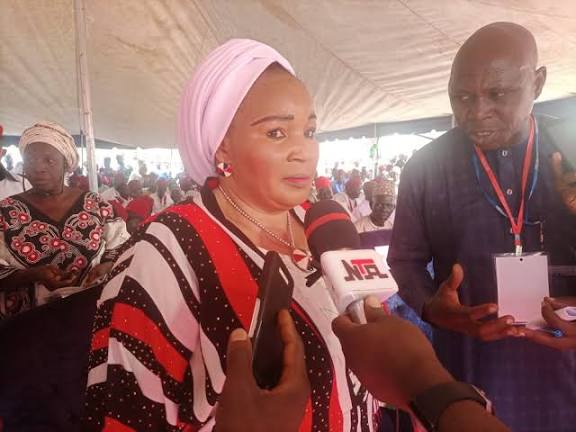
Year: 2012
Challenge: Suspension of Nigeria’s only female legislator in the state assembly for challenging relocation decisions.
Strategy: Advocated for gender equity, minority voices, and constitutional compliance.
Outcome: Suspension overturned.
Impact: Judicial affirmation of women’s political participation and legislative rights.
5. Falana v. Federal Government (CERPAC Fees)
Year: 2019
Challenge: Illegal hike of Combined Expatriate Residence Permit and Alien Card (CERPAC) fees by the Nigeria Immigration Service.
Outcome: Fee increase nullified.
Impact: Reinforced the principle that government agencies must act within legal authority.
6. Falana v. African Union
Year: 2011
Challenge: African Union’s failure to implement decisions from the African Commission on Human and Peoples’ Rights.
Outcome: Case highlighted international accountability mechanisms.
Impact: Set a model for cross-border human rights advocacy.
7. Elder Areola Abraham Love v. Oba Semiu Ogunjobi


Year: 2025
Challenge: Alleged assault by a traditional ruler.
Outcome: Lawsuit demanded accountability and public apology.
Impact: Signaled that traditional authorities are not above the law.
Major Legal Setbacks
Even the most formidable advocates face walls that cannot be immediately surmounted. For the Falana family, setbacks are not mere failures—they are lessons, shaping strategy, resilience, and understanding of Nigeria’s complex legal and political environment.
These moments reveal the limits of law when confronted by entrenched power, bureaucracy, or social and cultural pressures. Yet, each setback strengthened the Falanas’ resolve and informed their approach to future battles.
1. The Amina Lawal Context


Year: 2002–2003
Challenge: Amina Lawal, sentenced to death by stoning under Sharia law.
Falana’s Role: Public advocacy and commentary, raising awareness about human rights violations.
Outcome: Legal intervention required a coalition of lawyers; direct influence was limited.
Lesson: Even principled advocacy can face constraints when law intersects with religion, culture, and politics.
2. Political Interference in Legislative Disputes
Examples: Cases involving suspended legislators like Abdulmumin Jibrin and Ali Ndume.
Challenge: Delays in enforcing court orders, resistance from legislative bodies.
Lesson: Legal victories are insufficient if political systems resist compliance.
3. Challenges in Police and Security Reform
Issues: Unlawful detentions, extrajudicial killings, and slow enforcement of court orders.
Impact: Partial successes, protracted delays, and systemic obstruction.
Lesson: Legal action must be paired with sustained advocacy, media engagement, and public pressure.
4. Electoral Disputes with Ambiguous Outcomes
Challenge: Technical rulings or narrow interpretations that did not fully vindicate clients.
Lesson: Persistence and coalition-building are essential when judicial decisions leave partial victories.
5. Limits of International Advocacy
Challenge: African Union human rights recommendations sometimes delayed or unenforced.
Lesson: International law often relies on voluntary compliance; local follow-up is crucial to ensure impact.
Reflections on Setbacks:
- Even the strongest legal “sword” can bend under systemic and political pressures.
- Setbacks have honed the Falanas’ strategies and deepened their understanding of the law’s real-world limitations.
- These experiences also reinforced the importance of combining courtroom battles with public engagement, media strategy, and coalition-building.
Humanized anecdotes abound: colleagues describe how the Falanas faced threats, intimidation, and bureaucratic obstruction, yet remained steadfast. Their children, observing these struggles, learned that advocacy is a lifelong commitment and that courage often requires patience as much as action.
Setbacks are the anvil upon which the Falana legacy was forged. Each challenge tempered their resolve, sharpened their strategies, and prepared them for the next confrontation. They transformed obstacles into lessons, ensuring that even losses contributed to Nigeria’s broader pursuit of justice.
Family Dynamics and Multigenerational Influence
The Falana legal legacy is not just the story of Femi Falana—it is a family mission. Each member contributes to a broader vision: defending rights, holding power accountable, and shaping Nigeria’s legal and social consciousness.


Funmi Falana, Femi’s wife, is central to this dynamic. A lawyer and women’s rights activist, she has focused on:
- Gender equity and women’s political participation.
- Advocacy for victims of domestic abuse.
- Strengthening legal frameworks for social justice.
Together, Femi and Funmi, both Senior Advocates of Nigeria (SAN) create a partnership of intellect, principle, and strategy. Their work demonstrates that legal battles are rarely won by one person alone; collaboration magnifies impact.
The Next Generation
Their children carry the family values into new arenas. Most prominently:


Falz (Folarin Falana): Uses music and social commentary to highlight civic issues, accountability, and human rights.
Other children: Involved in legal and advocacy-related pursuits, learning through observation, mentorship, and active engagement.
This multigenerational approach ensures the legacy continues beyond courtrooms. It blends law with culture, showing that advocacy can reach millions through both litigation and social influence.
Key Principles of the Falana Family Approach
Collaboration over individual acclaim: Family discussions and strategy sessions enhance the effectiveness of cases.
Integration of law and public advocacy: Legal victories are amplified through media and cultural engagement.
Resilience under pressure: Observing setbacks has taught younger members that persistence is as important as skill.
The Falanas resemble a multi-stranded rope: each individual is strong, but together they are unbreakable. Even when external pressures bend one strand, the combined force maintains integrity.
Their household is more than a home—it is an incubator for justice. Ethical principles, civic duty, and legal strategy are part of daily life. Children grow up witnessing firsthand the costs and rewards of principled advocacy, learning that the pursuit of justice often requires patience, courage, and adaptability.
Through this family dynamic, the Falana legacy extends beyond individual court cases. It is a living system, combining legal skill, public engagement, and cultural influence to shape Nigeria’s understanding of rights and accountability.
Legacy and the Future of Nigerian Justice
The Falana family’s influence on Nigeria’s legal system extends far beyond individual courtrooms. Their work has shaped legal norms, human rights advocacy, and public expectations of justice. Decades of litigation, victories, and even setbacks have left a lasting imprint on the nation.
Impact on the Legal Profession
Mentorship: Younger lawyers study Falana strategies for combining legal expertise with moral courage.
Human rights benchmarks: Cases have set precedents in press freedom, electoral fairness, and protection from unlawful detention.
Institutional accountability: Courts, police, and government agencies are increasingly aware of citizens’ rights and judicial scrutiny.
The family’s victories are instructive: they show how strategic litigation, persistence, and principled advocacy can influence not only specific cases but broader societal norms.
Cultural and Public Influence
The Falana legacy is not confined to law offices or courtrooms. Through public advocacy and cultural channels:
Falz and social engagement: Artistic expression carries the family’s values to millions of Nigerians, reinforcing awareness of civic rights.


Public discourse: Media attention on key cases amplifies lessons about justice, accountability, and civic responsibility.
Coalition-building: Partnerships with NGOs and civil society organizations strengthen the reach and impact of legal action.
This dual approach—courtroom and culture—ensures that victories resonate socially and are not limited to legal texts.
Challenges Ahead
Nigeria’s legal and political environment remains volatile:
- Bureaucratic delays and institutional resistance can slow enforcement of court decisions.
- Political interference continues to test the independence of the judiciary.
- Human rights and social justice campaigns face ongoing pressures from entrenched power structures.
Yet, the Falana family demonstrates that resilience, strategy, and intergenerational continuity can overcome many obstacles. Their multigenerational model—combining legal skill, ethical commitment, and cultural influence—provides a blueprint for sustaining advocacy in challenging environments.
Career Reflection
The Falana family acts as both river and dam in Nigeria’s pursuit of justice. Sometimes they channel the flow of rights through the system, guiding citizens toward accountability. At other times, they block forces that threaten to erode liberties, standing firm against institutional resistance.
Their work embodies the tension between aspiration and reality: the pursuit of justice is ongoing, dynamic, and requires constant vigilance. Through legal victories, cultural engagement, and mentorship, the Falanas have created a living legacy that continues to shape Nigerian law and society.


The Enduring Flame
The Falana family’s through Nigeria’s courts is a story of courage, persistence, and principle. Femi and Funmi Falana, supported by their children, have transformed legal advocacy into a family mission—one that transcends individual victories and speaks to the broader struggle for rights, accountability, and societal reform.
Their story shows that justice is rarely linear. Landmark victories—defending journalists, legislators, and citizens against unlawful detention or abuse—exist alongside setbacks where political, cultural, or institutional pressures constrained outcomes. These dualities do not diminish the family’s influence; they reinforce the reality that principled advocacy often demands resilience and long-term strategy.
As Nigeria continues to navigate democratic, political, and institutional challenges, the Falanas remain a moral and professional compass. Their journey affirms that courage, collaboration, and conviction can bend even the most resistant systems toward justice—and that the flame of principled advocacy, once lit, can endure across generations.