


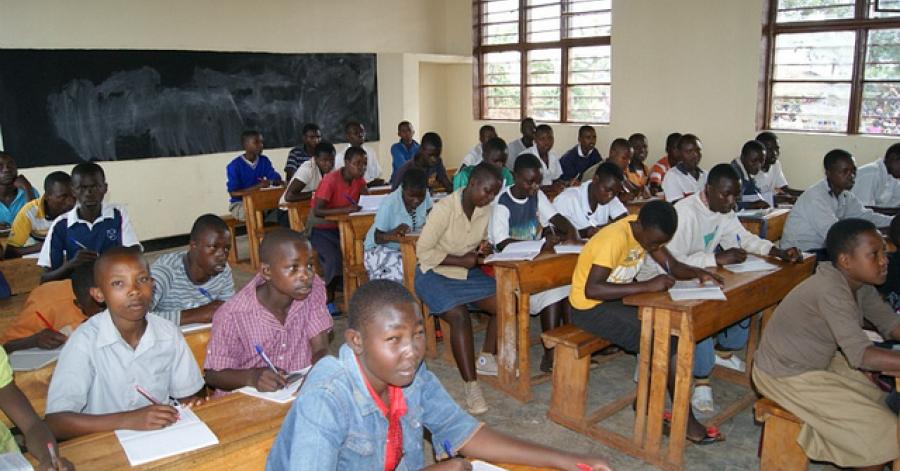
Across Nigeria’s towns and cities, the presence of tutorial centres has become a constant sight, offering young people a second chance at learning and preparation.
These centres, sometimes squeezed into single classrooms or rented halls, attract students with promises of better grades, university admission, or professional advancement.
From Lagos to Kano, and from Port Harcourt to Ibadan, thousands of young Nigerians troop daily into these spaces in search of knowledge.
The growth of tutorial centres has been fuelled by intense competition for limited spaces in higher institutions.
Nigeria’s education system admits fewer than half of applicants yearly into universities, polytechnics, and colleges of education.
The gap has left many students dependent on remedial classes to improve their chances in entrance examinations.
The Joint Admissions and Matriculation Board conducts the Unified Tertiary Matriculation Examination each year, with millions of candidates competing for admission.
In this struggle, tutorial centres act as lifelines, sharpening skills and familiarising students with the examination structure.
Beyond university hopefuls, secondary school pupils preparing for the West African Senior School Certificate Examination also form a large part of enrolments.
Parents, anxious about results, often turn to tutorial centres as supplements to regular schooling.
The rising cost of formal education has also made tutorials attractive, as many centres offer relatively cheaper access to structured lessons.
Some centres extend beyond secondary and tertiary preparation, providing short courses in professional fields such as accounting, information technology, and business management.
The flexible schedules offered by tutorials allow students to combine learning with part-time work, creating opportunities for those balancing education and livelihood.
Teachers in these centres often consist of graduates seeking employment or retirees wishing to share their expertise.
In many cases, the informal setting allows for close interaction between instructors and learners, something not always possible in overcrowded classrooms.
For some, the centres are not only places of study but also hubs of peer bonding and mutual support.
Young Nigerians facing repeated examination setbacks find encouragement in the company of others with similar experiences.
The culture of tutorials has given rise to local economies, with stationery sellers, food vendors, and hostel operators benefiting from the steady flow of students.
In places like Lagos, clusters of tutorial centres have transformed neighbourhoods into bustling academic corridors.
The expansion of digital technology has also found its way into the business of tutorials.
Many centres now blend physical classes with online learning platforms to reach students across states.
Mobile applications, practice tests, and recorded lectures are increasingly offered to cater to a new generation of learners.
Despite their benefits, tutorial centres raise questions about regulation and standards.
The absence of uniform guidelines means centres differ widely in quality, cost, and credibility.
Some operate with registered business licences, while others remain informal and undocumented.
Inconsistent teaching standards pose challenges, with some instructors lacking proper qualifications or training.
Concerns also linger about the heavy financial pressure tutorials place on low-income households.
In certain cities, fees rival those of private schools, leaving parents with difficult financial choices.
The dependence on tutorials has also sparked debates about the effectiveness of Nigeria’s formal education system.
Critics argue that the popularity of extra lessons reflects weaknesses in public schooling, where underfunding and overcrowding persist.
Yet, many parents and students see tutorials as unavoidable in the face of high academic competition.
For university hopefuls who have missed admission more than once, tutorials represent hope for eventual success.
For secondary school pupils aiming for strong grades, they serve as reinforcements to fragile school foundations.
And for unemployed graduates who teach in them, they provide income, purpose, and relevance.
Tutorial centres, therefore, stand at the crossroads of education, economy, and aspiration in Nigeria.
As long as demand for learning and opportunities remains high, their role in shaping the nation’s youth will continue to expand.