


In Nigeria, life moves in currents. Messages are the tiny eddies that carry hopes, frustrations, and secrets from one hand to another. A schoolboy waits for a message confirming his exam results. A market trader counts on alerts for the price of yams. A mother glances at her phone, expecting the ping that tells her child has arrived home safely. The air vibrates with invisible signals, a hum of connectivity that threads through the nation’s pulse.
And then—silence.
Not the quiet of night, not the pause between heartbeats, but the hollow absence of something that was always there. Phones lie idle. Notifications stop. People look up, baffled. Doors that should be open are locked. Lobbies that should be busy with ringing phones are empty. The river of digital life has, for the first time in memory, hit an invisible dam..
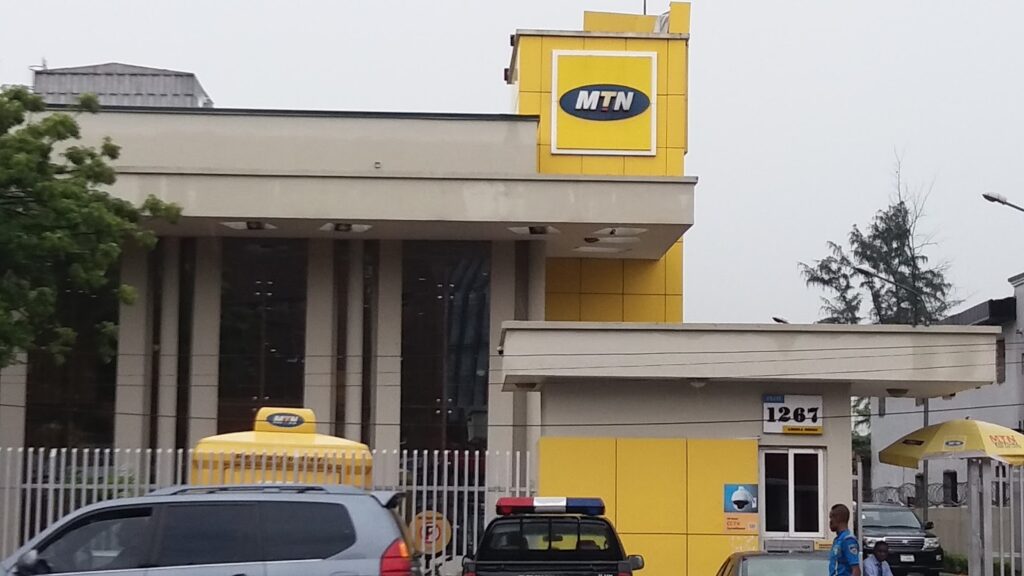
The offices that once buzzed with customer service, ringing phones, and the clatter of keyboards stood silent. Doors closed. Lobbies emptied. A nation’s connection to one of its largest telecommunication networks snapped, if only temporarily, like a river dammed against its will. Citizens, tethered to digital lifelines, confronted a void where once the hum of MTN services flowed seamlessly.
What followed was not just a corporate shutdown—it was a mirror held up to society, reflecting the intricate dance between technology, regulation, and human impatience. This is the story of that pause: how a simple requirement—linking a SIM card to a National Identification Number—ignited frustration, fury, and ultimately, a rare nationwide digital silence.

The Birth of a Giant
In 2001, a new pulse entered Nigeria’s digital veins. MTN Nigeria Communications Plc, a subsidiary of the South African MTN Group, began operations, and with the first call made on May 16, it was as though a new river had been unleashed into the country’s communication landscape. A river that promised to carry voices, messages, and transactions across the vast terrain of Nigeria—rural villages, bustling cities, and everything in between.
The $285 million investment to secure a GSM license was not just a transaction; it was a seed planted in a soil eager for connectivity. The river began quietly, threading its way through the nation, and slowly gathering force as millions of Nigerians dipped into its currents for the first time.
Early Currents and Growth
In its infancy, the river was modest. MTN navigated a landscape riddled with challenges: low teledensity, unreliable electricity, and roads that resisted easy passage. Yet, by 2002, the river had reached half a million tributaries—subscribers who had embraced this new lifeline. By 2004, it swelled to two million, and with every new connection, the river grew stronger, deeper, shaping the topography of Nigerian communication.
MTN’s growth was not merely about numbers; it was the weaving of a networked ecosystem. Each tower erected, each gateway activated, each SIM card sold, became part of a living web, a nervous system connecting communities, businesses, and governance.


Technological Tributaries
The river of MTN Nigeria did not remain stagnant. It branched into tributaries of innovation. In 2007, the introduction of 3G services accelerated the current, allowing data and information to travel faster, more efficiently. In 2016, 4G LTE arrived, turning the river into a torrent of digital possibility.
Beyond voice and text, the river carried financial lifeblood through MTN MoMo, enabling money to flow seamlessly between hands without the friction of cash. It coursed into digital entertainment, education initiatives, and enterprise solutions, each tributary feeding into a broader ecosystem, making MTN not just a telecom operator but a river that sustained economic and social life across Nigeria
MTN in Nigeria: More Than a Network
Since its entry into the Nigerian market in the early 2000s, MTN has grown beyond a mere telecommunications company. It is woven into the fabric of daily life. Farmers rely on SMS alerts for market prices; commuters track rides through mobile apps; students submit assignments over MTN’s mobile data. For millions, MTN is the artery through which daily life flows.
The company’s influence extends beyond connectivity. Its corporate campaigns, community projects, and sponsorships of entertainment and sports make it a household name. For many, MTN is less a company and more a silent partner in life’s milestones—birth announcements, job confirmations, long-distance love letters, and emergency calls. To shut down all its offices is not merely to close a business—it is to interrupt the heartbeat of a nation’s digital existence.
The NIN-SIM Mandate: A Fault Line
The National Identity Number (NIN) scheme, instituted by the Nigerian government, was designed as a safeguard: a way to verify identities, prevent fraud, and strengthen security. On paper, it was a tool of progress. In practice, it became a fault line.
Subscribers were required to link their NINs to their SIM cards. Deadlines were extended multiple times, yet millions remained unlinked. For everyday users, the process seemed bureaucratic and opaque. For others, accessing the required documents was a logistical labyrinth. The tension between regulatory intent and public inconvenience simmered quietly, a pressure cooker of frustration that awaited only the smallest spark.

When MTN, alongside other telecom operators, began disconnecting unlinked lines, the simmering anger erupted. It was not just a technical enforcement—it felt like a personal violation to a society accustomed to near-constant connectivity.
The Day the Offices Closed
On that July morning, MTN staff walked into empty corridors and locked doors. Notices went up: offices nationwide would remain closed for 24 hours. The reasons, carefully worded, cited the safety of employees and customers. But behind the corporate language lay a more human reality: fear of confrontation.
In Festac Town, Lagos, reports emerged of vandalized offices. Customers, frustrated and disoriented, lashed out physically against the faceless infrastructure that had, in their eyes, betrayed them. In Abuja’s Maitama district, similar scenes unfolded—angry mobs, threats, and damaged property painted a picture of a society grappling with the collision of technology, bureaucracy, and human impatience.
The metaphor of a river interrupted returns here. The digital river, once flowing freely through every phone and office, hit an unexpected dam. The dam was MTN, caught between regulatory compliance and the physical wrath of a nation’s citizens.
The Human Dimension: Voices Unheard
Behind the headlines were individuals whose lives had been disrupted. A small business owner could no longer confirm deliveries. A mother could not reach her child in school. A university student, awaiting exam results, found herself in digital limbo. The shutdown transformed abstract policy into an intimate, human story of inconvenience, anxiety, and tension.
Even employees felt the weight. Service staff, often the first point of contact for frustrated customers, faced the dual burden of personal safety and professional responsibility. For 24 hours, the corporate ecosystem paused, revealing the fragility of daily life’s dependence on digital infrastructure.
Nationwide Reactions: When the Digital River Stagnated
As news of MTN’s sudden office shutdown spread, the ripples of disbelief and frustration widened across the nation. Lagos, with its labyrinthine streets and ceaseless traffic, became a theater of human impatience. Commuters, expecting quick SMS confirmations from banks or delivery services, found themselves adrift. WhatsApp groups, once buzzing with updates, fell silent—or filled with anxious messages asking, “Is it just me, or is MTN down?”
In Abuja, Festac, and Port Harcourt, the shutdown catalyzed confrontations that went beyond idle complaints. The human impulse to seek immediate answers collided with the immovable barrier of locked doors. Offices that usually echoed with polite reassurances now stood as fortresses against the rising tide of anger. Some customers, frustrated and desperate, vented through vandalism—smashing glass doors, overturning chairs, scrawling frustration onto walls. The physical manifestations of digital disruption revealed the profound dependency of modern life on connectivity.
Social media became the nation’s courtroom. Twitter, X, Instagram, and Facebook were flooded with firsthand accounts: photos of vandalized offices, videos of agitated customers, and threads dissecting every nuance of the NIN-SIM policy. Memes, sardonic commentary, and viral hashtags like #MTNShutdown2024 painted a vivid picture of societal sentiment. The public’s voice, amplified by the very digital network under scrutiny, became a paradoxical echo chamber: the river had stopped, yet its ripples were more visible than ever.
MTN’s Crisis Management: Navigating a Storm
In the midst of escalating frustration, MTN’s response was methodical but humanized. The company leveraged its digital platforms—apps, online chat support, and call centers—to provide guidance while physical offices remained closed. For a nation reliant on instant access, this was a lifeline, albeit a tenuous one.
Inside MTN headquarters, emergency response teams coordinated communication strategies. Staff were briefed on safety protocols, and security personnel reinforced vulnerable offices. The company faced a delicate balance: ensuring staff safety while managing customer dissatisfaction and safeguarding brand reputation.
Leadership statements emphasized empathy, portraying MTN not as a faceless corporation, but as a caretaker caught in a maelstrom. Press releases reassured customers that services would resume and that reconnection timelines would accommodate all pending NIN linkages. Yet, the public, grappling with disrupted routines, demanded more than statements—they demanded immediate resolution.
Here, the metaphor of a river works again. MTN’s digital river, once unimpeded, had overflowed its banks in the form of public outrage. The company’s crisis management efforts sought to redirect the flow, creating channels of reassurance, guidance, and eventual reconnection.
Regulatory Context: NCC and the Weight of Compliance
The shutdown was inseparable from regulatory pressures. The Nigerian Communications Commission (NCC), enforcing the NIN-SIM linkage, intended to fortify national security and combat identity fraud. On paper, the policy was straightforward: every SIM card must correspond to a verified NIN. In practice, it collided with the lived realities of citizens—bureaucratic hurdles, document verification challenges, and the technological illiteracy of some users.
When disconnections began, protests and office closures were predictable outcomes. NCC’s intervention, eventually mandating temporary line reactivations and extending deadlines, highlighted the tension between policy intent and societal capacity to comply. The shutdown thus became a case study in governance: how regulatory frameworks can catalyze human frustration when execution outpaces public readiness.
The metaphorical river, in this context, represents governance itself: a force attempting to channel societal behavior. When the banks are too narrow, the current spills into chaos. The MTN shutdown was one such spill—a tangible manifestation of policy meeting the unpredictable human element.
Aftermath and Recovery: Reopening the Digital Floodgates
After 24 tense hours, MTN offices began to reopen, cautiously, like floodgates easing a river back into its course. The silence that had dominated lobbies, streets, and online chats gradually gave way to the familiar hum of customer service, the clatter of keyboards, and the ringing of phones. Yet the aftermath was more than operational—it was emotional, societal, and deeply instructive.
Across Lagos, Abuja, and Port Harcourt, citizens returned to MTN offices, some with trepidation, others with relief. The tension of uncertainty had left marks: broken doors were repaired, glass panels replaced, and security presence visibly increased. Staff were trained to manage both procedural queries and the lingering frustration of customers whose lives had been briefly derailed by disconnections.
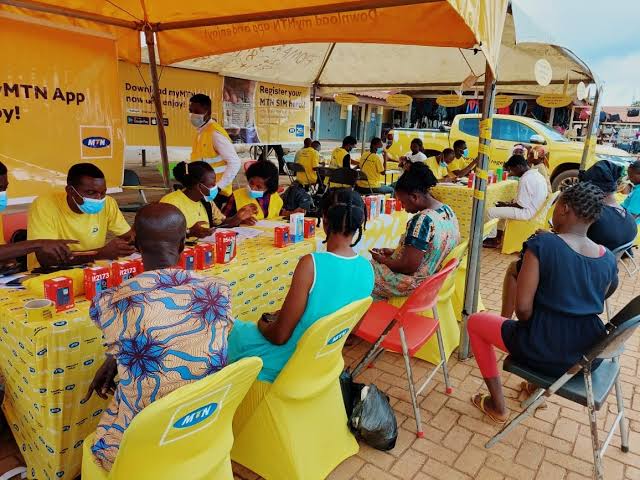
MTN simultaneously expanded its digital support channels. Online chat services, mobile apps, and call centers became conduits for reconnection, instructions for NIN verification, and reassurance. Customers were guided through the linkage process, often for the first time, revealing the digital literacy gap that had magnified the crisis. The shutdown had not only paused service—it had illuminated systemic weaknesses in both corporate and civic infrastructure.
The NCC, recognizing the intensity of public sentiment, extended the NIN-SIM deadline to September 14, 2024. This regulatory flexibility acknowledged the complexity of compliance in a nation of over 200 million citizens, and allowed MTN to manage reconnections without sparking further unrest.
In essence, the river of connectivity resumed—but with new channels, reinforced banks, and a keen awareness that even a brief obstruction can ripple across the human landscape.


Broader Implications: Lessons from a Digital Blackout
The 2024 MTN office shutdown was more than a corporate incident; it was a reflection of the interplay between technology, governance, and society.
1. Dependence on Technology: The shutdown highlighted how digital infrastructure underpins modern life. Disconnections affected commerce, communication, education, and even public safety, revealing society’s fragile reliance on uninterrupted connectivity.
2. Human Cost of Policy Enforcement: Regulatory mandates, even those intended for security, can produce unintended consequences when not aligned with societal capacity. Policymakers must anticipate human reactions, considering accessibility, bureaucratic hurdles, and literacy levels.
3. Corporate Crisis Preparedness: MTN’s response—digital channels, emergency protocols, and staff safety measures—demonstrated the importance of preparedness. However, the physical vulnerability of offices and the intensity of public frustration emphasized the need for holistic crisis strategies that blend technology, human empathy, and operational resilience.
4. Social Trust and Communication: Public trust, once shaken, is difficult to restore. Transparent communication, proactive engagement, and empathetic messaging emerged as crucial tools for companies operating in highly connected societies.
5. Metaphorical Reflections: Just as a river interrupted can flood its banks or erode surrounding land, a disruption in connectivity can overflow into society, revealing underlying vulnerabilities. The shutdown was a stark reminder that technology is not just a service—it is a lifeline interwoven with the rhythms of daily life.
Reflections: What the Shutdown Revealed About Nigeria’s Digital Society
Looking back, the MTN shutdown serves as a prism through which the complexities of Nigeria’s digital society are visible. It illuminated the interdependencies of infrastructure, policy, and human behavior, showing how a single corporate decision can cascade into widespread societal effects.
The incident also underscored resilience. Citizens navigated frustration, adapted to temporary disconnections, and ultimately returned to digital routines. MTN employees, regulatory bodies, and leadership teams all adjusted, demonstrating that disruption, though jarring, can become a catalyst for improvement.
More broadly, the episode invites reflection on the metaphoric river that is connectivity in Nigeria. The river can carry opportunity, education, commerce, and human connection—but when blocked, it floods emotions, exposes societal gaps, and tests the strength of governance and corporate responsibility alike.
The 2024 shutdown was a pause that spoke volumes, a moment when silence itself became a narrative about society, technology, and human patience.