


Nigeria’s struggle with insecurity has become a defining feature of national life, cutting across regions and affecting communities in different ways.
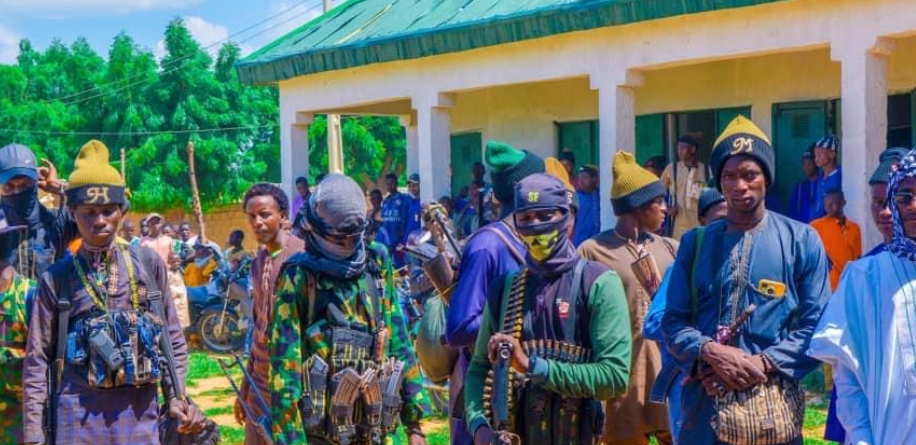
Across rural areas, families face repeated attacks from armed groups who raid villages, destroy homes, and abduct residents.
The fear of abduction has forced many households to pay heavy ransoms, leaving survivors traumatised and communities poorer.
In some regions, efforts to address the crisis have included peace meetings where armed groups sit across from government officials in search of temporary calm.
These approaches often bring brief pauses in violence but rarely produce lasting solutions, as groups return with greater strength and more weapons.
States such as Zamfara, Kaduna, and Katsina have faced years of recurring attacks, with communities subjected to the authority of armed groups who dictate daily life.
The violence has gradually spread into areas once thought safe, including parts of Plateau and Kwara, raising concerns that insecurity is no longer confined to the north-west.
In Plateau, clashes have displaced thousands, while in Kwara, coordinated attacks have unsettled a state previously regarded as secure.
The pattern of temporary truces followed by renewed assaults has created a cycle that leaves citizens questioning the effectiveness of negotiations.
Military personnel continue to confront these challenges, but reports of outdated equipment and inadequate support highlight the difficulties they face on the frontlines.
Despite the courage of soldiers, the imbalance of firepower remains a pressing issue, with attackers often better equipped with motorcycles, drones, and modern firearms.
The contrast between Nigeria’s successes in international peacekeeping missions and its struggles at home has become a point of debate on the state of internal security management.
Accusations of corruption in defence spending have further complicated matters, as funds earmarked for equipment and logistics are often called into question.
Beyond the battlefield, the economic dimension of insecurity has attracted attention.
Funds allocated as “security votes” in several states have become a subject of scrutiny, with concerns over how effectively they are used to protect communities.
The persistence of violence despite huge financial outlays has led many to question whether insecurity has become a system that benefits certain interests.
Some argue that external support could help address gaps in intelligence, technology, and logistics, yet Nigeria has been hesitant to accept such assistance.
While issues of sovereignty are often raised, critics suggest that reliance on foreign expertise has helped other nations without diminishing their independence.
The social cost of insecurity continues to grow, with displaced persons scattered across camps and host communities, struggling to rebuild their lives.
Farmers in many states have abandoned farmlands due to the risk of attacks, raising fears of reduced food production and worsening food inflation.
Transport routes have also become unsafe in several regions, with highways witnessing repeated incidents of kidnappings for ransom.
Schools in parts of the north have been forced to close temporarily, following mass abductions of pupils, denying children access to education.
These layers of disruption—economic, social, and educational—combine to deepen the crisis and stretch the resilience of affected families.
Despite these realities, government responses have often been criticised as reactive rather than preventive, with attacks frequently occurring before reinforcements arrive.
The challenge of balancing negotiations, military action, and social investment has remained unresolved, leaving communities caught in uncertainty.
Some states have invested in local vigilante structures, yet the effectiveness of these groups varies widely depending on training, equipment, and community trust.
The overall picture reflects a nation still searching for a comprehensive approach to a complex and evolving challenge.
Insecurity has shifted from isolated incidents to a widespread national problem that affects daily life, economic progress, and social stability.
The persistence of violence, despite years of policies and interventions, shows that no single solution can address the crisis.
What emerges is the urgent need for strategies that combine security reforms, economic development, and stronger community resilience.
Until then, insecurity will remain a central obstacle to Nigeria’s growth, casting a shadow over its unity and stability.