


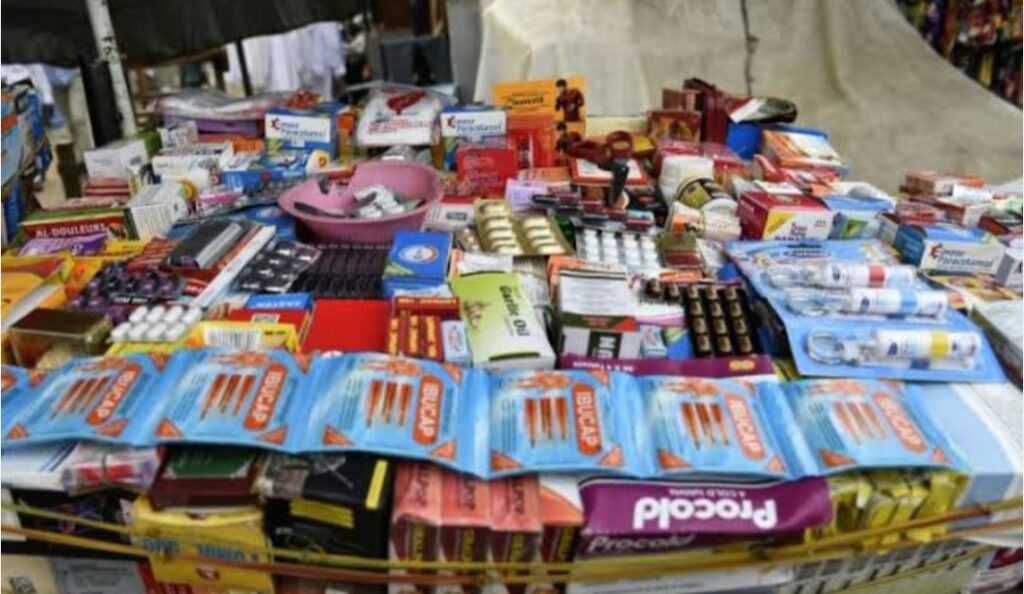
Nigeria faces a growing challenge in the fight against counterfeit drugs, a problem that continues to affect public health and safety.
From bustling open-air markets to informal kiosks in rural towns, fake medicines circulate freely despite laws and regulatory agencies tasked with stopping them.
The World Health Organization has repeatedly ranked substandard and falsified medicines as a serious threat to health systems across developing countries, with Nigeria often highlighted as a major hotspot.
The dangers are real, as counterfeit drugs not only fail to treat illnesses but also cause preventable deaths and complicate medical conditions.
Reports show that antibiotics, antimalarial drugs, and painkillers are among the most counterfeited medicines in circulation, undermining treatment outcomes for millions of Nigerians.
Part of the problem stems from weak border controls, where porous entry points allow fake products to slip into the country undetected.
Nigeria shares long and difficult-to-police borders with several neighbours, making it easier for counterfeiters to exploit gaps in security.
Another factor is the high demand for affordable medicines, as many Nigerians rely on cheaper alternatives in informal markets due to the rising cost of healthcare.
This demand creates an attractive market for counterfeiters, who package substandard products to resemble trusted brands.
In many urban centres, roadside stalls display a mix of genuine and fake drugs, leaving consumers unable to tell the difference.
The situation is further worsened by limited testing facilities and overstretched regulatory institutions that struggle to monitor every batch of medicines entering the country.
The National Agency for Food and Drug Administration and Control has launched several campaigns and raids in recent years, but the scale of the market remains overwhelming.
Analysts note that counterfeit drug cartels are sophisticated, often operating across borders with strong financial networks that make them difficult to dismantle.
The economic cost is also significant, with billions of naira lost annually to the illegal trade, affecting both government revenue and legitimate pharmaceutical companies.
Hospitals and clinics often face increased pressure when patients arrive with complications caused by ineffective or harmful counterfeit drugs.
The challenge extends beyond health, as counterfeit medicine trade has links with organised crime and wider smuggling networks.
Efforts to tackle the problem have included public awareness drives urging citizens to buy medicines only from licensed pharmacies and hospitals.
Technology has also been introduced, such as mobile authentication services that allow consumers to verify products using scratch codes and SMS confirmation.
While these measures have helped, their adoption remains inconsistent, especially in rural areas where mobile coverage is weak and access to licensed pharmacies is limited.
International cooperation has become central to Nigeria’s efforts, with joint operations carried out alongside neighbouring countries to intercept counterfeit shipments.
Global pharmaceutical companies have also been working with local regulators to tighten supply chains and improve drug traceability.
Despite these measures, counterfeit medicines remain resilient in the market, adapting quickly to enforcement strategies.
Experts believe that a stronger judicial response is needed, with tougher penalties for offenders to act as a deterrent.
Currently, prosecutions are rare, and many cases collapse due to weak investigations or corruption in the system.
The persistence of the counterfeit trade raises wider questions about public confidence in Nigeria’s health system.
When patients lose trust in the safety of available medicines, they may turn to unsafe alternatives or abandon treatment altogether.
To address this, stakeholders stress the need for improved healthcare access, affordable pricing of essential drugs, and stronger investment in local pharmaceutical production.
Producing medicines locally at competitive prices could reduce dependence on imports and shrink the market for counterfeits.
The counterfeit trade thrives in environments where regulation is weak, enforcement is slow, and poverty fuels demand.
Nigeria’s battle against fake drugs is therefore not only about enforcement but also about addressing the deeper socio-economic issues that sustain the trade.
Until these gaps are closed, counterfeit drugs will continue to endanger lives, weaken health systems, and undermine public trust.