

The air in Lagos on that November weekend was thick with unease, though most of the city carried on as if nothing was unusual. Traffic still poured through Ikeja’s arteries, traders still called out in the markets, and campaign posters still clung stubbornly to walls despite the rains that tried to peel them away. But beneath the surface, the season was unsettled.
Nigeria in 2014 was a house under strain. Its politics had grown more combative, its security forces more visible, and its citizens more restless. The country was inching toward a general election, and every gesture of power seemed magnified. Nothing appeared ordinary anymore: a convoy speeding through the streets carried more than passengers; a press statement carried more than words; a silence from the seat of authority often carried more than calm.
On the western edge of Lagos, in a district accustomed to commerce rather than confrontation, events were quietly aligning themselves. Few could have predicted that a routine-looking operation would evolve into a national spectacle, or that one address in Ikeja would soon hold the attention of the entire country.
The night passed without fanfare. The dawn that followed would not.
It was November 22, 2014 — a date that would refuse to fade quietly into the calendar.
Nigeria in 2014 — Democracy on Edge
In the months leading up to November 2014, Nigeria’s political temperature was rising like heat trapped beneath a closed roof. The promise of democracy, barely fifteen years old since the return of civilian rule in 1999, seemed caught between maturity and fragility. By then, the People’s Democratic Party (PDP) had reigned for over a decade, presenting itself as the natural party of governance. Its control extended across the executive, the legislature, and much of the state machinery. To many, the PDP was not merely in power; it was power itself.
Yet the sheen of invincibility was wearing thin. The ruling party was no longer the monolith it once claimed to be. Internal wrangling had torn open its seams, defections were bleeding its ranks, and its popularity was sliding under the weight of insecurity and economic unease. The Boko Haram insurgency in the northeast had escalated to levels unseen before, its brutality captured in headlines that ricocheted across the globe. The abduction of the Chibok schoolgirls in April 2014 crystallized a sense of government helplessness, igniting international outrage and domestic fury.
Economically, Nigeria was under pressure too. Oil prices, the lifeblood of the national budget, were falling on the international market. The government’s assurances of stability rang hollow in a country where inflation chewed steadily at earnings and unemployment stalked the youth. The sense of drift was not just economic or military — it was political.

This was the context in which the All Progressives Congress (APC) rose as a new force. Formed only the year before, in 2013, it was a coalition of strange bedfellows — former regional parties and political actors long relegated to the opposition benches. In other times, such alliances might have been dismissed as fragile marriages of convenience. But in 2014, they represented something different: a genuine threat to PDP dominance. The APC spoke the language of change at a time when Nigerians were desperate for it, and its rallies increasingly drew crowds that signaled momentum.
By late 2014, the political contest no longer felt like a routine election cycle. It was shaping into a showdown that could redefine the republic. The PDP still carried the weight of incumbency, with the machinery of state seemingly at its disposal. But the APC carried the weight of popular discontent, sharpening its rhetoric with every misstep of the ruling party. It was not merely a contest of policies; it was a battle for legitimacy.
In such an environment, every move by the government or its security agencies was scrutinized through the lens of suspicion. Nigerians had lived through military regimes long enough to recognize the dangers of institutions bending to partisan commands. Whispers grew louder: was the intelligence apparatus being used to protect the state, or to protect those in power?
This was the mood of Nigeria in 2014 — brittle, restless, and wary. The nation was a house waiting for the sound of glass breaking, knowing it could come from anywhere. And on one Saturday morning in Lagos, the sound came.
Security Agencies and Partisan Shadows
Nigeria’s democracy has always lived with a paradox: its institutions were designed to protect the state but often served the rulers. Nowhere was this contradiction more visible than in the nation’s intelligence service — known in 2014 as the State Security Service (SSS), later renamed the Department of State Services (DSS).
The agency traced its lineage back to the shadows of military rule. In the early years after independence, Nigeria’s leaders, scarred by coups and civil war, built a secret police force modeled on surveillance and control. From the old National Security Organization (NSO) under General Olusegun Obasanjo’s military government to the creation of the SSS by General Ibrahim Babangida in 1986, the agency’s primary mission was framed as defending internal security. In practice, this often meant keeping a watchful eye on dissenters, opposition figures, and any movement capable of unsettling the ruling order.
By the time civilian rule returned in 1999, the SSS had accumulated decades of institutional culture shaped by authoritarianism. Its agents were skilled at monitoring, intercepting, and suppressing political activity, but less accustomed to operating within the boundaries of transparency and accountability that democracy required. Though its legal mandate placed emphasis on intelligence gathering, counter-intelligence, and protection against threats to the state, in reality its work often blurred into partisan territory.
Throughout the PDP’s years of dominance, critics accused the agency of being more loyal to incumbents than to the constitution. Raids on opposition rallies, surveillance of rival politicians, and selective enforcement of security directives contributed to the suspicion that the SSS was less an impartial guardian and more a silent hand of the ruling elite. Even in everyday parlance, Nigerians joked that the “secret police” was never secret about who it served.
By 2014, this perception had hardened. The general election was approaching, and the PDP faced its most serious challenge since the return of democracy. In such a high-stakes environment, every move by the SSS was filtered through a lens of distrust. Opposition leaders frequently accused the agency of intimidation, alleging that their meetings were infiltrated, their offices watched, and their supporters harassed. The ruling party, for its part, defended the agency as merely doing its job of preserving national security.
The broader question loomed: what is the role of security agencies in a democracy where the balance of power is contested? Should intelligence services remain neutral arbiters, or could they act decisively in matters that touched the political domain? For many Nigerians, the answer seemed clear — neutrality was rarely observed.
This is what gave the events of late November 2014 their explosive edge. It was not merely about the legality of a search or the authority of a raid. It was about the history of an institution long seen as entangled with politics. Every action carried symbolic weight, and every operation risked being interpreted as an attempt to tilt the scales of democracy.
In the weeks leading to that day, Lagos buzzed with campaign activity, and the opposition prepared to consolidate its voter mobilization machinery. It was in this climate of suspicion, sharpened by history and inflamed by the stakes of 2015, that the SSS made its move.
November 22, 2014 — The Raid in Lagos
The morning broke like any other in Ikeja, but by mid-morning Acme Road would carry a different weight. Tucked between warehouses and corporate offices stood a building that housed what the All Progressives Congress called its “data center.” To the untrained eye, it was just another office in Lagos’s sprawling commercial district. But to party insiders, it was a nerve center — a hub where information about members was collated, where computers whirred with new voter registration drives, and where digital infrastructure was being built ahead of a historic election.
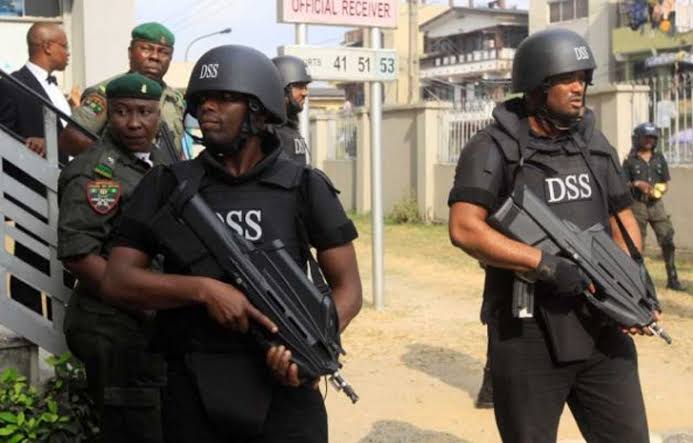
At approximately 6:00 a.m. on Saturday, November 22, 2014, the quiet was broken. Black SUVs rolled into the compound, their tinted windows hiding the faces inside. Men in dark uniforms, armed and efficient, spilled out. They carried the unmistakable presence of the State Security Service. Their entry was swift, their demeanor businesslike. They had come with orders, and those orders were to seize control of the premises.
The agents secured the building, cordoning off the area. Inside, staff present at the time were confronted, questioned, and ordered aside. Computers were unplugged, servers disconnected, and documents gathered into sacks. What might have looked like ordinary office equipment was treated as potential evidence. By the end of the operation, truckloads of hardware had been hauled away under the watchful eyes of officers who offered little explanation beyond the official line of “national security concerns.”


The SSS would later declare that it had received intelligence suggesting that illegal voter card cloning was taking place within the building. The opposition, according to the agency, was tampering with sensitive electoral materials, creating databases that could compromise the integrity of the 2015 polls. For the SSS, the raid was framed as a preventive strike — an effort to secure Nigeria’s democracy against manipulation.
The APC saw it differently. To the party’s leadership, this was no neutral enforcement of security law. It was, in their view, a deliberate attack on the very machinery they had built to challenge the ruling PDP. The building, they argued, was not a den of electoral fraud but a legitimate membership registration hub. The raid, in their telling, was nothing short of sabotage — a blatant attempt to cripple their operations and intimidate their supporters ahead of an election that could finally break PDP’s grip on power.
Almost immediately, word of the raid began to spread. Journalists rushed to the site, civil society observers raised alarms, and ordinary Nigerians debated the meaning of what had just occurred. In an era before instant viral videos, the imagery was still powerful: heavily armed agents storming an opposition party office in Africa’s largest democracy just months before a landmark election.
The symbolism was impossible to ignore. Here was the state’s most secretive security institution raiding the headquarters of the main opposition in the nation’s commercial capital. Whether or not the allegations of card cloning held water, the optics told their own story. For critics, it was confirmation of their worst fears — that state power was being bent to partisan advantage. For defenders of the action, it was a sign of vigilance, proof that security services were ready to protect Nigeria’s electoral process from subversion.
By midday, Acme Road had become a stage where the fragile lines between democracy and authoritarian reflexes were being tested. The confiscated computers and servers were driven away, leaving behind only empty desks and unanswered questions. But the raid did not end with the departure of the agents. Its true weight was only beginning to register.
That Saturday morning operation would quickly grow into a national controversy, one that transcended the walls of the seized office. In the days to follow, it would dominate headlines, fuel partisan rhetoric, and stir public suspicion. What seemed like a routine security intervention had transformed into a political earthquake.
Fallout and Political Earthquake
The raid on the APC office in Lagos did not fade quietly into the background. Within hours, the story had jumped from Ikeja’s streets into the nation’s bloodstream. Radio stations buzzed with speculation, newspapers scrambled for headlines, and political commentators filled television studios with urgent debate. What might have been written off as a technical security operation quickly escalated into a defining test of Nigeria’s fragile democracy.
For the All Progressives Congress, the response was swift and furious. Party leaders condemned the raid as an assault not just on their organization but on the very principles of electoral fairness. They insisted that the building on Acme Road was being used to register party members — a lawful and transparent exercise. By storming the premises and seizing equipment, the APC argued, the State Security Service had effectively attempted to cripple their preparation for the forthcoming election. The opposition framed it as a deliberate act of intimidation orchestrated by the ruling PDP through its control of the security apparatus.
The PDP, however, adopted a different narrative. Spokesmen for the ruling party suggested that the raid demonstrated the seriousness of security agencies in guarding the integrity of the electoral process. If indeed voter cards were being cloned, they argued, then the SSS had acted in defense of democracy. For PDP loyalists, the controversy could be turned on its head: it was the opposition that stood accused of attempting to compromise the system.
Caught between these two narratives were ordinary Nigerians, whose trust in institutions was already stretched thin. Many citizens, weary of years of corruption scandals and political double-dealing, saw the raid as further proof that security agencies were never truly neutral. To them, the timing was too precise, the target too strategic, and the justification too convenient. In the eyes of skeptics, this was the state reminding the opposition who still controlled the levers of power.
Civil society organizations quickly joined the conversation. Human rights groups raised alarms about the misuse of security agencies in partisan disputes. Lawyers questioned the legality of storming a political office without clear judicial backing. Editorials in major newspapers described the raid as “a dangerous precedent” and “a stain on Nigeria’s electoral process.” The symbolism of armed men hauling away servers from an opposition office in Lagos only months before a general election was not lost on anyone.
The courts soon became a battleground. The APC challenged the legality of the raid, seeking judicial redress for what they described as an unlawful invasion. Legal briefs and counter-briefs flew between lawyers representing the party, the electoral commission, and the security services. Though court proceedings were slow, the very act of dragging the case before judges amplified the raid’s political significance.
Perhaps the most dramatic fallout, however, was not legal but psychological. For millions of Nigerians, the raid confirmed suspicions that the state’s intelligence service was willing to tip the scales of the coming election. It hardened partisan divides: APC supporters grew more resolute in their conviction that the ruling party would stop at nothing to retain power, while PDP loyalists doubled down on portraying the opposition as desperate schemers. In this atmosphere, every rumor gained traction, every move by security agencies was interpreted as political theater, and every silence from Abuja was treated as deliberate.
The raid also gave the APC a potent weapon. In the months that followed, party leaders repeatedly invoked the Ikeja incident as evidence of persecution. Rallies were filled with rhetoric about how the opposition was being targeted for daring to challenge the status quo. This narrative of victimhood was politically powerful; it cast the APC not merely as an alternative to the PDP but as a movement struggling against oppression. In a democracy where distrust of authority ran deep, that narrative resonated widely.
For the PDP, the raid became a double-edged sword. Whatever advantage may have been gained from disrupting the opposition’s operations was overshadowed by the perception of overreach. The images of heavily armed operatives carrying away APC computers and servers lingered in the public imagination. In politics, optics often matter more than legality, and here the optics were devastating.
By the end of November, the raid had transformed from a localized security operation into a national political earthquake. It exposed the deep fractures in Nigeria’s democracy, where institutions meant to stand above partisan battles were instead dragged into the arena. It also reshaped the terrain of the 2015 campaign, giving the opposition a rallying cry and leaving the ruling party to explain why its intelligence service appeared to be entangled in the contest.
The raid on Acme Road was over in a matter of hours. But its echoes would last for months — right up to the ballot box.
The Road to the 2015 Elections
By December 2014, the raid on the APC’s data center had already become a permanent fixture in campaign speeches, newspaper editorials, and public debates. What might have been remembered as a curious security operation in Ikeja instead hardened into a symbol — a shorthand for everything wrong with Nigeria’s fragile democracy.
The opposition recognized the value of this symbolism. At rallies from Lagos to Kano, APC figures evoked the image of their office being stormed by armed agents. They portrayed themselves as victims of state persecution, a party so threatening to the establishment that the ruling government resorted to desperate measures. This narrative was politically golden: it rallied supporters, emboldened undecided voters, and painted the APC as the true underdog in a contest framed as David versus Goliath.
The ruling PDP, for its part, struggled to control the fallout. The party’s communication machinery attempted to frame the raid as a legitimate response to potential electoral malpractice, but the effort never quite stuck. The optics of a heavily armed raid, carried out by a security agency widely seen as loyal to the presidency, were simply too powerful. Every attempt to justify the action was countered by opposition voices insisting that the state had been weaponized.
Meanwhile, the Independent National Electoral Commission (INEC) was thrust into the center of the storm. Already under intense scrutiny for its handling of voter card distribution, INEC now faced added pressure to prove its impartiality. Questions arose about whether the servers seized from the APC contained legitimate membership data, cloned voter cards, or something else entirely. The lack of transparency surrounding the evidence only deepened suspicions on all sides.
Outside the political class, civil society groups amplified the concerns. Pro-democracy activists argued that the raid revealed how fragile Nigeria’s electoral infrastructure remained, barely two decades after military rule. Analysts warned that if one party believed security agencies were being used as political weapons, then the legitimacy of the entire election could collapse. For ordinary Nigerians, especially the youth, the incident was yet another reminder that power in Nigeria often operated in the shadows, behind closed doors, and through institutions that were supposed to remain neutral.
As the weeks turned into months, the raid receded from headlines but not from memory. It became one thread in a larger tapestry of discontent: Boko Haram’s insurgency raging in the northeast, economic pressures as global oil prices collapsed, and a growing sense that Goodluck Jonathan’s administration had lost its grip on the nation’s challenges. In this climate, the November raid served as a warning flare — proof, in the eyes of many, that Nigeria’s democracy was tilting dangerously toward authoritarian reflexes.
The APC exploited this perception with surgical precision. In speeches, Muhammadu Buhari, the party’s presidential candidate, promised to restore dignity to Nigeria’s institutions. He framed the election as a choice between continuity of abuse and the possibility of reform. The imagery of the Ikeja raid — men in dark uniforms storming opposition servers — was never far from the subtext of his rhetoric.
The PDP, meanwhile, attempted to counter with its own narrative: that Buhari represented a return to authoritarianism, a throwback to Nigeria’s military past. But the APC’s message of persecution carried more emotional weight. Nigerians had seen the images, read the headlines, and heard the stories. In politics, perception often outpaces policy, and the perception that the ruling party had overreached was impossible to erase.
By February 2015, the raid had become more than a footnote. It was a symbol of the stakes. To APC supporters, it was evidence that change was necessary to save democracy itself. To PDP loyalists, it was a test of resolve in defending their hold on power. To the undecided middle, it was a troubling reminder of how fragile Nigeria’s institutions remained in the heat of political competition.
When the elections were postponed by six weeks in early 2015 — officially due to security concerns in the northeast — many Nigerians immediately recalled the raid. The suspicion was instinctive: if the opposition’s servers could be seized in Lagos, what else might be orchestrated to tilt the field? Every move by the government was now interpreted through the lens of distrust seeded by that November morning in Ikeja.
By the time Nigerians finally went to the polls in late March, the atmosphere was electric. The raid had done more than disrupt an office; it had disrupted faith in the neutrality of the state. But paradoxically, it also energized voters, particularly those who feared the machinery of government would crush dissent. Rather than suppressing opposition enthusiasm, the incident inflamed it. Lines at polling stations were filled with citizens who said they were determined to vote because of — not despite — what had happened.

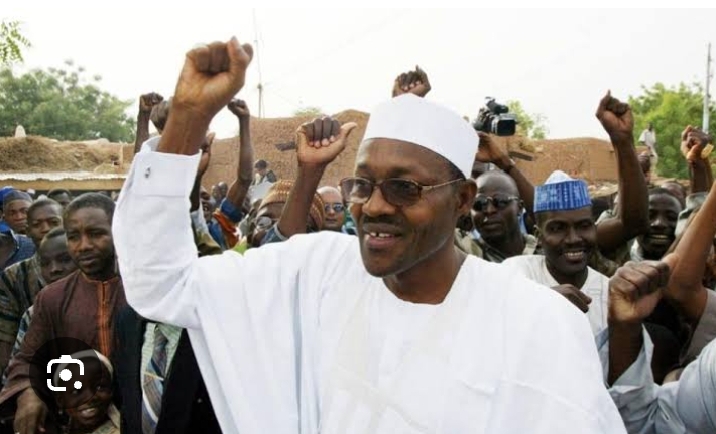
The result was historic. For the first time in Nigeria’s modern history, an incumbent president was defeated at the ballot box. Muhammadu Buhari’s victory was not just a triumph of campaign strategy, demographics, or circumstance; it was also a verdict on how Nigerians had interpreted moments like the Ikeja raid. Many saw it as the ultimate example of the arrogance of incumbency, and they punished it at the ballot box.
The November 22 raid had begun as a technical operation by the SSS, justified in the language of electoral integrity. But by the time the ballots were counted, it had become something larger: a political metaphor, a rallying cry, and, ultimately, one of the sparks that helped ignite a transfer of power unprecedented in Nigeria’s history.
The Legacy of November 22
History rarely announces itself in real time. What begins as a local incident, confined to one office building and a handful of actors, often expands into something larger once hindsight sharpens its outlines. The SSS raid of November 22, 2014, fits precisely into that pattern. On the day itself, it seemed like a dramatic but possibly fleeting episode. Yet in the years since, it has hardened into one of those symbols that refuse to fade, a reminder that Nigeria’s democracy has always lived on the edge of contest and control.
The legacy of the raid begins with perception. For opposition supporters at the time, it confirmed the fear that state institutions could be mobilized against political rivals. For ruling party loyalists, it was a warning that opposition momentum could provoke extraordinary measures. For neutral observers, it revealed the precarious balance between power and legitimacy in a system still learning the habits of democracy. That tension has never entirely disappeared.
In the years following the 2015 transition, the raid became part of Nigeria’s political folklore. It was cited in speeches by those who argued for reform of security agencies. It appeared in newspaper retrospectives on the 2015 election. And, perhaps most significantly, it entered the vocabulary of everyday political discussion. When Nigerians debated the impartiality of the police, the EFCC, or even INEC, they often reached back to November 2014 as a cautionary tale: proof that institutions can be bent to political will when accountability is weak.
Institutionally, the raid deepened calls for the depoliticization of the Department of State Services. Though the DSS continues to play a powerful role in Nigeria’s security architecture, critics argue that its reputation was stained by the perception of partisan action in 2014. Subsequent administrations have promised neutrality, yet the memory lingers, shaping public skepticism whenever the agency intervenes in political affairs.
The raid also influenced the broader conversation on digital infrastructure in Nigerian elections. In 2014, the idea that political parties could operate membership databases and digital registration systems was still relatively new. The seizure of servers raised urgent questions about data privacy, voter manipulation, and the vulnerability of political information. A decade later, as parties increasingly rely on digital tools, the Ikeja raid serves as an early reminder of how technology intersects with power — and how fragile the protections around that technology remain.
Perhaps the most profound legacy of November 22, however, lies in its emotional impact. For many Nigerians, the images of a political party’s office being stormed by security agents crystallized a sense of fragility in the democratic project. If such a raid could occur just months before a landmark election, what else might be possible? That anxiety did not vanish with the 2015 transfer of power. It persists in every rumor of surveillance, every report of political intimidation, every whisper that institutions still serve the presidency before the people.
The raid also shaped political strategy. Future opposition parties studied the APC’s response — its ability to turn the incident into a narrative of persecution and resilience. They learned that in Nigerian politics, victimhood can be a potent tool, one that mobilizes emotion and transforms vulnerability into strength. In a system where access to state resources tilts the playing field, the capacity to claim moral high ground becomes invaluable.
Over time, the November 22 raid has taken on a paradoxical meaning. To the ruling party of the day, it was a mistake, an incident better forgotten or reframed as a misunderstood necessity. To the opposition, it was a gift — an event that demonstrated their struggle against the machinery of incumbency. To historians of Nigerian politics, it is a hinge moment, one of the sparks that lit the fire of the 2015 election and carried Buhari to power.
Even now, its echoes remain. When security agencies raid journalists’ offices, detain protesters, or seize documents from political actors, Nigerians recall 2014. The comparison surfaces almost automatically: “This is another Ikeja.” That instinct reveals how deeply the raid is etched into public consciousness, not simply as an isolated event but as a template for how power can be abused.
Ten years later, Nigeria continues to grapple with the questions the raid raised but never answered. Can security agencies truly be insulated from politics? Can parties build digital infrastructures without fear of intrusion? Can voters trust that the institutions of democracy serve the people rather than the incumbents of the day? These questions remain unresolved, yet their urgency is a direct inheritance of that November morning in Lagos.
The raid did not end a political party; it did not prevent an election; it did not topple the republic. But it changed the fate of a contest, and in doing so, it changed the trajectory of Nigerian democracy. It reminded citizens that the line between civilian rule and authoritarian reflex can be perilously thin. It reminded institutions that every action carries symbolic weight. And it reminded politicians that power, once abused, can rebound at the ballot box with devastating force.
Ultimately, the SSS raid of November 22, 2014, was more than an operation. It was a metaphor, a parable, and a warning. Its true legacy is not confined to Ikeja, nor to the APC, nor to the 2015 election. It resides in the uneasy consciousness of a nation that knows its democracy is still young, still fragile, and still vulnerable to the shadows of power.
Final Thoughts: Shadows of November
The night of November 22, 2014, in Lagos, did not topple a government or cancel an election. Yet in hindsight, it was one of those hidden turning points, a reminder that power in Nigeria often declares itself not in parliaments or courtrooms but in the quiet corridors of security agencies. What seemed like a raid on a party office became, in the imagination of millions, a raid on the very possibility of fair competition.

The legacy of that moment lies in the paradox it created. An act intended to weaken an opposition instead fueled its resolve. A gesture of state power meant to intimidate ended up energizing. What should have been a show of control became an unmasking of fragility. The raid entered the bloodstream of the 2015 campaign, becoming shorthand for arrogance, excess, and the weaponization of institutions. When the ballots were finally cast, Nigerians did not only vote on policy promises or partisan loyalties; they also voted against the shadows that raid had cast.
Nearly a decade later, the memory remains unsettled. Each time security forces appear at the doorstep of journalists, activists, or rival politicians, Nigerians recall November 22. It has become a reference point — a story about how quickly democratic assurances can give way to authoritarian reflex, and how institutions meant to protect the republic can instead tilt its balance.
But its meaning is not only cautionary. It is also instructive. The raid’s unintended consequence — energizing citizens and emboldening opposition — reveals that power, no matter how overwhelming, is never absolute. The state can raid servers, seize machines, or occupy offices, but it cannot so easily extinguish the collective memory of a people determined to defend their vote.
The SSS raid that changed the fate of a political party overnight thus belongs not only to history but to Nigeria’s living present. It is a reminder to the powerful that every action carries echoes far beyond its moment, and a reminder to citizens that democracy is defended not once, but continually — in ballot lines, in courtrooms, in protests, and in memory.
In the end, November 22, 2014, was more than a raid. It was a metaphor for Nigeria itself: a nation where power and fragility coexist, where shadows loom over progress, but where the will of the people, when pushed, can transform darkness into a turning point.