


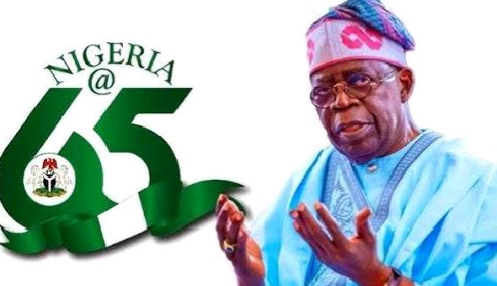
Sixty-five years after Nigeria hoisted its green-and-white flag into the October sky, the air around the nation still feels heavy with unfinished beginnings. It was supposed to be the age of maturity, a stage when the state could stand assured of its own rhythm, when history would settle into stability and progress. Instead, on this milestone anniversary, the President’s words fell like a sudden tolling bell: we are racing against time.
There was something almost spectral in the phrase. It was not a celebration of years gone by, nor a triumphal declaration of achievements amassed. It was, instead, an acknowledgment that time—this most silent of resources—was slipping, grain by grain, through the nation’s fingers. But whose time, really, was being measured by this hurried clock? Was it the time of the government, faced with restless expectations and a shrinking political horizon? Was it the time of the citizens, carrying daily burdens that made each sunrise a test of endurance? Or was it the time of the nation itself, a collective hourglass that had already spilled far too much promise into the sand?
To answer that, one must walk not just through the corridors of the present but through the echoing hallways of Nigeria’s past, where every independence anniversary has carried both celebration and sorrow, memory and warning. Because when a country reaches sixty-five, the question is no longer about youthful stumbles—it is about legacy, about whether the journey is leading forward, circling endlessly, or slowly running out of breath.

Nigeria at Sixty-Five — The Weight of Years and the Burden of Expectations
Sixty-five is an unusual age for a nation. It is not so young that excuses of immaturity still carry weight, and not so old that decline can be explained away by the natural fading of strength. It is, instead, an age of reckoning—a midpoint where the past casts long shadows and the future still demands clarity.
For Nigeria, sixty-five years since independence is not just a marker of time passed but a mirror held up to the promise once imagined. In 1960, when the Union Jack was lowered and the green-white-green flag was hoisted at the Race Course in Lagos, the atmosphere carried the scent of new beginnings. The leaders of that era spoke of greatness, of a destiny shaped by size, resources, and an unyielding spirit. The word giant was attached to Nigeria almost as a birthright, as though population and oil reserves alone could guarantee a place among the world’s most respected nations.
But sixty-five years have a way of stripping away illusions. They carry wars, coups, reforms, and recessions; they gather the weight of unfulfilled manifestos and broken promises. They accumulate the fatigue of citizens who have celebrated too many independence days without seeing the deeper meaning of freedom. Each anniversary becomes less about fireworks and more about reflection: what have these decades truly given?
At sixty-five, the measure is not only in GDP or infrastructure but in the lived experiences of ordinary people. How many children grow up with access to quality education? How many families eat without anxiety about tomorrow’s meal? How many graduates feel their years of study lead naturally into opportunities? These questions hang heavier now than they did in earlier decades because patience, like time, does not stretch infinitely.
The burden of expectations at sixty-five is twofold. For the leaders, it is the pressure of history—to deliver not just on campaign promises but on the unfinished business of generations. For the citizens, it is the weight of hope—to continue believing that the country can still fulfill the destiny spoken of at its birth. Both burdens are carried uneasily, sometimes clashing, sometimes overlapping, but always present, shaping how Nigeria walks into each new year of its existence.
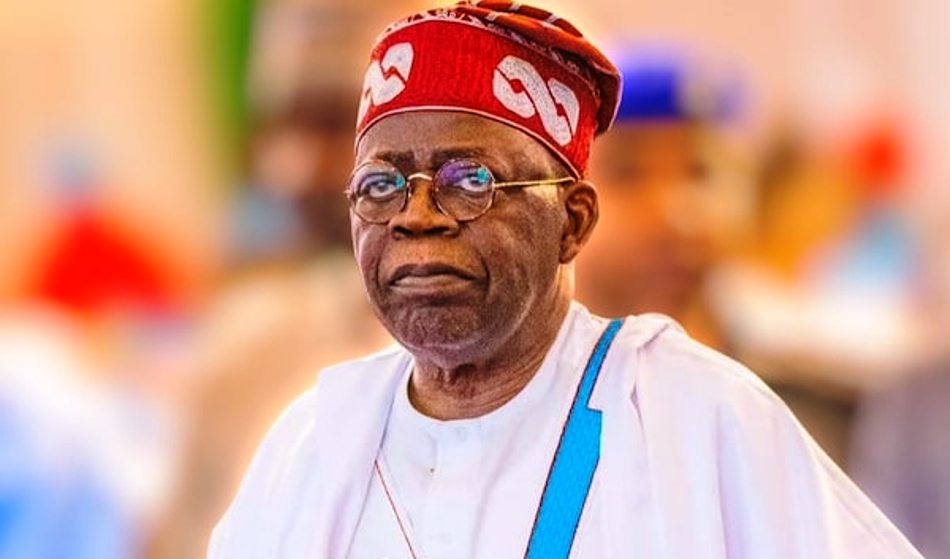

So when President Tinubu said the nation was “racing against time,” he was not speaking into an empty room. He was speaking into a chamber already echoing with decades of similar urgencies, of leaders before him who also claimed the clock was ticking, who also spoke of limited time to achieve transformation. And yet, each year, Nigerians still ask: transformation for whom, and on whose timeline?
The Language of Urgency — How Nigerian Leaders Have Always Spoken of Time
From the earliest days of independence, Nigerian leaders have often framed their rule in the language of urgency, as though the nation were forever running a race against an invisible opponent. Time has been the recurring metaphor, invoked to justify action, delay, or sacrifice.
In the 1960s, Prime Minister Tafawa Balewa spoke of Nigeria as a country standing at the edge of destiny, warning that the new nation had little time to waste if it was to unite its vast ethnic and regional differences. Barely six years later, General Yakubu Gowon, presiding over a nation fractured by civil war, declared that reconstruction and reconciliation must happen “in the shortest possible time.” Time, in that context, was not just about healing; it was about survival, about preventing the wounds of war from becoming permanent scars.
In the 1970s, with the oil boom swelling national revenues, leaders like General Murtala Mohammed and Olusegun Obasanjo spoke of urgency in terms of modernization. Roads had to be built, refineries constructed, industries established—before the blessing of oil wealth slipped away. The oil, they knew, would not last forever. But as years passed, much of that urgency dissolved into missed opportunities and wasted surpluses.
The civilian return of 1979 carried the same tone. President Shehu Shagari promised rapid development, a sense of acceleration after years of military rule. Yet by the early 1980s, economic downturns and corruption slowed that pace, and the language of time became one of excuses rather than delivery. The coup that followed in 1983, led by General Muhammadu Buhari, framed itself explicitly as a race against decay. He introduced his “War Against Indiscipline,” declaring that Nigerians could no longer afford the luxury of wasted minutes.
Every administration since then has, in its own way, borrowed this vocabulary. Ibrahim Babangida’s “transition without end” in the late 1980s and early 1990s was justified by the idea that the nation needed more time to prepare for democracy. Sani Abacha, in the 1990s, spoke of urgency in security terms, insisting that time was needed to stabilize the country before political freedoms could be restored.
When civilian rule returned in 1999, President Obasanjo again picked up the same thread. He declared Nigeria at a crossroads, urging citizens to tighten belts because time was short for structural reforms. President Umaru Musa Yar’Adua, with his Seven-Point Agenda, framed his tenure as a timeline of targets, though ill health cut that clock short. Goodluck Jonathan spoke of Nigeria as a nation running to catch up with global progress. And Muhammadu Buhari, in his long-awaited presidency, returned to the imagery of time almost obsessively, describing a nation that had “wasted decades” and could not afford more delay.
Now, in 2025, President Bola Ahmed Tinubu inherits this same lexicon of haste. His words about “racing against time” do not emerge from nowhere; they are part of a long continuum of Nigerian leaders who have invoked urgency as both promise and shield. The danger, however, is that when urgency is repeated too often without corresponding results, it begins to lose its power. Citizens grow weary of hearing that time is running out when, in their daily lives, nothing seems to move forward.
Yet the persistence of this language reveals something deeper: Nigeria is a country that has always felt it was late to its own destiny, a nation forever conscious of the gap between its potential and its reality. Each leader, stepping into office, feels the weight of that gap pressing down, and instinctively reaches for the clock as a way of framing the challenge. Time becomes both the enemy and the measure, the explanation and the excuse.
At sixty-five, this cycle raises a sobering question: if every generation of leaders has said that time is short, then what has all this time been used for?
The President’s Hourglass — Tinubu’s Race Against Political and Economic Timelines
When President Tinubu declared on Nigeria’s 65th Independence Day that the nation was “racing against time,” the words carried a double weight. On the surface, they spoke to the country’s collective destiny, but underneath, they revealed something more personal: the shrinking window of his own presidency.
Every administration is bound by a political hourglass. The grains of sand fall steadily, regardless of circumstance, and for Nigerian presidents, the first term often feels like a sprint against perception. Tinubu, sworn in during May 2023, has now crossed into the middle of his tenure. By 2027, he must face either the verdict of re-election or the judgment of history. In between, the sands fall quickly, measured not only in years but in how much tangible progress citizens can point to in their daily lives.
For him, the urgency is sharpened by context. He inherited a country weighed down by a cash-strapped treasury, spiraling inflation, fragile security, and a currency under pressure. His earliest decisions—removing fuel subsidies and floating the naira—were framed as necessary sacrifices, reforms that could not wait. They were presented as choices demanded by time itself, as though the economy’s hourglass had already run dangerously low.

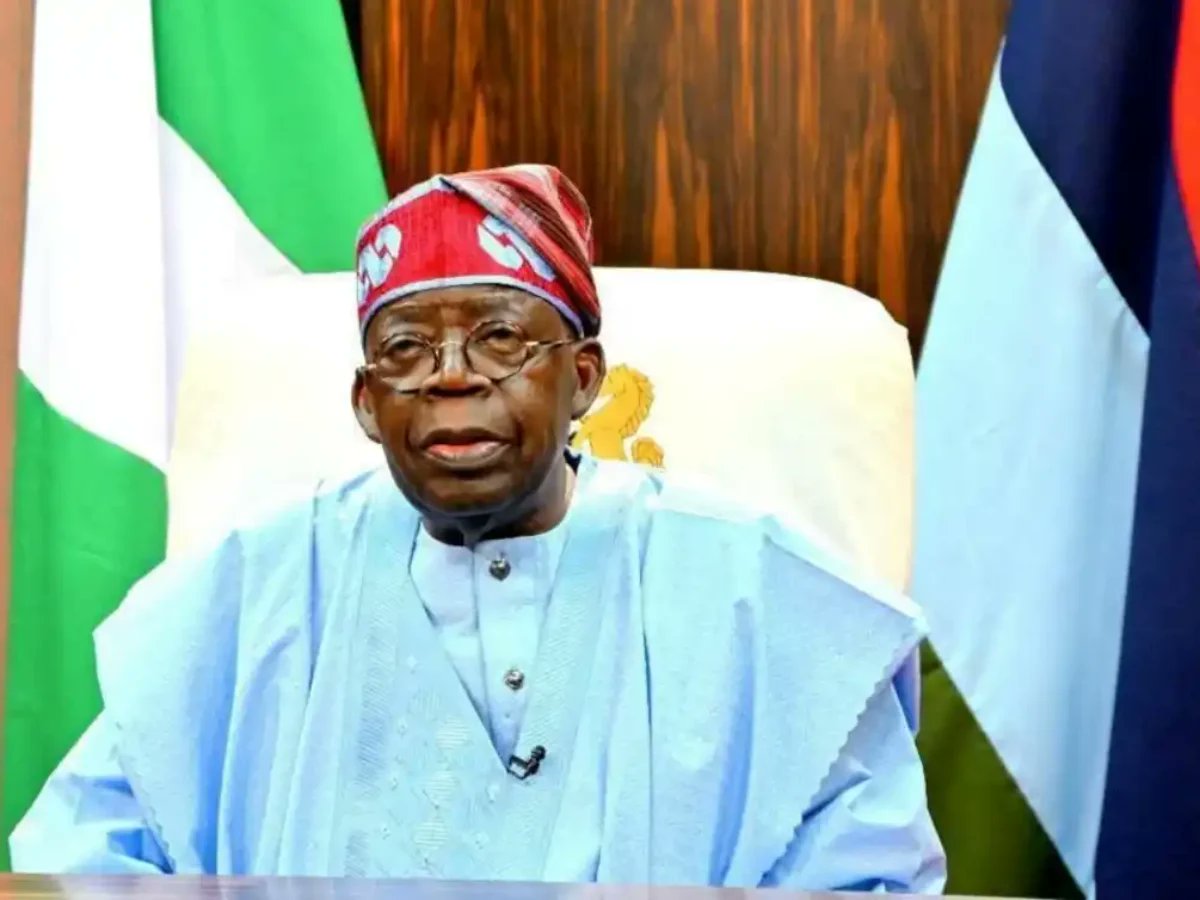
But this political clock is not simply about economics. It is also about legitimacy. Tinubu came into office with a contested mandate, his victory challenged in courts and doubted in sections of the public sphere. For a leader in that position, time is more than a measure of governance—it is an opportunity to prove that his presence at the helm is not just legal but necessary. Each reform, each policy, is not only an attempt to fix Nigeria’s challenges but also a race to inscribe his name in the ledger of indispensable leaders before the public grows impatient.
The economic timeline he faces is even less forgiving. Global investors, multilateral lenders, and domestic businesses all operate with their own calendars. Ratings agencies release reports at set intervals. Loans and debt obligations mature with unyielding deadlines. Citizens themselves, enduring rising prices, measure patience not in years but in months and weeks. To be told to endure today in the hope of a brighter tomorrow requires belief that tomorrow will actually arrive—and arrive soon enough to matter.
Thus, Tinubu’s phrase about “racing against time” is not simply rhetorical; it is a reflection of the bind in which he finds himself. His government cannot afford the luxury of slow reforms, yet fast reforms risk destabilizing already fragile households. He must deliver change quickly enough to maintain political credibility, but carefully enough not to ignite unrest. It is a balancing act on a clock whose hands never pause.
Yet beyond his personal horizon, there is the larger national clock—the one that began in 1960 and continues to tick relentlessly. While Tinubu may think of his time as a four-year or eight-year stretch, Nigeria’s time is measured in generations. The challenge lies in reconciling these timelines: how to ensure that policies crafted for immediate political survival also serve the deeper trajectory of a nation already six and a half decades into independence.
This is the true paradox of leadership at sixty-five. The personal clock of a president is urgent and short. The clock of a nation is long but unforgiving. To speak of “racing against time” is to acknowledge both, but it also demands clarity: is the race about securing a presidency, or about securing a country’s future?
Citizens’ Clock — How Ordinary Nigerians Experience the Passing of Time
If the President’s hourglass is measured in terms of political cycles and economic reforms, the clock of ordinary Nigerians ticks to a far more intimate rhythm. It is not marked by policy announcements or budgetary deadlines but by daily survival—by the cost of food in the market, the arrival or absence of electricity, the chance of making it safely home through a stretch of dangerous road.
For the ordinary citizen, time is felt first and foremost in the body. The mother who wakes before dawn to fetch water that still does not flow in her neighborhood counts the hours by the weight of her bucket. The commuter stuck in Lagos traffic counts it in minutes lost each day to congestion, in hours that could have been spent with family or invested in work. The farmer in Benue or Zamfara measures time by the seasons, aware that insecurity can undo a year’s labor in a single night of violence.
Education is another calendar altogether. Parents measure years by their children’s progress—or lack of it—in schools disrupted by strikes or underfunding. For students, time is stolen by the suspension of classes, by semesters extended indefinitely, by certificates that come too late to be useful in a fast-moving job market. In these stolen years, many watch peers abroad surge ahead while they remain stranded in waiting rooms of uncertainty.
For workers, especially in the informal economy, time is inseparable from earning. The street vendor knows that every day without customers is not simply lost profit but a threat to that evening’s meal. The young graduate turned ride-hailing driver measures his weeks in rides, his months in survival income rather than career advancement. For pensioners, each new year becomes a test of endurance, waiting for arrears or benefits that often arrive too late.
But perhaps nowhere is the passage of time felt more keenly than in Nigeria’s generational story. Parents often speak of their children with a blend of hope and regret—hope that the next generation will live better, regret that decades of sacrifice have not brought the improvements they once imagined. Young people, in turn, measure time differently: by the opportunities that seem perpetually delayed, by dreams deferred in a country where talent often outpaces infrastructure, and by the decision many face of whether to wait longer or to leave altogether.
The dissonance is striking. While leaders speak of four-year terms and long-term reforms, citizens live on a clock of immediacy. Hunger is daily. Rent is monthly. School fees come termly. Inflation erodes savings in real time. To be told to “wait” or “endure” is to be asked to surrender yet more years to a system that has already consumed too many.
This difference in clocks explains much of the tension between governments and citizens. What seems like urgency to a leader—reforms over a few years—often feels like delay to a citizen, whose life cannot be paused while waiting for national progress. In this gap between political time and personal time lies much of Nigeria’s frustration at sixty-five.
For the people, the race against time is not abstract. It is the race to secure dignity before old age, to achieve stability before despair sets in, to grasp opportunity before it disappears forever. It is a clock that rarely pauses, and unlike government timelines, it does not allow for postponements.


The Nation’s Clock — Nigeria’s Historical Hourglass at Sixty-Five
Beyond the personal clocks of leaders and citizens, there is the larger clock of the nation itself. At sixty-five, Nigeria stands not just in the middle of its own story but in the context of global history—a timeline that judges countries not by their potential but by what they have become.
When independence came in 1960, Nigeria was seen as a rising power. With its vast population, fertile land, and newly discovered oil, many believed it could emerge as the African giant that would anchor the continent politically and economically. Comparisons were often drawn with nations like Malaysia, Indonesia, and South Korea—countries that, at the time, faced similar challenges of poverty, colonial legacies, and fragile institutions.
But history has its own merciless way of measuring progress. In the decades since, many of those peer nations have surged forward, building industries, expanding infrastructure, and raising living standards. South Korea, once scarred by war, became a hub of technology and innovation. Malaysia and Singapore transformed into models of efficient governance and economic growth. Meanwhile, Nigeria, despite its resources, has struggled to escape cycles of crisis.
This divergence makes the nation’s clock feel especially urgent at sixty-five. Each passing decade that does not deliver transformation deepens the gap between Nigeria and the nations it once stood alongside. The metaphor of “catching up” has become harder to sustain, because the race is not only about moving forward—it is about closing a widening distance.
Nigeria’s hourglass also reflects internal struggles. Every milestone year since independence has carried both celebration and grief: the civil war of the 1960s, the coups and counter-coups of the 1970s and 1980s, the dashed democratic hopes of the 1990s, the fragile civilian stability of the 2000s, the insurgencies and economic crises of the 2010s and 2020s. Each era has added layers of resilience, but also scars. At sixty-five, the weight of these accumulated crises shapes how the nation perceives its own time—less as an open road ahead, and more as an unfinished business long overdue.
Yet history also shows that national clocks are not fixed. Countries have reinvented themselves even at later stages. China’s dramatic rise did not begin until the late 20th century, long after its revolutionary struggles. Rwanda, scarred by genocide in the 1990s, restructured itself into a case study of rapid recovery within a single generation. Nations, like individuals, can choose turning points, even when the hourglass seems nearly empty.
For Nigeria, the question is whether sixty-five will be remembered as just another marker on a slow march of lost opportunities, or as the threshold where a new urgency finally translated into lasting change. The stakes are not only about economics but about cohesion: whether a nation of over 200 million people, spread across ethnic, religious, and regional divides, can continue to hold together while racing against the tide of history.
This is why the President’s words resonate so deeply. To say Nigeria is “racing against time” is to admit that the hourglass is not endless. A country cannot always defer its promises to the next generation. At some point, history will render its judgment. At sixty-five, Nigeria stands closer than ever to that judgment, carrying both the burden of its past and the weight of its future.
The Clock of Generations — Youth and the Search for Belonging
Among the many clocks that measure Nigeria’s journey, none ticks louder than the clock of its youth. More than half of the country’s population is under the age of twenty-five, a statistic that should be a blessing. In other societies, such a youthful majority has powered waves of innovation, productivity, and cultural dynamism. In Nigeria, it has instead become a paradox—an immense reservoir of energy and talent, too often left untapped.
For young Nigerians, time feels like a currency stolen before it is even spent. Many begin life already negotiating disadvantages—schools without sufficient teachers, hospitals without medicine, communities without steady power. By the time they reach their teenage years, their calendar is often disrupted by realities beyond their control: strikes that shut universities for months at a stretch, examinations postponed indefinitely, opportunities narrowed by outdated systems.
The sense of delay becomes a defining feature. A degree that should take four years stretches into six or seven. Internships come late, if at all. Career paths seem less like roads and more like waiting rooms, where doors open only for the well-connected. Marriage, home ownership, and financial stability—all the traditional markers of adulthood—are postponed further into the future. For many, their twenties and early thirties feel less like the flowering of potential and more like a suspended animation, a constant negotiation with time wasted.
Yet this generation is far from passive. The rise of social media has given young Nigerians new instruments of voice and visibility. Movements like EndSARS were not only about policing but about reclaiming time itself—the demand to live without the fear that one’s future could be cut short in an instant. Online, they organize, critique, and create. In music, fashion, film, and technology, Nigerian youth are reshaping global culture, even when their own country offers little structural support.
But alongside this defiance lies another form of urgency: the rush to leave. Migration has become a generational response, a way of converting stolen time into reclaimed opportunity. The “japa” wave, as it is popularly called, reflects both hope and despair—hope that life can be better elsewhere, despair that Nigeria does not yet offer the same. Doctors, engineers, tech professionals, academics—all join the steady stream leaving the country, building lives that might have been possible at home if time had not been squandered.
This migration creates a strange duality. On one hand, it reduces immediate pressure within Nigeria, offering a release valve for ambition. On the other, it deepens the national urgency, because every skilled departure is also a loss of investment, a subtraction from the country’s future. A generation cannot be asked to wait indefinitely; if the clock at home refuses to move, they will find clocks that do.
At sixty-five, this generational clock is perhaps Nigeria’s most critical. Nations that fail to channel the energy of their youth often face instability. Frustration becomes protest, protest can harden into disillusionment, and disillusionment, if left unresolved, can fracture the social contract. But nations that recognize youth as partners rather than burdens can harness decades of vitality.
The President’s declaration of “racing against time” thus takes on a sharper meaning in this context. For the young, the race is not just about abstract national progress—it is about the race to secure their future before it slips irretrievably into exile or exhaustion. The true test of leadership at sixty-five will be whether Nigeria can finally align its national clock with the urgent pulse of its youth.
The Global Clock — Nigeria in a World That Does Not Wait
Nigeria’s race against time is not confined to its borders. At sixty-five, the nation exists in a world that moves with relentless acceleration. Global economies, technological innovations, and geopolitical shifts operate on clocks that are unforgiving. While Nigeria grapples with its internal hourglasses, the rest of the world is already running past it.
Consider technology. Countries that invested early in digital infrastructure, renewable energy, and information technology have surged ahead. South Korea, Estonia, and Singapore offer examples of nations that understood time as both resource and currency. They moved decisively, knowing that delays would compound into lost decades. Nigeria, despite its talent and human capital, often finds itself reacting rather than acting—catching up after the fact, innovating under pressure, and watching opportunity slip through the fingers of those too long delayed.
Trade and investment operate under similar pressures. Foreign investors do not wait for political transitions, economic reforms, or infrastructure projects to mature. They measure opportunities in quarters and fiscal years. If Nigeria’s reform timeline lags, capital flows elsewhere, and the cost is not only lost investment but diminished global confidence. Every postponed policy, every delayed execution, accelerates the perception that time in Nigeria moves differently from time in the global economy—and rarely in sync with opportunity.
Security is another axis of global time. The international community observes, often impatiently, how nations respond to insurgencies, piracy, and organized crime. Every delayed intervention, every slow judicial response, is interpreted as weakness or indecision. In an era when conflicts spill over borders and instability can ripple across continents, Nigeria’s internal time constraints have external consequences. The hourglass is no longer purely domestic; it affects alliances, trade relations, and global credibility.
Migration underscores this pressure as well. Every young professional, every skilled worker who leaves in search of faster, more predictable clocks, reinforces the reality that the world does not wait for national deficiencies. Brain drain is simultaneously a symptom of internal delay and a signal of global acceleration. While other countries race ahead with educated populations, Nigeria’s potential is dispersed, its momentum slowed by domestic constraints.
Even climate and natural resource management operate under strict global timelines. Rising temperatures, desertification, and fluctuating rainfall patterns demand swift, forward-thinking action. Countries that respond promptly can mitigate losses and gain strategic advantage; those that hesitate face compounding challenges that may become irreversible. Nigeria, sitting atop vast natural and human resources, cannot afford the luxury of delayed adaptation. The stakes are immediate, measurable, and unforgiving.
Thus, the President’s metaphor of racing against time has an international resonance. It is not merely about domestic reforms or political survival; it is about aligning Nigeria’s pace with the tempo of the world stage. At sixty-five, Nigeria’s survival, growth, and influence are inseparable from its ability to move in sync with global time—acting decisively, anticipating trends, and seizing fleeting opportunities before they vanish.
Yet this reality also magnifies domestic tension. Citizens’ clocks, politicians’ clocks, and the national clock must all harmonize while contending with external pressures. The world is moving fast, but if internal dissonance persists, Nigeria risks lagging—not for decades, but for generations, as time lost is rarely recovered.
Synchronizing the Clocks — Can Nigeria Align Leadership, Citizens, and Global Tempo?
Nigeria at sixty-five faces a challenge few nations experience: multiple clocks, each moving at its own pace, yet all demanding attention simultaneously. The President’s political urgency, citizens’ daily struggle, the youth’s impatience, and the world’s relentless tempo create a complex network of overlapping timelines. The question is whether these disparate rhythms can ever harmonize—or whether they will continue to collide, generating friction instead of progress.
Synchronizing the clocks begins with leadership. Policies can no longer be abstract exercises in rhetoric; they must speak directly to citizens’ lived realities while anticipating global pressures. Infrastructure projects, for instance, are not simply statements of capability—they are investments in the nation’s ability to compete internationally. Reforms in education, healthcare, and industry must reduce the time citizens spend struggling with basic needs, thereby freeing human potential to meet broader ambitions.
The second element is trust. When ordinary Nigerians see that government timelines align with their personal urgency, patience can be rebuilt. Citizens’ clocks slow when they perceive predictability, reliability, and visible outcomes. Conversely, when reforms stall or promises are repeatedly deferred, the disconnect deepens. Alignment requires transparency and accountability—leaders acknowledging that citizens’ hours are as valuable as political cycles.
Youth engagement is equally vital. With over half the population under twenty-five, the generational clock cannot be ignored. Programs that provide education, entrepreneurship opportunities, and meaningful participation do more than empower—they synchronize the youthful pace of ambition with national objectives. Ignoring this alignment risks a continuation of the “brain drain,” where time invested in talent is lost to foreign shores.
At the international level, synchronization demands foresight and agility. Global markets, security concerns, and climate imperatives do not pause for domestic politics. Nigeria’s leadership must anticipate trends, act decisively, and maintain credibility in global arenas. Only by moving in step with these external pressures can the nation convert potential into influence rather than letting opportunity slip irretrievably.
Yet, achieving harmony among these clocks is no simple task. Historical inertia, bureaucratic inefficiency, and social fragmentation act as drag on the system. Each citizen’s experience of delay feeds into collective impatience, which can disrupt political timelines. At the same time, external pressures compress internal deadlines, creating a feedback loop where time feels increasingly scarce.
Still, there are examples of partial synchronization. Local initiatives in Lagos and other states have demonstrated that targeted reforms can accelerate citizens’ daily clocks while contributing to broader economic growth. Private sector innovation, youth-led technology hubs, and diaspora partnerships have shown that when different layers of society operate in unison, progress can be achieved more swiftly than top-down mandates alone allow.
At sixty-five, Nigeria’s challenge is clear: the nation must learn to orchestrate these overlapping timelines rather than letting them operate in conflict. Success will not be measured solely in policy milestones or GDP growth, but in the lived experience of Nigerians—the hours reclaimed from inefficiency, the years restored to opportunity, the decades finally harnessed toward the promise first imagined in 1960.
Synchronization is not a metaphor—it is survival. The nation’s next sixty-five years will depend on whether leadership, citizens, and the world’s tempo can find common rhythm before more time is irretrievably lost.
Reflections on Legacy — What Sixty-Five Years Teaches About Time, Leadership, and Hope
Sixty-five years is a long span for a nation, yet in historical terms, it is barely the start of adulthood. For Nigeria, the anniversary is both a moment of reflection and a call to action, a reminder that time—once lost—is difficult to reclaim, but never entirely irretrievable.
Leadership is inseparable from time. Every generation of Nigerian leaders has faced the same paradox: the urgency of today versus the patience required for lasting change. Tinubu’s race against time mirrors this continuity, yet also embodies a unique personal dimension. His presidency reminds us that the clock is both personal and collective—leaders’ decisions accelerate or slow the nation’s rhythm, and every hour spent in indecision or mismanagement is a moment of opportunity lost.
For citizens, sixty-five years represents both endurance and deferred dreams. Millions have experienced hardship, insecurity, and systemic inefficiencies, yet they have persisted. Their clocks, while marked by daily struggle, also pulse with resilience, creativity, and hope. In markets, classrooms, farms, and tech hubs, ordinary Nigerians are racing too—not against abstract history, but for food, education, security, and dignity. These are the hours and years that define the nation in tangible terms.
The youth carry a special weight in this legacy. They embody both impatience and possibility, a reminder that national time cannot be abstract if the majority lives at a compressed, urgent tempo. Their migration, innovation, protest, and ambition reveal that time is not evenly distributed; opportunity is scarce, and the cost of delay is high. Aligning the youth’s clock with the nation’s aspirations is not merely desirable—it is existential.
History also teaches that nations are not defined solely by lost time but by how they reclaim it. Nigeria has endured coups, civil war, economic crises, and systemic inefficiency. Yet it remains resilient, a country of vast human and natural resources, cultural dynamism, and strategic significance. Sixty-five years is a record of both struggle and survival, of missed deadlines and improbable recoveries.
Tinubu’s speech of racing against time thus resonates on multiple levels. It is a call to action, a personal reflection, and a national challenge. At sixty-five, Nigeria cannot afford complacency; it cannot wait indefinitely for reforms, for alignment, for cohesion. Yet the race is not only about speed—it is about coordination, foresight, and endurance. Progress is meaningful only when it benefits citizens in their lived experience, when it empowers youth, when it restores Nigeria’s place in the global rhythm, and when it converts decades of promise into tangible reality.
The legacy of sixty-five years is not simply measured in policies passed or infrastructure built. It is measured in the lives of Nigerians: the hours of education completed, the days of security experienced, the years of opportunity realized. Time, once stolen by history, must now be reclaimed collectively, with intention and urgency.
In the end, racing against time is both metaphor and mandate. It is a reminder that history waits for no nation, no leader, no generation. And yet, it is also a reminder that time, though fleeting, is ultimately shaped by those who choose to run with purpose, to synchronize the clocks, and to leave behind a legacy where every hour, every day, and every year counts toward the promise first imagined in 1960.
Nigeria at sixty-five stands at a threshold: a nation aware of past delays, conscious of present urgency, and compelled to act before the hourglass empties. The question is no longer theoretical. It is human, immediate, and undeniable: will this generation, led by those in power today, finally align time with hope?

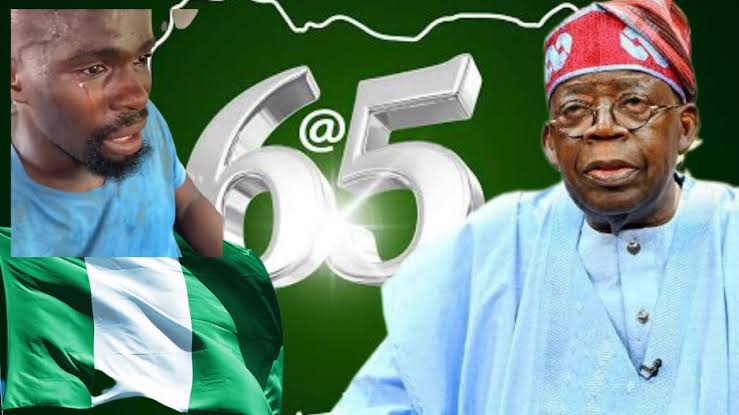
Leaving With This: The Measure of Tomorrow
At sixty-five, Nigeria is neither at the beginning of its journey nor at the end. It stands in the middle, shaped by decades of trial and persistence, carrying both the burden of history and the possibility of renewal. President Tinubu’s call about racing against time is, at its core, a reminder that the nation’s story is still unfinished.
But the question is not only about the state. It is about the citizen who measures time in hours at a bus stop, the student counting years before graduation, the worker waiting for wages that never stretch far enough, the entrepreneur hoping that tomorrow will be less uncertain. These are the clocks that matter most.
If leadership continues to speak only in the language of urgency without matching it with progress that people can feel, then time will keep slipping — not in speeches, but in the daily lives of Nigerians who cannot afford more wasted years.
Nigeria’s future will not be decided by how often leaders remind the nation of time, but by how they use it: whether to deepen trust, to expand opportunity, and to give meaning to the patience citizens have carried for six and a half decades.
In the end, the race against time is not a contest to be won by government alone. It is a responsibility shared across generations — leaders, citizens, and communities — each with a role in ensuring that the years ahead do not simply add to the weight of the past.
Sixty-five years after independence, the measure of Nigeria’s tomorrow will not be in how fast it runs, but in how steadily and justly it walks forward, step by step, with its people.