


Nigeria’s growing youth population continues to face an employment challenge that worsens each year.
As traditional academic paths produce more graduates than available white-collar jobs, attention is shifting towards technical and vocational education as a possible solution.
Across the country, industries complain about a shortage of skilled workers. Construction firms, manufacturing plants, and service providers often import labour for technical roles that local workers could fill if adequately trained.
This situation exposes a gap between the education system and the demands of the labour market.
Technical education focuses on practical learning and applied skills. Unlike conventional universities, technical and vocational institutions train students for direct entry into specific trades or professions.
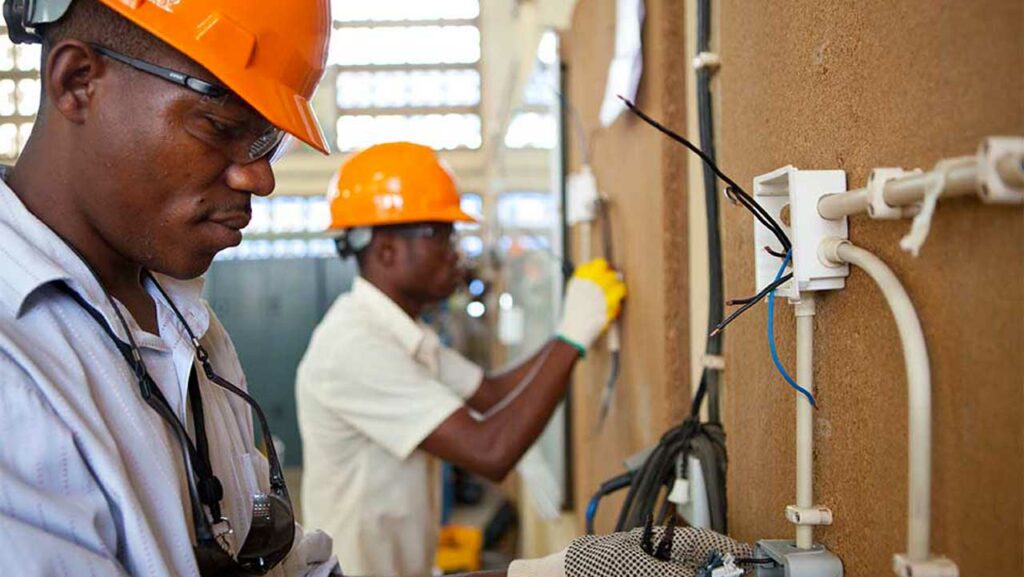
These include fields such as welding, carpentry, electrical installation, plumbing, and information technology.
For decades, Nigeria’s technical education sector has been underfunded and undervalued. Many secondary schools have abandoned workshops and laboratories due to poor maintenance or lack of equipment.
This neglect has weakened the pipeline of young people prepared for hands-on careers.
The National Board for Technical Education oversees polytechnics and related institutions, but their reach remains limited compared to universities.
While higher education receives most of the attention and funding, technical colleges struggle with outdated curricula and limited teaching resources.
Yet, the need for skilled workers is more urgent than ever. With growing emphasis on industrialisation, renewable energy, and technology-driven services, the economy depends increasingly on people who can operate and maintain machines, systems, and infrastructure.
Several private training centres and non-governmental initiatives have stepped in to fill the void.
They provide short-term skills training in trades and digital skills. However, their efforts remain fragmented, often lacking national coordination or certification that employers recognise.
The problem is not only about training but also perception. Many families still see vocational education as a last resort, suitable only for those who cannot afford university.
This mindset has discouraged talented young people from pursuing careers in technical fields.
The labour market, however, tells a different story. Skilled technicians often earn competitive wages, particularly in sectors like oil and gas, construction, and ICT.
The increasing demand for technical expertise in renewable energy, automation, and digital services shows that skills can offer sustainable employment paths.
Government reforms have attempted to address this imbalance. Various national policies now emphasise skills acquisition, entrepreneurship, and innovation.
Programmes such as youth empowerment schemes and technical partnerships with foreign organisations aim to expand training opportunities.
Despite these efforts, implementation remains a major hurdle. Many initiatives stop at the announcement stage without strong follow-up or long-term funding.
The gap between policy and practice continues to limit impact, leaving thousands of unemployed youths without access to relevant training.
Another challenge is the disconnect between training institutions and industry needs. Many technical schools still teach outdated methods, while employers require modern competencies.
Without active collaboration between educators and industry players, graduates remain unprepared for today’s workplaces.
The private sector plays a key role in bridging this divide. Partnerships between companies and training institutions can provide apprenticeships, internships, and on-the-job experience.
These collaborations ensure that students learn current technologies and gain exposure to real-world challenges.
Digital transformation is also reshaping technical education. Online platforms now offer flexible learning in areas such as coding, robotics, and electrical engineering.
This trend expands access and creates opportunities for self-paced learning, especially for young people outside urban centres.
However, access to quality infrastructure remains uneven. In rural and semi-urban areas, power supply, internet connectivity, and equipment shortages hinder effective training.
Until these foundational problems are addressed, technical education will struggle to achieve its full potential.
Experts agree that the path forward lies in rebranding technical education as a credible and respected alternative to university degrees.
Strengthening polytechnics, investing in modern equipment, and linking curricula to labour market needs can transform the system into a driver of employment.
If Nigeria succeeds in repositioning technical education, the country could close its long-standing jobs gap.
Skills-based learning has the potential to turn millions of job seekers into job creators, boosting productivity and supporting inclusive growth.
For a country seeking to diversify its economy and empower its youth, investing in technical education may not just be an option — it may be the most practical step towards lasting development.