


Nigerians are no longer aghast and perturbed by these abnormal realities like they were in past years. These killings, as with the mind-numbing dysfunction and rot that Nigeria has become synonymous with in recent years, no longer faze or unsettle the preponderance of the citizens.
This past week has been one of the most disconcerting for Nigerians in recent years. This is largely due to the spate of violent attacks and killings in recent days. The killings have sent shivers down the spines of many Nigerians who are not affected by this frightful reality. The killings that started last week at Oke Ode in the Irepodun local government area of Kwara State have intensified in the last few days and spread to other parts of the country.
The dastardly onslaught in Kwara, which saw over twelve persons killed, was quickly followed by another senseless attack in Yagba West local government area, where twenty-seven people were killed. In Borno State over 5000 people have fled Kirawa, a border town, to Cameroon. To be frank, this daily stream of negative and unnerving news of deaths and destruction no longer moves the needle in public consciousness like it did in the past. Nigerians are no longer aghast and perturbed by these abnormal realities like they were in past years. These killings, as with the mind-numbing dysfunction and rot that Nigeria has become synonymous with in recent years, no longer faze or unsettle the preponderance of the citizens.
But when it comes to insecurity many can’t seem to wrap their head around how the nation’s security apparatus has been able to rid the country of perverse and murderous elements who are hell bent on destroying it. This conundrum has engendered a series of hard, tough and pertinent questions that seek to highlight the nature and peculiarity of Nigeria’s insecurity.
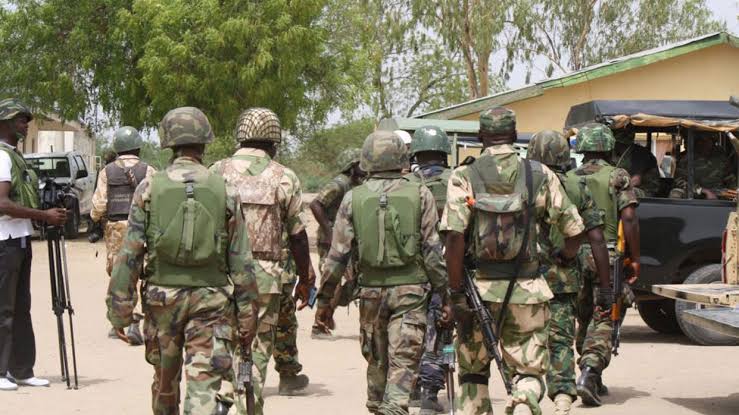
For instance, during the recent attack in Oke Ode in Kwara State, the security agencies failed to act on the reliable Intel and important information provided by the residents of the town. One of the residents stated that the soldiers deployed to the beleaguered town refused to engage the terrorists who invaded it, citing a lack of orders from their superiors in Abuja. The residents also disclosed that the soldiers confiscated local guns used by hunters and vigilantes in the town to fend off external aggression and terrorist attacks, leaving them vulnerable and exposed.
A dispassionate observer of the unfolding events in Oke Ode may dismiss the accounts of these residents as the tale of troubled minds who will fabricate anything to appeal to public sentiment in order to draw the attention of the government to their plight. But this is not the case as subsequent events revealed that the anger and frustration of the hapless dwellers of the towns are not misplaced and that there is more to the repulsive and distasteful attacks on them and the killing of their neighbours than meets the eye.
After the suspicious withdrawal of troops from the town and the lack of security operatives’ presence in the town, with the help of the state government, the people began to move out in droves to save their lives and protect whatever was left of their worldly possessions. The government also moved the nursing school in the town to Ilorin. The question to be asked here is why the government is moving the people out instead of keeping them in the place they’ve lived all their lives and providing them with adequate security?
Is the decision to withdraw troops from the town initially, and also confiscating the guns of the vigilantes and hunters who are protecting the town part of a grand sinister plot for the terrorists to attack and besiege the town with little or no pushback? And why haven’t we heard of any joint offensive operation by security agencies to rout and root out these terrorists? These and many more questions are the answers that need to be answered.
This is not the first time a horde of villagers has been forced out of their villages and ancestral homes because security agencies, especially the military, cannot protect them and confront the insanity of these rampaging armed non-state actors. From Plateau to Benue, from Kogi to Borno, Nigeria is littered with camps of internally displaced persons where Nigerians, who are left to their fate and are forced to bear the brunt of the government’s inability to protect them, live like refugees. Many of these displaced persons have been living in these camps for years with little or no hope of seeing their ancestral homes where they were driven out again.
Some have asserted that the reason why Nigeria has been unable to tackle its decade-long security crisis is that those who are saddled with such responsibility, those who are tasked with ensuring the peace and stability of the country and also protecting it from internal and external aggression, are largely involved in the security crisis. It is hard to argue against or outrightly dismiss the position of those who hold this assertion.
We’ve seen terrorists gleefully post videos of their atrocities and the spoils of their nefarious activities on social media without any repercussions. We’ve seen and heard of terrorists collecting ransom into bank accounts but we’ve not heard of the owners of these bank accounts being arrested and prosecuted. The digital footprints and the bank transaction trails are enough to track and locate these monsters, but for some inexplicable reasons, our security operatives have refused to deploy the sophisticated and advanced technology at their disposal to that effect.
These pertinent questions and the doubts that they sow have forced many to reevaluate their position on the Nigerian state and the major actors that shape its destiny.