


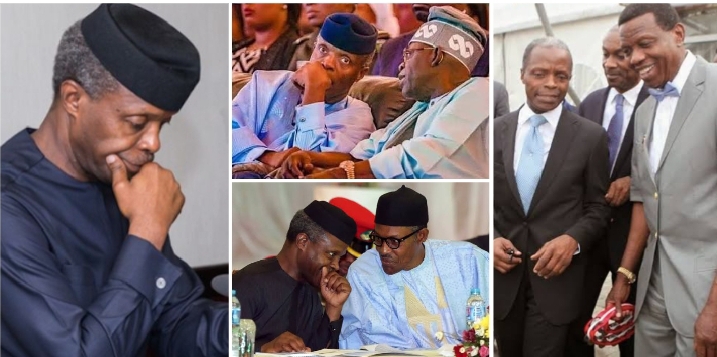
There are silences that speak louder than words — and in Aso Rock, silence is often a language of survival.
The Villa’s office, usually a place of quiet reflection, seemed to hold its breath that morning as Yemi Osinbajo faced the weight of unseen decisions. Within its walls, the tension of governance pressed down like a dense fog, and the collision of faith and responsibility demanded clarity beyond policy or protocol. For Osinbajo, the challenge was not merely to lead; it was to navigate the delicate balance between conscience and power, to reconcile the preacher he had always been with the politician the nation required, without losing himself.
Osinbajo had always believed that faith could civilize politics, that morality could temper ambition. But Abuja — with its labyrinth of loyalties, betrayals, and whispered power — was not Lagos. It was not the courtroom or the pulpit. It was a stage where silence could be mistaken for weakness, and purity could be treated like naivety. Inside the Villa, even light seemed to have shadows. Every handshake carried a history. Every smile had a motive.

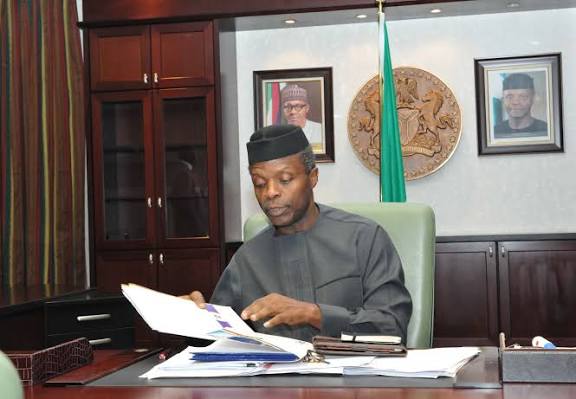
That morning, reports from the oil ministry and the DSS were on his desk. Files that hinted at corruption, complacency, and chaos. But the question before him was not about documents — it was about destiny. How far could a pastor go before becoming a politician? How could he speak of grace when surrounded by greed?
Aso Rock, after all, was no church. It was a theatre of ghosts — of ambitions buried and revived, of loyalties traded like currency, of faith tested beyond endurance. And for a preacher who believed in redemption, the ultimate test was not how to speak truth to power, but how to remain whole while holding it.
The Making of a Preacher-Politician
It began far from the marble walls of Abuja — in the quiet rhythms of Ikenne, Ogun State, where Yemi Osinbajo was raised in the shadows of Awolowo’s political legacy and the embrace of a disciplined, middle-class Yoruba family. His father, a civil servant; his mother, a woman of faith. The household was a fusion of intellect and devotion. Long before he would stand beside generals and oligarchs, Osinbajo learned the language of restraint — the habit of measured speech, the discipline of silence before judgment. Those traits would become both his armor and his prison.
By the late 1980s, he had carved a niche at the University of Lagos — a law lecturer with a rare mix of moral conviction and intellectual precision. His classrooms were not just about legal theory; they were spaces of quiet persuasion.
Students often described how he spoke softly but with gravity, how every principle he taught seemed anchored in a deeper ethical code. That same discipline would later define his political style — the preference for persuasion over confrontation, the obsession with order amid chaos.

His journey to the pulpit was not sudden. Within the Redeemed Christian Church of God, he found a calling that gave structure to his intellect. Preaching, for him, was not performance; it was a kind of justice — the alignment of truth and duty. When he began ministering at the Olive Tree Parish in Banana Island, his sermons were filled with stories about stewardship, humility, and moral responsibility. Few could have imagined that those same themes would one day echo in Nigeria’s corridors of power.
But destiny, as it often does in Nigeria, came wearing political clothing. Around the early 2000s, Osinbajo caught the attention of Bola Ahmed Tinubu — then Governor of Lagos State — a man who saw politics not as a sermon but as a strategy. Tinubu needed a mind that could anchor reform without rebellion, someone who could lend moral legitimacy to his technocratic vision. Osinbajo, with his spotless reputation and methodical intellect, was perfect. When he was appointed Attorney-General of Lagos State in 1999, it was the beginning of a relationship that would define his political life — a bond built on admiration, convenience, and later, deep moral conflict.
As Lagos fought its fiscal wars with the federal government, Osinbajo became the quiet general behind the scenes. He drafted arguments that redefined federalism, he structured reforms that outlived administrations. Yet, even then, his politics bore the scent of the pulpit. He spoke about the rule of law like one speaks about faith — as something sacred, something that must be preserved even when inconvenient.
But in the years to come, that very idealism collided with the unrelenting pragmatism of power. Lagos was only a classroom. Abuja would be the crucible.
Entering the Lion’s Den: Osinbajo and the Buhari Years
When Muhammadu Buhari began his second quest for the presidency in 2014, his campaign was a sermon of its own — about discipline, incorruptibility, and national redemption. Yet beneath that austere gospel lay the need for something Buhari himself could not offer: warmth, intellect, and the bridge to a restless southern middle class that distrusted soldiers in khaki. That bridge was Yemi Osinbajo.
It wasn’t Tinubu’s first instinct to offer him; it was strategy. The ticket needed someone clean, articulate, and untainted by scandal. Osinbajo was all of that and more. His selection as Buhari’s running mate surprised many. He was neither a career politician nor a rabble-rouser; he had never held elective office. To some in the All Progressives Congress, he looked too delicate for the furnace of Abuja — a dove among hawks. But to Buhari’s handlers, that was precisely the point. The preacher’s gentleness made him the perfect contrast to the general’s severity. Together, they symbolized discipline and conscience, steel and spirit.

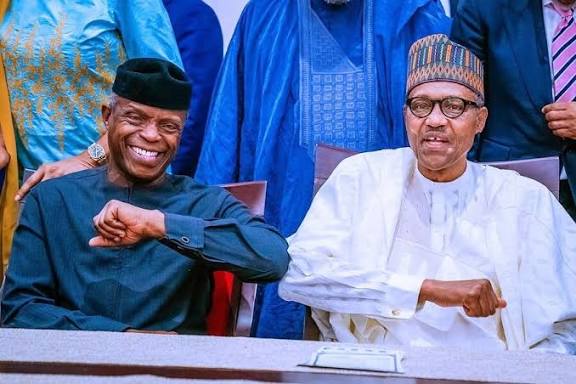
When the pair won the 2015 election, Osinbajo entered Aso Rock not as a conqueror but as a pilgrim. The air in the Villa was thick with decades of suspicion — civil servants conditioned by secrecy, aides trained in hierarchy, and politicians fluent in deception. Osinbajo’s office soon became an island of order amid the undertow of politics. Every morning, he began with prayer meetings. Staffers later spoke of how he would stand by the window after devotion, staring out toward the distant city like a man searching for the line between heaven and statecraft.
But as months passed, the optimism began to thin. Buhari’s leadership style — centralized, military, and instinctively distrustful — left little room for Osinbajo’s consultative method. Files stalled, memos waited, and access narrowed. The Vice President’s gentle professionalism clashed with the Villa’s coded rituals of influence. Even his faith meetings, once admired, became the subject of whispers — that the “pastor” was too idealistic for politics, too polished for the trenches. The more he tried to stay above the fray, the more his detachment was mistaken for weakness.
Still, Osinbajo adapted. He took charge of the economy, social intervention programs, and foreign outreach. He built alliances with technocrats and governors, crafting a quieter form of leadership — less visible, more effective. His intellect became his weapon. His calm became his armor. He rarely raised his voice, yet his presence steadied many crises that never made headlines.
But politics, like gravity, always pulls the righteous downward. For every initiative he championed, there was a rival watching, a faction offended, a whisper planted. Abuja had a way of testing sincerity until it broke.
The real test would come in 2017, when the general fell ill, and the preacher was asked to hold the sword.
The Acting President Moment: When the Pastor Ruled
When Buhari was flown to London for medical treatment in early 2017, the atmosphere in Abuja was thick with uncertainty. Ministers avoided cameras, governors whispered in coded tones, and the opposition smelled blood. For the first time, Nigeria had no visible president — only an acting one, and he was a pastor.
Osinbajo assumed office quietly, almost reverently, as though he were entering a sacred space. Yet within weeks, the tone of governance shifted. Files long delayed began to move. Approvals came faster. Ministers suddenly reported to work earlier. The Vice President’s office became a command center of efficiency — not through intimidation, but through moral gravity. He visited markets, convened meetings with business leaders, and addressed economic stagnation with the precision of a reformer who saw policy as ministry.
Abuja noticed. The bureaucracy, long paralyzed by fear of Buhari’s conservatism, began to thaw under Osinbajo’s calm authority. In those few months, Nigeria witnessed what governance could look like when intellect led instinct. Investors took interest. Civil servants rediscovered initiative. Even the skeptical elite began to ask: could the preacher actually rule?
But not everyone was pleased. The quiet success of those weeks unsettled the Villa’s deep currents. For some in Buhari’s inner circle, Osinbajo’s efficiency was misread as ambition. His popularity with the public became suspect. Reports began to circulate — that the “pastor” was trying to carve his own kingdom within the presidency. Aso Rock’s corridors, once alive with energy, thickened again with suspicion.
One decision symbolized his brief defiance: the removal of the Director-General of the Department of State Services, Lawal Daura, and other bureaucrats accused of obstructing reform. It was a move that sent ripples through the intelligence community — an assertion that, even in the absence of his principal, the acting president would not be a placeholder. In those months, he embodied the possibility of a moral government — one that led with conscience rather than fear.
But when Buhari returned, the mood changed. The Villa recalibrated, the old hierarchies reassembled. The preacher was gently reminded of his place — that acting was not ruling, and loyalty was the truest currency in power. The reforms slowed. The energy ebbed. His seat at key meetings grew uncertain.
Yet something had changed in Osinbajo himself. The experience of command had tasted like revelation — proof that governance could be ethical, decisive, humane. But revelation, in politics, is often followed by crucifixion.
The Invisible Cage: Loyalty and Its Price
By 2018, Osinbajo’s wings were clipped, though softly. His aides felt it, his silence confirmed it. Buhari’s inner circle — the so-called “cabal” — had learned to view the Vice President’s idealism as both liability and threat. His access to security briefings narrowed, his authority over agencies diluted. The preacher had been placed back in the pew.
He did not protest. In public, he smiled. In private, he retreated into prayer and policy papers. Loyalty, for him, was not weakness but theology. In his sermons, he had often preached about obedience as a form of strength — the discipline to trust a higher order even when misunderstood. Now, that same theology became his survival code.
But politics is not scripture. In Abuja, silence is interpreted, not respected. His humility was recast as irrelevance; his patience, as fear. When he visited regions ravaged by poverty or insecurity, the cameras caught compassion; the power brokers saw calculation.
Behind the scenes, some governors and party members urged him to be more assertive. “You could be president,” they told him. “You’ve earned it.” But Osinbajo, bound by conscience and caution, would not rebel. He believed destiny could not be seized, only revealed. That conviction made him honorable — and vulnerable.
By the time Buhari sought reelection in 2019, Osinbajo’s role had been reduced to symbolism. He campaigned with vigor, delivered speeches with eloquence, yet the power machinery around him had shifted elsewhere. When a helicopter he boarded crash-landed during the campaign in Kogi State, many saw it as divine intervention — a sign that grace still covered him.
But within the Villa, grace had limits. His aides were shuffled, his Economic Management Team restructured, and by 2020, even his influence over parastatals had waned. The preacher had been fenced in — not out of malice, but out of fear. The system does not know what to do with men it cannot corrupt.
Yet Osinbajo endured. He continued to serve, to preach, to teach. In sermons, he spoke of endurance, of faith in seasons of darkness. He once told a congregation, “Sometimes, the road to light passes through long tunnels.” Few realized he was describing himself.
The tunnel would grow darker still when loyalty met its final test — the moment his godfather became his opponent.
The Tinubu Paradox: Godfather, General, Ghost
Every politician in Nigeria has a beginning, and nearly all beginnings lead back to a godfather. For Yemi Osinbajo, that godfather was Bola Ahmed Tinubu — the architect of modern Lagos, the strategist of southwestern politics, and the man whose empire of loyalty built the foundations of Osinbajo’s political ascent. Their bond had been pragmatic, almost paternal. Tinubu saw in Osinbajo a mind sharper than the typical politician’s, a man who could translate ideals into legal frameworks. Osinbajo, in turn, saw in Tinubu a master tactician capable of turning ideas into power. For nearly two decades, they moved in sync — one the strategist, the other the conscience.
But politics is a tide that erodes even the firmest rock. By 2022, as Buhari’s era drew to a weary close, the air around the APC grew electric with succession ambitions. Tinubu had waited too long, built too much, invested too deeply to withdraw now. His presidential ambition was not just personal — it was ancestral, almost mythic, the fulfillment of a decades-long calculus. But then came the whisper: Osinbajo, too, may run.

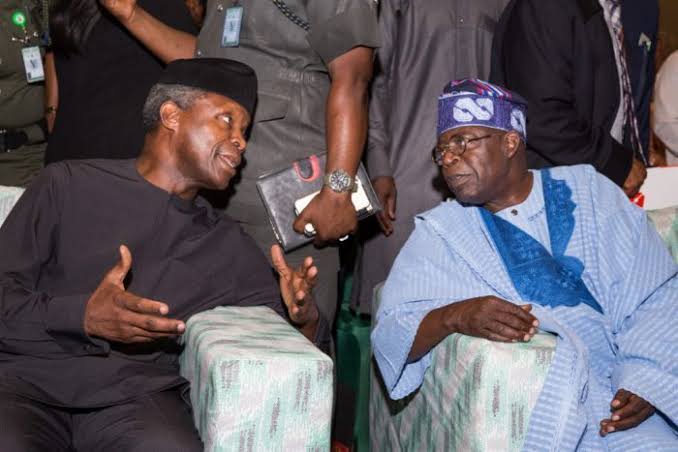
To the public, it was a surprising headline. To Tinubu’s circle, it was betrayal. How could the protégé step forward while the patriarch still breathed politically? How could the pastor, the one he elevated, compete for the same crown? The declaration came with restraint, but it landed like a thunderclap: “I stand before you today to declare my intention to run for president.”
Osinbajo’s campaign was not flamboyant; it was moralistic. His tone was that of a reformer pleading for a nation’s soul, not a politician bargaining for power. He spoke of service, of rebuilding trust, of leading with compassion. But in the ecosystem of Nigerian politics, ideals rarely outshine infrastructure. Tinubu’s machinery was ancient and vast — governors, financiers, delegates, and loyalties woven over years. Osinbajo’s candidacy, though noble, lacked the grease that turns conviction into victory.
Yet the deeper struggle was spiritual. For Osinbajo, the decision to run was not rebellion but obedience to conscience. To stand aside in deference would be loyalty; to step forward, conviction. It was the hardest sermon of his life — preached not from a pulpit, but in the shadow of political inheritance. Behind the scenes, he prayed with aides, consulted mentors, sought divine clarity. His closest allies said he saw the contest as a test of calling, not competition.
But politics has no altar for purity. The primaries were swift and brutal. Delegates shifted with the wind of power. When the votes were counted, Tinubu triumphed resoundingly. The teacher had met the limit of idealism. Osinbajo, ever composed, congratulated his godfather. The cameras captured grace; only silence recorded the ache.
In that defeat, something sacred and tragic coexisted. The pastor had not lost merely an election; he had lost a fellowship. Tinubu would later ascend to the presidency, and Osinbajo would fade from the national spotlight — not disgraced, but distilled. Nigeria had seen ambition, humility, and heartbreak coalesce in one man’s story. The paradox was complete: Tinubu, the general of strategy, had prevailed; Osinbajo, the preacher of conscience, had kept his soul.
Between Pulpit and Power: The War Within
For eight years, he had spoken the language of both politics and prophecy, of pragmatism and purity. The pulpit demanded compassion; power demanded calculation. He had spent years walking a corridor lined with portraits of presidents and hearing in his head the echo of scriptures that warned, “What shall it profit a man, if he gains the whole world…”

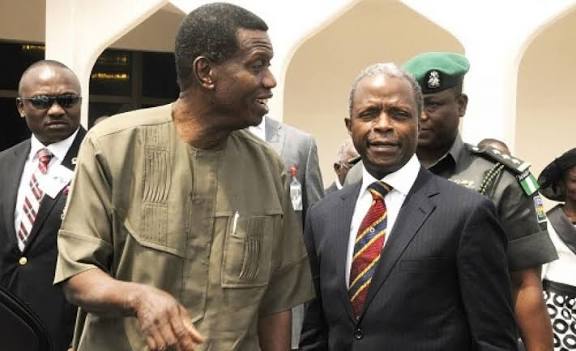
Within Nigeria’s religious landscape, Osinbajo’s image had become almost mythic — the “good man in a bad system,” the RCCG pastor who refused to curse his rivals, the scholar who would not bend his ethics for expedience. But even goodness, in excess, invites suspicion. His critics accused him of passivity, of being too mild to transform a nation that needed thunder. They mistook restraint for fear, and humility for inaction. Yet those who knew the machinery of Abuja understood the calculus: speak too loudly, and you’re crushed; speak too softly, and you vanish. Osinbajo had chosen a third way — endurance.
Even in the height of political storms, he never abandoned the pulpit. His sermons, though increasingly metaphorical, revealed the undercurrents of his struggle. He spoke of Joseph in Pharaoh’s court, of Daniel in Babylon — metaphors that mirrored his own existence: the righteous man serving under a system that mistrusted light. In these parables, he found both confession and consolation.
But within him, the war continued. There were moments when the preacher in him rebelled against the politician he had to be — when compromise stung, when diplomacy felt like deception. There were also nights when he longed for the simplicity of ministry — no factions, no caucuses, no coded threats. And yet, part of him understood that purpose sometimes hides in paradox. To preach in peace is noble; to preach in power is sacred and perilous.
By the time Buhari’s tenure ended, Osinbajo had become something rare: a politician unseduced by bitterness. He had seen proximity to power without succumbing to its poison. For many Nigerians, that in itself was a moral victory — proof that one could emerge from Aso Rock without moral scars, without the stench of scandal, without vengeance in the eyes.
But for Osinbajo, survival was not enough. He wanted meaning — the redemption of experience. That search would define his life after power.
After the Storm: Osinbajo’s Quiet Exit
When the handover came in May 2023, the ceremony was elegant, understated. Cameras panned across faces — victors, survivors, ghosts. Osinbajo, dressed in his signature dark agbada and cap, stood calmly beside his wife, Dolapo. There was no bitterness in his expression, no theatrical farewell. Only a quiet dignity, the stillness of a man who had wrestled with power and chosen peace.
After leaving office, he did not join the opposition, did not court controversy, did not seek sympathy. He simply vanished from the noise. Friends described how he spent weeks in contemplation, away from the limelight, before slowly re-emerging through academia, international diplomacy, and global development work. He accepted a leadership role with the Global Energy Alliance for People and Planet — a shift from politics to purpose. In that transition, one could see the return of the teacher, the reformer, the priest.
But Nigeria remembered. The public that once mocked his quietness now began to reinterpret it. In hindsight, his restraint looked like wisdom. His avoidance of scandal looked like discipline. The same patience that seemed passive in power now appeared prophetic in absence. For in a nation where leaders leave behind chaos, Osinbajo left behind calm.
His story became a metaphor for an entire generation of Nigerians — those who believe integrity is not weakness, and that faith, when lived sincerely, is not naïveté. The preacher had gone to Aso Rock, faced the tempter, and returned with his conscience intact. That, in the moral economy of power, is resurrection.
Still, solitude has its own trials. Away from the cameras, Osinbajo now carries the weight of reflection — not regret, but understanding. He has seen how politics tests the soul, how loyalty bends the spirit, and how silence sometimes speaks more truth than speech. In interviews and public addresses since then, his tone remains gentle, but his eyes hold stories the world will never fully hear.
For men like him, history’s judgment comes slowly — in whispers, not applause.

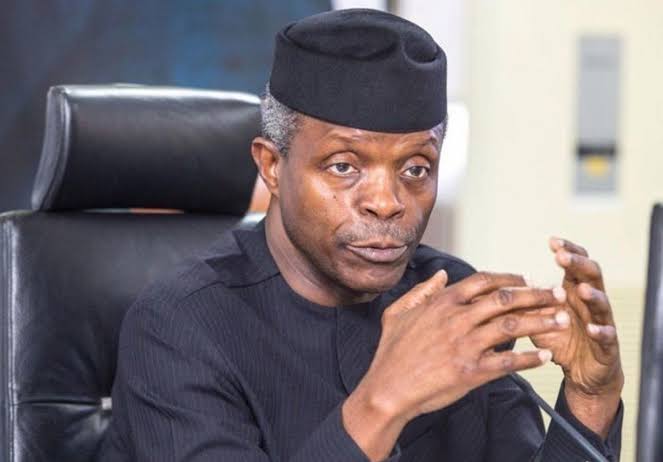
Closing Reflection: The Spirit of Politics
There are two kinds of power in the world: the power to rule, and the power to remain pure. Few achieve both. Yemi Osinbajo’s journey through Aso Rock is a chronicle of the second kind — a pilgrimage through temptation, where integrity became both shield and cross. He did not conquer the system, but neither did the system conquer him.
In many ways, his story is Nigeria’s mirror: a land where decency struggles to breathe amid intrigue, where faith meets cynicism, and where the righteous must learn diplomacy to survive. Osinbajo’s years in power asked one timeless question — can goodness govern? The answer, like him, remains quiet, unboastful, unresolved.
In the final measure, perhaps the preacher’s greatest achievement was not policy or reform, but presence — the proof that morality can stand near power and not be devoured. When future generations study this chapter of Nigeria’s democracy, they may see in him not a failed politician but a rare witness — the man who stepped into the lion’s den and came out, not triumphant, but seemingly uncorrupted.
And so the story closes where it began — in silence. Not the silence of defeat, but of completion. The silence before the next sermon, perhaps, when Yemi Osinbajo, the preacher in Aso Rock, will rise again to teach what politics could never teach him: that the truest power is self-mastery, and the highest office is a clean heart.