


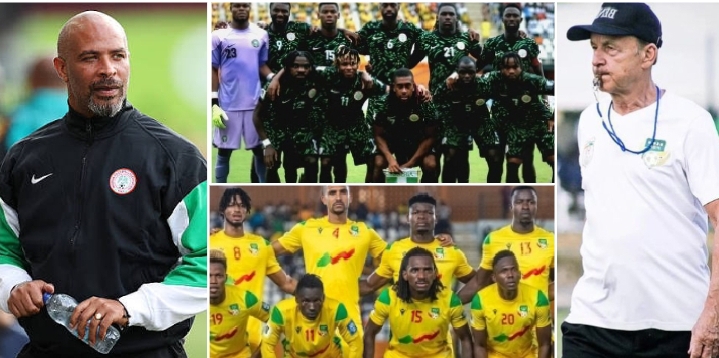
The streets of Nigeria hum with a collective heartbeat as October 14 draws near. Fans draped in green and white fill cafés, bus stops, and markets, speculating about lineups, substitutions, and the subtle decisions that could tip the scales. The Super Eagles’ World Cup qualification campaign is poised on a knife’s edge, and every conversation, every gesture, seems to pulse with the suspense of what might happen on home soil. The question lingers like a shadow over the stadium: which in-game tweak will finally unlock Benin Republic’s defenses?
Inside the training ground, Coach Eric Chelle moves quietly among his squad, eyes scanning, mind calculating. Lookman’s suspension casts a strategic void that demands innovation. How will the Super Eagles compensate for his pace and unpredictability? Which players will emerge as improvisers in his absence? The answers exist somewhere between drills, whispered instructions, and instinctive understanding, waiting to be executed under the stadium lights.
Even among fans, the tension is palpable. Conversations on radio stations, WhatsApp groups, and street corners swirl with speculation: will Chukwueze take on the mantle of wide threat? Can Osimhen and Arokodare combine dynamically to stretch the Beninese backline? Every potential adjustment is a question mark, a flicker of possibility that could erupt into decisive advantage—or leave the Eagles exposed.

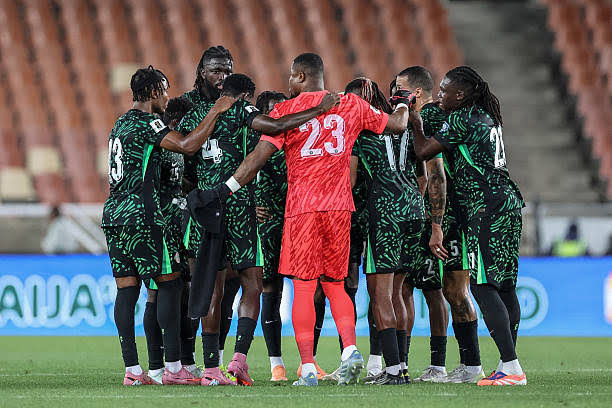
The beauty of tactical suspense lies in its invisibility. To the casual observer, players are simply jogging, passing, and stretching. But each movement is a thread in a web of strategy, a signal of where an in-game tweak might unfold. As October 14 approaches, anticipation becomes almost tangible, a living, breathing entity above the pitch, waiting for the first whistle to transform potential into action.
The Group C Decider: Points, Pressure, and Possibility
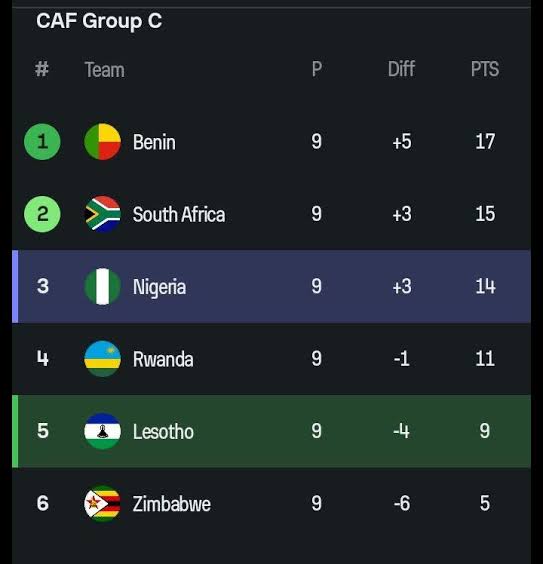
October 14 carries more than the usual weight of a World Cup qualifier. With the final matchday in Group C approaching, every point, every run, and every decision will be magnified. Nigeria enters the game knowing a convincing win over Benin Republic is not just desirable—it is essential. Anything less leaves the Super Eagles on the brink, their fate intertwined with South Africa’s final match against Rwanda. The pressure is immense, a palpable tension that seeps into every pre-match sequence from warmups to kickoff.
Benin Republic, in contrast, approaches the contest with both caution and ambition. Their previous results have positioned them at the top of the group, but a misstep could be fatal. The game is as much psychological as it is tactical, and every subtle movement on the pitch will be scrutinized for signs of vulnerability or opportunity. The outcome of Nigeria’s encounter may hinge as much on composure under pressure as on technical execution.
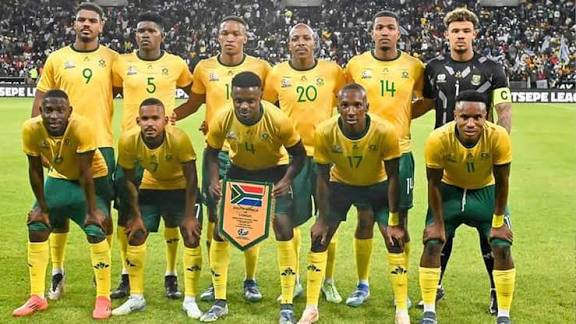
South Africa’s final game against Rwanda adds another layer to the suspense. A South African win could cement their group victory, leaving Nigeria chasing slim margins. A draw or loss, however, could swing the balance, placing the Super Eagles squarely in contention if they can overcome Benin. The intertwining fates of the three nations create a narrative tension that heightens every tactical nuance, every potential in-game adjustment, and every sequence played on Nigerian soil.

The stakes extend beyond points. The pride of representing the nation, the cultural weight of playing at home, and the anticipation of millions of fans create a backdrop in which every micro-decision—be it a run into space, a delayed press, or a quick switch of play—carries amplified significance. The sequence of events on October 14 will unfold like a suspense-driven story, each chapter determined by both the planned tactics and the human unpredictability of the players.
Cultural Weight: Home Advantage as Tactical Amplifier
The Super Eagles’ home turf, the Godswill Akpabio International Stadium on Tuesday, is more than a venue; it is a stage where culture, expectation, and national identity collide. Fans’ energy—chants, drums, synchronized movements—adds an unpredictable dimension to tactical sequences. Defensive and offensive micro-adjustments are amplified by crowd pressure, while players’ split-second decisions are influenced by the knowledge that a nation is watching.
Every overlap by Onyemaechi or Fredrick, every probing run by Iwobi, and every strike attempt by Osimhen resonates beyond mere tactics. They carry the weight of expectation, transforming in-game tweaks into emotionally charged sequences. This cultural overlay adds suspense not just in the strategic sense but in a human, palpable way: what the players choose to do under scrutiny may determine the unfolding narrative of the match.
Coach Chelle’s tactical planning cannot be viewed in isolation. Each in-game tweak interacts with crowd psychology, stadium acoustics, and cultural energy, creating a suspense-rich environment where timing, improvisation, and anticipation define success. The Super Eagles’ sequences become more than movement—they are an orchestrated tension, choreographed yet reactive, poised to exploit or adapt in real-time.
Midfield Dynamics: Crafting Suspense Through Movement
Against Lesotho, Ndidi, Iwobi, and Moses Simon formed a compact yet fluid midfield. For Benin Republic, Chelle might encourage the trio to experiment with staggered pressing triggers, alternating between slow buildup and sudden bursts. Ndidi could act as a pivot, moving the ball forward in short bursts or launching long diagonals to Osimhen, while Iwobi drifts into pockets of space, teasing defenders into decisions they might later regret.


Moses Simon, who operated on the right against Lesotho, could be tasked with greater creative responsibility in Lookman’s absence. His dribbles and overlapping runs provide width, while sudden diagonal passes can create pockets of opportunity. Bruno Onyemaechi’s left-side movement and defensive awareness will complement these sequences, creating balance even when attacking risks are taken.
The psychological suspense in midfield lies in unpredictability. Each player’s choice—Ndidi holding a pass a fraction longer, Iwobi cutting inside, Simon timing a run—could trigger an in-game tweak, a subtle adjustment that changes the balance between attack and counterattack. Chelle’s genius may emerge in these invisible micro-decisions, where the tactical puzzle slowly reveals itself.
Even defensive midfield coordination becomes part of suspense. Ndidi and Frank Onyeka, who played centrally against Lesotho, can switch between pressing and holding depending on Benin’s shape. The timing of these adjustments, almost imperceptible to fans, forms the backbone of the Super Eagles’ tactical flexibility: the suspense is not in the scoreboard but in the unseen potential of each movement.
Striking Dynamics: Osimhen and Arokodare/Akor at the Core
The forward pairing of Osimhen and Arokodare or Akor Adams, proven against Lesotho, will likely anchor Chelle’s attacking strategies. Osimhen’s explosive runs behind defenders remain the primary source of threat, but with Lookman absent, Arokodare may be more involved in lateral movement, dragging defenders out and creating channels for overlapping fullbacks.
Tolu Arokodare’s role can be unpredictable: dropping slightly to link midfield, occupying central defenders, or challenging for aerial balls. Each action could serve as a tactical tweak designed to destabilize Benin Republic’s shape. The suspense is compounded by the fluidity with which Osimhen and Arokodare can interchange positions, making it difficult for defenders to anticipate the next move.

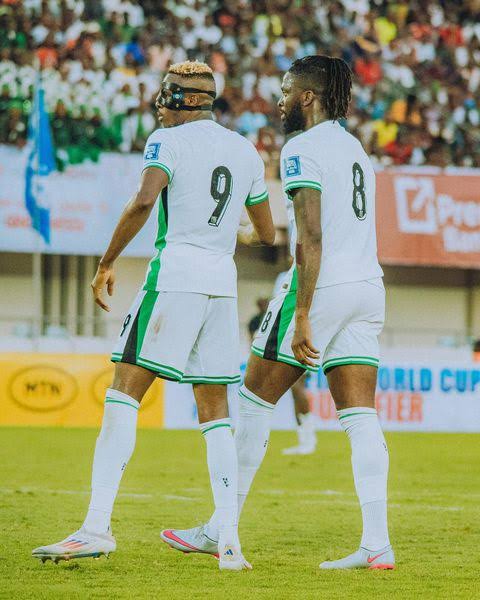
Bruno Onyemaechi and Benjamin Fredrick can time overlapping runs to coincide with the forwards’ diagonal runs, creating corridors of space that would normally be exploited by Lookman. This interplay, rehearsed yet flexible, heightens pre-match suspense: fans and analysts can only speculate which combination of runs and positional rotations will generate the first decisive opening.
Meanwhile, the forwards’ pressure on Benin’s defensive midfielders can trigger in-game tweaks across the squad. Midfielders may advance earlier, defensive lines may shift slightly, and the tempo of the game may increase—all orchestrated subtly by Chelle’s instructions. The suspense here is dual: each action tests Benin Republic’s reactions while also setting the stage for future tactical maneuvers.
Defensive Sequences: Stability and Tactical Suspense
The backbone of the Super Eagles lies in their defensive quartet and midfield shield. William Troost-Ekong, as captain, commands the line alongside Calvin Bassey, while Semi Ajayi provides additional stability when called upon. Against Lesotho, this unit maintained composure under intermittent pressure, and October 14 will test their discipline against a more compact, reactive Benin Republic. The suspense here is subtle: every push forward by Osimhen or Arokodare forces the backline to anticipate space, timing, and positioning, creating micro-adjustments that may tip the balance.

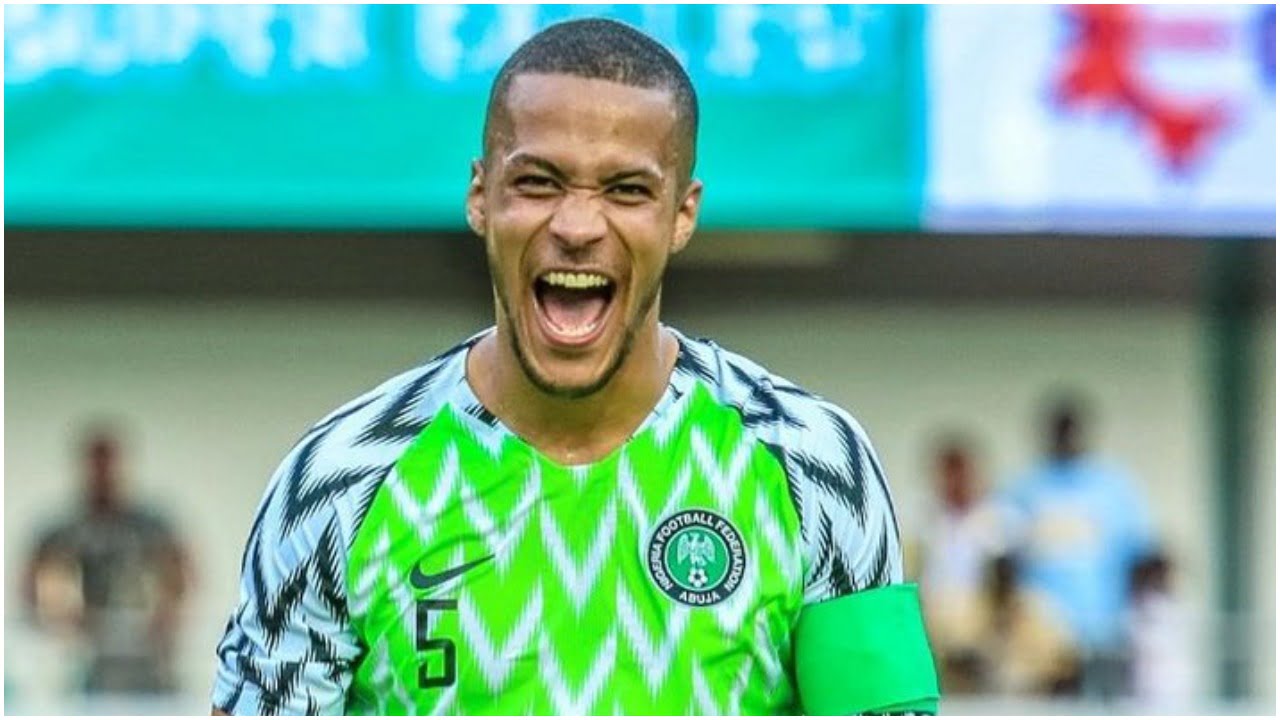
Bruno Onyemaechi and Benjamin Fredrick, operating as fullbacks, have dual responsibilities. Beyond providing overlapping width in Lookman’s absence, they must monitor counterattacks and transition fluidly into defensive roles. Chelle may orchestrate in-game tweaks where one fullback presses aggressively while the other drops, a small asymmetric adjustment that disrupts Benin Republic’s attacking rhythm. These tiny variations, invisible to casual fans, form the suspenseful heartbeat of tactical play—every decision is a potential catalyst for a goal or a near miss.
The midfield shield of Ndidi and Frank Onyeka becomes a second line of defense and a fulcrum for tactical experimentation. They can selectively press Benin Republic’s buildup or drop into deeper lines to absorb pressure. Timing is everything: one second too early or too late, and the opposition can exploit space. Chelle’s in-game tweaks may involve subtle shifts—Ndidi pushing higher to create numerical superiority in midfield, Onyeka covering wider channels—testing not just the opposition’s positioning but also the team’s cohesion under live conditions.
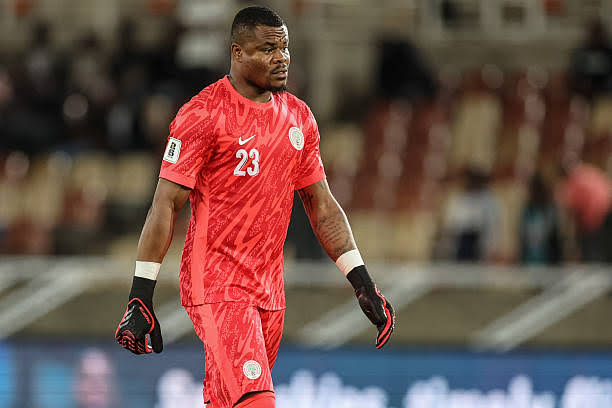
Finally, Stanley Nwabali in goal is both a last line and an on-field strategist. His distribution could trigger in-game tactical shifts: quick throws to the wings to catch Benin off guard, or measured kicks to initiate structured buildup. Suspense is embedded in his anticipation due to his costly mistakes in recent games: which passes or catch will be safe, which might ignite a sudden counter-movement? Every ball he touches could subtly alter the flow, illustrating how defensive control and tactical suspense are inseparable in a match where every micro-adjustment carries weight.
Pre-Match Calculations: Filling Lookman’s Absence
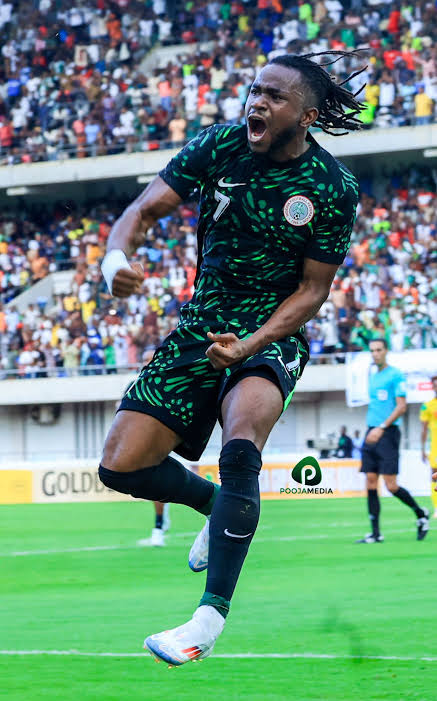
The suspension of Ademola Lookman reshapes the tactical landscape. Against Lesotho, he had provided natural width and creative thrust from the left midfield. On October 14, that responsibility may be redistributed across the squad. Alex Iwobi could adopt a slightly more advanced role, orchestrating attacks from central spaces while occasionally drifting to the left to exploit gaps. Wilfred Ndidi, who anchored midfield against Lesotho, might also push forward selectively, creating overloads that force Benin Republic to stretch their defensive lines.
Victor Osimhen and Tolu Arokodare, the striking duo against Lesotho, will remain central to any in-game tweak. Osimhen’s runs behind the defensive line can pull defenders out of position, while Arokodare’s physicality and timing offer a target for diagonal balls and overlapping plays. Coach Chelle may use staggered runs, quick one-twos, and false movements to create uncertainty—tactical suspense layered over known player strengths.

The fullbacks, Bruno Onyemaechi on the left and Benjamin Fredrick on the right, become critical in compensating for the missing left-wing threat. Against Lesotho, they provided width and defensive solidity; on October 14, subtle in-game adjustments—overlapping runs, delayed returns, or shifts into central positions—could open channels previously dominated by Lookman. Every movement is both reactive and premeditated, a quiet choreography designed to test Benin Republic’s awareness.
William Troost-Ekong, captain and defensive anchor, alongside Calvin Bassey, will orchestrate the backline. Their positional discipline allows Chelle to experiment with in-game tweaks in the midfield and forward lines without exposing the defense. Semi Ajayi, who partnered the center-backs at times against Lesotho, adds another layer of security for reactive adjustments. Meanwhile, Stanley Nwabali in goal provides both shot-stopping and a calm presence, ready to coordinate the defensive tweaks as the match unfolds.
Benin Republic’s Sequences: Disrupting the Super Eagles
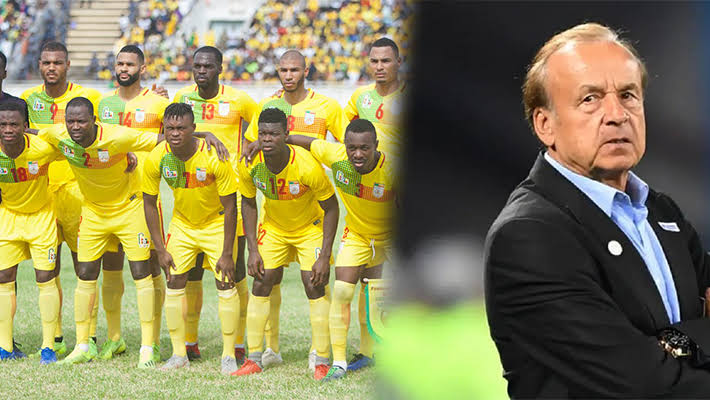
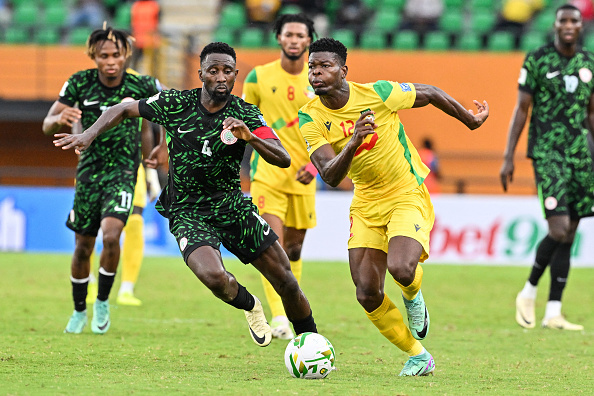
Former Super Eagles coach, Gernot Rohr’s Benin Republic enters the contest with a strategy built on compact defensive organization and sharp counterattacking. Olivier Verdon anchors the backline, pairing with David Kiki to maintain tight coverage while also providing the occasional forward threat. Their disciplined positioning aims to frustrate Nigeria’s central play and force predictable sequences.
In midfield, Sessi D’Almeida and Jodel Dossou serve as disruptors, challenging Nigeria’s build-up with well-timed interceptions and bursts of pressing. Their timing is key: too early, and gaps appear behind them; too late, and Nigeria’s forwards exploit open spaces. The suspense is in the anticipation—when will they act, and how will the Super Eagles respond?
Benin’s attacking threats, particularly Steve Mounié and Aiyegun Tosin, excel in transitional moments. Their pace and positioning are designed to exploit any lapse by Nigeria, particularly if fullbacks advance aggressively or midfielders overcommit. Each quick turn from defense to attack forms a high-stakes sequence, requiring the Super Eagles to react with precision, coordination, and composure.

On the flanks, Dossou and Tosin mirror Nigeria’s width, creating tension in one-on-one matchups with Fredrick and Onyemaechi. Overlaps, feints, and diagonal runs become micro-battles, each carrying potential consequences. The interplay between defensive discipline and attacking ambition ensures that every touch, every movement, and every sequence is laden with suspense.
South Africa’s Shadow: The Ripple Effect on Nigeria
The Super Eagles’ fate is inextricably tied to South Africa’s result against Rwanda. The outcome of that match casts a shadow over every tactical decision, press, and sequence in Nigeria’s game. A South African win would secure their top spot in Group C, leaving Nigeria chasing slim margins. Conversely, a draw or defeat opens a door for Nigeria, transforming their clash with Benin into a golden opportunity to leapfrog rivals and claim a critical position in the standings.
This interconnected tension adds psychological weight to each sequence. Players are aware that their movements are not only for themselves or their team—they are playing out a narrative that spans the continent. Each midfield rotation, each defensive cover, each sprint into open space carries amplified significance. The uncertainty of South Africa’s result creates a suspenseful undercurrent that affects decision-making: should the team press higher to force a goal, or maintain composure to avoid exposing themselves to counters?
For Benin Republic, the South African factor is equally compelling. They are aware that Nigeria’s urgency could be heightened, pushing the Eagles into riskier sequences. Defensively, they must anticipate aggressive movements, overlapping fullbacks, and late surges from the forwards. Each counterattack must be timed perfectly, as a misjudged pass or overcommitment could instantly tip the balance in Nigeria’s favor.
The ripple effect of South Africa’s game exemplifies how interconnected sequences in football can be. Tactical choices, psychological readiness, and spatial awareness all converge under the pressure of a larger narrative. Nigeria’s focus is split between executing their own strategy and factoring in the possible shifts created by the other result, heightening the suspense from kickoff until the final whistle.

Fate in Motion: Stakes, Sequences, and Legacy
As the stadium waits for the first whistle, the weight of possibility hangs in every movement. October 14 is more than a match; it is the intersection of preparation, intuition, and consequence. Each player carries not just skill but the collective memory and expectation of a nation. Ndidi’s poised scans of the field, Onyeka’s subtle body shifts in midfield, and Iwobi’s eyes measuring angles become part of a larger story—a narrative of sequences that could either crystallize into triumph or dissolve into heartbreak.
The Super Eagles’ fate is inseparable from the results elsewhere. South Africa’s encounter with Rwanda pulses invisibly through every touch, every decision, and every run. A single outcome there could alter the urgency, changing sequences into desperate pushes or measured maneuvers. Benin Republic, aware of these shifting currents, brings their own rhythm of suspense: poised counters, disciplined defensive rotations, and micro-pressures designed to exploit the slightest hesitation. The narrative tension becomes almost a living organism, reacting to each breath, glance, and thought on the field.
Beyond tactics, there is a cultural and psychological weight. Every fan feels the suspense as a heartbeat; every neighborhood, every broadcast, every conversation is threaded with anticipation. Football in Nigeria is never merely sport—it is identity, legacy, and a collective memory in motion. The sequences executed on October 14 will ripple far beyond the ninety minutes, shaping stories that will be told, replayed, and remembered. The Super Eagles step into the arena not just to play, but to define a moment, a legacy, a chapter in the nation’s World Cup journey.
And yet, even in this crescendo of anticipation, uncertainty remains. The outcome hinges on a series of interlocking sequences—micro-adjustments, sudden bursts, calculated risks—that will unfold in real time. Every pass, every sprint, every press carries amplified significance.

The story of October 14 is already being written in the space between heartbeats, and as the whistle blows, fate will begin to move. What unfolds next is a sequence of suspense, strategy, and human endeavor, where the echoes of every action may decide not only the Super Eagles’ path to Qatar 2026 but also the narrative of an entire nation.