


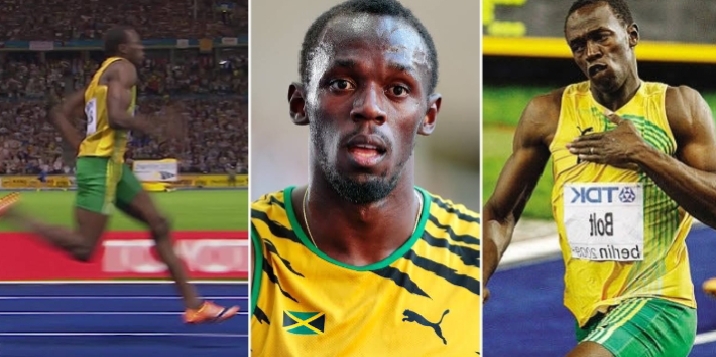
It was August 16, 2009, in Berlin. The floodlights glared, the track gleamed like liquid graphite, and the hum of anticipation was not just about a race — it was about the edge of human possibility. In lane five, a tall Jamaican with a loose grin rolled his shoulders as though he’d just strolled in from the beach.
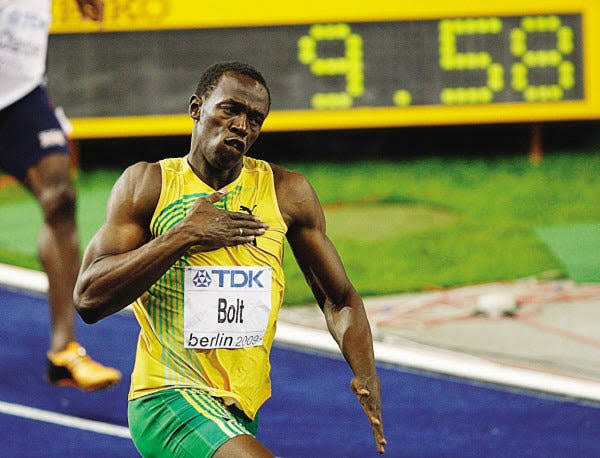
The stadium was already chanting his name — Bolt. What happened next would slice through time like a whip: 9.58 seconds later, the clock froze, and humanity learned a new verb. To Bolt — to move faster than logic, to make history sprint for cover.
That moment didn’t feel real, even to those watching it unfold in real time. Cameras struggled to keep pace, commentators ran out of adjectives, and science scrambled for explanation. His stride length, his relaxation, his laughter before the race — none of it belonged to the template of world champions.
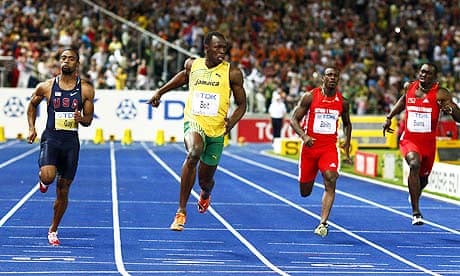
And yet, the universe seemed to bend for him. The image of Bolt pounding through the finish line, head tilted toward the clock, arms spread in disbelief, became a modern relic — one of those snapshots that outlives language.
But beneath the thunderclap of applause was something quieter: the birth of a myth. That night, Usain Bolt didn’t just win a race; he redefined the anatomy of speed. He turned velocity into an emotion, into something spectators could feel in their ribs. The stopwatch had been a measuring instrument — now it became a witness.

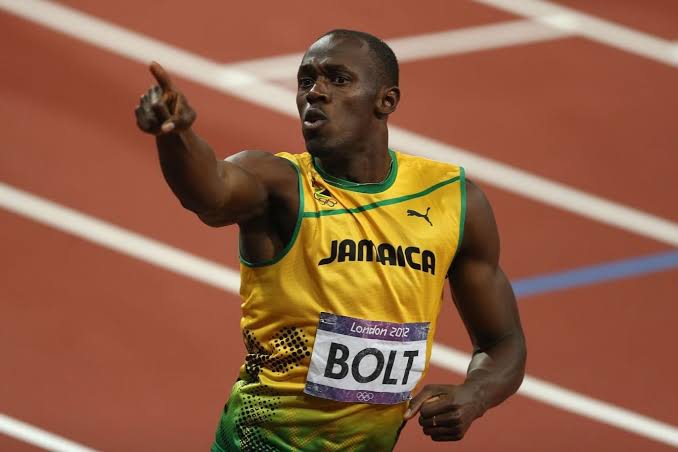
This is the story of how one man’s 9.58 seconds became a language of its own — how speed, joy, and defiance fused into something the world could only describe in one word: Bolt.
Roots in Sherwood Content: The Boy Who Outran Silence
Before the cameras, before Berlin, before the medals glittered like fallen stars, there was Sherwood Content — a quiet town tucked in Jamaica’s northwestern parish of Trelawny. Here, life moved at the pace of sunrise and sugarcane. The roads were unhurried, and the air smelled of soil and rain. For a tall, restless boy named Usain, this slowness was suffocating. He ran not for medals, but to feel wind — to disturb stillness.
His parents, Wellesley and Jennifer Bolt, ran a small grocery shop that doubled as the community’s heartbeat. They didn’t have much, but they had rhythm — the island’s pulse was in every step. Usain’s first track wasn’t synthetic; it was dirt, uneven and defiant. School sports days were the earliest stage, and his lanky legs often carried him past the finish before others had even straightened their posture. But his victories were as much about laughter as about triumph — he would joke mid-race, tease his rivals, and still finish first. It wasn’t arrogance. It was joy.
Coaches soon realized that the boy’s gait broke every rule of sprinting: too tall, too playful, too relaxed. But what the textbooks didn’t account for was Jamaican rhythm — the island’s effortless cadence of movement. Bolt ran like a man hearing a drumbeat no one else could hear. Every stride felt like syncopation, every acceleration a verse. He wasn’t chasing the finish line; he was dancing toward it.
This was how the legend began — not in a stadium, but in a small town that taught him the luxury of unhurried beginnings. From Sherwood Content, he carried something the stopwatch could never record: an ease with time itself. That would become his greatest weapon — a runner who didn’t run against the clock, but with it.

The Race Within: When Fear Found Its Rival
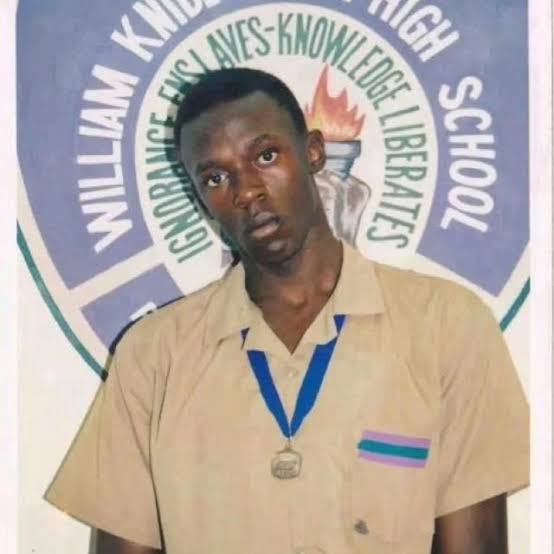
By his late teens, Bolt’s name was already whispered in Kingston’s athletic circles. But fame came with fractures. He had grown fast — too fast — and his body often rebelled. Hamstring injuries stalked his early career like a curse. He stumbled at world stages, sometimes quitting mid-race, sometimes limping home to headlines that questioned if he had wasted potential. Beneath his easy smile was frustration — and fear.
Track is a cruel theater. Every failure is public, every misstep timed, replayed, and analyzed. Bolt’s coaches saw in him a paradox — a prodigy who loved running but hated losing, a joker hiding the terror of expectation. When he failed at the 2004 Athens Olympics, barely making a mark, critics labeled him unserious. He laughed it off publicly, but in private he battled something larger than injury: the fear that maybe speed alone wasn’t enough.
That fear became his hidden fuel. He trained through pain, rewired his stride, and learned discipline under Glen Mills — the man who would turn him from talented to timeless. Mills stripped away the noise and rebuilt his mechanics from scratch. He taught Bolt how to channel that ease, how to let his body’s natural rhythm coexist with technical precision. Slowly, the laughter returned — but this time, it had an edge. He wasn’t just running to entertain anymore. He was running to evolve.
Every athlete has a moment when they stop chasing victory and start chasing mastery. For Bolt, that shift happened quietly, away from cameras — the moment he accepted that the race within is always longer than 100 meters. It’s the marathon of doubt, fought daily in silence. And in conquering that invisible race, he became unstoppable.
2008: The Beijing Revolution
Beijing was where the myth met the world. On August 16, 2008, the Bird’s Nest Stadium became the stage for a performance that redefined human motion. The 100-meter final was expected to be tight — Tyson Gay, Asafa Powell, and others were ready. But Bolt made it art. Halfway through, with meters to spare, he looked left, looked right, spread his arms, and thumped his chest — mid-race. No one had ever done that. It wasn’t disrespect; it was disbelief.

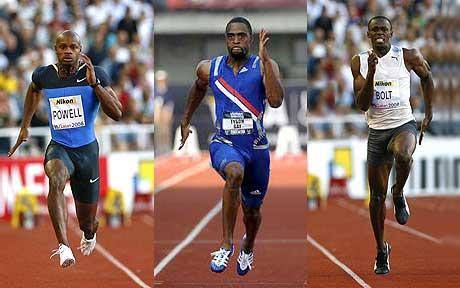
9.69 seconds. A world record. And he celebrated before crossing the line. The world gasped — not just at his speed, but at his freedom. He didn’t run like an athlete; he ran like someone who had found the loophole in human physics. Bolt wasn’t straining. He was smiling. The expression became an instant cultural code — a declaration that speed could be joyful, not tortured.
Within days, the “Lightning Bolt” pose circled the planet. Children mimicked it, brands adopted it, and Jamaica erupted into a nationwide festival. The world had seen great sprinters before — Carl Lewis, Michael Johnson, Donovan Bailey — but Bolt’s energy transcended track. He was charisma in motion, proof that dominance could still look effortless. In a sport long haunted by doping scandals, his joy felt pure, his aura, cleansing.
The Beijing Olympics gave birth to something larger than a champion. It created a symbol. Bolt wasn’t just fast; he made fast look fun again. In an era where pressure and perfection had sterilized sports, he reintroduced wonder. Every stride became a story — and every story, a reminder that sometimes, grace beats grind.
The 9.58 Moment: When Speed Broke Sound
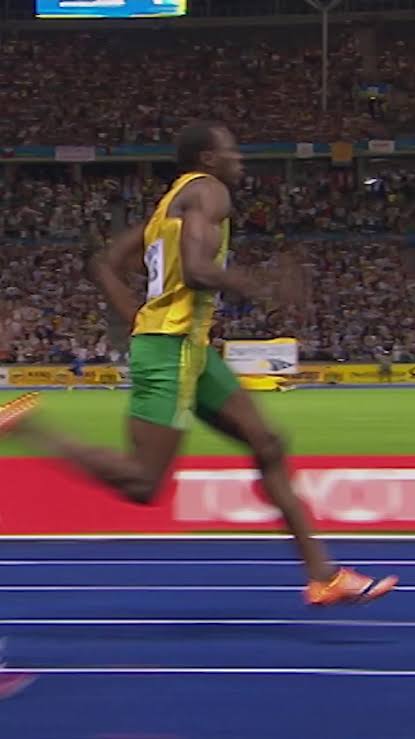
When the Berlin World Championships arrived in 2009, the planet already knew what to expect from Usain Bolt — or so it thought. The year before, he had stunned the world in Beijing. But 9.58 seconds later, Berlin would become something else: not just a championship, but an altar. Humanity watched as one man sprinted beyond comprehension. The stadium’s roar didn’t rise — it detonated. There was disbelief not only that he had done it, but how easily he seemed to do it. Shoulders relaxed, arms sweeping in rhythmic arcs, Bolt looked less like an athlete and more like a man being carried by some invisible current of grace.
The numbers defied physiology: 41 strides, each roughly 2.7 meters, executed with near-effortless rhythm. Analysts later said he reached a top speed of 44.72 kilometers per hour — a blur made flesh. But beyond the math lay something metaphysical. Speed, as scientists define it, is distance over time. Speed, as Bolt displayed it, was time suspended over wonder. His record didn’t just measure acceleration; it measured imagination. The world was forced to confront a new question: what happens when human capacity outruns belief?
Berlin transformed him from champion to phenomenon. It wasn’t just the record that mattered — it was the aesthetic. Bolt’s ease, his playfulness before the race, his grin as competitors stiffened in focus — all of it inverted the psychology of competition. He didn’t just break the record; he rewrote what greatness looked like. Commentators began calling him “a different species,” and perhaps in that exaggeration lay the truth. The world hadn’t just watched someone fast — it had witnessed someone free.
From that night onward, “Bolt” ceased to be a noun. It became an action. To Bolt meant to defy hesitation, to become pure intention in motion. News headlines borrowed the verb, marketers built slogans around it, and fans whispered it as a mantra. 9.58 wasn’t only about the clock — it was about the cultural velocity that followed. The man had outpaced time, and time, in response, had immortalized him.

The Physics of Personality
Every sprinter in history has studied angles — body lean, stride frequency, foot strike, arm swing. But Bolt’s success was born not just of biomechanics, but of personality. His ease under pressure became his superpower. Scientists could measure his height and reaction time; what they couldn’t quantify was how joy altered his performance. When most athletes coiled under tension, Bolt relaxed. His laughter, his pre-race dancing, his spontaneous showmanship weren’t distractions — they were psychological calibration. By turning pressure into play, he disarmed anxiety.
Coaches who tried to imitate his style with other athletes often failed because they mistook confidence for carelessness. What Bolt had was balance — a deep awareness that he performed best when he was himself. This authenticity, fused with raw talent, made him magnetic. He didn’t posture as invincible; he performed as inevitable. His competitors watched him joke minutes before the gun, and that, more than his top speed, often broke their composure. His body moved with rhythm, but his aura moved with ease.
Physiologists analyzed everything — his fast-twitch fibers, long legs, flexible spine — but personality remained the true differentiator. Bolt ran with a kind of narrative logic: every race had a beginning, a climax, a finale. The crowd became part of the story, and he played to them not out of vanity but communion. Sport, for him, was theater — and in that theater, he was both actor and author. The track was not a battlefield but a stage, and he performed not to crush, but to captivate.
In blending charisma with competitiveness, he made physics poetic. His movement turned into metaphor — the science of speed meeting the spirit of self-expression. When he smiled mid-race, the laws of motion seemed momentarily suspended. What Newton described with gravity, Bolt demonstrated with grace. The physics of personality became his signature — proof that performance begins in the mind long before the gunshot.
The Sprint Economy: When Bolt Became a Brand
After Berlin, Bolt transcended sport. His name alone could move markets. Puma’s global sales skyrocketed; endorsement deals from Gatorade, Hublot, Virgin Media, and Nissan turned him into one of the most lucrative athletes of his era. But unlike others, Bolt’s brand wasn’t built on luxury or controversy — it was built on joy. Companies didn’t just want his face; they wanted his energy, his humility, his human spark. He became the ambassador of optimism in a world that often confused intensity with greatness.
Jamaica, too, reaped the dividends. Tourism campaigns adopted his silhouette. The Jamaican flag, fluttering behind Bolt’s lightning pose, became a global emblem of resilience and rhythm. Even as he earned millions, he never abandoned the island’s simplicity. He invested in schools, sponsored youth athletics, and stayed grounded in his origins. His story became part of Jamaica’s national brand — an export of excellence rooted in authenticity.
But branding Bolt was never only commercial — it was cultural. He symbolized a shift in how the world perceived Black excellence: effortless, unforced, confident without apology. In an era when Black athletes often carried the burden of representing nations, Bolt danced through that responsibility. He didn’t shrink under identity; he celebrated it. His dreadlocks, his dialect, his laughter — all became political affirmations disguised as joy.

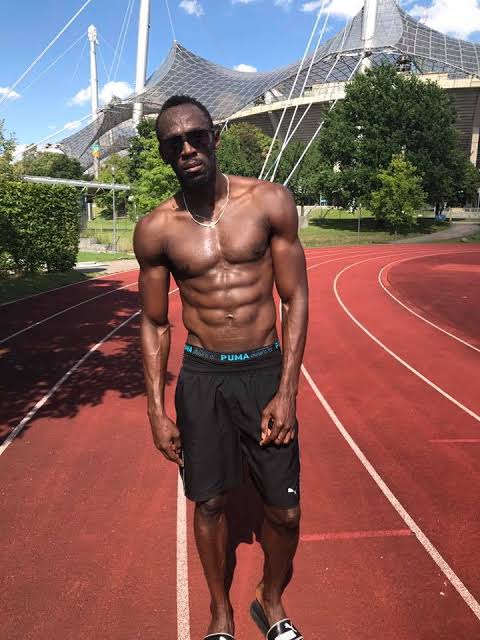
By 2012, his persona had expanded beyond track. He was in music videos, documentaries, video games — yet he never seemed corrupted by fame. What made him marketable was what made him moral: he enjoyed being himself. When you said “Bolt,” you didn’t just picture speed. You pictured liberation.
London 2012: The Night Speed Became Silence
The London Olympics was supposed to be a showdown — the moment the world caught up. Rivals like Yohan Blake had beaten him at the Jamaican trials; whispers spread that Bolt was past his prime. But the 2012 100-meter final crushed that narrative. When the gun fired, he stumbled slightly, then exploded. By 60 meters, the race was already over. 9.63 seconds. The second-fastest time in history. Only one man had run faster — Usain Bolt himself.
What struck observers wasn’t the speed, but the calm. In London, Bolt’s performance felt almost spiritual — a meditation in motion. The crowd’s cheers blurred into a kind of collective silence, the sound that comes when awe drowns out noise. After crossing the line, he didn’t pound his chest or scream; he simply raised his arms and smiled. It was as though he had made peace with time. There was no need to chase what he had already conquered.
London confirmed what Berlin began: Bolt’s greatness wasn’t an accident; it was a philosophy. He didn’t treat speed as violence against the clock, but as harmony with it. His dominance redefined the psychology of winning — not through aggression, but through grace. For young athletes watching across continents, Bolt became proof that excellence need not look painful. It could look peaceful.
That night, commentators struggled for words, but one phrase emerged from the roar: “He makes fast look easy.” The simplicity was deceptive. Behind that ease lay years of pain, sacrifice, and relentless consistency. But Bolt’s genius was his ability to hide the effort — to make sweat look like symphony. In doing so, he turned the ordinary act of running into a form of art.
The Burden of Being Lightning
Every legend faces the echo of his own myth. After 2012, Bolt carried not just expectations but disbelief — people began watching not to see if he’d win, but how easily. Every race became a referendum on his immortality. Injuries returned, fatigue crept in, and younger rivals circled. Yet even in decline, Bolt’s presence drew sold-out crowds. They weren’t there for the stopwatch anymore. They were there for the story.
He knew it too. Fame, for all its glory, is a quiet thief. It steals anonymity, rest, and sometimes joy. Bolt began to feel the strain of his own legend — the pressure to perform, to entertain, to remain flawless. When he false-started at the 2011 World Championships, the world gasped — not at the mistake, but at the reminder that lightning, too, can miss its mark. Yet even in failure, his grace remained intact. He laughed, bowed, and walked off — human, finally.
The burden deepened as questions of legacy grew louder. How do you follow perfection? How do you sustain magic that the world expects on demand? Bolt answered by embracing imperfection. He ran not for immortality but for closure. Each victory thereafter felt like an epilogue, each lap of honor a farewell note written in motion. His joy persisted, but it carried nostalgia — the kind that comes when a man begins to outrun even his own past.
By Rio 2016, the inevitability of time had caught up. Yet Bolt still won — clean, clear, triumphant. It wasn’t dominance anymore; it was defiance. His triple-triple (three golds in three consecutive Olympics) cemented him as history’s most decorated sprinter. But beneath the medals lay something deeper: the wisdom that even lightning must one day rest.
The Last Sprint: Rio and the Curtain Call
By 2016, Usain Bolt was no longer just the favorite — he was the standard. The Rio Olympics arrived like the final chapter of a story everyone knew would be legendary. But legends don’t walk quietly; they create echoes. In the days leading up to the 100-meter final, the whispers were louder than ever: “He’s aging,” “The injuries have slowed him,” “The young bloods are coming.” Even Bolt admitted his body was no longer the obedient instrument it once was. But what no one could measure was how well he understood the theater of greatness.
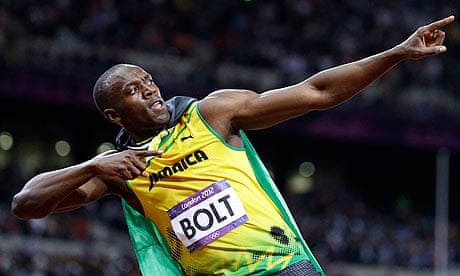
On August 14, when the gunshot cracked the night, Bolt started slow — as he often did. At 30 meters, Gatlin was ahead. But then came the familiar surge, the one that seemed to bend the air itself. Bolt’s head tilted slightly forward, arms slicing clean arcs, legs uncoiling like a drawn bow. By 80 meters, the outcome was inevitable. 9.81 seconds later, he crossed the line. His face wasn’t of wild celebration — it was serenity. A king signing his own farewell decree.
That night wasn’t about time; it was about meaning. The world wasn’t just watching a race. It was witnessing a man sprint through the threshold of history. The stadium’s sound swelled — not with surprise, but reverence. He took his lap with the Jamaican flag draped across his shoulders like a coronation robe. There was no need to shout. Greatness doesn’t need volume; it vibrates in silence.
Rio marked more than his last Olympic sprint. It was a ritual of closure. The boy from Sherwood Content had run his way into the world’s collective language. He had outpaced every stopwatch, broken every ceiling, and redefined the boundaries between mortal and myth. Rio wasn’t the end. It was the becoming.
When Lightning Slowed: The Human Behind the Myth
Legends often end with a roar, but Bolt’s post-Rio days began with something quieter: rest. He withdrew from the cycles of stadium lights and media storms. His body, long pushed to its outermost edges, began to demand its due. Injuries that had whispered during his youth now spoke plainly. For the first time in two decades, Bolt allowed himself the audacity to be still. The world called it retirement. He called it life.
Away from the track, the mythology softened. He posted goofy videos on Instagram. He became a father. He explored football dreams with Central Coast Mariners. He invested in businesses and quietly returned to Jamaica’s hills. For many athletes, stepping away from the spotlight feels like exile. For Bolt, it felt like returning to origin. The boy who once ran to feel wind had learned to listen to silence again.
But what truly defined these years wasn’t withdrawal — it was redefinition. Bolt never chased the afterglow of past victories. He didn’t cling to what he’d been; he became something else entirely: a reference point. His name lingered in commentary boxes, sports debates, classrooms, memes, and metaphors. Even as he slowed down, the world used Bolt to describe everything fast: a startup taking off, a headline breaking, a goal scored in a flash. His velocity outlived his running.
The human behind the myth did not vanish. He simply stopped racing against time and began walking with it. And in that shift, he achieved what many champions never do — he remained loved, not merely remembered.
Legacy in Motion
Every generation inherits a legend. For track and field, Bolt’s legacy became the standard by which speed itself is measured. His 9.58 remains untouched — a number etched in the cultural memory of sport like an incantation. Yet his influence isn’t confined to record books. It lives in how new sprinters stretch their stride, how coaches rethink biomechanics, how nations believe they can raise champions from soil, not privilege.
His legacy also carries weight in the wider cultural space. For young Black athletes around the world, Bolt’s story embodies the power of authenticity. He never bent himself to fit the image of what the world thought a champion should look or sound like. He brought Jamaica to the world, not the other way around. His patois, his joy, his ease — they became a kind of cultural literacy. To admire Bolt was to acknowledge where he came from.
More than any medal, Bolt’s most lasting gift to sport may be the way he made greatness accessible. He didn’t wear intimidation like armor; he wore laughter like light. His presence gave permission to a generation to excel without losing themselves. That is why his legacy isn’t just athletic — it’s philosophical. He reminded the world that speed doesn’t have to be clenched teeth and rigid form. It can be music, it can be smile, it can be home.
Long after the spikes were hung and the tracks emptied, his impact continued to ripple. New prodigies chase his records, but what they truly chase is the feeling he gave the world — that brief, electric pulse when time felt breakable.

Becoming a Verb: The Afterlife of Speed
Language has a way of honoring what it cannot contain. To Bolt has entered the lexicon not as a name, but as a force. Journalists say “the economy bolted,” fans say “he bolted from the defense,” tech writers say “the idea bolted to life.” What began as a surname in a quiet Jamaican village became a unit of movement. Few athletes in history have crossed that threshold — Pele did in football, Ali in boxing, Jordan in basketball. Bolt did it with 41 strides.
This linguistic transformation isn’t just cultural flattery. It’s recognition that Bolt’s gift to the world was bigger than medals. He gave us a feeling — the sensation of watching a human do something so improbable that it bypasses explanation and becomes instinct. To “bolt” means to move faster than fear. To “bolt” means to make time chase you.
His image remains iconic: that lightning pose, that grin under stadium lights, that tall frame slicing the track like a brushstroke. But what truly endures is the verb. It travels across languages, contexts, and generations. It lives in pop culture, in marketing, in the unguarded vocabulary of daily life. It is a rare afterlife — one not of fading, but of dispersion. Bolt didn’t just win. He became.
Years from now, long after record books are updated and new sprinters emerge, the verb will remain. A testament to a moment in history when speed turned into language. When a boy from Sherwood Content taught the world how to run toward wonder.
Closing Reflection: The Man Who Raced Time
Usain Bolt’s story is not just one of records, but of rhythm. He didn’t conquer time — he conversed with it. Every race was a dialogue, every stride an argument for what humans can become when they move without fear. He arrived with laughter, ran with grace, and left with silence. But silence is not absence; sometimes, it is the echo of something too fast to be caught.
He remains a paradox the world still tries to define: the sprinter who never looked like he was sprinting, the champion who seemed more like a friend, the giant who carried the weight of history with a smile. His life is both evidence and metaphor — proof that greatness does not have to roar to be unforgettable.

When future generations run, they will do so in a world he widened. When the crowd holds its breath at the gunshot, it will be because Bolt once taught them that for nine seconds, anything is possible.
He came, he ran, he became a verb.