


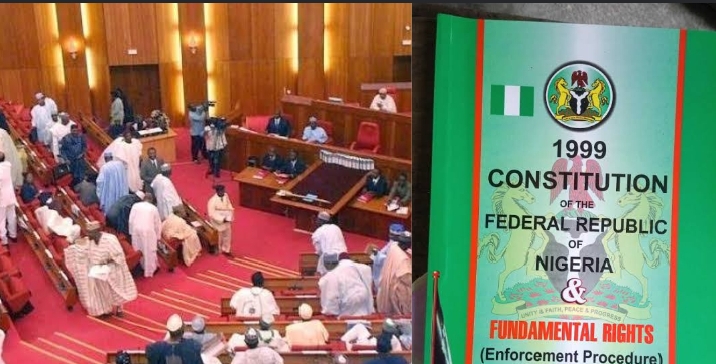
There are rooms in Abuja where quietude carries more weight than sound. Between the walls of the National Assembly, in the pauses between motions, and in the hesitant shuffle of papers before a vote, something unseen lingers. It is not quite history, not entirely law—but a presence. The kind that breathes through clauses written more than two decades ago and watches over the men and women who now claim to speak for the nation.
Nigeria’s democracy was reborn in 1999 with a document that promised direction and restraint—a Constitution meant to guard against excess and to heal the wounds of decades past. Yet, over the years, it has become more than parchment; it has become a haunting. Every new assembly inherits its ghosts: the unspoken compromises of the transition era, the clauses crafted in haste, the ideals suspended between ambition and caution.
In today’s lawmaking, those ghosts still move. They shape debates before words are spoken, dictate alliances before votes are cast, and whisper reminders of limits every time power begins to forget itself. The Constitution that once symbolized freedom now lives as both compass and echo, binding a nation to its own unfinished promises.
This is the story of those unseen influences—how a charter written in 1999 still commands obedience in 2025, how the ghosts of that founding document continue to shadow every bill, every reform, every claim to authority. It is not a story about the past; it is a story about what refuses to leave.
1999 Unveiled: The Architecture of Ghosts
The 1999 Constitution is not merely a legal text—it is a living skeleton, an architecture of power and compromise that continues to shape Nigeria’s lawmaking. Each clause, each chapter, is a silent actor in every legislative debate, a whisper in every vote, a shadow in every negotiation. Its components—crafted with care, compromise, and caution—form the very foundation of the ghosts that haunt governance, reminding lawmakers that every decision is both an opportunity and a responsibility.
1. Preamble sets the tone for governance, emphasizing democracy, rule of law, and the sovereignty of the people. It signals the Constitution’s dual role: guiding authority and moral compass, a shadowy reminder of the ideals lawmakers must uphold.
2. Fundamental Objectives and Directive Principles of State Policy (Chapters II and IV) outline national goals like security, social welfare, equality, and education. Though non-justiciable, they serve as guiding principles for legislation, shaping the moral and political compass of every lawmaker.
3. Fundamental Rights (Chapter IV) grant rights to life, dignity, freedom of expression, assembly, movement, and religion. Enforceable in courts, these clauses shape lawmaking on civil liberties, human rights, and justice policies, reminding lawmakers of the moral weight behind every law.
4. The Federal Structure (Chapter I & II) defines Nigeria as a federation of states, clarifying federal and state powers. These provisions haunt negotiations on revenue allocation, state autonomy, and federalism, serving as constant reminders that unity is fragile and balance delicate.
5. The Executive (Chapter VII) outlines the powers and responsibilities of the President, Vice President, and Governors. From appointments to immunity, these clauses are both instruments of authority and silent constraints, guiding how power is exercised and contested.
6. The Legislature (Chapter VI) establishes the bicameral National Assembly: Senate and House of Representatives. Lawmaking powers, oversight responsibilities, and checks on the executive are framed here, alongside procedures for introducing, amending, and passing bills—clauses that continually shape the rhythm of governance.
7. The Judiciary (Chapter VII)—Supreme Court, Court of Appeal, and Federal and State High Courts—gives life to dormant clauses, ensuring that the ghosts of the Constitution actively shape lawmaking outcomes through judicial review and interpretation.
8. Public Service (Chapter IX) organizes civil service and public officers, providing the machinery through which laws are implemented and bureaucratic influence exercised.
9. Revenue Allocation and Finance (Chapter II, Part I & V) create the framework for revenue sharing between federal, state, and local governments. The Federation Account and statutory allocations ensure that every fiscal negotiation is haunted by historical precedent and constitutional expectation.
10. Political Parties and Electoral System (Chapter VI, Part II & IV) provide the legal structure for elections and party registration, guiding democratic participation and legislative action on electoral reforms.
11. Amendment Process (Section 9, etc.) requires approval by two-thirds of the National Assembly and ratification by at least two-thirds of state assemblies. This ensures that every change is deliberate, contested, and negotiated—a reminder that the Constitution’s influence persists even when altered.
These components are the bones upon which Nigeria’s legislative body moves. They are more than words; they are shadows that guide, constrain, and inspire. Understanding them is the first step in reading the whispers of 1999, the ghosts that continue to shape lawmaking from Abuja to every state capital.

1999: The Birth of a Specter
The ink had barely dried on the 1999 Constitution when the ghosts began to stir. Abuja’s chambers hummed with anticipation and uncertainty; civilians were back, yet shadows of military decrees lingered like a chill across the marble floors. Every clause seemed alive, some whispering promises of freedom, others murmuring caution. Legislators, newly sworn in, felt these presences in the cadence of their debates, the hesitant handshakes, the careful pauses between motions.
Lawmaking felt less like creating rules and more like dancing with unseen partners. The Constitution was at once a guide and a mirror, reflecting the aspirations of a fledgling democracy while reminding its actors of compromises etched in secrecy. Early bills—on public service reform, state budgets, and electoral frameworks—were written as much in response to these spectral pressures as to real policy needs. Every paragraph carried the weight of history, every sentence a negotiation with invisible eyes.
In committee rooms, whispers of past military centralization seeped through interpretation. Lawmakers discovered quickly that some clauses were alive only when challenged, speaking in subtle ways during disputes over executive appointments or federal-state resource allocations. The ghosts of 1999 were patient teachers, showing that power was not only about authority but about knowing when to yield, when to insist, and when to read between the lines.
By the close of 1999, Nigeria’s first civilian legislators understood that their roles were half lawmaker, half interpreter of shadows. The Constitution, they realized, was less a book of rules than a living actor, haunting every decision, shaping every debate, and reminding the nation that democracy, like memory, is always a negotiation between past and present.
2000–2003: Learning the Steps
The early years of the new millennium were a rehearsal in humility. Legislators moved through plenaries and committees as if walking a floor strewn with unseen tripwires. Bills on telecommunications, electoral reform, and public finance carried more than technical detail—they carried the weight of precedent, the caution of compromise, the echo of the 1999 framers’ fears. Each article cited was a ghostly reminder: power could be won, but only if wielded with respect for history’s invisible hand.
Revenue allocation became a recurring rhythm in the legislative dance. Governors and federal officials read the same clauses differently, negotiating percentages and interpretations like silent duels. Lawmakers mediated, crafting compromises that were less about legal certainty and more about survival. Every allocation debate became a dialogue with ghosts—some past military rulers, some civilian framers—who had left behind an architecture of both guidance and ambiguity.
Even ceremonial moments—the swearing in of ministers, confirmation of judges—felt haunted. Legislators spoke cautiously, aware that every word could invoke a clause whose intention was never entirely clear. Procedural nuances, once mundane, took on spectral significance; a misplaced vote or a skipped quorum could awaken dormant consequences embedded in 1999’s careful ambiguity.
By 2003, as Nigeria prepared for its first civilian-to-civilian transition, the Assembly had become a chamber of shadowed expertise. Lawmaking was no longer only about text; it was about listening to the echoes, interpreting whispers, and negotiating with presences that had long outlived their authors. The ghosts of 1999 were no longer distant—they had become teachers, collaborators, and sometimes, silent critics.
2003–2007: The Executive’s Shadow
The second term of the Obasanjo presidency was a theater of tension, where lawmaking and power moved like dancers circling a fire. The 1999 Constitution loomed as a spectral referee, its clauses both shield and leash. Every attempt to constrain executive authority—the Petroleum Industry Bill, public sector reforms, appointments—felt like speaking to the air; the Constitution’s ghosts stirred only when their attention was demanded, leaving legislators to read nuance, tone, and unspoken threats.
Ambiguity became survival strategy. Provisions on separation of powers and federalism were neither blunt nor precise; they were whispered guides. Lawmakers learned to invoke them selectively, drawing strength from some clauses, bending others with careful justification. Debate was a ritual, each motion a conversation with the past, every amendment a negotiation with history’s shadow.
Judicial interventions began to articulate the ghosts more clearly. Court rulings on budget approvals, state revenue disputes, and ministerial confirmations lifted clauses from dormancy, giving them teeth. Legislators observed, internalized, and adapted, discovering that lawmaking was a dialogue with both text and spirit. The ghosts of 1999, ever patient, taught that legislation could only succeed if it respected the invisible architecture laid decades earlier.
By 2007, it was evident that lawmaking under 1999 was not a mechanical process. It was choreography with history’s unseen partners. Legislators had learned to read the room not just for political alignment, but for the spectral cues embedded in every clause. The Constitution was no longer a book—they felt it in their hands, in their debates, in the quiet after a vote was cast.
2007–2011: Federalism in the Mirror
The fourth National Assembly entered a country fractured along fiscal, ethnic, and regional lines. The 1999 Constitution’s clauses on federalism glowed like lanterns in the fog, illuminating paths for governors, legislators, and the presidency alike. Yet the light was uneven, casting shadows that could trip the unwary. Every bill touching state powers, resource control, or local governance was a negotiation with specters of compromise and unfulfilled promises.
Revenue allocation debates became lessons in historical memory. The statutory formulas were clear on paper, but their interpretation was alive, shifting with context. Governors invoked the Constitution like charms, federal ministers contested their reach, and lawmakers mediated, balancing legality with the political art of survival. The ghosts of 1999 hovered over each negotiation, reminding all that text without history was fragile.
Lawmakers also grappled with emerging security concerns. Policing, regional militia, and emergency powers required balancing federal oversight with state autonomy. The Constitution’s spectral presence guided decision-making in ways that were both subtle and profound. Each clause became a lens through which the Assembly measured risk, consequence, and precedent.

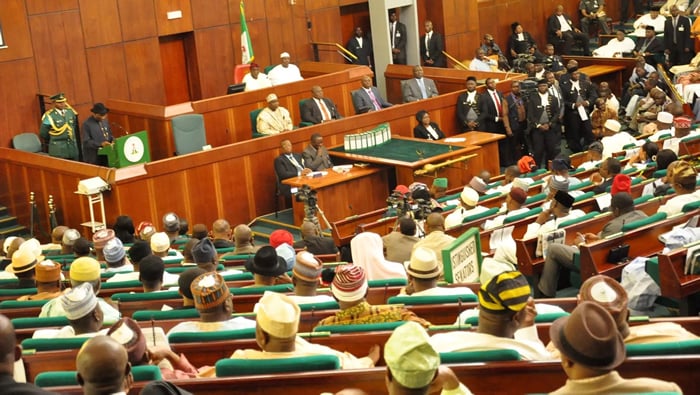
By 2011, the dance was deeply ingrained. Lawmaking was no longer a simple execution of authority; it was a conversation with past failures, a negotiation with silent observers, and a reflection of a document that had become both compass and ghost. Nigeria’s federal system, though fraught, had learned to speak through the echoes of its own making.
2011–2015: The Ghosts of Precedent
By 2011, Nigeria’s lawmaking had become a conversation with memory. The fifth National Assembly moved like dancers familiar with invisible steps, anticipating which clauses might awaken and which could be bent without confrontation. The ghosts of 1999 whispered caution and ambition in equal measure, shaping debates on economic reform, security, and social welfare. Every bill was a negotiation not just with colleagues, but with the silent authority of history.
Revenue allocation disputes became recurring tests of foresight. Governors wielded statutory references like talismans, while the presidency interpreted the same clauses as instruments of oversight. Committees, aware of judicial interpretations, crafted recommendations with the subtlety of courtiers negotiating with a shadowed monarch. The Constitution’s specters were patient, guiding compromise where ambition threatened imbalance.
Electoral reform and ministerial appointments reflected the same invisible influence. Each proposed law carried lessons from past controversies: previous misreadings of federal power, prior revenue battles, and the enduring ambiguity of executive oversight. Legislators learned that lawmaking was as much about intuition and precedent as it was about policy detail.
By the close of this term, the pattern was clear: Nigeria’s lawmaking was a dialogue with ghosts. The 1999 Constitution had moved beyond ink on paper—it was an unseen partner, shaping decisions, mediating conflict, and ensuring continuity amid change. Those who ignored its presence often found themselves entangled in disputes, a reminder that history, though silent, demanded attention.
2015–2019: Digital Shadows and Political Gravity
The sixth National Assembly convened amid political polarization and the rapid rise of digital scrutiny. Social media amplified every debate, yet the 1999 Constitution remained the invisible hand behind each decision. Lawmakers navigated public perception while honoring the spectral authority of clauses that had guided Nigeria since its civilian rebirth. The ghosts of 1999 had adapted, whispering not only in chambers but through the urgency of digital eyes.
Legislation on infrastructure, national security, and economic reform bore the marks of historical negotiation. Clauses once contested now shaped strategy, guiding lawmakers through complex partisan and regional pressures. Every amendment was a conversation with the past, a reminder that ambition without history could destabilize both law and political capital.
Judicial interpretations continued to animate dormant provisions. Court rulings on electoral disputes, ministerial appointments, and executive overreach made constitutional ambiguities tangible, teaching lawmakers that legislation was a living dialogue. Every vote was performed with an awareness that 1999’s shadows were watching.
By 2019, Nigeria’s lawmaking had matured into a subtle choreography. Legislators innovated and contested, yet always within the invisible boundaries of history. The Constitution’s ghosts were not obstacles; they were guides, ensuring that democracy remained anchored, compromises respected, and authority exercised with awareness of consequence.
2019–2023: Crisis, Compromise, and Continuity
The seventh National Assembly faced crises that tested law, spirit, and negotiation. Security challenges, economic instability, and regional unrest demanded swift legislative response, yet every action was filtered through the lens of the 1999 Constitution. Its clauses acted as compass and caution, reminding lawmakers that the urgency of the moment must bow to historical foresight.
Revenue and fiscal disputes again revealed the lingering power of precedent. Governors, legislators, and the presidency invoked familiar clauses, each negotiation a reenactment of battles fought in prior decades. Compromise remained central, but it was now informed by judicial memory, political experience, and societal expectation.
Legislators found creative ways to navigate unprecedented challenges while remaining constitutionally anchored. Strategic phrasing, selective invocation of clauses, and procedural nuance allowed them to respond to crises without overstepping invisible boundaries. The ghosts of 1999 were patient instructors, guiding lawmaking with a subtle insistence on prudence.
By 2023, it was clear that Nigerian lawmaking was a continuous dialogue with the past. The 1999 Constitution, once merely a framework, had become a silent partner—shaping policy, mediating conflict, and ensuring continuity. Its ghosts had endured, teaching lawmakers that democracy is never a matter of convenience but a conversation with history itself.
2023–Present: Echoes of the Future
Today, Nigeria navigates a complex landscape of political tension, economic uncertainty, and societal expectation. Legislators craft laws under immense pressure, yet every action is haunted by the Constitution’s clauses—reminders that authority carries responsibility and compromise is not optional. The ghosts of 1999 remain, guiding debates, shaping votes, and whispering the lessons of past assemblies.
Modern issues—digital governance, climate policy, electoral reform—test the Constitution’s flexibility. Lawmakers interpret its clauses with care, aware that every decision echoes both precedent and aspiration. The spectral presence of 1999 ensures that lawmaking remains a delicate balance between principle and pragmatism, innovation and tradition.
Even in informal negotiations, caucuses, and party strategy sessions, the Constitution’s legacy is felt. Its clauses, once contentious, now serve as tools for mediation, a silent curriculum for managing alliances, regional tensions, and emerging crises. Ghosts of compromise and history are present in every handshake, every vote, every public pronouncement.

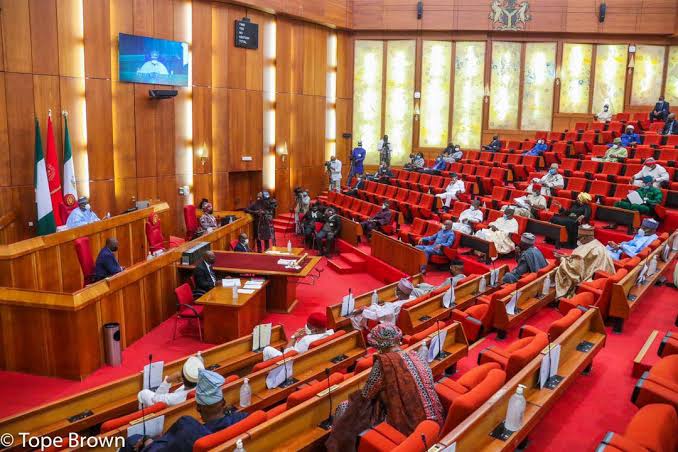
As Nigeria moves forward, the 1999 Constitution persists not as a static text but as a living guide. Its ghosts remind lawmakers that democracy is a conversation with memory, that power is tethered to responsibility, and that the future will always be written in dialogue with the past.
Closure of Thought: Shadows That Shape Tomorrow
The 1999 Constitution is not a relic; it is a presence. Its clauses walk silently through every chamber, linger over every vote, and echo in every negotiation. Lawmakers may draft bills, debate fiercely, or seek to innovate, yet the ghosts of 1999 are always there—watching, guiding, and testing the limits of authority. They are patient, impartial, and relentless, reminding the nation that law is not merely written, but lived.
Every decision in Abuja, every compromise at the state level, is a conversation with these unseen actors. The ghosts do not coerce; they influence through the weight of history, the authority of precedent, and the subtle insistence of morality embedded in the Constitution. Legislators learn, often slowly, that ambition without awareness of these shadows is fragile, and that power exercised without respect for inherited compromise is fleeting.
Modern Nigeria faces unprecedented challenges: digital governance, climate change, economic uncertainty, and political polarization. Yet, in every debate, in every bill, the 1999 Constitution whispers its guidance. Its presence ensures that innovation is tempered by principle, that progress is anchored in stability, and that democracy is always a negotiation between past and future.

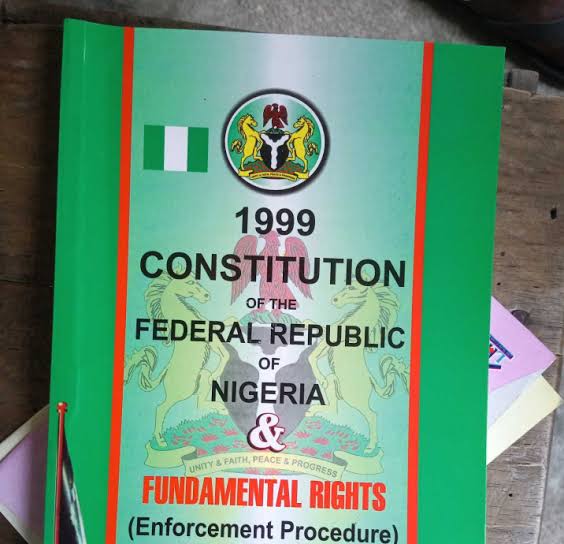
In the end, the 1999 Constitution is more than law—it is a living memory, a shadowed teacher, and a spectral architect of Nigeria’s governance. Its ghosts will continue to walk with lawmakers, unseen but unyielding, shaping decisions and the nation itself. Nigeria’s democracy, ever fragile, finds its rhythm not in the absence of constraint, but in the quiet counsel of these enduring presences.