



A fighter is measured in punches, but a champion is weighed in silence. Bashiru Lawrence Ali, Nigeria’s first cruiserweight world champion, moved through life with the discipline of a boxer and the endurance of a man fighting an invisible opponent. Every arena he entered outside the ring—government offices, sports federations, media scrutiny, and public expectation—was another canvas where strength, strategy, and patience were tested.
Before a crowd cheered or a bell rang, Ali fought battles that no scoreboard could capture. The currency of these battles was not sweat or blood, but perseverance, clarity of purpose, and moral courage. A missed signature, a bureaucratic delay, a sponsor who reneged on a promise—each was a subtle jab to the body and spirit, and each required a counterstrike of patience and strategy.
The streets of Lagos, where he was born in 1956, had already schooled him. Crowded alleys, buzzing markets, and the hum of daily survival taught him early that resilience is a muscle often exercised far from the public eye. He learned to anticipate, to pivot, to endure—and these lessons would follow him into every unseen arena he would later face.


This article unfolds these hidden sequences of Bash Ali’s journey—from early life to international recognition, from confronting corruption to chasing Guinness World Record glory. Each sequence reveals the depth of struggle, the artistry of perseverance, and the invisible stakes that shaped a legend.
Forged in Lagos’ Shadows (1956–1974)
Bash Ali was born into a Lagos alive with motion, where every street was a lesson in survival and every corner a test of wits. Childhood was less about play and more about learning the rhythm of resilience. Poverty was a sparring partner; societal expectation was a coach demanding discipline beyond his years.
Even before the world knew his name, he had learned the importance of timing and observation. The marketplace taught him to read people; the neighborhood taught him patience and endurance. Every small victory, every careful maneuver to navigate the crowded chaos, was practice for a far larger ring he had yet to enter.
In these years, Ali cultivated not only physical strength but also mental dexterity. He saw how opportunities could vanish in a heartbeat and how preparation in quiet moments determined outcomes in the spotlight. Lagos’ energy became the forge where his patience, judgment, and foresight were honed like the leather of a championship glove.
By adolescence, Ali had internalized a critical truth: the battles unseen are often the ones that define a man. Before he would ever face an opponent professionally, he was already fighting—against circumstance, expectation, and the subtle inequalities that shape lives.
The Ring Beckons, Bureaucracy Lurks (1978–1985)
When Ali officially stepped into professional boxing in 1978, the world saw his fists but not the invisible gauntlets he wore to navigate a system unaccustomed to African champions. The fight extended beyond training and sparring—it threaded through forms, licenses, and the often unpredictable bureaucracy of sports administration.
Every bout required more than strength. Negotiations with promoters, securing venues, and ensuring international recognition were puzzles with pieces that sometimes disappeared mid-game. The ring was just the stage; the unseen battles unfolded in offices, committee rooms, and the quiet frustrations of waiting for approvals that could make or break a career.

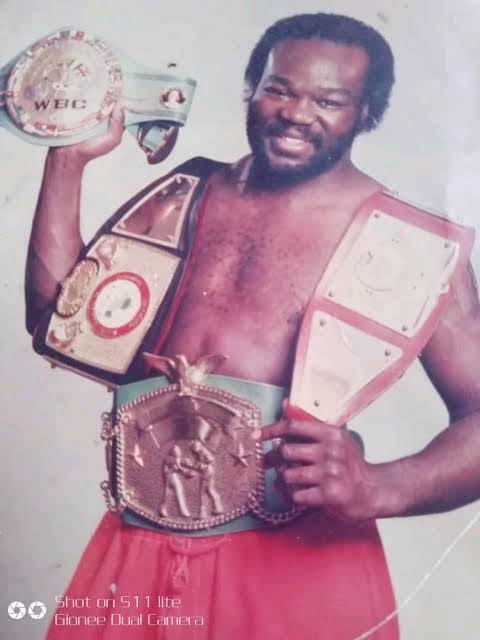
Yet Ali approached these unseen challenges with the same intensity he brought to the ring. Each delay was a test of patience, each bureaucratic obstacle a measure of endurance. Where others might have faltered, he adapted, learned, and persevered—turning the invisible gauntlets of administration into a form of mental sparring that sharpened his focus.
By 1985, when Ali clinched his first cruiserweight championship, he had proven something beyond skill—he had proven the capacity to endure battles that no crowd could cheer. His victories in the ring were, in many ways, echoes of victories already won in silence.
Confronting Corruption and Hidden Opponents (1987–2004)
Ali’s tenure as a world champion was punctuated by fights that did not involve gloves. Corruption, favoritism, and systemic inertia became opponents of a different sort—unseen yet potent. He resisted pressures to compromise, navigated the opaque corridors of sports administration, and endured detentions that tested the limits of human patience and dignity.
The most acute battle came in his refusal to yield to compromised systems. Spending 43 days in Kuje Prison was more than punishment; it was a crucible that tempered resilience, moral clarity, and strategic thinking. It was a stark reminder that some battles could not be fought with fists but only with steadfastness of purpose.
Financial instability followed. Having once thrived as a professional athlete, Ali faced the sharp edges of systemic neglect. Yet he persisted, refusing to sacrifice principles for short-term gains. Each challenge became a round in a marathon fight—one where endurance, not speed, determined success.
This sequence of struggles was as defining as any championship bout. The silent rounds of negotiation, resistance, and personal sacrifice were the foundation upon which his legacy, and his eventual Guinness World Record pursuit, would be built.
Personal Sacrifices and Appeals to Government (2005–2010)
Outside the ring, Ali’s battles were measured in days lost, opportunities forgone, and the weight of principled defiance. His fight against corruption and systemic inertia demanded personal sacrifices that few could see or quantify. Nights once reserved for rest became hours of correspondence, negotiation, and strategizing with officials who often slowed progress instead of enabling it.
He reached out to government authorities, appealing for support to host a Guinness World Record Boxing Championship in Nigeria. Each letter, each meeting, was a round fought without physical blows. The bureaucracy, slow and resistant, was a sparring partner that required patience and precision, teaching lessons in endurance far different from those learned in training gyms.


Financial strain accompanied these endeavors. Sponsorships were hard to secure, and expenses mounted as he navigated the labyrinth of approvals, venue coordination, and international verification. The unseen toll of managing resources while maintaining focus on his ultimate goal tested his mental resilience to its limits.
Through these struggles, Ali’s commitment never wavered. The vision of bringing international recognition to Nigerian boxing remained a guiding light. Each personal sacrifice became a thread in the tapestry of legacy he was weaving—one defined not only by titles but by courage in confronting invisible adversaries.
Preparing for Guinness World Record (2010–2015)
The Guinness World Record pursuit demanded meticulous orchestration. Ali knew that this was a battle of details, where the slightest oversight could nullify years of preparation. Every bout chosen for verification, every referee affidavit, every video recording became a part of the architecture of legitimacy.
Training remained rigorous, but it was interlaced with administrative strategy. Weeks of physical conditioning were punctuated by meetings, planning sessions, and careful documentation. This duality—of body and bureaucracy—created a rhythm akin to shadowboxing with invisible opponents, where a misstep could compromise the whole endeavor.
Media engagement became another arena. Ali needed to communicate his intent and credibility while maintaining focus on the record attempt itself. Managing narratives, ensuring factual reporting, and countering skepticism were battles that required diplomacy, patience, and mental agility.
By 2015, Ali had aligned all necessary components for a legitimate record attempt. Each verified bout, each documented detail, each resolved administrative challenge was a victory, invisible to the public but essential to the eventual realization of his goal. The groundwork was complete, and the stage was set for history.

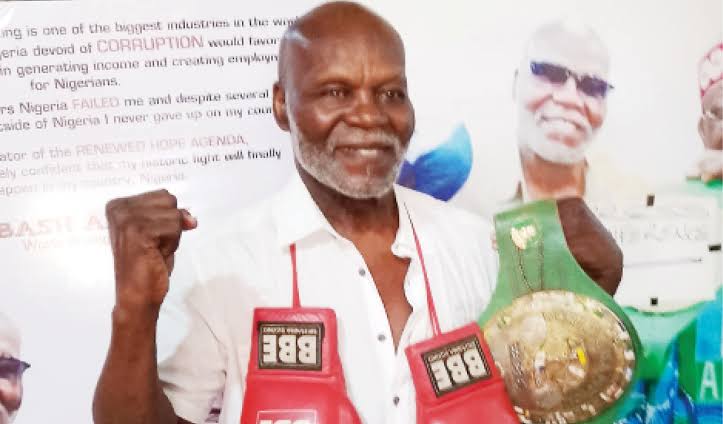
Media Scrutiny and Public Perception (2015–2018)
As news of Ali’s Guinness World Record pursuit spread, the glare of public attention illuminated yet another battlefield. Skepticism, doubt, and the occasional misreporting tested his ability to manage perception without losing focus on preparation. Public opinion became an arena where credibility and composure were as important as punches and stamina.
Interviews, press briefings, and public appearances demanded a new form of discipline. Ali had to craft a narrative that conveyed authenticity, ambition, and the value of Nigerian boxing, while shielding himself from distractions that could derail the record attempt. Each interaction was a calculated round, where words and demeanor held stakes equivalent to any bout.
Criticism, however, sharpened him. Misjudgments and doubts became fuel for perseverance, reinforcing the importance of letting actions speak louder than headlines. The unseen labor of managing reputation mirrored the persistence required in the gym—steady, deliberate, and relentless.
By 2018, public perception had shifted. Ali’s integrity, long-standing commitment, and meticulous preparation had earned respect. The unseen battles of media management and narrative shaping were won, leaving him poised to step into the historical moment he had long envisioned.
The Guinness World Record Attempt (2018–2022)
The culmination of years of preparation arrived with the official record attempt. Every fight selected for recognition was meticulously planned, ensuring compliance with Guinness standards. Ali faced opponents physically in the ring, but outside the ropes, he faced administrative, logistical, and verification challenges that demanded equal vigilance.
Travel arrangements, venue coordination, and referee validation required relentless attention to detail. A single oversight could invalidate months or years of effort. The invisible opponent of bureaucracy became a test of endurance, strategy, and focus that paralleled the physical trials of the bout itself.
Each match was a negotiation between physical prowess and the precision of documentation. The ring became a stage where victory was measured not only in points or knockouts but in the successful verification of effort and achievement. Ali’s mastery extended beyond punches to encompass strategy, patience, and unwavering attention to procedural rigor.
By 2022, the Guinness World Record was within reach. The culmination of physical, mental, and administrative labor reflected a truth Ali had long embodied: that the greatest battles often occur where no one is watching, and triumph is defined as much by perseverance in silence as by success in the spotlight.
Legacy and Enduring Resilience (2023–Present)
Now, in the twilight of a remarkable career, Bash Ali’s legacy extends beyond accolades and championship belts. His story is one of resilience in arenas unseen—against corruption, bureaucracy, public scrutiny, and personal sacrifice. Each of these battles, invisible yet consequential, contributed to the architecture of a life defined by integrity and purpose.

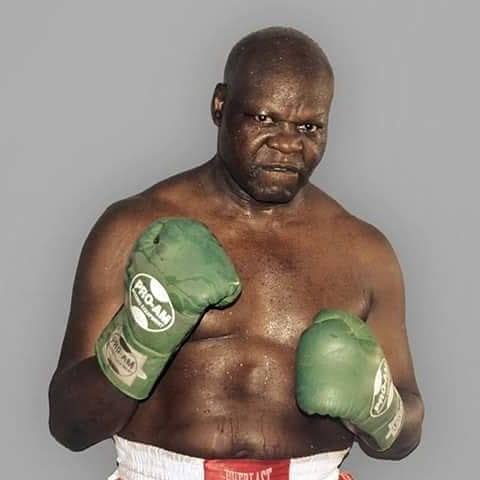
Mentorship became a new arena. Ali now channels his experiences into guiding younger athletes, teaching them not just the mechanics of boxing but the art of navigating life’s invisible rings. Every lesson in patience, persistence, and moral courage is a round in a fight against systemic challenges that still face aspiring Nigerian athletes.
The pursuit of the Guinness World Record remains emblematic of Ali’s enduring spirit. It symbolizes not just personal achievement, but the triumph of meticulous preparation, integrity, and resilience over obstacles both seen and unseen. His journey is a testament to the truth that legacy is forged in silence as much as in applause.
In the end, Bash Ali reminds us that every champion fights battles beyond the ropes. Success is measured not only in victories on the scoreboard, but in the courage to confront invisible adversaries, persist through adversity, and leave a mark that transcends the ephemeral glare of public attention.
Closeout: The Quiet Triumph of Perseverance
Bashiru Lawrence Ali’s life reminds us that the fiercest battles are often invisible. Beyond the roar of the crowd, beyond the gleam of championship belts, lie the challenges of integrity, bureaucracy, and personal sacrifice—opponents that test character more than skill. For Ali, each of these battles was a measure of resilience, patience, and unwavering focus.
His journey shows that triumph is not defined solely by public acclaim or records etched in history books, but by the courage to persist when no one is watching. The pursuit of a Guinness World Record, the appeals to officials, and the resistance to corruption were victories of a quieter, yet equally potent, kind.
Ali’s legacy is a blueprint for future generations: that discipline, moral courage, and strategic patience are as vital outside the ring as they are within it. The unseen rounds he fought are a testament to the enduring spirit required to navigate life’s complexities, both personal and professional.


Ultimately, Bash Ali stands as a champion not just of boxing, but of perseverance itself. His story illuminates the profound truth that the greatest victories are often those wrested from silence, struggle, and the relentless demands of the unseen arenas of life.