


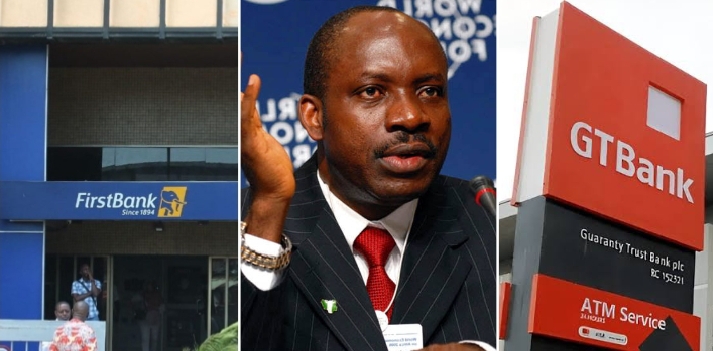
The year was 2004, and Lagos Island smelled of reform — of panic, ambition, and new arithmetic. Down the road from the Central Bank office, a tension lived in the marble corridors of every financial tower that lined Marina. Mergers were no longer theoretical ideas whispered in policy documents; they were coming alive, like sudden marriages arranged by survival. Numbers had turned romantic. Spreadsheets, once private, began to flirt across boardrooms.
On one side of the island stood First Bank of Nigeria, the country’s oldest and proudest institution, with over a century of colonial and postcolonial history layered into its blue logo. Across the city, Guaranty Trust Bank (GTBank) was rewriting what it meant to be young, profitable, and audacious. One moved like an elder with deep ancestral memory; the other, like a modern prodigy unafraid of tomorrow’s storm.
No one said it outright, but whispers had begun to form: Could these two banks, standing at opposite ends of Nigeria’s financial spectrum, find reason to merge? It was the kind of speculation that ignited quiet curiosity — not because there were meetings or proposals, but because in the frenzy of Charles Soludo’s banking consolidation reform, anything seemed possible.
GTBank and First Bank — two banks that shared the same skyline, the same regulators, and sometimes even the same clients — were imagined as potential partners in a marriage of survival and ambition. It was a courtship that existed mostly in the national imagination, but it told a deeper story: about legacy, independence, and the politics of growth.
Two Banks, Two Bloodlines
To understand the fascination with this imagined merger, one must first understand the DNA of both banks — their distinct corporate personalities born of different eras.


First Bank of Nigeria, established in 1894 as the Bank of British West Africa, was the colonial bridge between empire and commerce. It handled the payrolls of administrators, the trade of cocoa and palm oil, the savings of the early Nigerian elite. Its offices were temples of tradition: mahogany desks, navy blue ties, an air of quiet authority. Through the decades, it evolved into the face of Nigerian conservatism in finance — stable, cautious, procedural. It was the bank your grandfather trusted and your parents respected.
Guaranty Trust Bank, founded nearly a century later in 1990 by a group of young Nigerian bankers led by Tayo Aderinokun and Fola Adeola, emerged with an entirely different spirit. It was modern, urban, tech-savvy — the bank of the new Lagos elite. Its design aesthetic, corporate culture, and even dress code symbolized a generational revolt against old bureaucracy. GTBank’s orange logo wasn’t just color; it was ideology — boldness wrapped in simplicity.
By 2004, both banks were profitable and influential, yet philosophically opposed. First Bank saw growth as inheritance; GTBank saw it as invention. First Bank prioritized lineage, continuity, and structure; GTBank exalted efficiency, youth, and innovation. If the two ever merged, it would be like merging jazz with classical music — technically possible, emotionally turbulent.


Their differences extended beyond culture into economics. GTBank’s profit margins were rising faster, its cost-to-income ratio lower, and its digital innovations ahead of peers. But First Bank held something GTBank didn’t — time-tested trust, deep rural penetration, and the intangible prestige of having “been there from the beginning.” In essence, each was what the other wasn’t. And that is what made the rumor of their “marriage” so irresistible.
The Age of Reckoning: Nigeria’s Banking Reforms
It began as a lecture and ended as a decree. When Professor Charles Chukwuma Soludo, newly appointed Governor of the Central Bank of Nigeria, announced in July 2004 that every commercial bank must raise its capital base to ₦25 billion, the nation’s financial sector convulsed. Only two or three banks could boast that level of capitalization; the rest would either merge or vanish.
The reasoning was technical — Nigeria had too many undercapitalized banks, over 80 of them, many operating like regional outfits rather than national powerhouses. Soludo’s vision was bold: he wanted to collapse quantity into quality, to turn fragmented competition into concentrated strength. In his words, “the era of armchair banking is over.”

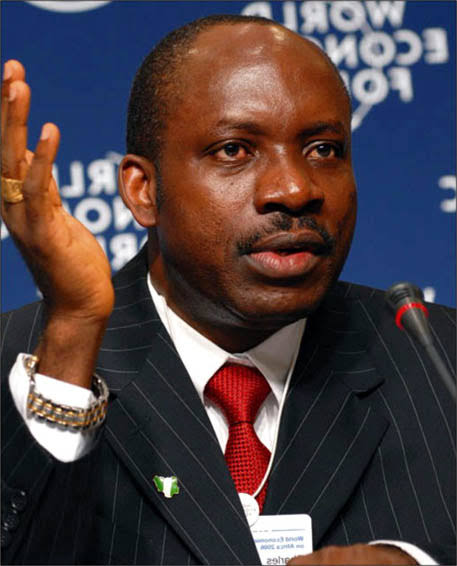
But behind the governor’s steady tone was panic across boardrooms. Small banks began courting each other frantically, the way families rushed to arrange marriages before famine. CEOs who had once avoided each other were now exchanging coffee and capital. Bankers who had never shared trust now shared spreadsheets. Within 18 months, Nigeria would witness the largest merger wave in its financial history, reducing 89 banks to 25.
The giants, however, watched differently. First Bank, with its century-old heritage, felt no existential fear. It had weathered colonial rule, independence, civil war, and deregulation. GTBank, though barely 14 years old, was already admired for its managerial discipline, modern branding, and lean governance. Both believed they could meet the ₦25 billion requirement without needing a partner. But the market didn’t care about self-assurance. Every strong institution was suddenly fair game for speculation.
And so the “courtship of capital” began — not in formal negotiations, but in rumors, analyses, and symbolic comparisons. What would happen if the old world (First Bank) and the new world (GTBank) decided to unite? Would it be the perfect blend of stability and innovation — or an arranged marriage doomed by cultural difference?
The answer, of course, would never come in form of a contract. But the idea itself would reveal the psychology of Nigerian banking at its most fragile and ambitious hour.
Whispers on Marina: The Era of Possible Unions
Between 2004 and 2005, as mergers unfolded daily, the financial press in Lagos became a theatre of speculation. “Who’s merging with whom?” was the question that moved markets. Reports of “exploratory discussions” appeared and disappeared like ghosts. Every banker, from Victoria Island to Abuja, had an opinion.
Inside GTBank’s head office on Adeola Odeku Street, Lagos, the leadership held emergency sessions. They were not desperate; they were strategic. The bank already had a capitalization advantage and a growing reputation for corporate governance. But as UBA absorbed Standard Trust Bank, Oceanic merged with International Trust, and Intercontinental absorbed Equity Bank, the optics of standing alone grew complicated. Even the giants were expected to make moves.
“Should we merge to appear stronger?” one director reportedly asked during those days. “Or should we prove strength by staying single?”
At the same time, First Bank’s board faced its own question. The bank’s strength was unquestioned, but its bureaucracy made it slower to adapt. Some analysts suggested it needed a younger, nimbler partner to modernize its operations. GTBank, in that speculative imagination, was the perfect suitor — small enough to bring energy, big enough to deserve respect.
Nothing formal was ever tabled between both institutions. Yet the speculation created a mythic aura — a parallel universe in which Nigeria’s oldest and youngest financial titans nearly joined forces. It was not unlike the way Lagos itself evolved: the old island embracing the new mainland, tradition learning to dance with technology.
But whispers only travel as far as conviction allows. Deep down, both banks knew that what made them great also made them incompatible. Still, in the fevered air of consolidation, the idea refused to die. Journalists wrote about it in cautious tones, analysts debated it in roundtables, and regulators smiled diplomatically when asked if such a merger could ever happen. It couldn’t — but Nigeria’s economy, restless and romantic, needed to believe it might.
The Boardroom Crossroads
Within GTBank, Tayo Aderinokun, the late co-founder and visionary CEO, often said that independence was not arrogance — it was identity. His deputy, Segun Agbaje, shared that conviction. They wanted GTBank to be the model of modern African banking — transparent, innovative, disciplined — not a brand swallowed by legacy.
Meanwhile, at First Bank, board elders viewed mergers with suspicion. Their institution had survived colonial regimes, military juntas, and recessions. Why would it now need a partner, especially one not yet half its age? The cultural tension between the two was enormous: one operated like a family dynasty; the other, like a Silicon Valley startup.
But the question of what-ifs still lingered. Imagine a balance sheet combining First Bank’s deep capital with GTBank’s creative systems — a financial giant straddling both the past and future. It was an alluring thought, one that could have redefined the shape of Nigerian banking. Yet, the merger would have also required both institutions to unlearn everything they knew about themselves.
As the Central Bank’s consolidation deadline approached, the boardroom calculus shifted from “who to marry” to “how to survive.” GTBank raised its capitalization independently, through public offerings and institutional investments. First Bank did the same, relying on its massive asset base and investor confidence. Both crossed the ₦25 billion threshold without needing to join hands. The imagined wedding was called off before invitations could be printed.
But like all great unfulfilled unions, the story lingered. It became part of Nigeria’s unofficial banking folklore — the “courtship that almost was,” the hypothetical alliance that defined a generation of financial independence.
Independence as Identity
After the consolidation dust settled, a new Nigeria emerged — leaner, more competitive, and more digital. GTBank stood out not just for surviving, but for evolving into a symbol of modern African banking culture. Its orange became a national color of corporate confidence. The bank’s youthful aesthetic, minimal advertising language, and design-led philosophy inspired an entire generation of professionals. Independence had paid off.
First Bank, too, began its own modernization journey. It overhauled its management, restructured its services, and embraced digitalization to remain relevant in a post-merger economy. The bank’s long history became a badge of endurance rather than inertia. Where others had merged out of fear, First Bank reinvented out of necessity.
In hindsight, both institutions benefited from staying apart. GTBank grew into a continental brand — expanding into Ghana, Kenya, and the UK — while First Bank remained the steady patriarch of Nigeria’s banking heritage. Each embodied a different kind of success: one fast and flexible, the other deep and dependable.
The market didn’t miss their merger. It celebrated their individuality. Yet, within the metaphor of the “almost marriage,” one could trace the evolution of Nigerian capitalism itself — a system learning that not all partnerships require formal vows to create shared meaning.


The Legacy of What Never Happened
Two decades later, the 2004–2006 consolidation remains one of the most transformative events in Nigeria’s economic history. It forced clarity upon chaos and birthed the modern financial ecosystem. Many of the merged entities from that era — Oceanic, Intercontinental, Platinum Habib — no longer exist under their original names, but the institutions that resisted merger pressure still dominate today.
For GTBank, independence became philosophy. The same internal culture that resisted merger pressure in 2005 also inspired the creation of HoldCo structure (GTCO) in 2021, expanding into payments, wealth management, and fintech. For First Bank, longevity remained its quiet rebellion — it outlived colonialism, digital disruption, and leadership turnover.
The “almost marriage” thus becomes symbolic: a story about how institutions define themselves not just by who they merge with, but by who they refuse to become. It also mirrors the tension within Nigeria’s broader story — between heritage and innovation, continuity and reinvention.
Looking back, perhaps the greatest merger between GTBank and First Bank was not financial but philosophical. Together, their separate trajectories shaped the nation’s modern economic identity: GTBank taught Nigerian banking how to look forward; First Bank reminded it never to forget where it came from.
And so, in that sense, the courtship of capital never really ended — it simply evolved into coexistence, two parallel love stories written in profit, policy, and pride.
The Union That Never Was (Conclusion)
In the end, what never happened said more than what did.
GTBank and First Bank never merged, yet their silence shaped a generation of bankers. One taught Nigeria how to move with speed; the other, how to stand with grace.

Theirs was not a failed courtship but a quiet understanding — that some unions weaken the soul they try to save.
By staying apart, they proved that identity can be a kind of merger too — between ambition and restraint, memory and motion.
And somewhere along Marina, where their towers still face each other across the city’s old skyline, the story endures:
sometimes the future is not built by joining hands, but by holding your ground.