


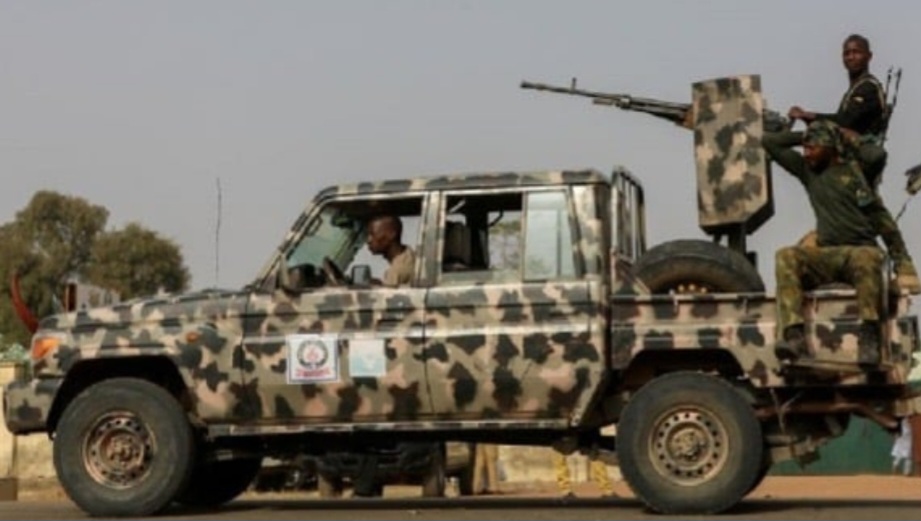
Nigeria’s political landscape has witnessed several transitions since its return to democratic rule in 1999.
From that moment, the country’s governance structure began to shift from the barracks to the ballot, marking the longest uninterrupted period of civilian rule in its history.
Despite recurring political tension, security challenges, and public dissatisfaction, the idea of a military coup has gradually lost its hold on the national imagination.
Several factors now make such a takeover nearly impossible to achieve in modern Nigeria.
One of the most significant reasons is the strong constitutional framework that clearly defines civil authority as supreme over the armed forces.
Nigeria’s military is now bound by laws that emphasise loyalty to the state and obedience to democratic control.
The professionalisation of the armed forces over the years has also strengthened discipline within the ranks.
Officers now undergo training focused not only on defence operations but also on respect for civilian authority and democratic values.
This shift has been reinforced by the restructuring of command systems, regular audits, and increased oversight by the ministry of defence.
In the past, poor communication and weak institutional checks made it easier for ambitious officers to exploit loopholes within the system.
Today, advanced surveillance, internal monitoring, and intelligence sharing have made coordination of illegal operations far more difficult.
Technology has also changed the equation, as every movement within security institutions is now traceable through digital networks and monitoring systems.
Public perception has played an equally important role in reducing any appetite for military rule.
Memories of past coups remain vivid, reminding citizens of the restrictions, censorship, and economic decline that often followed.
The modern Nigerian population, especially the younger generation, has grown up under democratic institutions and has little tolerance for authoritarian control.
Social media platforms have given citizens the power to mobilise opinions quickly, making it almost impossible for any coup to go unnoticed or unchallenged.
Unlike in the past, information now travels in real time, leaving no space for secrecy or surprise manoeuvres.
Regional and international pressure also act as strong deterrents against any unconstitutional seizure of power.
Nigeria is a key member of international organisations that uphold democratic governance, and any deviation would attract immediate sanctions.
The Economic Community of West African States and the African Union maintain clear policies rejecting military takeovers and enforcing suspension or penalties on offending states.
This diplomatic isolation could have devastating effects on Nigeria’s economy and global standing, especially as it remains a major regional player.
Internally, the structure of governance has become more decentralised, with powers shared among federal, state, and local institutions.
This makes it difficult for a single force to take over without facing widespread resistance from multiple levels of authority.
The National Assembly, judiciary, and civil society organisations also act as institutional buffers against any attempt to disrupt the democratic process.
The professional image of the armed forces has improved since the return to civilian rule, with many officers now focused on combating terrorism, insurgency, and organised crime.
Involvement in governance would distract from these national security duties and could damage years of reform efforts.
The military has also benefited from better welfare, career progression, and global partnerships, reducing the temptation for political intervention.
Economic and political realities further discourage coup attempts, as the country’s diversity and regional balance make governance complex and unstable under force.
The modern economy depends heavily on private and international partnerships that operate best under stable democratic conditions.
Disrupting this system through a coup would immediately trigger financial and diplomatic backlash.
Public institutions, the media, and non-governmental organisations are more alert and vocal than ever before, providing layers of accountability that never existed during the coup-prone years.
The rise of civic education and active youth participation in political discussions also strengthen democratic awareness across the country.
Elections, though imperfect, continue to serve as the legitimate channel for leadership change and public expression.
The focus on electoral reforms, technology-driven voting, and citizen monitoring further reduces the likelihood of people accepting a military takeover.
Ultimately, Nigeria’s democratic resilience has been built over time through collective experience and a growing belief in constitutional order.
While political instability still exists, the system has matured to the point where coups are no longer viewed as solutions but as setbacks.
The nation’s journey since 1999 has shown that stability, not force, remains the foundation for progress and development.
For a country that once cycled through military regimes, Nigeria’s greatest achievement today may be that its army now protects democracy rather than interrupts it.