Before the roar of stadiums and the glare of global attention, the Super Eagles’ 1996 journey began in the labyrinthine streets of Lagos. Young boys chased tattered footballs across dusty pitches, barefoot, under the relentless West African sun, dreaming of a glory that seemed just beyond reach.
Among them, Kanu Nwankwo’s gaze carried quiet determination; Jay-Jay Okocha’s nimble feet seemed to dance to rhythms the world had yet to hear; Daniel Amokachi and Emmanuel Amunike chased every ball as though destiny depended on it. These were not just players—they were custodians of a nation’s hope, sculpted by adversity, hunger, and the silent prayers of millions.
The squad was not perfect—far from it. Training sessions sometimes ended in silence, not celebration; tempers flared, doubts whispered, and egos quietly wrestled for air. Yet within that tension, something stronger was forged. Kanu’s calm steadied them, Okocha’s laughter reminded them why they played, and Babayaro’s quiet discipline anchored the dream before it ever took flight.

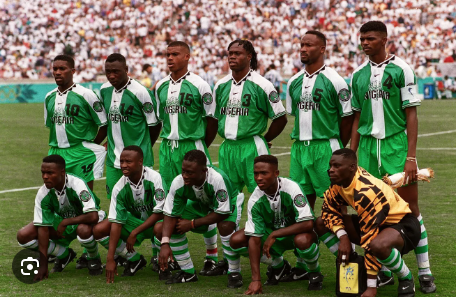
When the plane finally rose from Lagos toward Atlanta, it carried more than a team—it carried the fragile heartbeat of a nation daring to compete. This is a story of how that belief found its voice, how youth became history, and how gold was not just won, but earned in the fire of resilience.
From Lagos to Atlanta: The Journey of Preparation and Expectation
Traveling from the familiar streets of Lagos to the sprawling stadiums of Atlanta was not merely a change of scenery; it was an immersion into a crucible of pressure and promise. For Nigeria’s Olympic team, preparation had been intense but understated. Every friendly match, every tactical drill, every moment spent poring over opponents’ weaknesses was a step toward the unknown, a rehearsal for a reality where the stakes were immense.
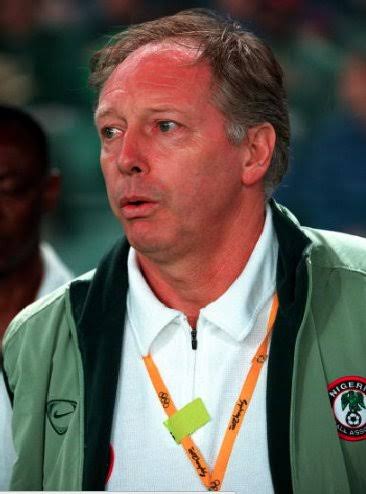
Jo Bonfrère’s coaching philosophy went beyond physical conditioning. He understood that mental acuity and psychological resilience were as crucial as goal-scoring prowess or defensive solidity. The Dutch coach emphasized situational awareness, insisting that players anticipate the rhythm of matches before it unfolded. In Atlanta, this preparation would become evident in the team’s cohesion, their near-telepathic understanding of one another’s movements on the pitch.
Yet, preparation was not without tension. The squad faced logistical challenges and the psychological burden of representing a nation brimming with expectations. Media speculation in Nigeria oscillated between cautious optimism and incredulous doubt, and the players learned early that they were not just athletes—they were symbols of national pride. Kanu Nwankwo often stayed behind after practice, reviewing tapes, absorbing every detail, ensuring that his leadership would be measured not only in words but in performance.

The journey also fostered bonds that transcended sport. Meals shared quietly, conversations that carried both humor and anxiety, and nights spent reflecting on childhood dreams cultivated an intimacy that would translate into the chemistry seen on the pitch. By the time the opening whistle blew in Atlanta, the team had forged not just tactical readiness but an emotional resilience, a shared purpose that would carry them through the turbulence of the tournament.
Group Stage Tension: Hungary, Japan, and the Brazilian Test
When Nigeria faced Hungary in their opening match, every heartbeat seemed amplified, every touch magnified by the consciousness of expectation. Kanu Nwankwo orchestrated attacks with a quiet precision, Ikpeba and Amunike made decisive runs, and the unity Bonfrère had nurtured became tangible on the pitch. Kanu’s late strike was not just a goal; it was a declaration of arrival, a promise to a nation that their dreams were valid and achievable.
Japan’s game demanded adaptability. The players had to balance aggression with strategic restraint, flair with precision. Amunike’s deft finish and Amokachi’s powerful strike were the embodiment of that balance—a symphony of preparation and instinct. Each goal carried the weight of collective belief, echoing the silent prayers of those watching back home.
Brazil, formidable and elegant, posed a far greater test. Despite a 4–1 loss, Nigeria’s lone goal from Amokachi signaled defiance rather than despair. The squad walked off the pitch not defeated but sharpened, their resolve strengthened by adversity. The loss was a lesson in humility, a reminder that preparation was continuous and that true strength emerges from the interplay of triumph and setback.
By the end of the group stage, the Dream Team had revealed its essence: a fusion of talent, discipline, and courage, capable of confronting giants while remaining tethered to the values that had shaped them. They were more than athletes—they were storytellers, writing their legacy in every touch, every sprint, every heartbeat.
Quarterfinal Breakthrough: Confronting Mexico
The quarterfinal against Mexico arrived with a mixture of anticipation and quiet apprehension. The Super Eagles had survived the pressures of the group stage, but the knockout phase was a new battlefield—where one mistake could end dreams, and one spark of brilliance could ignite history. In the locker room, tension hung in the air like an unspoken fog. Kanu, Okocha, and Amokachi sat in silent focus, each lost in their own rituals of preparation, the weight of a nation pressing on shoulders far too young to carry it alone.
From the first whistle, Nigeria imposed their presence. Okocha’s dribbles became more than skill—they were declarations of intent, weaving past defenders, bending the tempo of the game, challenging Mexico’s confidence. Celestine Babayaro’s runs along the flank were precise and purposeful, each strike of the ball echoing months of dedication and training. When Okocha finally opened the scoring, the stadium seemed to exhale in relief. It was not just a goal; it was a liberation, proof that the team could convert preparation into decisive action.
Daniel Amokachi and Victor Ikpeba moved like synchronized shadows, understanding each other instinctively, exploiting gaps, and orchestrating attacks that left Mexico scrambling. The second goal, scored by Babayaro, was a testament to collective intelligence, the culmination of strategic positioning, awareness, and trust. Every player on the field knew their role, not merely in terms of tactics but in the emotional fabric of the team—confidence, courage, and unity weaving together into victory.
By the final whistle, Nigeria’s 2–0 triumph was not merely a win—it was a statement. The Dream Team had survived the first true test of knockout football, proving that they were more than talented individuals; they were a living organism, a team capable of enduring pressure, overcoming fear, and translating aspiration into reality. In Atlanta, a story of possibility was unfolding, and Nigeria was authoring its chapters with precision and soul.
Semi-Final Drama: The Brazilian Redemption
The semi-final against Brazil was a collision of history, ambition, and emotion. The previous group-stage defeat hung over the players like a shadow, a reminder of the gulf between potential and execution. Yet this was no longer the same Nigeria. The lessons of the early rounds, the hours of preparation, the quiet mentorship among players, had coalesced into a collective heartbeat. Every movement, pass, and sprint carried a weight beyond the pitch—it was the weight of national pride and continental aspiration.
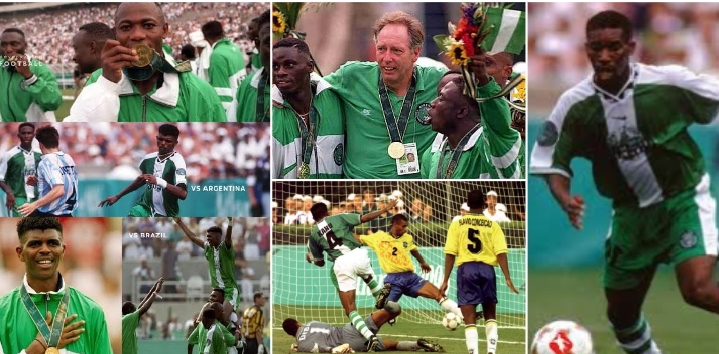
Brazil struck early, their goals a testament to individual brilliance and technical perfection. Bebeto and Flávio Conceição scored with precision, and for a moment, the Dream Team seemed on the brink. But Nigeria’s response was emblematic of their growth: resilience tempered by strategy. Victor Ikpeba’s strike narrowed the deficit, and Kanu’s equalizer was a delicate blend of timing and audacity. The stadium was alive with tension, each second stretching impossibly long, each touch imbued with destiny.

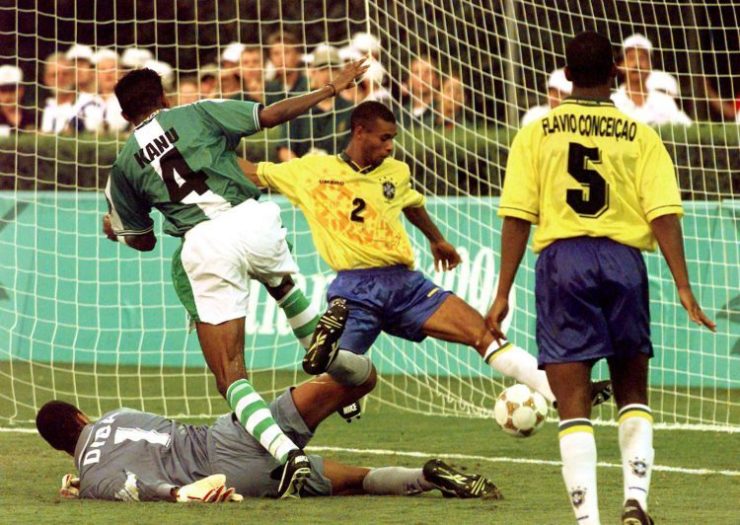
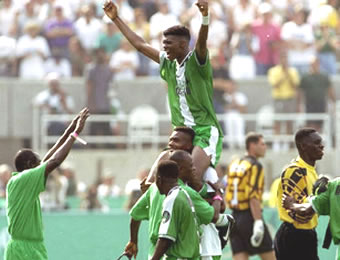
Extra time became a theater of suspense. Players were exhausted yet fueled by adrenaline, every movement a gamble between triumph and despair. And then, the moment that would etch itself into history: Kanu Nwankwo’s golden goal. It was not simply a score; it was a crystallization of dreams, preparation, and courage—a strike that carried the hopes of millions and the pride of a continent. The Super Eagles had achieved the unimaginable: defeating Brazil on the grandest stage, claiming their place in the Olympic final.
That victory was more than athletic achievement; it was a declaration of African potential, a symbol that talent combined with discipline, unity, and belief could rival the very best in the world. The semi-final was the emotional crucible in which legends were forged, where fear transformed into courage, and where the Dream Team truly became immortal.
The Golden Finale: Triumph Over Argentina
The final against Argentina arrived with the weight of expectation compressed into ninety minutes. From the opening whistle, the stadium felt electric, each pulse of the crowd resonating with anticipation and history. Claudio López’s early goal threatened to unsettle Nigeria, sending ripples of anxiety through the team and the nation alike. Yet the Dream Team had been tempered by trials; panic had no place here. They moved with purpose, their collective heart steady despite the shadows of early adversity.

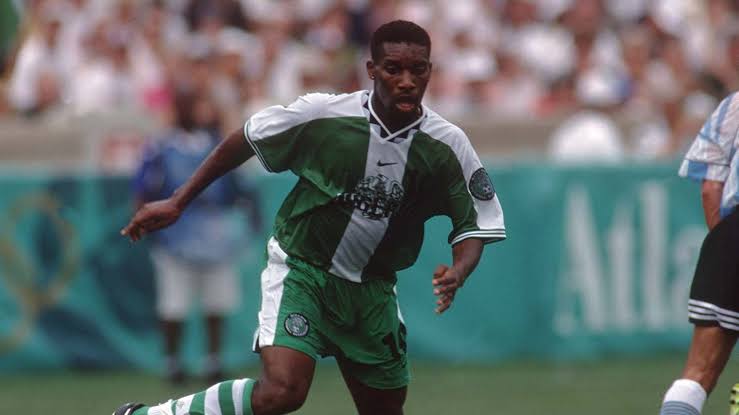
Celestine Babayaro’s equalizer at the end of the first half was more than a goal—it was a restoration of belief, a reaffirmation that Nigeria’s story was far from complete. Daniel Amokachi’s strike in the 72nd minute shifted momentum, each precise touch and explosive run embodying months of preparation and the unspoken trust between teammates. Every goal was a narrative, a pulse in the life of a team carrying not just a medal, but the pride of a continent.
Even Crespo’s penalty for Argentina could not deter them. And in the 89th minute, Emmanuel Amunike struck, sealing a 3–2 victory that would be remembered forever. The final whistle was not merely the end of a match; it was a collective exhale, a moment of catharsis, a story of triumph born from discipline, unity, and unrelenting belief. Nigeria had become Olympic champions.
The victory reverberated far beyond Atlanta. Streets in Lagos erupted in celebration; every pass, goal, and save had become part of the nation’s narrative. The Dream Team had demonstrated that African football could command the world stage, that courage, preparation, and faith could transform the improbable into reality. Their legacy would be told not just in statistics, but in hearts, memories, and the generations they would inspire.
Kanu Nwankwo: The Silent Commander
Kanu Nwankwo was not a player defined by bluster or overt displays of ego. From the streets of Owerri to the Olympic stadiums of Atlanta, his presence was measured, almost serene, yet charged with authority. On the pitch, he spoke without words; his movements orchestrated attacks, stabilized the midfield, and gave teammates the confidence to push boundaries. To watch Kanu was to witness a mind always calculating, balancing instinct with strategy, courage with restraint.
His journey to Atlanta was paved with resilience. Young and perceptive, Kanu had faced challenges that would have daunted lesser players. He carried the weight of expectation with quiet dignity, aware that every pass, every run, every moment of composure could shift the fate of the match and the hopes of an entire nation. In moments of pressure, he became the anchor, the silent force around which the Dream Team coalesced.

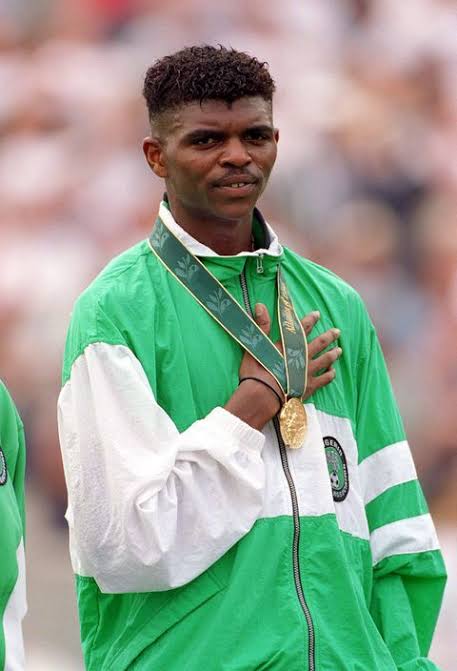
In the semi-final against Brazil, Kanu’s golden goal was more than a strike; it was the culmination of years of preparation, patience, and trust in his own ability. Each touch leading to that goal reflected his understanding of timing, space, and human emotion—the awareness that football, at its highest level, is as much about reading hearts as reading defenses. That goal did not just win a match; it etched Kanu’s name into the annals of history, immortalizing him as both athlete and symbol.
Yet beyond the statistics and the glory, Kanu’s influence was emotional and spiritual. He carried hope like a torch, his calm determination radiating across teammates and fans alike. He became a living example of how discipline, humility, and faith could transform raw talent into historic achievement, leaving a legacy that would inspire African footballers for generations.
Jay-Jay Okocha: The Artistry of Freedom
Jay-Jay Okocha was football as poetry in motion. Every touch was a brushstroke, every dribble a flourish, every feint a question posed to defenders and to fate itself. In Atlanta, his artistry was not for show alone; it was functional, tactical, and essential. Okocha’s ability to manipulate the ball, deceive opponents, and create space elevated the Dream Team’s game from competent to extraordinary. Watching him play was to witness intuition and creativity dancing in perfect balance.
Off the pitch, Okocha’s energy was infectious. He lifted the spirits of teammates with laughter, encouragement, and quiet reminders of collective purpose. In a tournament where pressure could crush youthful confidence, Okocha reminded everyone that joy and focus could coexist. His flair was a weapon and a morale booster, a signal that Nigeria’s game was not merely technical but lived and breathed with emotion.

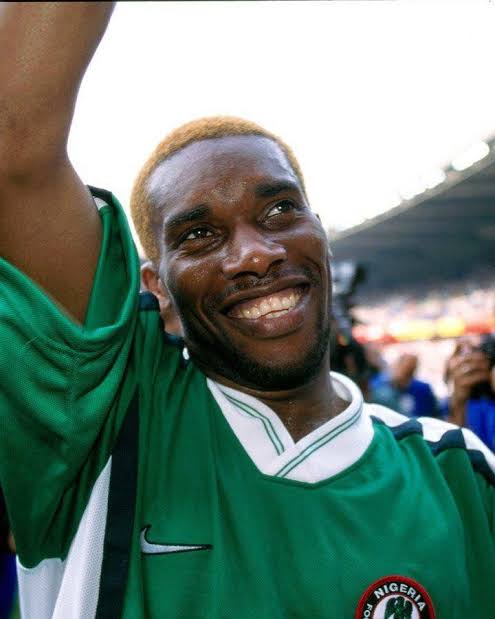
Against Mexico in the quarterfinal, Okocha’s dribbles destabilized the opposition, opening pathways for Babayaro and Amokachi to score. Each movement was calculated yet fluid, a testament to his understanding of both the art and science of football. The crowd may have seen spectacle; the team experienced strategic liberation, the ability to impose rhythm and tempo on an unforgiving opponent.
Okocha’s legacy from Atlanta 96 is both aesthetic and functional. He demonstrated that football could be beautiful without compromising effectiveness. He inspired a generation to see creativity as strength, courage as expression, and individuality as a vital component of teamwork. In him, the Dream Team carried not only victory but the elegance of artistry meeting purpose.
Daniel Amokachi: The Thunderbolt Forward
Daniel Amokachi’s presence was unmistakable: a blend of raw power, relentless energy, and instinctive finishing. He played football as a forward should—bold, direct, and unyielding. In Atlanta, his runs into the box, his timing of attacks, and his understanding of space were instrumental in shaping Nigeria’s path to gold. When Amokachi struck, it felt inevitable yet electrifying, a sudden release of kinetic energy that left goalkeepers and defenders scrambling in disbelief.
His journey was as much about perseverance as talent. Amokachi had learned early that success demanded more than skill—it required resilience in the face of expectation, humility amid praise, and courage under fire. Every sprint down the pitch, every contested ball, every goal reflected his personal mantra: refuse to yield, and the world must acknowledge you. Against Japan and Mexico, his strikes were not only crucial goals but emotional statements, proof that Nigeria’s ambition was not theoretical—it was actionable and precise.

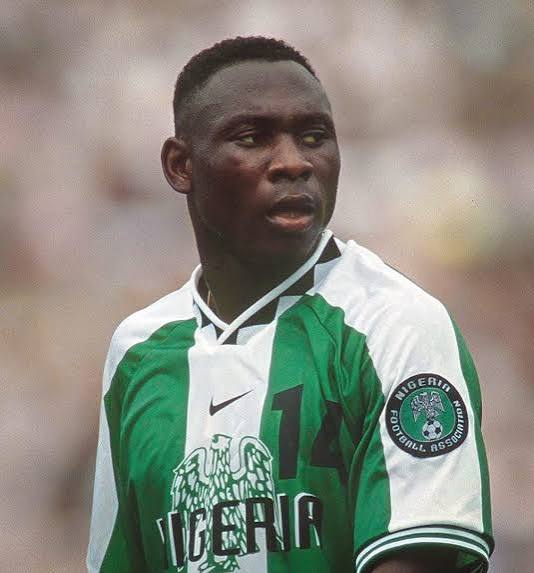
In the final against Argentina, Amokachi’s 72nd-minute goal shifted momentum decisively. The precision, timing, and composure required to execute under Olympic pressure elevated him from athlete to narrative force. He became a symbol of the Dream Team’s spirit—unflinching, aggressive when necessary, but deeply intelligent in execution.
Amokachi’s legacy is thunderous, both literally and metaphorically. He reminded the world that athleticism could be both inspiring and functional, that courage was measured not by absence of fear but by its mastery. His performance in Atlanta 96 became a blueprint for future forwards: strike decisively, move with intelligence, and leave everything on the field.
Emmanuel Amuneke: The Architect of the Unexpected
Emmanuel Amunike was often underestimated by observers who looked only at speed or goal statistics. Yet in Atlanta, he became the architect of critical moments, the player whose movement and instinct could unravel defenses when least expected. His 89th-minute winner against Argentina was not merely a goal—it was a narrative climax, the punctuation mark on a story written in determination, timing, and trust.
Amunike’s approach to the game blended patience with opportunism. He waited, read the flow of play, and then struck with a precision that belied youth. His timing in the box was impeccable, his runs intelligent, and his awareness of teammates’ positioning reflected a deep understanding of football as a collaborative, emotional experience. In every crucial match, he embodied both preparation and inspiration.
Off the pitch, Amunike’s humility and quiet focus provided balance to a squad brimming with energy and personality. He was a stabilizing presence, a reminder that victory is born not only of talent but of clarity, patience, and timing. His interactions with teammates, encouragements, and strategic insights strengthened the emotional and tactical fabric of the Dream Team.

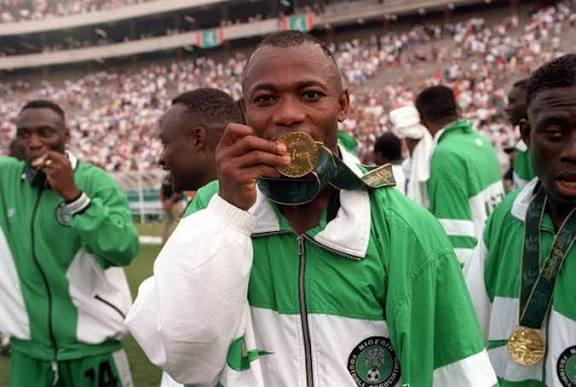
Amuneke’s legacy is the poetry of decisive action. His gold-winning strike remains a symbol of belief meeting opportunity, an emotional testament to the power of preparation, courage, and intuition. In the annals of African football, he is remembered not only for his goals but for the timing, grace, and intelligence that made those goals immortal.
Legacy: Africa’s Golden Moment
The Super Eagles’ triumph in Atlanta was not merely a medal; it was a seismic cultural moment. For Africa, it was proof that footballing excellence could emerge from the continent’s talent-rich yet underappreciated leagues. Young boys and girls across Nigeria and beyond saw heroes they could emulate, legends who embodied possibility, resilience, and hope. Kanu, Okocha, Amokachi, and Amunike became symbols, each goal, dribble, and strike representing far more than personal achievement.
On the global stage, Nigeria’s victory challenged perceptions. The Dream Team showed that African teams could compete with—and defeat—the world’s elite. The semi-final win over Brazil and the final triumph against Argentina were more than victories; they were statements. Africa was not merely a supplier of talent to European leagues; it could dominate, inspire, and lead in its own right.

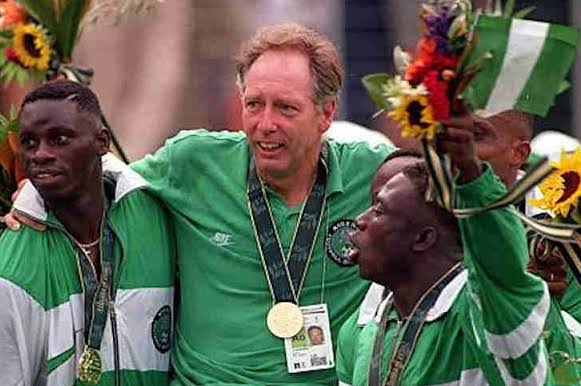
The ripple effects were profound. Nigerian football infrastructure, youth academies, and public enthusiasm received renewed attention. More than just statistics, the legacy of Atlanta 96 lives in the inspiration it provided, the pride it instilled, and the confidence it nurtured in generations of players who followed. The triumph became a cultural touchstone, a narrative that linked sport, identity, and aspiration.
Ultimately, the Super Eagles of Atlanta 1996 were more than gold medalists—they were storytellers, pioneers, and symbols of possibility. Their journey from Lagos streets to Olympic glory remains a testament to preparation, courage, and heart, a living legacy that continues to move, inspire, and transform.