


When liberal democracy becomes a tool of authoritarianism, dictatorship, impunity and mindless corruption people look for help elsewhere, even if the alternative they crave more often than not wears the same garb of despotism they loathe under the civilian rule and democratic set-up.
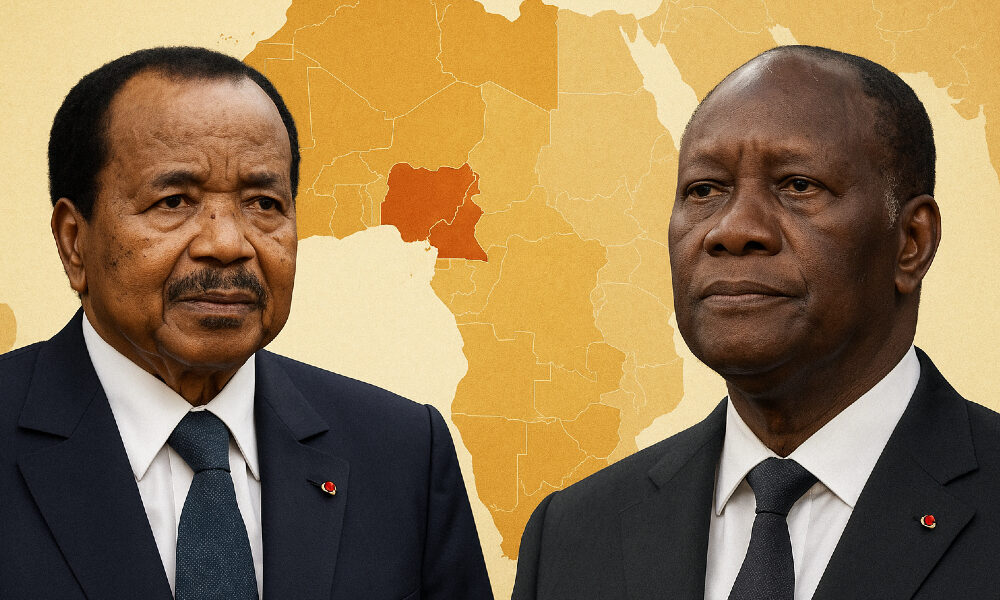
In the last few weeks, Cameroon has been enveloped by political upheaval and social unrest as the expected result of a keenly contested presidential election leaves the country in limbo. 92-year-old Paul Biya, who has ruled the country since 1981, was contesting for his eighth term in office as president. Last week, Biya’s main challenger and opposition leader, Issa Tchiroma Bakary, declared himself the winner of the election. His supporters took to the streets to defend his purported victory. At least four members of the opposition party have been shot dead by security forces since Sunday.
However, on Monday, Biya was declared the winner of the election by the Constitutional Council. According to the official results declared by the council, Biya won the election with 53.7% of the vote. But Biya is not alone in this weakening and manipulation of state institutions and stifling of the civic space to capture the state and perpetuate himself in power. In Côte d’Ivoire, Alassane Ouattara was also re-elected for a fourth term in office after removing the constitutional limit to extend his stay in power beyond the two-term limit. Even more worrisome is the fact that Quattara, who rode on the crest of revolutionary fervour and became president after his predecessor, Laurent Gbagbo, who wanted to remain as president after losing his re-election but was forced to vacate his position in a brutal power struggle that resulted in a civil war breaking out in the West African country, has now morphed into the very thing he fought against. In the just-concluded presidential election, Quattara disqualified all opposition candidates and contested unchallenged.
But Biya and Quattara’s victory is not a triumph for democracy. If anything, their questionable and foreboding victory is a testament to the incompatibility of the Western-style liberal democracy with many African countries, especially those in the sub-Saharan and Central regions of the continent. For Many despots and strongmen who came to power via democratic means but have refused to leave office after their tenure elapses, the election is nothing more than a perfunctory periodic ritual used to maintain the illusion of democracy. Other condiments of these illusions and the pococurante ritual of democracy is a multi-party system, even though opposition parties hardly have a say or get to compete on a level playing field, and universal adult suffrage of one man one vote.
They do this to seek the validation of the West. And of course, the West, who like to pontificate about the goodness of democracy, capitalism and neoliberalism, are well aware of the sham and disgraceful performative exercise called elections in these countries but they don’t care as long as they have easy and unfettered access to these nations mineral and natural resources that they need to keep their own industries running and economy alive they are willing to look the other way and let the atrocities of these dictators slide because they are in bed together and have their interest protected.
To insist on transparent and credible elections is to create a condition that exposes their lackey to the risk of losing power to someone who may not do their bidding and protect their interest and stake in the country. This is a gamble these Western powers are not willing to make. The risk is not worth it for them. It is better to play along. For them, placing the pedantry of democracy over strategically beneficial self-interest is akin to playing Russian roulette.
The standard is different for Africa. In Africa, flawed, manipulated and rigged elections are better than no elections, the West believe. Election is an elaborate theatrics where the ruling party at the national level, its elected public officers and corrupt elites pretend to organise and hold the habitual rituals of democracy and their Western “pro-democracy” friends commend them with the logic of cultural and political relativism. This repulsive legitimacy that is conferred on the abhorrent abuse of democratic ideals by the Western overlords breeds disillusionment among the people of the countries where they have continued to help widely resented and largely unpopular sitting-tight presidents remain in power.
It is not a surprise that there has been a resurgence of coups in many African countries in recent years. When liberal democracy becomes a tool of authoritarianism, dictatorship, impunity and mindless corruption people look for help elsewhere, even if the alternative they crave more often than not wears the same garb of despotism they loathe under the democratic set-up.
We’ve to be honest and truthful with ourselves regarding the conversation about liberal democracy. While it has succeeded in some countries on the African continent, it has failed in the overwhelming majority of the nations on the continent. We’ve to put an end to the liberal democratic experiment before it destroys what is left of Nigeria, Cameroon, and Africa. We need to ditch the old retrogressive ways that liberal democracy has foisted on us and look inward. We must start all over again but this time we must craft a new type of democracy, one that factors in Africa’s peculiar realities. One based on African cultural practices of consensus, shared power, and decentralised governance, based not solely on elections but also on other acceptable methods of leadership selection.
And if we are too indolent and unwilling to chart a new course, do the onerous and heavy task of liberating ourselves from this suffocating clutch of liberal democracy, at least we should stop pretending that what we have currently is normal and is the best we can come up with. We should instead insist that elections must be free, fair and credible and their outcomes must reflect the electoral choice and will of the people.
Despite its many demerits, in a real liberal democracy, unintelligent, uninspiring, charlatans and failed characters may emerge as candidates, even in the West, but they are often, though not always, rejected at the polls. The difference is that in the West, they at least operate on the principle of the sanctity of the vote, and the strong institutions and system are there to put them in check should they start going out of line. With liberal democracy being dangerously flawed and incompatible with our society, the least we can do, if we’re stuck with it, is that characters like Biya, Quattara and Museveni in Uganda cannot effortlessly rig themselves back to power ad infinitum.