


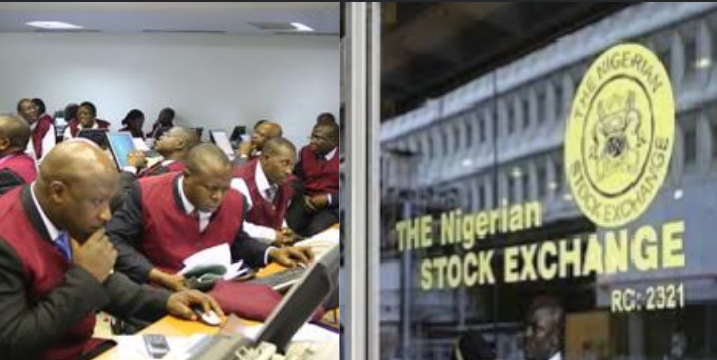
It began quietly, like most trading days in Lagos do: the hum of generators, the hiss of coffee machines, and the rhythmic tapping of keyboards as brokers logged into the Nigerian Exchange (NGX) terminal.
The air inside the glass tower on Marina was heavy with the smell of anxiety and disinfectant — that peculiar blend that defines modern finance. But as the digital clock struck 9:34 a.m., a ripple went through the room. One number — small, innocent, and unassuming — appeared on the ticker and changed the energy of the floor: 4.
Monitors flickered like nervous eyes, numbers leaping in patterns only the floor could feel. The room held its breath, each trader caught between calculation and instinct, as if the market itself were leaning closer to whisper something unseen.
Red and green danced across the tickers, ordinary yet charged, a silent rhythm that threaded through the floor. Phones vibrated, apps refreshed, and every fluctuation felt sharper, heavier — a pulse the traders could feel but not name.
This is an article about the rhythms of Nigeria’s stock market — patterns that seem ordinary but carry the weight of memory, culture, and collective experience. It traces the hidden stories in numbers and the subtle tension that shapes every day on the NGX.
The Origins of an Unofficial Fear


The Nigerian Exchange, once the Lagos Stock Exchange, was founded in 1960 — the same year Nigeria gained independence. For years, its evolution mirrored the nation’s journey: optimism, expansion, crisis, recovery, and reinvention. By the mid-2000s, it had become a stage where ambition met volatility.
The roots of the “number four” superstition trace back to April 4, 2008, the day Nigerian equities plunged faster than anyone expected. Global tremors from the impending financial crisis had just begun, and in Lagos, banks were over-leveraged and investors euphoric. That Friday, the All-Share Index dropped by 4.04 percent. In the chaos that followed, four major banks — Intercontinental, Oceanic, Afribank, and Bank PHB — all began their long fall into regulatory purgatory.
For traders who survived that year, the coincidence stuck. They started whispering about “the four pattern” — four banks, four percent, fourth day. When another market correction arrived exactly four years later, on April 4, 2012, the myth matured into a quiet legend.
No official report ever acknowledged it. But within the ecosystem of brokers, analysts, and speculators, the number four became a ghost — harmless until it appeared too many times on a trading screen.
Superstition and the Science of Fear
Behavioral economists often argue that markets are not driven by logic but by emotion disguised as data. In Nigeria, where culture and commerce interlace, that truth runs deeper. Traders who grew up hearing proverbs about destiny and cycles of fortune carry those beliefs into their spreadsheets.
The number four carries no inherent doom in Yoruba, Igbo, or Hausa numerology. Yet in the global language of superstition — imported from Asian markets where “4” phonetically resembles “death” — it found new soil. Nigerian traders who read Bloomberg or watched Nikkei tickers internalized that fear, subconsciously translating it into their own trading rhythms.
Every generation of NGX traders has its trauma. The 1990s had the banking collapses. The 2000s had margin lending and the bubble burst. The 2020s have inflation and currency shocks. Each era teaches the market new rituals of caution. By the time retail investors flooded into digital trading apps, “the 4 effect” had become shorthand for sell quickly and wait it out.
So, when April or the fourth trading week of any quarter arrived, liquidity often dipped slightly. It was not a mathematical rule but a behavioral echo — a superstition that shaped decisions without announcing itself.
The Marina Floor and Its Living Memory
Step into the NGX building on any trading morning, and you will understand why superstition survives there. The place hums like a living organism. Screens blink in coded languages, traders murmur prayers, and the floor vibrates with anticipation. Every number, every signal, carries weight.
Older brokers still remember the pre-digital days when trades were shouted across the hall, paper tickets flying like white birds. They remember 2008 — the week some lost homes, marriages, and reputations. One veteran, now in his seventies, still refuses to execute large orders on the fourth day of any month. “It’s not fear,” he says. “It’s respect for pattern.”

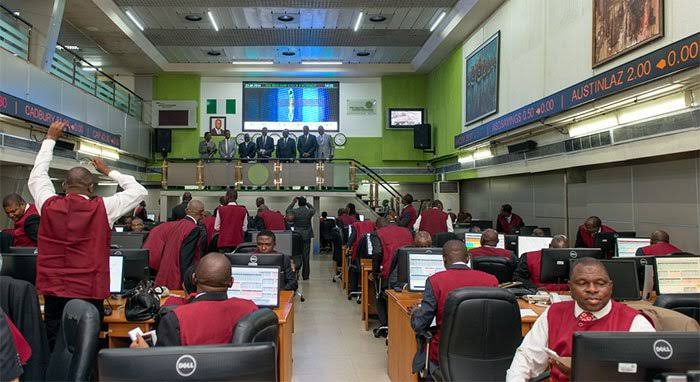
The younger generation laughs at such caution — until they don’t. In 2020, as COVID-19 crushed oil prices, the NGX recorded its steepest April losses since the crash of 2008. Again, the fourth week was the worst. That eerie recurrence fed the myth anew, bridging generations through shared unease.
The market became a theatre of déjà vu — a place where memory disguised itself as mathematics.
April’s Pattern: The Fourth Month Phenomenon
Financial analysts often debate whether calendar months influence market behavior. In Nigeria, April has become symbolic — the fiscal midpoint between optimism and reckoning. It is when audited statements land, when investors reassess strategies, and when governments release economic forecasts.
In the decade between 2014 and 2024, four major April downturns punctuated the NGX timeline. Each coincided with policy uncertainty or external shocks: oil price volatility in 2014, recession fears in 2016, pandemic disruption in 2020, and subsidy-related market corrections in 2024.
Traders began calling April “the testing ground.” The number four — both the month’s sequence and its recurring presence in losses — seemed cursed. Yet, statistically, it was explainable. April was simply when fiscal truth met market fantasy. Still, myths thrive where numbers fail to comfort.
That duality — logic on one side, folklore on the other — defines the Nigerian stock market more than any algorithm ever will.
Data Doesn’t Forget: The Hidden Records of Loss
Look through NGX archives and you’ll find a quiet symmetry. Four of the top ten single-day declines in Nigeria’s market history happened either on the 4th of a month or in the fourth week of a quarter. Statistically irrelevant, perhaps — but symbolically magnetic.
In April 2016, market capitalization dropped by ₦404 billion in four trading days. In 2020, the All-Share Index fell by 4.4 percent in the week ending April 24th. Analysts called it coincidence; traders called it confirmation.
This convergence of fours — 4 days, ₦404 billion, 4 percent — stitched itself into the oral folklore of finance. Numbers, after all, tell stories when people are desperate for meaning. The myth survived because the data left just enough room for imagination.
The Fourth Reckoning: 2024’s Market Spiral
By 2024, the NGX had become a far more complex organism than it had been in 2008 or even 2020. Global commodity volatility collided with domestic policy uncertainty, creating a pressure cooker environment. Oil price fluctuations, looming subsidy reforms, and interest rate adjustments converged like unseen tectonic plates beneath Lagos’s financial district. Over four consecutive weeks beginning in April, the NGX lost roughly ₦4 trillion in market capitalization. Traders, analysts, and policymakers scrambled to explain it, yet the recurrence of “four” in so many metrics did not escape the seasoned eye.
Analysts attributed the spiral to external forces: global market interdependence, currency volatility, and political signaling. Yet traders noticed what others dismissed — the alignment of numbers, weeks, and losses. April again, four consecutive weeks, ₦4 trillion lost. For them, the pattern confirmed an almost mythic memory embedded within the market itself, a collective imprint left by decades of financial trauma. They whispered in hushed tones about a “fourth reckoning,” a spectral punctuation in the otherwise rational flow of investment.
This recurrence illuminated a broader truth: superstition in markets is rarely irrational. While the macroeconomic drivers were real and measurable, the human interpretation of risk — magnified by pattern recognition — shaped behavior. Selling accelerated, stop-losses triggered, and liquidity dried at precisely the points where history had repeatedly shown vulnerability. The NGX, for all its modernization, remained sensitive to its own past.
In boardrooms and trading floors alike, the “four” phenomenon became shorthand for collective vulnerability. It symbolized more than just coincidence; it represented the cyclical wounds of Nigeria’s market — the memory of collapses, investor panic, and policy uncertainty that resurfaced at intervals. Recovery always followed, but always with the echo of previous losses embedded in decisions, calculations, and cautious strategies. The myth had matured into a structural rhythm, informing behavior beyond conscious awareness.

The NGX Board and the Shadow of “Four”
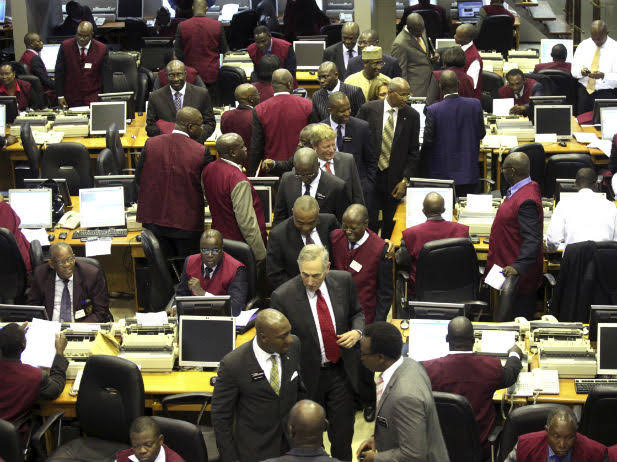
Traders’ eyes are always on the NGX Board, where numbers flicker and fortunes are made or lost in milliseconds. On any given day, the board displays hundreds of stocks, their prices, percentage changes, and the All-Share Index (ASI). It is the heartbeat of the Nigerian market, constantly updated and scrutinized by both retail and institutional investors.
Even without superstition, humans naturally notice patterns. A cluster of losses, a recurring dip, or a particular sequence in stock tickers can catch the eye and create a psychological impression. For example, if a series of declines happened historically around the 4th day of the month or the fourth week of a quarter, traders might unconsciously associate that number with caution. The NGX Board, by constantly broadcasting these numbers, becomes the visual anchor for memory and pattern recognition.
Behavioral finance shows that repetition reinforces perception. If a trader remembers that the ASI fell sharply on the fourth of a month, the next time the calendar hits that day, they watch the board more nervously. Small losses or dips might feel amplified, creating a self-reinforcing cycle of attention, anxiety, and cautious trades. The board is not magic — it simply reflects data — but human interpretation transforms it into something that feels meaningful, even ominous.
In modern digital platforms, this effect persists. NGX trading apps, online tickers, and real-time dashboards carry the same data, visible to investors across Nigeria. The board becomes both a tool and a mirror: a mirror of the market and of human psychology. Even if no one “fears” the number 4 objectively, repeated exposure to the board, combined with memory and market experience, can give it mythical significance — a subtle tension woven into every glance at the scrolling figures.
Takeaway — When Numbers Remember
Every market has its ghost. On Wall Street, it is 1929. In Tokyo, it is the 1989 bubble. In Lagos, it is the recurring “4.”
The Nigerian Exchange will continue to evolve — new policies, new platforms, new players. But as long as memory shapes behavior, superstition will remain coded into the heartbeat of the market. The fear of “4” is not a belief in curses; it is a shorthand for everything traders cannot control — timing, policy, fate.

And perhaps that is what keeps them grounded. Because to fear a number is to remember that beneath the systems, humans still search for meaning in the mathematics of loss. The NGX, in all its glass and circuitry, remains a human story — a story of resilience disguised as repetition.