


They would have us believe that the dysfunction that pervades the country and the criminal misgovernance of the people has nothing to do with the horde of money-seeking, power-hungry and heartless political and ruling class, but the very hapless and forlorn victims of their abysmal leadership and disgraceful statecraft.
Nigeria is not the only country in the world plagued by corruption. Every nation in the world, including China, where corruption and the theft of public funds are viewed as an immortal sin, grapples with the scourge. The only difference between many of these countries and Nigeria is that their leaders know not to let their personal interests and greed get in the way of national interest. Despite their shady and corrupt dealings, they are still largely altruistic and imbibe some measure of noblesse oblige.
In Nigeria, the case is quite different. Corruption has not only been normalised but institutionalised and to not partake in corruption or anything that largely undermines the social cohesion of the society and stunts the growth of the nation is to be seen as an outcast and be ostracised by the deluge of reprobates who already sell the country just to be able to brag about the wealth they have dubiously and diabolically acquired. The principle of noblesse oblige is unfamiliar to Nigerian elites and the political class, as they don’t view their position as one that should be used to create better and more tremendous socio-economic conditions for their people.
Another jarring aspect of corruption and mismanagement of public funds in Nigeria is not just how it undermines the nation’s development, but also how it erodes and destroys the profound ideals and characteristics essential for the growth and survival of any society. It undermines individual characteristics that foster a peaceful, progressive, and successful society.
For years, the subject of Lagos’ budget has been a topic of public discourse, as the secrecy surrounding the state’s revenue and expenditure often leaves many of its residents shortchanged. For many within and outside the state, the revenue that accrues to the state is not in any way commensurate with the level of development. For instance, at $100–135 billion, Lagos State has roughly the same gross domestic product as Morocco but the city’s development, especially in the area of infrastructure and quality of life, is nowhere near that of Morocco. Morocco has turned economic outputs into tangible and visible growth and development, while Lagos, despite its enormous resources and a GDP that rivals Morocco’s, has not conclusively solved any socio-economic issues that its residents grapple with.
The inability of Lagos, even as a state within a federation despite the enormous human and material resources at the disposal of those in charge of the state, to match the breathtaking development and growth of Morocco is down to greed and corruption among callous elites and the political class for whom the concept and ideals of nationalism and public good are alien.
In 2024, salary earners in Lagos paid a whopping ₦705.41 billion in taxes. Instead of being provided with efficient and reliable public transport, well-equipped and adequately staffed hospitals, standard and well-maintained public schools, world-class infrastructure and public firefighting service, they got potholes, insecurity, and zero safety nets. The government lavished money and bought luxury cars and furniture. This is not a one-off mismanagement of public funds but a disconcerting attribute that has become the hallmark of the state for many years. Year in, year out, Lagos state records humongous revenue, particularly from taxes, but there is little or absolutely nothing to show for it by way of development that a subnational of its calibre deserves.
The lion’s share of Lagos revenue comes from taxation of salaried workers, people already grappling with runaway inflation occasioned by a sharp rise in the cost of rent, food and transportation, which are further exacerbated by a surge in crime and general insecurity. Instead of plowing back these taxes into the system to create a social safety net that will cushion the effect of the harsh and brutal socio-economic conditions Lagosians face, the money is splurged on frivolities that do not help or improve the lives of average Lagosians in any way but sustain lavish and flamboyant lifestyles of the corrupt ruling class.
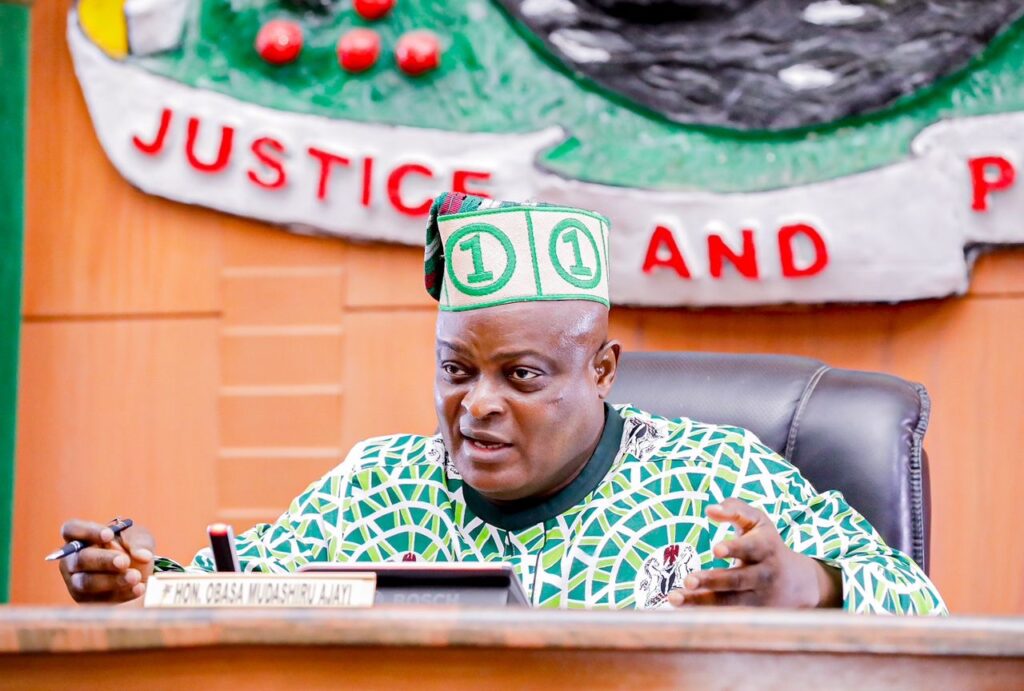
In the 2026 state budget, ₦87 billion is allocated as the capital for just 40 Lagos lawmakers, which significantly exceeds the state’s entire capital allocation to health, pegged at ₦68 billion. Statistically, this means the comfort, pleasure and material satisfaction of 40 politicians is valued more than the health of over 20 million residents. As if outrageous capital allocation is not unconscionable enough, N6.2 billion was also budgeted for 40 house in the federal capital territory in Abuja, underscoring the distasteful indifference to of elected public officials to productive governance and public good but total fixation on personal comfort and corrupt enrichment of themselves at the expense of themselves at the expense of the state and its struggling residents.
The commitment of huge resources to the welfare of a handful of lawmakers while the majority of the state’s residents struggle with basic needs does not in any way portray the state as one who prioritise the well-being of its lawmakers, if anything, it reflects poorly on the state and those managing its affairs and the shows that the state is been run by low-quality men.
These are for only the budgetary allocations that are made public. The most worrying aspect of this matter is that whatever we now know of this outrageous and indefensible allotment of taxpayers’ money to the welfare of a motley crowd of selfish and avaricious elected public officials is nowhere near the wastage and misuse of public funds that the people are not privy to or have any inkling about.
Despite this unmistakable misuse of public resources and glaring diversion of taxpayers money into unproductive quarters that has little or no benefit to the people, Lagosians and by extension Nigerians are now being gaslit into believing that they don’t pay enough tax for the kind of growth and development they deserve while the issue of corruption and malfeasance that have hindered the growth of Nigeria are swept under the carpet. They would have us believe that the dysfunction that pervades the country and the criminal misgovernance of the people has nothing to do with the horde of money-seeking, power-hungry and heartless political and ruling class, but the very people hapless and forlorn victims of their abysmal leadership and disgraceful statecraft.