


Following the 2023 election, particularly the controversy and widespread dissatisfaction that greeted the presidential poll outcome, the agitation for far-reaching electoral reform intensified. Before the general election, the national assembly passed a raft of legislation to reform and strengthen the electoral process. However, after the elections, it became abundantly clear to many Nigerians that key issues that mitigate against the conduct of free and credible elections were not addressed by the 2022 electoral acts. One of the issues that the electoral reform of 2022 failed to comprehensively and conclusively address is the real-time electronic transmission of result and as the preparation for the 2027 election enters top gear, the matter has become a topical and dominant one in our national discourse.
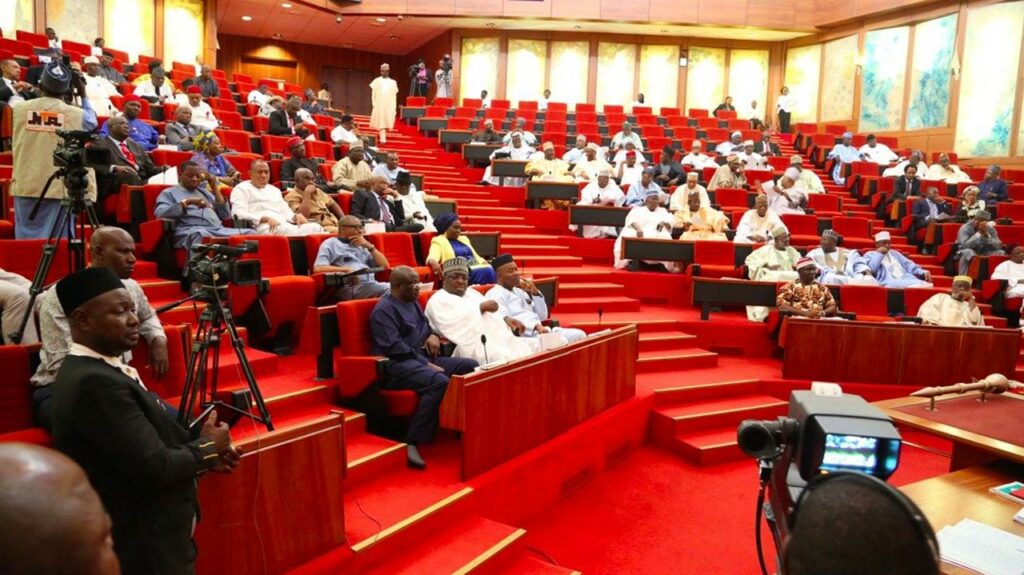
On Wednesday, the Nigerian upper legislative chamber at the federal level, the Senate, during deliberation and review of the electoral amendment Bill, rejected a critical provision which is the electronic transmission of results in real time from the polling booth. Expectedly, the development sparked outrage among Nigerians with opposition parties voicing their revulsion at the move as they described it as harmful and dangerous.
The decision of the Senate to reject electronic transmission of results did not come as a surprise to many observers, it only validated and reinforced their notion about the lack of real desire on the part of the principal officers of the national assembly to promulgate laws that will enhance the credibility of our perennially flawed and highly controversial elections. While members of the Senate and the House of Representatives make so much song and dance about passing laws that will strengthen our electoral process and deepen our democracy, they have paid lip service to important aspects of what is gradually becoming superficial electoral reforms and fall short when it matters most.
After the outrage and hysteria that followed yesterday’s disclosure of the Senate’s rejection of real-time electronic transmission of election results, the Senate president, Godswill Akpabio, clarified the position of the legislative body on Thursday. According to him, real-time transmission of counted votes at the polling booths has always been a key provision of the 2022 electoral act and the Senate did not reject it. To casual and passive observers of Nigerian politics and elections, Akpabio’s clarification should be enough to douse tension and calm frayed nerves. But to those who have keenly followed events in the political space in the last three years and are deeply interested in the conduct of elections in the country, Akpabio’s response is not only disingenuous but alarmingly dishonest.
Of course, many Nigerians are aware that one of the key provisions of the 2022 electoral act is real-time electronic transmission of results. In fact, that provision and the Independent National Electoral Commission (INEC) pledge to strictly adhere to it were partly responsible for the relatively high voter turnout, especially for the presidential election, in 2023. But the high hope and expectation that many had during the election quickly fizzled out after the results viewing portal suddenly and bizarrely malfunctioned and voters were unable to view the results of the presidential election in real time. Whatever hope and confidence they have the infusion of technology and electronic transmission of results in real time will make their votes count completely vanish after INEC, during the presidential election tribunal petition, stated it was not mandated to transmit election results electronically from polling booths to a result viewing portal that is accessible to everyone.
After the disappointment and discontent that greeted INEC’s conduct of the 2023 presidential election and how it leveraged the loophole in the 2022 electoral act to justify its inability and, some will say, refusal to organise and hold transparent and credible elections, there was serious and aggressive push for mandatory real-time electronic transmission of results to be part of the next amendments of the 2022 electoral act so many were taken aback when the Senate decided not to make electronic transmission of results mandatory.
There is absolutely no doubt that mandatory electronic transmission of results will enhance the transparency and credibility of our electoral process and strengthen our democracy. Why the Senate has refused to make such provisions a part of the Electoral Act Amendment Bill is obvious to any discerning mind. One would have thought that a Senate dominated by the ruling party would have no problem passing a law that makes rigging and manipulation of elections extremely difficult and painfully unattractive.
But the Senate under the control of the APC has only acted true to its form by refusing to make the electronic transmission of election results mandatory. The feelers we are now getting are that the decision to block compulsory and legally binding transmission of results was not taken by the majority of the senators but by the principal officers of the Senate led by Akpabio. We have essentially become a nation being held to ransom by small-minded, money-seeking and power-hungry men.
The rejection of electronic transmission of results in real-time does not pose a threat to our democracy; it also has the potential to plunge the country into political unrest and social upheaval. The action of the Senate leadership is a deliberate attack on Nigeria’s democracy. It weakens the foundation of free, fair and credible elections. One would have thought that the manipulation, turmoil and draining legal disputes that bedevilled past elections, particularly the 2023 general election, would have forced the Senate to prioritise the mandatory real-time electronic transmission of results as these issues all stemmed directly from the refusal to fully implement electronic transmission, but it appears that the lawmakers enjoy the tension, chaos, disorder, manipulation and uncertainty that the lack of this crucial electoral measure and democratic guard rail brings than the stability, transparency, peace that its presence engender.
Then one must ask, does the government exist to ensure order, stability, progress and justice, or to institutionalise chaos and instability? Is its purpose to serve the people, or to fulfil the nefarious and selfish aspirations of a select few?
By rejecting mandatory electronic transmission—a critical component for electoral integrity—we are fanning the embers of disorder and anarchy aimed at fomenting confusion and chaos for the sinister ambitions and inordinate whims of small cliques. What we need now is leadership that is focused on building a credible, orderly, and livable nation for the next generation, rather than one permanently ensnared in cha.s?