


There are other known rabid and firebrand Islamic clerics and ultra-conservative politicians whose utterances, actions and inactions have done more to undermine Nigeria’s unity and sow the seed of religious extremism in the country.
On Tuesday, a member of the United States House of Representatives, Riley Moore, who represents Virginia’s second district, announced the introduction of the Nigeria Religious Freedom and Accountability Act of 2026. Other cosponsors of the bill are Brian Mast, Chris Smith, Mario Diaz-Balart, and Bill HuizengaThe Bill is aimed at finding a lasting solution to the actions of subversive elements, religious extremists and terrorists who persecute, attack and in many cases kill Christians and liberal Muslims. Moore’s Bill is the visit he made to Nigeria late last year.
More had visited Benue following President Donald Trump’s designation of Nigeria as a country of particular concern amid purported claims of Christian genocide in Nigeria. Benue is one of the states worst hit by the violent attacks and atrocities of suspected armed Fulani herders. Thousands have lost their lives. Millions are also living in internally displaced persons camps after fleeing their homes and ancestral land to escape the mindless onslaught of rampaging and bloodthirsty terrorists.
The lawmakers cited the Nigerian government’s indifference to the plight of Christians in the country and have shown little or no interest in protecting them against targeted persecution and killings. They said U.S. President Donald Trump “acted justly” by redesignating Nigeria as a Country of Particular Concern (CPC), arguing that the Nigerian government has historically failed to sufficiently prevent or respond to religiously motivated violence and has tolerated impunity by extremist actors.
The lawmakers stated that between 50,000 and 125,000 Christians were killed between 2009 and 2025, with more than 19,000 churches destroyed. They also referenced attacks in Yelwata, the Christmas Eve massacres of 2023 and 2024, and the Holy Week and Easter attacks of 2024 and 2025, which they said left more than 9,500 people, mostly Christians, dead and displaced over half a million others. According to Open Doors’ 2026 Watch List, Nigeria accounts for 72 per cent of Christians killed worldwide.
The sponsors further highlighted cases such as Rhoda Jatau and Deborah Yakubu, who suffered mob violence, imprisonment or death over alleged blasphemy, while perpetrators were rarely punished.
If the bill is passed into law, it would also compel U.S. authorities to consider targeted sanctions, humanitarian assistance, and security cooperation frameworks aimed at ending immunity for perpetrators of religious violence and strengthening protections for affected populations.
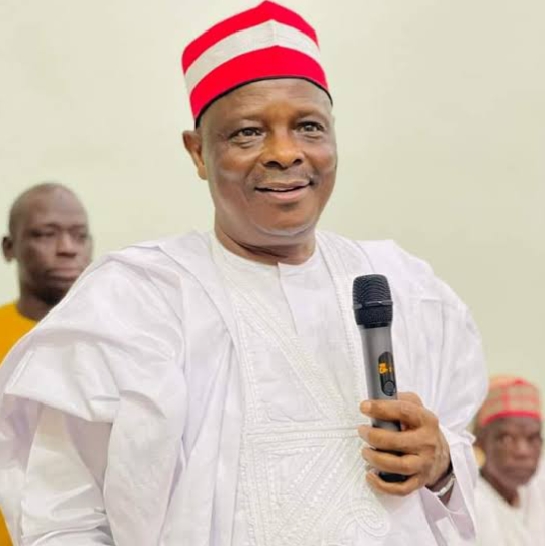
Those named for possible sanction over what the lawmakers describe as ‘severe religious freedom violations’ are Fulani-ethnic nomad militias in Nigeria, Rabiu Musa Kwankwaso, former Kano State Governor, Miyetti Allah Cattle Breeders Association of Nigeria (MACBAN); and Miyetti Allah Kautal Hore.
The inclusion of Kwankwaso’s name among those who could face sanction over purported links to terrorism and religious violence has raised eyebrows and sparked debate among Nigerians. While many understand that the US government’s sudden interest in the plight of Nigerian Christians is not entirely a humanitarian concern but mainly part of efforts to advance its strategic geopolitical interests, what they find strange and confounding is the indictment of Kwankwaso in this long-standing security and religious conundrum.
While some have opined that Kwankwaso’s inclusion may not be unconnected to his vocal opposition and patriotic condemnation of Trump’s threat to attack Nigeria, others have attributed it to the vicious and high-octane politicking ahead of the 2027 general election. Whatever the case may be and whichever side you choose to believe between these two sets of people, one thing that the majority of Nigerians agree on is that Kwankwaso is nothing close to what can be called a religious extremist. Here is a man who lost his re-election as governor of Kano State because he refused to implement Sharia law.
We don’t know what irrefutable proofs the congressmen who sponsored the bill have about Kwankwaso’s involvement in extreme religious right violation, we certainly are not privy to any intelligence they have at their disposal which affirm Kwankwaso’s predisposition to violent religious extremist and terrorist, but if we are to assume without conceding that the congressmen and the US government are truly in possession of never seen before information that indicts Kwankwaso in some terrorists activities, then one must ask what urgent steps and decisive actions are they planning to take on top and influential politicians, some of whom are serving in the current government, who have been linked to violent attacks and religious related killings are public knowledge.
One would have thought that if the congressmen and the US government were genuinely interested in going after those fueling religious extremism and promoting Sharia in the country, names like Sani Yerima, who was the first politician to introduced Sharia in Nigeria after he implemented it when he was governor of Zamfara, would have been the first they will indicts, some one like sheikh Ahmad Gumi disturbing and destructive misinterpretation of certain Islamic tenets and doctrines have engendered dangerous fundamentalists. His open association with terrorists wreaking havoc in many areas of the north has also emboldened more misguided charlatans to pick up arms against the state and start terrorising fellow Nigerians.
There are other known rabid and firebrand Islamic clerics and ultra-conservative politicians whose utterances, actions and inactions have done more to undermine Nigeria’s unity and sow the seed of religious extremism in the country. None of these characters is mentioned in the bill. To all intents and purposes, the inclusion of Kwankwaso on the list of those indicted in religious extremism carries certain undertones that raise concerns and serious questions about what the US and Nigerian governments are up to.
Plausible conspiracy theories and reasonable conjectures have also been woven around the development with many asserting that the national security adviser, Nuhu Ribadu, is the one behind grouping of Kwankwaso with men who revel in heinous and barbaric acts. By and large, Moore and his fellow congressmen who sponsored the bill have questions to answer and one can only wonder if their purported effort to address alleged Christians persecution in Nigeria, creates a vicious and malicious spectre of animosity that haunts certain persons while protecting some guilty parties and advancing the selfish interest of some power-hungry elements