


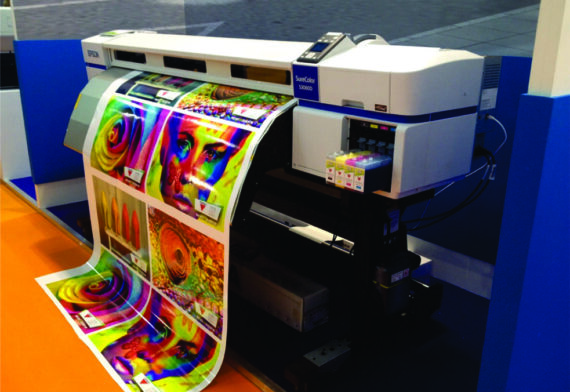
Have you ever wondered about the diverse array of printing machines that bring your documents and designs to life? From the humble desktop printer to massive industrial presses, the world of printing technology is vast and varied. Whether you’re a small business owner, a graphic designer, or simply curious about the printing process, understanding the different types of printing machines can be invaluable.
In this article, we’ll explore ten distinct types of printing machines, each with its own unique capabilities and applications. By the end, you’ll have a comprehensive overview of the printing landscape and be better equipped to choose the right machine for your needs.
What is a Printing Machine?
Printing machines are sophisticated devices designed to reproduce text and images onto various surfaces. These versatile tools have revolutionized communication, enabling the mass production of printed materials for diverse applications. At their core, printing machines utilize a combination of mechanical and electronic components to transfer ink or toner onto substrates like paper, fabric, or plastic.
The heart of any printing machine is its imaging system, which creates the pattern to be printed. This may involve plates, drums, or digital processes, depending on the type of printer. Ink delivery systems ensure the precise application of colorants, while paper feed mechanisms manage substrate movement through the machine. Control panels and software interfaces allow operators to fine-tune settings and monitor production.
Most printing machines follow a similar workflow: First, the image is prepared, either through physical means (like etching a plate) or digital file processing. Next, the substrate is loaded and moved into position. The printing mechanism then applies ink or toner to create the image. Finally, the printed material is dried or cured before being collected for further processing or distribution.
Understanding these fundamental aspects of printing machines is crucial for anyone involved in the printing industry or considering investing in printing equipment.
10 Types of Printing Machines and Their Uses
In today’s digital age, printing machines continue to play a crucial role in various industries. From small home offices to large-scale commercial printing facilities, these devices are essential for producing high-quality printed materials. Let’s explore ten different types of printing machines and their unique applications.
Offset Printing Machines
Offset printing machines are sophisticated devices that use a plate-based printing technique. This method transfers ink from a plate to a rubber blanket and then onto the printing surface. The process is based on the repulsion of oil and water, with the image to be printed getting ink from ink rollers, while the non-printing area attracts a water-based film.
Offset printing machines are widely used for high-volume commercial printing tasks. They excel in producing:
- Newspapers
- Magazines
- Brochures
- Stationery
The advantages of offset printing include:
- Consistent high-image quality
- Quick and easy production of printing plates
- Longer printing plate life compared to direct printing
- Cost-effective for large print runs
- Ability to work on a wide range of printing surfaces
Disadvantages of offset printing
Despite its benefits, offset printing has some drawbacks:
- Higher cost for low-volume jobs
- Not ideal for small print runs
- Potential for slight image variations due to a rubber blanket
- Time-consuming setup process
Digital Printing Machines
Digital printing machines are advanced devices that produce high-quality prints directly from digital files. These versatile printers use cutting-edge technology to create vibrant images and text on various materials, including paper, fabric, and plastic.
Digital printing machines employ a process where digital images are transferred onto media using inkjet or laser technology. Unlike traditional printing methods, they don’t require printing plates, making them ideal for on-demand and short-run printing jobs.
These printers are widely used in various industries, including:
- Publishing
- Marketing and advertising
- Textile printing
- Packaging
- Photography
Advantages of digital printing machine
- Quick turnaround times
- Cost-effective for small print runs
- Ability to personalize each print
- High-quality, consistent output
- Environmentally friendly with less waste
Disadvantages of digital printing machine
- Higher per-unit cost for large print runs
- Limited substrate options compared to offset printing
- Color matching can be challenging
- Initial investment in equipment can be substantial
Digital printing machines offer unparalleled flexibility and efficiency, making them an essential tool in today’s fast-paced printing industry.
LED Printers
LED printers are a type of electrophotographic printing machine that uses light-emitting diodes (LEDs) instead of lasers to create images on a photosensitive drum. These printers work by charging the drum and then using an array of tiny LEDs to expose it, creating the image to be printed.
LED printers are commonly used in offices and businesses for high-volume printing.
LED printers offer several advantages, these include:
- Faster printing speeds
- Lower maintenance costs
- More compact design
- Improved energy efficiency
- Higher reliability due to fewer moving parts
Disadvantages of LED printers
Despite their benefits, LED printers have some drawbacks:
- Generally higher initial cost compared to laser printers
- Lower print resolution in some models
- Limited color options in entry-level machines
- Potential for banding in large solid color areas
LED printers excel in environments requiring fast, high-volume printing with consistent quality. While they may have a higher upfront cost, their long-term reliability and efficiency often make them a cost-effective choice for businesses with substantial printing needs.
Solid Ink Printers
Solid ink printers, also known as phase-change printers, use a unique printing technology that melts solid ink sticks to create vibrant, high-quality images. These innovative printing machines heat wax-like ink to its liquid state before applying it to paper, where it quickly solidifies.
Solid ink printers are primarily used for producing colorful marketing materials, brochures, and presentations. They excel in creating eye-catching graphics and are often favored by businesses that prioritize image quality in their printed materials.
Advantages of Solid ink printers
- Exceptional color quality and vibrancy
- Eco-friendly with minimal packaging waste
- Lower cost per page for color printing
- Consistent print quality on various paper types
- Simple ink replacement process
Disadvantages of Solid ink printers
- Higher initial cost compared to traditional printers
- Longer warm-up time due to the ink-melting process
- Limited availability of solid ink cartridges
- Potential for ink waste during maintenance cycles
While solid ink printers offer stunning print quality and environmental benefits, they may not be suitable for all office environments due to their specialized nature and operational considerations.
Screen Printing Machines
Screen printing machines are devices used to transfer ink onto a substrate through a mesh screen with a stencil. This versatile printing method can be applied to various materials, including textiles, paper, and plastics. The process involves pushing ink through the screen onto the printing surface using a squeegee.
Screen printing machines are widely used in textile printing, graphic arts, and industrial applications.
The advantages of Screen printing machines
- Versatility in printing on various materials
- Ability to produce vibrant, long-lasting colors
- Cost-effectiveness for large-scale production
- Durability of printed designs
- Capability to print on uneven surfaces
Disadvantages of Screen printing machines
Despite its benefits, screen printing has some drawbacks:
- Time-consuming setup process
- Limited color options for complex designs
- Potential for ink waste
- Difficulty in achieving fine details
Screen printing machines offer a balance of versatility and quality, making them a popular choice for many printing applications. However, considering the advantages and disadvantages is crucial when selecting the most suitable printing method for your specific needs.
3D Printing Machines
3D printing machines, also known as additive manufacturing devices, create three-dimensional objects by layering materials based on digital models. These innovative printing machines use various materials like plastics, metals, and ceramics to build objects layer by layer, bringing digital designs to life.
These are some of the uses of a 3D printing machine:
3D printing machines find applications across numerous industries, including:
- Prototyping in product design
- Custom manufacturing in the aerospace and automotive sectors
- Medical field for prosthetics and implants
- Architecture for creating scale models
- Education for hands-on learning experiences
Advantages of 3D printing machines
- Customization: Allows for intricate, personalized designs
- Reduced waste: Uses only necessary materials
- Rapid prototyping: Speeds up product development
- Complex geometries: Creates shapes impossible with traditional methods
- On-demand production: Eliminates the need for large inventories
Disadvantages of 3D printing machines
- Limited materials: Not all substances are suitable for 3D printing
- Size constraints: Larger objects may require multiple prints
- Post-processing: Many prints need additional finishing
- High initial costs: Quality machines can be expensive
Ink Tank Printers
Ink tank printers, also known as continuous ink supply system (CISS) printers, are innovative printing machines that use refillable ink reservoirs instead of traditional cartridges. These printers feature large, transparent tanks that allow users to easily monitor ink levels and replenish them as needed.
Ink tank printers are ideal for high-volume printing environments, such as home offices or small businesses.
Advantages of Ink tank printers
- Cost-effective: Lower cost per page compared to cartridge-based printers
- Eco-friendly: Reduced plastic waste from cartridges
- High-capacity: Can print thousands of pages before refilling
- Convenient: Easy-to-refill tanks with minimal mess
- Quality output: Produces sharp text and vibrant colors
Disadvantages of Ink tank printers
Despite their benefits, ink tank printers have some drawbacks:
- Higher upfront cost: More expensive initial purchase price
- Potential for clogging: Requires regular use to prevent ink drying
- Limited color options: Typically offer only four basic colors
- Bulkier design: Larger footprint due to ink tank system
Laser Printers
Laser printers are high-speed, high-quality printing machines that use laser beam technology to produce crisp text and graphics. They work by using a laser to draw an electrostatic image on a rotating drum, which then attracts toner particles and transfers them onto paper.
Laser printers are widely used in offices, schools, and homes for their numerous benefits.
Advantages of Laser printers
- Speed: They can print large volumes quickly, often exceeding 20 pages per minute.
- Quality: Laser printers produce sharp, professional-looking documents.
- Cost-effective: While initial costs are higher, they’re economical for high-volume printing.
- Quiet operation: They run more quietly than many other printer types.
- Versatility: Many models can handle various paper sizes and types.
Disadvantages of Laser printers
Despite their strengths, laser printers have some drawbacks:
- Higher upfront cost compared to inkjet printers
- Larger size and weight, taking up more space
- Less suitable for photo printing than specialized photo printers
- Potential health concerns due to toner particle emissions, though modern models have improved filtration
Inkjet Printers
Inkjet printers are a type of printing machine that creates images by propelling tiny droplets of liquid ink onto paper or other materials. These versatile devices use a print head with numerous microscopic nozzles to deposit ink with extreme precision, producing high-quality text and images.
Inkjet printers are widely used in homes and offices for various printing tasks, including:
- Documents and reports
- Photos and graphics
- Marketing materials
- Artwork and creative projects
Advantages of Inkjet printers
- High-quality output: Inkjet printers produce sharp text and vibrant colors.
- Versatility: They can print on various paper types and sizes.
- Low initial cost: Inkjet printers are often more affordable upfront than laser printers.
- Compact size: Many models are small and portable, ideal for home use.
- Photo printing: Inkjets excels at producing high-quality photo prints.
Disadvantages of Inkjet printers
- Higher cost per page: Ink cartridges can be expensive, increasing long-term costs.
- Slower printing speed: Inkjets are generally slower than laser printers for large print jobs.
- Ink smudging: Printouts may smudge if exposed to moisture before drying completely.
- Clogged nozzles: Print heads can clog if not used regularly, requiring maintenance.
Thermal Printers
Thermal printers are specialized printing devices that use heat to produce images on thermochromic paper. These machines operate by selectively heating areas of the paper, causing a chemical reaction that changes its color. Commonly used for receipts, labels, and tickets, thermal printers are popular in retail, logistics, and healthcare industries.
Advantages of Thermal Printers
- Cost-effective: Thermal printers only require special paper, eliminating the need for ink or toner.
- Silent operation: With fewer moving parts, these printers are quieter than traditional models.
- Fast printing: They can produce high-quality prints quickly, ideal for high-volume environments.
- Durability: Thermal printers have a longer lifespan due to their simple mechanism.
- Compact size: Their small footprint makes them suitable for space-constrained areas.
Disadvantages of Thermal Printers
- Limited color options: Most thermal printers only print in black and white.
- Sensitivity to heat: Prolonged exposure to high temperatures can cause fading or darkening of prints.
- Special paper required: Thermal paper is more expensive than regular paper and may be less readily available.
- Print longevity: Thermal prints may fade over time, making them unsuitable for long-term document storage.
Frequently Asked Questions
These are some frequently asked questions and answers about the different types of printers.
What is the most common type of printing machine?
The most common type of printing machine for commercial use is the offset printing press. This versatile machine is widely used for high-volume printing of newspapers, magazines, books, and marketing materials. Offset printing offers excellent print quality and cost-effectiveness for large print runs.
How do 3D printers differ from traditional printing machines?
3D printers create three-dimensional objects by layering materials, unlike traditional printers that apply ink to paper. These innovative machines use various materials such as plastics, metals, or ceramics to construct objects based on digital designs. 3D printing is revolutionizing industries like manufacturing, healthcare, and product design.
What factors should I consider when choosing a printing machine?
When selecting a printing machine, consider factors such as:
- Print volume requirements
- Desired print quality
- Types of materials you’ll be printing on
- Budget constraints
- Available space for the machine
- Maintenance and operating costs
Carefully evaluating these factors will help you choose the most suitable printing machine for your specific needs.
Conclusion
As you’ve seen, the world of printing machines is diverse and complex. From digital printers for everyday office use to specialized industrial presses, each type serves a unique purpose in bringing ideas to life on paper and other materials.
By understanding the capabilities and applications of different printing technologies, you can make informed decisions about which machines best suit your needs. Whether you’re a small business owner, a graphic designer, or simply curious about the printing process, this knowledge empowers you to navigate the printing landscape with confidence. As printing technology continues to evolve, staying informed about these advancements will help you leverage the right tools for your printing projects.