


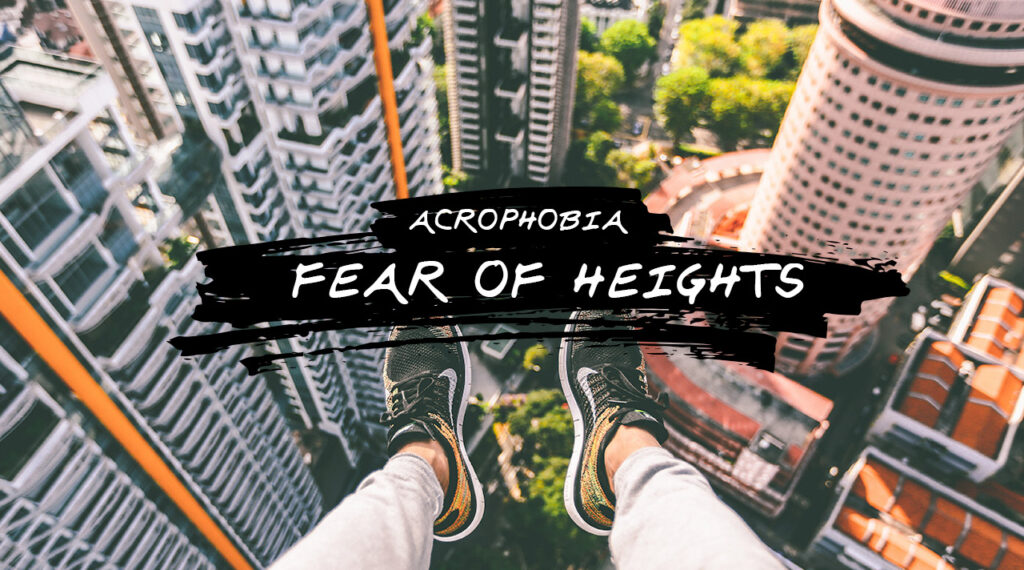
Acrophobia is not just a simple fear of heights; it’s an overwhelming and persistent dread that can affect your daily life. Imagine standing on a balcony or even thinking about looking out a window from a tall building, and suddenly, your heart races, your palms sweat, and you feel dizzy. That’s acrophobia. It’s classified as a specific phobia, an intense fear of a particular situation—in this case, heights. This fear is more than just feeling uneasy; it’s gripping anxiety that can lead to panic attacks and avoidance behaviours.
Common Triggers of Acrophobia
Certain situations can trigger this fear, varying from person to person. Here’s a list of common scenarios that might set off acrophobia:
- Standing on a bridge: Even a sturdy bridge can feel like it’s swaying when you’re acrophobic.
- Climbing a ladder: Looking down from even a few feet up can be terrifying.
- Flying in an airplane: The mere thought of being thousands of feet in the air can cause panic.
- Walking near a cliff: The fear of falling can make your legs feel like jelly.
- Riding an escalator or elevator: The movement and height can be unsettling.
How Acrophobia Differs from Other Phobias
While all phobias involve an irrational fear, acrophobia is unique because the fear of heights can lead to dangerous situations. If you panic while high up, you might lose your footing or make a sudden, unsafe move. Unlike other phobias, where avoidance might not directly lead to harm, with acrophobia, the fear itself can increase the risk of an accident. It’s also different because it taps into a natural survival instinct—most people are cautious of heights. Still, acrophobia amplifies this caution to an extreme level, often without any real danger.
Living with acrophobia can be challenging, but understanding your triggers and how this phobia operates is the first step toward managing it. Remember, you’re not alone in this; many experience the same fear, and help is available.
Symptoms of Acrophobia
Emotional Symptoms
When you’re dealing with acrophobia, the emotional impact can be pretty intense. You might feel a sudden wave of panic just thinking about heights. It’s like your brain goes into overdrive, convincing you that you’re in danger even when you’re not. Some folks say they need to cling to something solid, like the ground will disappear beneath them. It’s not just fear—it’s a full-on emotional rollercoaster.
- Panic attacks at the thought of heights
- Overwhelming anxiety when faced with high places
- A persistent feeling of dread or doom
Physical Symptoms
Your body doesn’t hold back when showing signs of acrophobia. It can feel like your heart is trying to escape your chest, pounding away like a drum. You might notice you’re breathing faster, or maybe you start to sweat buckets. Dizziness and nausea are common, making it feel like the world is spinning around you.
- Rapid heartbeat and palpitations
- Shortness of breath
- Sweating and trembling
Behavioural Symptoms
Behavioural changes are a big part of acrophobia too. You might find yourself going out of your way to avoid heights. This could mean skipping out on fun activities like hiking or avoiding tasks like cleaning the gutters. It’s not just about avoiding tall buildings or bridges; it can affect your entire lifestyle.
- Avoidance of high places, even if it means missing out
- Refusal to participate in activities involving heights
- Seeking reassurance or needing a companion when facing heights
Living with acrophobia can feel like you’re constantly on edge, always planning your next move to avoid that dreaded fear. It’s not just a fear of heights—it’s a fear of the fear itself, and it can be exhausting.
Causes of Acrophobia
Evolutionary Perspectives
So, let’s start with the idea that some fears are hardwired into us. Think about it: in the wild, if you fell from a high place, it could be game over. This is where the evolutionary perspective comes in. It’s like our brains are programmed to be cautious around heights because, way back when, it helped keep us alive. Researchers even did this experiment with babies and animals where they wouldn’t crawl over clear glass that looked like a drop-off. It shows that a bit of fear of heights is pretty normal, even if it’s just a tiny bit.
Behavioural Theories
Now, here’s where things get interesting. Behavioural theories suggest that we might pick up our fear of heights from our surroundings. Imagine a kid watching their parent freak out on a ladder—chances are, that kid might start feeling the same way. It’s like learning by watching. Then there’s the whole trauma angle. If you or someone you know had a scary fall, that memory could stick with you. And let’s not forget classical conditioning. Say you had a bad fall once; your brain might start linking heights with danger. Next time you’re up high, your brain’s like, “Nope, not doing that again!”
Genetic and Environmental Factors
And then there’s the mix of genes and the world around us. Some folks might be more prone to acrophobia because of their family. If your parents or siblings have it, you might too. It’s like a family trait. Plus, the environment plays a role. If you grew up in a place where heights were always seen as dangerous, that could shape your feelings too. Sometimes, there’s no clear reason why someone has acrophobia—it just happens. It’s like a puzzle with some missing pieces.
Acrophobia can be a real puzzle. Sometimes it makes sense, and other times, it just feels like a random part of who you are. But understanding where it might come from can be a step towards dealing with it.
Treatment Options for Acrophobia
Exposure Therapy
Exposure therapy is often the go-to method for tackling acrophobia. This involves gradually facing your fear of heights in a controlled and safe way. You might start by looking at pictures of tall buildings, then progress to standing on a balcony, and eventually, you could find yourself at the top of a skyscraper. The idea is to desensitize you to heights by repeated exposure, helping your mind and body learn that being up high isn’t as dangerous as it feels. Some folks find this process a bit daunting, but with a therapist guiding you, it can be a game changer.
Cognitive Behavioral Therapy
Cognitive Behavioral Therapy, or CBT, is another effective treatment. It’s all about changing the way you think about heights. A therapist will work with you to identify negative thought patterns and replace them with more positive, realistic ones. It’s like retraining your brain to react differently to heights. This method usually involves a series of sessions, and you can do it one-on-one or in a group. Many people find that CBT helps with their fear of heights and boosts their overall mental resilience.
Virtual Reality Therapy
Virtual Reality Therapy is a newer kid on the block but is gaining traction fast. It allows you to experience heights virtually without ever leaving the ground. You wear a VR headset, and suddenly, you’re standing on a virtual cliff or walking across a high bridge. It’s a safe way to expose yourself to heights and practice calming techniques without the real-world risks. Plus, it’s often more accessible and less intimidating than real-life exposure. As VR tech improves, this therapy is becoming more popular and effective for treating acrophobia.