


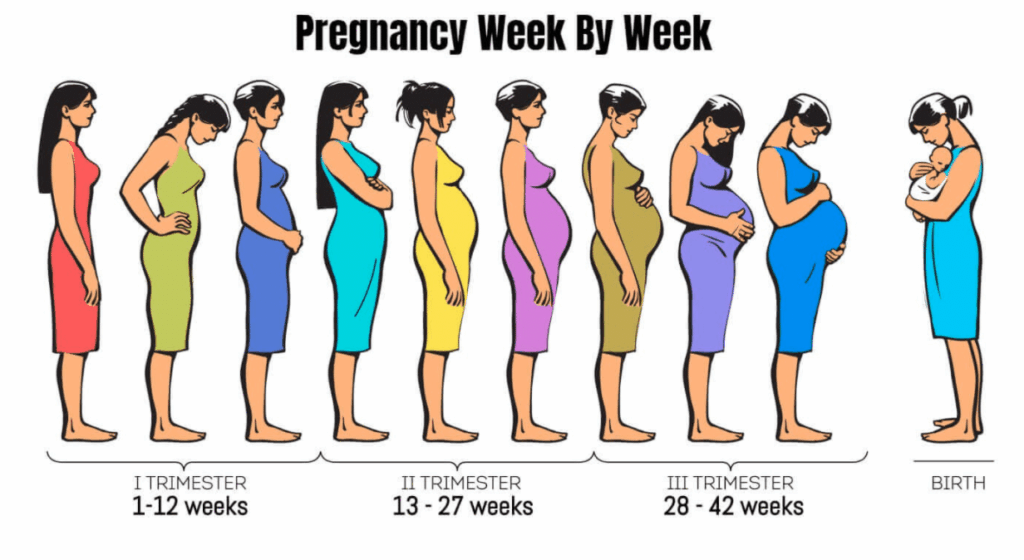
Pregnancy is a big change that can be both thrilling and scary. Knowing what to expect can make expectant mothers feel more ready. Pregnancy is split into three parts, each lasting over 13 weeks. A full-term pregnancy is about 40 weeks long, starting from the first day of the last period.
Women will go through many changes during pregnancy. They might feel mood swings and notice physical changes. The first sign for many is missing a period. By understanding what’s coming, women can prepare for the months ahead.
Early Signs and First Trimester Changes
During the first trimester, women go through many physical and emotional changes. Pregnancy symptoms differ from one woman to another. Common signs include morning sickness, feeling very tired, and mood swings. The Mayo Clinic says these symptoms can start as early as four weeks into pregnancy.
It’s very important to go to regular prenatal care checkups. These visits help keep the health of both the mother and the baby in check.
Some women might face pregnancy complications like high blood pressure or gestational diabetes. Regular checkups can spot these issues early. This allows for quick treatment. The first trimester is key for the baby’s growth, and any problems can be handled with the right prenatal care.
Common First Signs of Pregnancy
- Morning sickness
- Fatigue
- Mood swings
- Food cravings and aversions
- Increased urine output
Knowing these signs and getting medical help if needed is very important. Regular prenatal care and watching out for pregnancy complications help ensure a healthy pregnancy and a good outcome.
| Weeks of Pregnancy | Fetal Length | Pregnancy Symptoms |
|---|---|---|
| 1-4 | 1/4 inch | Morning sickness, fatigue |
| 5-8 | 1 inch | Mood swings, food cravings |
| 9-12 | 3-4 inches | Increased urine output, sore breasts |
Understanding Your Changing Body
During pregnancy, it’s key to keep a healthy lifestyle. This includes a balanced pregnancy diet and regular pregnancy exercises. A good diet gives the baby the nutrients it needs to grow. Exercise helps prevent complications and makes delivery smoother. Plus, wearing comfy maternity clothing helps your body feel better.
To stay healthy during pregnancy, here are some tips:
- Eat a balanced diet with lots of fruits, veggies, whole grains, and lean proteins
- Drink plenty of water to stay hydrated
- Do regular physical activity like walking or prenatal yoga
- Wear maternity clothes that are comfy and support your body
By following these tips, pregnant women can lower the risk of problems. They can also have a healthier pregnancy. It’s important to listen to your body and take breaks to rest. You’ll feel ready for what’s coming with a good pregnancy diet, regular pregnancy exercises, and comfy maternity clothing.
| Healthy Pregnancy Tips | Benefits |
|---|---|
| Eat a balanced diet | Supports baby’s growth and development |
| Stay hydrated | Reduces risk of complications |
| Engage in regular physical activity | Ensures a smooth delivery |
| Wear comfortable maternity clothing | Accommodates the changing body and reduces discomfort |
What to Expect During Pregnancy: Month by Month
Pregnancy lasts about 40 weeks, split into three trimesters. Each trimester brings big changes in how you feel and look. Knowing these changes helps moms-to-be get ready for the pregnancy stages and labour and delivery.
Here are some key milestones and developments to expect during each trimester:
First Trimester Milestones
- Weeks 1-12: Rapid fetal development and physical changes for the mother
- Month 1-3: Morning sickness, fatigue, and emotional adjustments
Second Trimester Developments
- Weeks 13-26: Significant physical growth and fetal development
- Month 4-6: Relief from morning sickness, increased energy, and a visible baby bump
Third Trimester Preparation
- Weeks 27-40: Preparation for labour and delivery and final fetal development
- Month 7-9: Braxton-Hicks contractions, back pain, and pregnancy tips for a healthy delivery
By knowing these milestones, expectant moms can better prepare for the pregnancy stages and labour and delivery. This ensures a healthy and happy pregnancy journey.
| Trimester | Weeks | Milestones |
|---|---|---|
| First Trimester | 1-12 | Rapid fetal development, morning sickness |
| Second Trimester | 13-26 | Significant physical growth, relief from morning sickness |
| Third Trimester | 27-40 | Preparation for labour and delivery, Braxton-Hicks contractions |
Essential Nutrition and Wellness Tips
A healthy diet is key for a mom-to-be and her baby. The American College of Obstetricians and Gynecologists says to eat various foods. This includes fruits, veggies, whole grains, lean proteins, and low-fat dairy.
Doing pregnancy exercises like walking or swimming is also good. It helps keep a healthy weight and lowers the risk of certain health issues.
Prenatal care is vital for a healthy pregnancy. Taking prenatal vitamins and supplements, like folic acid, is important. It helps prevent birth defects and supports the baby’s growth.
The U.S. Public Health Service suggests that women take 400 micrograms of folic acid daily. Starting with 5-10 minutes of light exercise is a good way to begin a pregnancy fitness routine.
| Nutrient | Recommended Daily Intake | Food Sources |
|---|---|---|
| Folic Acid | 400 micrograms | Leafy greens, legumes, and fortified cereals |
| Calcium | 1,000 milligrams | Dairy products, fortified plant-based milk, and dark leafy greens |
| Iron | 27 milligrams | Red meat, poultry, fish, and fortified cereals |
Following these tips can help ensure a healthy pregnancy and baby. Always talk to a healthcare provider about your best diet and exercise.
Managing Common Pregnancy Discomforts
Women often face various discomforts during pregnancy, like back pain and morning sickness. The Mayo Clinic suggests staying hydrated, eating small meals, and exercising regularly to manage these issues. It’s vital to know about pregnancy symptoms and take steps to avoid pregnancy complications.
Some common discomforts during pregnancy include:
- Back pain
- Morning sickness
- Fatigue
- Heartburn and indigestion
- Varicose veins
These issues can be managed with the right care. Drinking plenty of water, for instance, can help prevent headaches and labour and delivery complications.
It’s important to see a healthcare provider if these discomforts worsen or last too long. By knowing about pregnancy symptoms and managing them, women can have a healthier and more comfortable pregnancy.
| Discomfort | Description | Management |
|---|---|---|
| Back pain | Can range from mild to severe | Regular exercise, proper posture, and rest |
| Morning sickness | Can be severe and lead to dehydration | Eating small meals, staying hydrated, and taking vitamin B6 |
| Fatigue | Can be caused by anemia or low iron levels | Getting enough rest, eating a balanced diet, and taking iron supplements |
Emotional and Mental Wellbeing
During pregnancy, you might feel many emotions. You could be excited, joyful, anxious, or worried. These feelings are normal parts of being pregnant. Pregnancy symptoms can be tough, so caring for your mind and heart is key. The American College of Obstetricians and Gynecologists says up to 1 in 5 moms-to-be or new moms might face depression or anxiety.
It’s important to have people you can count on. Pregnancy tips from doctors can help. Things like a family history of mental illness, relationship problems, job loss, or past abuse can increase risk. Prenatal care should talk about mental health, too.
Mood Changes and Hormones
Hormones in pregnancy can change your mood. You might feel sad, anxious, or irritable. It’s important to know the signs of mental health issues. These include constant worrying, feeling sad or low for 2 weeks, or pulling away from friends and family.
Building Support Systems
A strong support system is vital for your emotional and mental health during pregnancy. This can include:
- Talking to a healthcare provider about mental health concerns
- Joining a pregnancy support group
- Connecting with friends and family members
- Practising self-care and stress-reducing techniques
You can handle pregnancy and parenthood better by focusing on your emotional and mental well-being. This can also lower the chance of long-term mental health problems. If negative thoughts or feelings start to interfere with your daily life, getting professional help is a good idea.
Preparing for Labor and Delivery
As your pregnancy ends, getting ready for labour and delivery is key. You’ll need to make a birth plan, pack a hospital bag, and learn about pain relief. The Mayo Clinic says being informed and prepared for each labour stage is important.
Labour is a time to watch your contractions and knows the different stages. First-time moms usually labour for 12 to 24 hours, while those who have given birth before might labour for 8 to 10 hours. Recognizable signs of true labour include regular, longer, and more intense contractions.
Birth Plan Basics
A birth plan outlines your wishes for labour and delivery. It should cover pain relief, labour positions, and care for your newborn. Talk to your healthcare provider about your birth plan to ensure it fits their policies.
Hospital Bag Essentials
Packing a hospital bag is a must for labour and delivery. Include comfy clothes, toiletries, and snacks. Don’t forget a copy of your birth plan and any medical documents.
Pain Management Options
Knowing your pain relief choices is vital for comfortable labour and delivery. Options include breathing, massage, and medication. Talk to your healthcare provider to find the best method for you.
By following these pregnancy tips and focusing on prenatal care, you can have a smooth and healthy labour and delivery. Stay informed, be ready, and trust your healthcare provider to help you.
| Stage of Labor | Duration | Description |
|---|---|---|
| Early Labor | 12-24 hours (first birth), 8-10 hours (subsequent births) | Contractions become stronger and more frequent, causing the cervix to dilate |
| Active Labor | 6-8 hours | Contractions intensify, and the cervix dilates from 6 to 10 centimetres |
| Pushing Stage | 2-3 hours | The baby is born, and the placenta is delivered |
Warning Signs and When to Call Your Doctor
It’s key to know the warning signs of pregnancy complications during pregnancy. Many symptoms are normal, but some need quick medical help. Regular prenatal care and a healthy lifestyle can help avoid issues. But, knowing when to get help is vital.
Watch for signs like vaginal bleeding, severe stomach pain, blurry vision, and swelling with headaches. If you see these, call your doctor or midwife fast. Also, seek help if you have a fever over 38°C (100.4°F), severe nausea, or trouble breathing.
Other signs to watch for include: * Severe pain or cramping in your lower abdomen or shoulder pain with vaginal bleeding * Dizziness or fainting * Vision changes, including flashing lights or blurry sight * Sudden severe swelling in hands, feet, or face * Persistent headache not relieved by pain medication * Pain under the ribs * Extreme itchiness on hands or feet * Unimproved leg swelling overnight
It’s also important to know about labour and delivery complications. Being aware of warning signs can help you get medical help quickly. If you have any unusual symptoms or concerns, contact your healthcare provider right away.
Conclusion: Embracing Your Pregnancy Journey
Pregnancy is a special and personal time, filled with both happiness and challenges. As you move forward, cherish every moment and ask for help when you need it. Your prenatal care and labor and delivery are tailored just for you, so talk openly with your healthcare team.
While the pregnancy tips and prenatal care advice here can be useful, your journey might be different. Listen to your gut, take care of yourself, and build a circle of loved ones for support. This way, you’ll face the highs and lows of this life-changing period with strength and appreciation.
FAQ
What are the early signs of pregnancy?
Early signs of pregnancy include a missed period and nausea, or “morning sickness.” You might also feel tired, have sore breasts, and need to pee more. If you think you might be pregnant, take a test and see your doctor.
What physical changes can I expect during the first trimester?
In the first trimester, you might feel sick in the morning, be very tired, and have sore breasts. Mood swings are common too. Drinking water, resting, and eating well can help your body.
How can I maintain a healthy lifestyle during pregnancy?
Eating well, drinking water, and staying active are key to a healthy pregnancy. Wear comfy clothes and avoid foods and activities that could harm your baby.
What can I expect during each stage of pregnancy?
Pregnancy is split into three parts. The first trimester brings early symptoms. The second trimester is when you might feel more energetic and start to feel your baby move. The third trimester is about getting ready for labor and delivery.
What are the essential nutrients and vitamins I need during pregnancy?
You need folic acid, iron, calcium, and more to help your baby grow. Your doctor can suggest a prenatal vitamin and help with a healthy diet.
How can I manage common pregnancy discomforts?
Discomforts like back pain and morning sickness can be managed. Try using a pregnancy pillow, drink lots of water, and use ginger or peppermint for nausea.
How can I support my emotional and mental wellbeing during pregnancy?
Pregnancy can be tough emotionally and mentally. Build a support network, manage stress, and take care of yourself. This might mean talking to a therapist, joining a support group, or practicing mindfulness.
How can I prepare for labor and delivery?
To prepare for labor, make a birth plan, pack a hospital bag, and learn about pain relief options. Childbirth classes and talking to your doctor about your wishes are also helpful.
What are the warning signs of pregnancy complications?
Severe bleeding, persistent vomiting, or feeling less movement from your baby could mean trouble. Know these signs and call your doctor right away if you’re worried.