


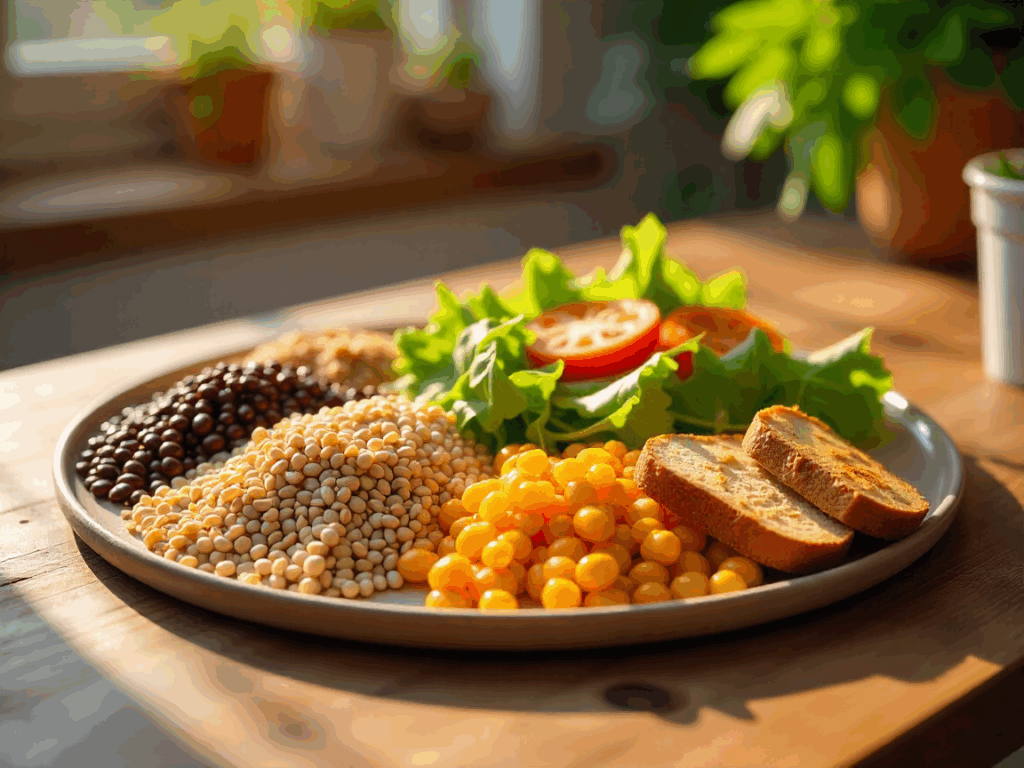
Adding the right foods to your diet can really change your health. With more people choosing vegan lifestyles, it’s key to know the top vegan protein sources.
Many foods are packed with protein and other essential nutrients, such as fibre and vitamins. Beans, lentils, nuts, and seeds are great examples. They’re easy to add to your meals.
Exploring plant-based proteins can be very rewarding. It offers health benefits and lets you find new favourite foods. With numerous options, switching to a plant-based diet is easier than ever.
Why More Americans Are Choosing Plant Proteins
Americans are turning to plant-based diets for health and environmental reasons. They see the benefits of plant proteins over animal proteins.
Plant proteins are good for health. They help lower the risk of heart disease and cancer. This makes them a smart choice for many.
Health and Environmental Benefits
Plant-based proteins, such as beans, lentils, and tofu, are healthy and eco-friendly. They need less land, water, and energy than animal proteins.
| Protein Source | Environmental Impact | Health Benefits |
|---|---|---|
| Beans | Low water usage | Rich in fiber and protein |
| Lentils | Low land usage | High in antioxidants |
| Tofu | Low energy requirements | Good source of iron |
As people become aware of plant proteins, demand increases. This trend will likely keep going. It’s driven by health and environmental awareness.
Essential Plant‑Based Protein Sources to Include Daily
Eating a variety of plant-based protein sources is key. It gives your body all the amino acids it needs. Adding these foods to your daily meals can significantly enhance your health and overall well-being.
Legumes and Beans
Legumes and beans, such as lentils, chickpeas, and black beans, are rich in protein. They also contain a lot of fibre, vitamins, and minerals. This makes them a great choice for any meal.
Legumes and beans offer many benefits:
- High in protein and fibre
- Rich in vitamins and minerals like iron and zinc
- Supports healthy digestion
- Can help lower cholesterol levels
Other high-protein plant foods include nuts and seeds. Almonds, chia seeds, and hemp seeds are all rich in protein. They’re easy to add to your diet.
| Food | Protein Content (per serving) | Additional Nutrients |
|---|---|---|
| Lentils | 18g (per 1 cup cooked) | Fiber, Iron |
| Chickpeas | 15g (per 1 cup cooked) | Fiber, Folate |
| Almonds | 6g (per 1 ounce) | Healthy Fats, Vitamin E |
By incorporating a variety of plant protein-rich foods, you can ensure you get enough protein. You also get other essential nutrients.
Top 10 Highest-Protein Plant Foods by Gram Count
Find out the top plant foods high in protein for a healthy vegan diet. Adding these protein-rich foods to your meals can be tasty and good for you.
Here are the top 10 highest-protein plant foods, ranked by their protein content per gram:
- Seitan (21g of protein per 3 oz serving)
- Soybeans (29g of protein per cup)
- Lentils (18g of protein per cup)
- Tempeh (15g of protein per 3 oz serving)
- Tofu (9g of protein per 3 oz serving)
- Chickpeas (15g of protein per cup)
- Spirulina (16g of protein per cup)
- Amaranth (9g of protein per cup)
- Quinoa (8g of protein per cup)
- Hemp seeds (10g of protein per ounce)
These plant-based protein sources are not only high in protein but also rich in fibre, vitamins, and minerals. For example, lentils are a great source of iron, while chickpeas are rich in potassium.
Nutritional Benefits and Uses
Each of these high-protein foods offers unique nutritional benefits and can be incorporated into your diet in various ways. For instance, seitan can be used in stir-fries, while spirulina can be added to smoothies for an extra nutritional boost.
| Food | Protein Content | Nutritional Highlights |
|---|---|---|
| Seitan | 21g per 3 oz | High in protein, versatile in recipes |
| Lentils | 18g per cup | Rich in iron, fibre |
| Chickpeas | 15g per cup | High in potassium and fibre |
By incorporating these top 10 highest-protein plant foods into your diet, you can ensure you’re meeting your protein needs while enjoying a variety of delicious and nutritious meals.
Incorporating Plant‑Based Protein Sources Into Every Meal
Starting a plant-based diet doesn’t mean you’ll miss out on protein. Here’s how to add it to every meal. Start your day with a protein-rich breakfast to establish a healthy foundation.
For breakfast, try oatmeal with almond butter and banana, or a tofu scramble with spinach and whole-grain toast. These meals are not only protein-rich but also keep you full until lunch.
Boosting Protein at Lunch and Dinner
At lunch, a salad with chickpeas, quinoa, and veggies is both filling and protein-rich. For dinner, adding lentils or tofu to your meals can significantly increase your protein intake.
- Add beans to your favourite stews or soups.
- Use tofu in stir-fries with a variety of colourful vegetables.
- Snack on nuts and seeds, such as almonds and chia seeds, which are high in protein.
- Experiment with seitan or tempeh as protein-rich alternatives in your meals.
By incorporating a variety of plant-based protein sources into your meals, you can ensure you get enough protein. Whether you’re looking for a vegan protein source list or want to try new protein options, there are many tasty choices available.
Addressing Common Myths About Plant Proteins
More people are choosing plant-based eating. It’s essential to dispel myths about plant proteins. Many people believe that plant proteins are incomplete or lack essential amino acids, but this isn’t true.
Some worry that plant proteins lack all the essential amino acids we need. However, eating different plant proteins throughout the day helps resolve this issue. For example, beans and lentils are low in methionine. Grains like rice and wheat have more of it.
Nutritional Benefits of Combining Plant Proteins
Mixing different plant proteins gives us all the amino acids we need. This is called protein complementing. It ensures we get a complete amino acid profile.
| Plant Protein Source | Amino Acid Profile | Complementary Food |
|---|---|---|
| Legumes (beans, lentils) | Low in methionine | Grains (rice, wheat) |
| Nuts and Seeds | High in healthy fats and protein | Legumes or whole grains |
| Whole Grains | Low in lysine | Legumes or nuts/seeds |
High-protein plant foods, such as quinoa, chia seeds, and hemp seeds, are rich in protein and essential nutrients. Quinoa, for example, is a complete protein. It has all nine essential amino acids.
Knowing how to mix different plant proteins helps us get enough protein. This knowledge fights myths about plant proteins. It supports a well-planned, plant-based diet.
Your Plant Protein Journey: Next Steps and Resources
Starting a plant-based diet can be very rewarding. With the right tools, you can continue to do good work. Explore various vegan protein options and sources to make your meals both fun and healthy for vegans.
For a smooth transition, try meal planning and look for recipes that are high in protein. You can find great ideas for plant-based food online or in cookbooks. When it comes to supplements, opt for well-established brands that offer high-quality, plant-based protein powders.
Legumes, nuts, and seeds are great vegan protein sources. They’re easy to add to your daily meals. Try new recipes to find your favourites. With a bit of creativity, you can enjoy a fulfilling plant-based diet.
FAQ
What are some high-protein plant-based foods that I can incorporate into my diet?
High-protein plant foods include legumes such as lentils and chickpeas, as well as beans. Nuts, such as almonds and walnuts, and seeds like chia and hemp, are also beneficial. These foods are not only high in protein but also rich in fibre, vitamins, and minerals.
Are plant-based protein sources as effective as animal-based sources?
Yes, plant-based protein sources can be as effective as animal-based sources. When you eat different plant-based proteins, you get all the essential amino acids your body needs.
How can I incorporate more plant-based protein into my meals?
To add more plant-based protein to your meals, start with a protein-rich breakfast. Try oatmeal with nuts and seeds, or a smoothie with plant-based protein powder. Add beans or lentils to your lunch and dinner. Snack on nuts and seeds throughout the day.
What are some common myths about plant proteins?
One myth is that plant proteins are incomplete and can’t provide all essential amino acids. But this is not true. While some plant proteins may lack certain amino acids, eating a variety of them can give you all you need.
Can I get enough protein on a vegan diet?
Yes, you can get enough protein on a vegan diet. Eat a variety of plant-based protein sources, such as legumes, beans, nuts, and seeds. You can also use plant-based protein powder as a supplement.
What are some vegan protein sources that are also high in other nutrients?
Chia seeds are rich in omega-3 fatty acids and are a good vegan protein source. Lentils are high in iron and fibre. Nuts and seeds are also great for healthy fats and antioxidants.
How can I ensure I’m getting all the essential amino acids from plant-based protein sources?
To get all essential amino acids, eat a variety of plant-based proteins throughout the day. Pair whole grains with legumes, or nuts and seeds with beans.
Are there any plant-based protein powders that are highly recommended?
Yes, pea protein, hemp protein, and brown rice protein are highly recommended. Choose unflavored and unsweetened options to avoid added sugars and artificial ingredients.