


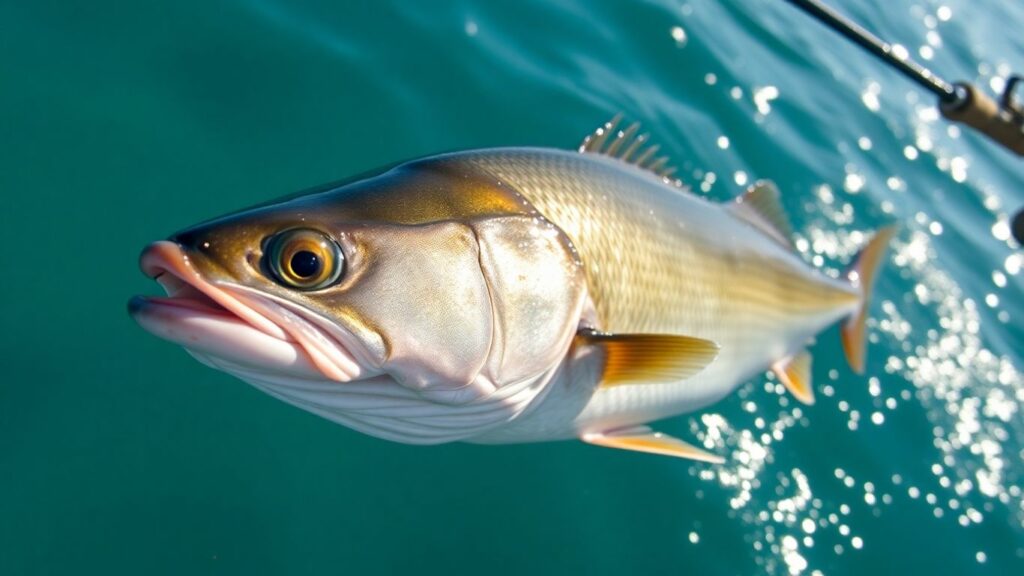
So, you want to start catching more fish, especially those deeper ones? Your depthfinder is your best friend here. It’s not just a fancy gadget; it’s a tool that can seriously improve your angling advice for beginners and help you improve your fishing skills. Think of it as your eyes underwater. Modern depthfinders can show you the bottom contour, identify structure like drop-offs or humps, and even spot schools of baitfish.
Knowing what your unit can do is the first step. Some units show depth, while others offer detailed down-imaging or side-imaging, which gives you a clearer picture of what’s below and to the sides of your boat. Take some time to read your manual and play around with the settings.
You’ll want to learn how to adjust sensitivity, colour palettes, and maybe even set alarms for specific depths. This knowledge is key to catching more freshwater fish.
Interpreting Sonar Data for Structure and Baitfish
Once you know how to use your depthfinder, the next step is learning to read what it’s telling you. This is where the real magic happens for catching more fish.
You’re looking for two main things: structure and baitfish. Structure refers to anything on the bottom that fish might use for cover or as a highway – things like points, ledges, submerged trees, or rock piles.
Your depthfinder will show these as changes in bottom hardness or shape. Baitfish are usually shown as small, flickering arches or clouds on your screen. The key is to find where the baitfish are holding and then look for nearby structure that intersects that depth. Fish, especially larger ones, often hang around bait. If you see baitfish suspended over a deep channel, for example, you know that’s a good place to start casting.
Don’t just look at the bottom line; learn to tell the difference between a school of bait and a school of your target fish. It takes practice, but seeing these patterns emerge on your screen is incredibly rewarding and will definitely help you improve your fishing skills.
Strategic Lure Selection And Presentation
Picking the right lure and knowing how to move it through the water are some of the best fishing techniques you can master. It’s not just about throwing something in and hoping for the best; it’s about making smart choices that lead to successful fishing strategies. Think of your lure as your messenger to the fish – you want it to say the right things at the right time.
Choosing Lures Based on Confidence and Conditions
Honestly, the biggest factor in choosing a lure is your own confidence. If you don’t believe in a lure, you’re probably not going to fish it effectively. That feeling of confidence translates into how you work the lure, and that’s what gets bites. So, pick something you feel good about using. Don’t get too caught up in the colour debates; while some colours work better in certain water clarity, your belief in the lure is often more important. Natural colours are usually a safe bet, but if you have a bright pink lure that you know will catch a fish, go for it. Your conviction matters.
Conditions play a big role too. When the water is warmer, fish tend to be more active and spread out, meaning your lure has a bigger ‘strike zone’ to work with. In colder water, fish often become more lethargic and hold tighter to cover or in specific depth ranges, shrinking that strike zone. You need to adapt your lure choice and presentation to match these conditions.
Here are a few go-to lures that work well in many situations:
- Spinnerbaits: Great for covering water and working through cover, such as weeds or submerged wood. You can vary your retrieve speed to match the fish’s mood.
- Crankbaits: These dive to a certain depth and wobble, mimicking baitfish. They’re excellent for finding fish in different water columns.
- Soft Plastics (like worms or jigs): Versatile and can be rigged in many ways to fish the bottom, through cover, or even suspended. A Texas-rigged worm, for example, is fantastic for getting into thick weeds without snagging.
Adapting Presentation to Water Temperature and Structure
How you move your lure is just as important as the lure itself. This is where adapting to water temperature and structure comes into play. In warmer water, you can often get away with a faster retrieve, covering more ground and triggering reaction strikes. Think about burning a spinnerbait or a fast-crawling crankbait.
When the water gets colder, you’ll likely need to slow down. Fish are conserving energy, so a slow, steady retrieve with a soft plastic or a jig can be much more effective. You might need to let your lure sit on the bottom for a few seconds or twitch it subtly. Pay attention to what the fish are telling you. If your usual fast retrieve isn’t getting any action, try slowing it way down.
Structure is your map to finding fish, and your lure presentation needs to work with it. If you’re fishing around a rocky point, you might want a crankbait that ticks off the rocks, or a jig that can be hopped along the bottom. If you’re targeting submerged trees, a spinnerbait that can be rolled over the branches or a Texas-rigged worm that can be pitched into the limbs might be your best bet.
Always try to keep your lure in the ‘strike zone’ – the area where a fish is likely to bite – for as long as possible. This means understanding the structure’s depth and the depth at which the fish are holding.
Leveraging Natural Cues And Conditions
Fishing isn’t just about casting a line and hoping for the best. The real pros, the ones who seem always to have a full stringer, are paying attention to what nature is telling them. It’s like the fish are sending out signals, and if you know how to read them, you’re way ahead of the game.
Reading Weather and Water Patterns for Optimal Fishing
Weather and water conditions can totally change how fish behave. Think about it: a big storm rolling in or a sudden cold front can make fish move or get a bit finicky.
You’ve got to be observant. If the weather’s been stable, fish might be in a predictable pattern. But if there’s been a big shift, like a cold front pushing through, fish often move deeper or hunker down closer to cover. That means you might need to switch from casting a spinnerbait way out there to flipping a jig right into those logs.
Here’s a quick rundown of what to watch for:
- Barometric Pressure: A rising barometer often means fish are more active, while a falling one can signal a slowdown. A sudden drop can sometimes trigger a feeding frenzy before the weather really turns bad.
- Wind Direction: The old saying about wind direction isn’t just folklore. A west wind is often considered good fishing weather, while a strong south wind can sometimes shut the bite down. Wind also pushes baitfish around, and where the bait goes, the predators usually follow.
- Water Temperature: This is a big one. Fish are cold-blooded, so water temperature directly affects their metabolism and feeding activity. Warmer water generally means more active fish, while colder water can slow them down, making them hold tighter to structure or go deeper.
- Tides and Current: For many fisheries, especially saltwater, tidal movement is key. Fish often feed best when there’s a strong current, especially around structure like points, channels, or drop-offs. Try to time your fishing to coincide with the moving tide.
Seasonal and Daily Fish Behaviour
Fish aren’t just randomly swimming around; they have patterns based on the time of year and even the time of day. Understanding these shifts can make a huge difference in your success.
- Seasonal Changes: As the seasons change, so do the fish’s habits. In spring, they might move shallower to spawn. Summer often sees them seeking cooler, deeper water or shade during the heat of the day. Fall can be a great time as fish feed up before winter, and in winter, they typically move to deeper, more stable water.
- Daily Patterns (Bite Times): Many anglers have found success by paying attention to specific ‘bite times’ throughout the day. These are often linked to lunar cycles (solunar periods) and tend to occur during dawn and dusk, or during major and minor feeding periods. Low-light conditions, such as early morning and late evening, often make larger fish feel more secure and more willing to feed.
- Structure and Cover: Fish relate to their environment. They use submerged logs, weed beds, rock piles, and drop-offs for safety, ambush points, and to find food. Learning to identify these key areas and understanding how fish use them in different conditions is a game-changer. Sometimes, fish will hold on a specific type of structure, like submerged logs at a certain depth, creating a pattern you can replicate in other areas.
Keeping a fishing log can be super helpful. Jotting down the conditions, what you used, and where you caught fish can help you spot these patterns over time. It’s all about paying attention and learning from your time on the water.