


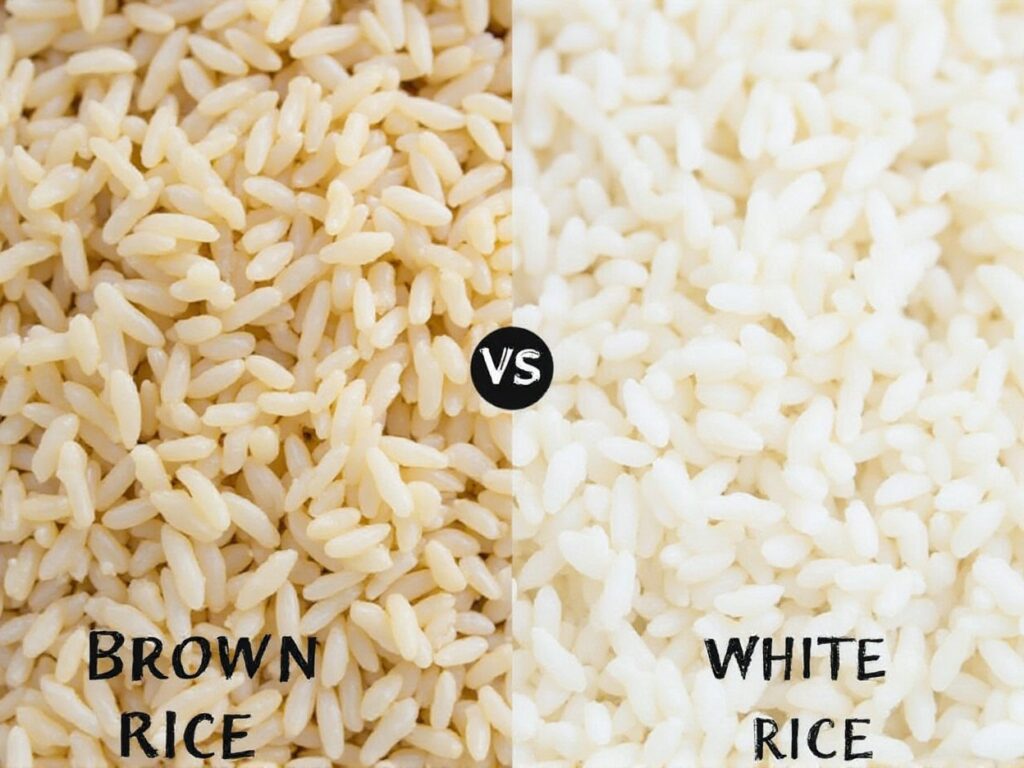
Brown rice and white rice have big differences in nutrition. Brown rice is a whole grain packed with fiber, vitamins, and minerals. It has 3.5 grams of fiber per cup, helping with digestion and blood sugar, making it a healthier choice.
White rice, on the other hand, has only 0.6 grams of fiber per cup. This makes brown rice better for those seeking nutritional benefits.
The debate on brown rice vs. white rice is ongoing. Brown rice has fewer calories, with 218 per cup, compared to white rice’s 242 calories. This makes brown rice ideal for those watching their calorie intake.
Knowing the health benefits and nutritional differences can help people make better diet choices and pick the best option for their health goals.
The Basic Differences Between Brown and White Rice
Brown rice and white rice are quite different. Brown rice is a whole grain with germ, bran, and endosperm. It has more fiber. White rice, on the other hand, is refined and has less fiber.
The way they’re processed affects their nutrition. Brown rice keeps its nutrient-rich outer layers, while white rice loses fiber, vitamins, and minerals. This makes brown rice a better choice for fiber.
Key Differences in Nutritional Content
- Brown rice has 1.1 grams of fiber per serving. White rice has only 0.2 grams.
- Brown rice is packed with nutrients like selenium, magnesium, and folate. These are often lost in white rice.
- Brown rice’s fiber helps slow digestion. It also helps manage blood sugar, which is great for people with type 2 diabetes.
Knowing the differences between brown and white rice is key. Brown rice is healthier because of its high fiber and nutrient content. It’s a better choice than white rice.
The Nutritional Battle: Brown Rice vs. White Rice
Brown rice has more fiber, vitamins, and micronutrients than white rice. Its bran layer and germ are full of nutrients. Eating brown rice often can lower the risk of heart disease and some cancers.
Some key health benefits of brown rice include:
- It has more fiber and protein, helping you feel full and manage your weight
- It’s rich in antioxidants and phytochemicals, protecting against chronic diseases
- Switching to brown rice can lower the risk of type 2 diabetes
White rice, on the other hand, has less fiber, protein, and antioxidants. But it has a higher glycemic index, affecting blood sugar levels more. Knowing the nutritional differences between brown and white rice helps you choose better for your diet and health benefits.
Fiber Content and Digestive Health Benefits
Brown rice is packed with fiber, about 3.12 grams per cup. This fiber is key for good digestive health. It helps with regular bowel movements and supports good gut bacteria.
Brown rice’s fiber content helps digest carbs slowly, slowing down the rise in blood sugar. This makes it great for people with diabetes or those who need to control their blood sugar. Brown rice has a glycemic index of 50, much lower than white rice.
Some main benefits of brown rice are: * It’s full of fiber for better digestive health * Its glycemic index is low, helping with blood sugar * It’s rich in nutrients like magnesium, iron, and selenium * It keeps you full longer, perfect for weight loss diets
Essential Vitamins and Minerals Comparison
Brown rice and white rice differ in vitamins and minerals. Brown rice is packed with micronutrients like manganese, magnesium, and selenium. White rice, on the other hand, is enriched with iron, thiamin, and folic acid. Brown rice also has more B vitamins, including thiamin, niacin, and vitamin B6.
Brown rice has more phosphorus, magnesium, and zinc than white rice. It also has more fiber, with 1.75 grams per serving. White rice has only 0.87 grams of fiber. Here are some key vitamins and minerals found in both:
- Manganese: 0.07 mg in white rice, 0.52 mg in brown rice
- Magnesium: 4.35 mg in white rice, 42.9 mg in brown rice
- Phosphorus: 6.95 mg in white rice, 75 mg in brown rice
- Iron: 0.12 mg in white rice, 0.52 mg in brown rice
Eating brown rice can add important micronutrients, vitamins, and minerals to your diet. Because of its higher nutrient content, it’s a healthier choice than white rice.
Glycemic Index and Blood Sugar Impact
The glycemic index (GI) is key for managing blood sugar. It shows how fast a food raises blood sugar. Brown rice has a lower GI than white rice, at 55 compared to 64.
This makes brown rice better for controlling blood sugar and preventing diabetes. The fiber and nutrients in brown rice slow down carb digestion. This reduces the blood sugar spike.
White rice, on the other hand, can quickly raise blood sugar. The American Diabetes Association suggests eating less than 26% carbs daily. Brown rice fits into this diet well because of its lower GI and more fiber.
Benefits of brown rice for blood sugar include: * Lower GI than white rice * More fiber to slow carb digestion * Rich in magnesium and manganese for health * Helps keep blood sugar stable.
Adding brown rice to your diet can help manage your blood sugar. It’s a healthier choice than white rice for those who are watching their blood sugar.
Cooking Techniques and Time Considerations
Cooking brown rice and white rice needs different methods and times. Brown rice cooks longer than white rice. It can be boiled, steamed, or sautéed. The choice depends on dietary preferences and texture.
For cooking methods, brown rice needs a 2:1 water-to-rice ratio, while white rice uses a 1:1 ratio. Brown rice takes 40-45 minutes to cook, while white rice cooks in 15-20 minutes.
| Rice Type | Cooking Method | Water-to-Rice Ratio | Cooking Time |
|---|---|---|---|
| Brown Rice | Boiling, Steaming, Sautéing | 2:1 | 40-45 minutes |
| White Rice | Absorption Method | 1:1 | 15-20 minutes |
Knowing the cooking methods and times for brown and white rice helps make choices. It lets people pick the best way to cook based on their dietary preferences.
Storage Life and Shelf Stability
Keeping rice fresh is key to its quality and safety. Rice’s shelf life varies based on its type, storage conditions, and handling. Brown rice, with more oil, spoils faster than white rice. Dry brown rice lasts 3–6 months, while dry white rice can stay good for up to 2 years.
Store rice in a cool, dry spot for it to stay safe. Air, heat, and moisture can make rice go bad quickly. Look out for signs like holes, bugs, mold, and a bad smell in expired rice. Cooked rice can also spoil, leading to food poisoning.
Extending Shelf Life
To keep rice fresh longer, try these tips:
- Use airtight containers to keep rice fresh and prevent moisture.
- Store rice in a cool place, around 40 degrees Fahrenheit, to slow down spoilage.
- Choose food-grade buckets or mylar bags, 4-6 millimeters thick, for long storage.
By storing rice correctly, you can keep it fresh and safe for longer. Rice is a main food for over half of the world. Proper storage helps prevent waste and keeps it safe to eat.
Cost Comparison and Availability
Choosing between brown rice and white rice involves looking at cost and availability. Prices can differ based on where you are and the market. White rice is often cheaper and easier to find than brown rice. For instance, a 32-ounce bag of white rice might cost about $2.50. On the other hand, a 16-ounce bag of brown rice could be around $2.75.
White rice is more common in supermarkets, but brown rice is becoming easier to find. Dietary preferences also influence this choice. Some like brown rice’s nuttier taste and chewier texture. Others prefer white rice’s softer feel.
Here are some key points to consider when comparing the cost and availability of brown rice and white rice:
- Brown rice is generally more expensive than white rice due to its higher demand and additional health benefits.
- White rice is more widely available and cheaper compared to brown rice.
- Brown rice is becoming increasingly accessible in many stores, making it easier to incorporate into your diet.
- Dietary preferences and availability can vary depending on the region and market.
The choice between brown rice and white rice depends on your dietary preferences, budget, and availability. By considering these factors, you can make an informed decision that meets your needs and preferences.
Environmental Impact and Sustainability
Brown rice and white rice have different effects on the environment. Brown rice is seen as more sustainable because it needs less water and processing. White rice, on the other hand, uses more water and energy, leading to a bigger carbon footprint. Rice is a key food for over half of the world’s people, making its environmental impact a big worry.
Research shows that the System of Rice Intensification (SRI) can cut water use by 25-50% and greenhouse gas emissions by 50%. It also boosts yields by 56% in irrigated areas and 86% in rainfed areas. These findings suggest that sustainable rice farming can lessen the environmental harm caused by rice production.
Water Usage in Production
Water is key in rice farming, with about 2,500 liters needed for one kilogram of rice. SRI methods can greatly lower water use, making rice production more eco-friendly. Also, sustainable irrigation systems can reduce water waste and help conserve water.
Carbon Footprint Comparison
Comparing the carbon footprint of brown and white rice shows brown rice is better. Brown rice needs less processing, which means lower energy use and emissions. Sustainable farming methods like SRI can also decrease the rice industry’s carbon footprint.
Packaging Considerations
Packaging is also vital to rice’s environmental impact. Using eco-friendly packaging, like biodegradable or recyclable materials, can reduce waste. Consumers can help by choosing products with less packaging and supporting companies that focus on sustainability.
Making the Smart Choice for Your Health Goals
Choosing between brown rice and white rice depends on your health goals and dietary preferences. Brown rice is a whole grain with more fiber, vitamins, and minerals than white rice. Yet, white rice can fit into a balanced diet if eaten in small amounts.
Think about what you need and how you live. Brown rice is great for better digestion, blood sugar control, and disease prevention. It’s full of fiber, which is good for your gut and keeps you feeling full. On the other hand, white rice is quick to cook and can be part of a healthy meal when paired with nutritious foods.
Finding the right balance is key to meeting your health goals. Eating a mix of whole grains, fruits, and veggies is good for your health. This way, you make choices that really help your body.