


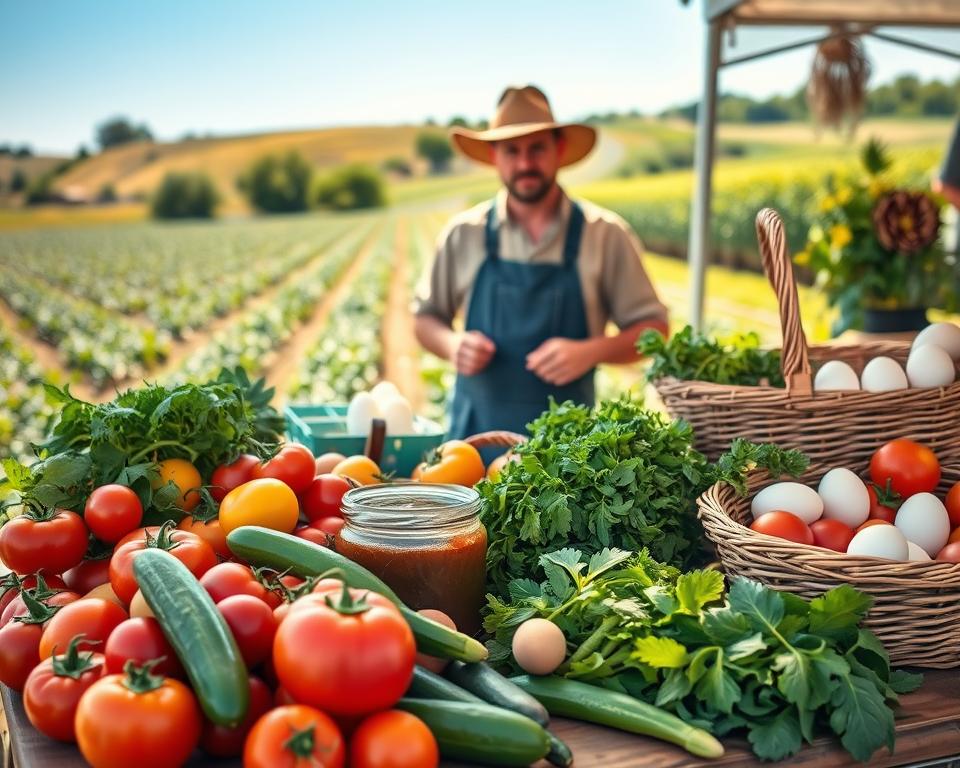
The old way of farming is expensive for farmers. Middlemen take 60-70% of what the customer pays. This big loss can be lessened by selling directly to people.
When farmers sell farm fresh produce straight to buyers, they get the full price. This can triple their income compared to selling to wholesalers. It’s good for farmers and helps local health and economies.
Choosing direct sales can change farming for the better. It makes farms more stable and profitable.
The Financial Reality of Modern Farming
Farmers are finding it hard to make a profit in today’s farming world. The challenges they face include losing money to middlemen and dealing with price changes. These issues make it tough for farmers to stay afloat financially.
Middleman Markups and Profit Erosion
For every dollar spent on farm products, only $0.11 goes to the farmer. The rest goes to others: $0.23 to the packer/processor, $0.13 to the distributor/wholesaler, and $0.53 to the retailer. This shows how much farmers lose to middleman markups.
Farmers also deal with price changes and market uncertainty. These factors can greatly affect their income. Changes in demand and supply make it hard for farmers to plan for the future.
Capturing Full Retail Value
By selling directly to consumers, farmers can get the full price of their products. This not only boosts their profits but also helps them connect directly with buyers. This can lead to more stable income for farmers.
Building Resilient Revenue Streams
To be more resilient, farmers can sell their products through different channels. This includes online platforms and local markets. By doing this, they can avoid relying on just one market or middleman. This helps reduce the financial risks of farming today.
- Diversify sales channels to reduce dependence on intermediaries
- Engage in direct-to-consumer sales to capture full retail value
- Build direct relationships with consumers for more stable revenue
Direct-to-Consumer Farm Sales
In recent years, farming has changed a lot. Now, farmers sell their products directly to people, skipping the middlemen. This new way of selling helps farmers make more money.
Historical Context and Recent Growth
Farmers have always sold their goods directly to people at local markets. But now, with the help of the internet, they can reach more customers. This change is because people want fresh, local food and farmers want to keep more of their earnings.
Some important facts about this growth are:
- More online farm stores and farmers’ markets have popped up.
- People are looking for sustainable and local food more than ever.
- Farmers can make up to 40% more money by selling directly.
Consumer Demand Trends
More and more people want to buy local farm products. They want food that’s fresh, of high quality, and made in a sustainable way. They look for these products online or at farmers’ markets.
Key trends include:
- More interest in organic and sustainable food.
- People want to know how their food is made.
- Supporting local economies is important to them.
By understanding these trends, farmers can connect better with their customers. This can help farmers make more money and build stronger relationships with their buyers.
Breaking Down the 3x Profit Opportunity
Farmers can now keep more of the money they make by selling directly to consumers. This change can triple their profits. It happens because they get 70-80% of what the customer pays.
Profit Margins Across Different Produce Types
Profit margins vary by produce type when sold directly. Organic and specialty crops often have higher margins because they cost more. Here’s a look at how different types compare:
| Produce Type | Wholesale Price | Direct-to-Consumer Price | Profit Margin Increase |
|---|---|---|---|
| Organic Vegetables | $2.50/lb | $4.00/lb | 60% |
| Conventional Fruits | $1.50/lb | $2.50/lb | 67% |
| Specialty Crops | $3.00/lb | $5.00/lb | 67% |
Value-Added Products and Their Margins
Products like jams, honey, and artisanal cheeses have even higher margins. This is because they require more work and have unique qualities. They can boost profits by up to 100% over raw produce.
Small-Scale Success Stories
Small farmers have seen big gains by selling directly to consumers. Some have doubled their income in just one year. The farm-to-table experience attracts customers who want fresh, local food.
Mid-Size Farm Transitions
Mid-size farms are also benefiting from direct sales. They use sustainable agriculture practices to appeal to eco-friendly buyers. Online platforms and local markets help them reach more people and make more money.
Popular Direct-to-Consumer Farm Sales Channels
The rise of direct-to-consumer farm sales channels has opened new avenues for farmers to connect with customers. By leveraging these channels, farmers can increase their profit margins and build a loyal customer base.
Farmers’ markets are a traditional yet effective direct-to-consumer sales channel. To succeed, farmers need to focus on Finding the Right Markets for Your Products. This involves researching local markets, understanding customer preferences, and ensuring that products comply with market regulations.
Finding the Right Markets for Your Products
Identifying the right farmers’ markets is key. Consider foot traffic, competition, and customer demographics.
Booth Setup and Customer Engagement
An attractive and well-organized booth can boost customer engagement. Farmers should display their products appealingly and be ready to share their farm’s story.
Online stores are another vital channel for direct-to-consumer sales. Designing Share Options and Pricing is critical for online success. Farmers can offer various share options, such as weekly or monthly subscriptions, to attract and retain customers.
Designing Share Options and Pricing
Flexible pricing and share options can cater to a broader customer base. Consider the size of the shares, frequency of delivery, and pricing strategy.
| Sales Channel | Key Considerations | Potential Benefits |
|---|---|---|
| Farmers’ Markets | Booth setup, customer engagement, product variety | Immediate customer feedback, high margins |
| Online Stores | E-commerce platform, fulfillment logistics, digital marketing | Broader customer reach, flexible sales options |
| On-Farm Experiences | Location visibility, customer experience, event planning | Enhanced customer loyalty, premium pricing |
Successful operations often use a zone-based delivery system. This optimizes routes and reduces costs. It’s great for online stores and on-farm experiences.
Member Retention Strategies
Building a loyal customer base requires effective retention strategies. This includes regular communication, loyalty programs, and continuous product improvement.
Location and Visibility Considerations
For on-farm experiences, the farm’s location and visibility are key. Farmers should make sure their farm is easy to find and accessible to customers.
Creating Memorable On-Farm Experiences
Creating memorable experiences for customers can foster loyalty and encourage repeat visits. This can include farm tours, workshops, and other interactive activities.
Choosing the right e-commerce platform is critical for online sales. Popular options include Shopify, WooCommerce, and BigCommerce, each with various features and integrations.
Fulfillment and Delivery Logistics
Efficient fulfillment and delivery logistics are essential for maintaining customer satisfaction. Farmers should consider partnering with local delivery services or implementing their own logistics system.
Building Your Online Farm Presence
Having a strong online presence is key for farmers to succeed in direct sales. Direct delivery lets farmers brand themselves better and own customer data. This way, they can talk directly to their buyers.
To make a strong online farm presence, farmers must tell a story that speaks to their audience. They need to share their farm’s story, products, and values through a solid content plan.
Content Planning for Agricultural Businesses
Planning content well is vital for farm businesses. It means knowing who to talk to, making engaging content, and finding the best ways to share it. Farmers can use blog posts, social media, and email newsletters to share their story and sell their products.
Visual Storytelling Techniques
Visual storytelling is a great way for farmers to connect with people. High-quality images and videos help show off their products and farming ways.
By mixing good content planning with visual stories, farmers can build a strong online presence. This attracts and keeps customers, boosting their brand and farm profits. It leads to a better farm-to-table experience.
The Power of Direct-to-Consumer Farm Sales
Direct-to-consumer farm sales are changing the game in agriculture. They give farmers a chance to make more money than they would in traditional markets. By selling straight to people, farmers can earn more and connect with their customers better.
One big plus is the chance to make more money. Without middlemen, farmers keep more of what they earn. This helps them stay financially stable and invest in sustainable agriculture practices.
Also, direct sales help farmers build strong bonds with their customers. They can hear what people like and make products that fit those needs. This makes customers stick around and come back for more.
Direct sales also let farmers stand out as unique brands. They can show they’re different from big industrial farms. This is great for those who focus on sustainable agriculture practices. People are willing to pay more for products that are good for the planet.
Another perk is getting to know what customers want. By looking at what people buy, farmers can make better choices. They can even plan their marketing to reach more people.
In short, direct-to-consumer farm sales are a game-changer. They help farmers, support local farm products, and make the food system fairer. As more people want local food, farmers who sell directly will do well.
Creating the Farm-to-Table Experience
A well-designed farm-to-table experience can boost customer loyalty and retention. By using direct delivery, farmers can offer a personalized experience. This experience helps build a stronger connection with customers.
Every farm has a unique story. Crafting this narrative is key to a genuine farm-to-table experience. Share your farm’s history, values, and practices to connect with customers.
Consistent Brand Messaging
Consistency is vital for a strong brand identity. Make sure your message is the same across all platforms. This includes social media and packaging, reflecting your farm’s values and story.
Farm Tours and Educational Events
Hosting farm tours and educational events can show the effort behind local farm products. These hands-on experiences deepen the connection between your farm and customers.
Recipe Sharing and Cooking Demonstrations
Sharing recipes and cooking demos highlights the versatility of your fresh farm goods. It encourages customers to try new recipes and value your products.
Implementing Sustainable Agriculture Practices as a Selling Point
More and more people want eco-friendly products. This means sustainable farming is key for selling fresh produce. People care about the planet and want to support farming that’s kind to it.
Using sustainable farming helps the environment and gives farmers an edge online. By using methods like crop rotation and organic farming, farmers can make better food while being kind to the planet.
Farmers can show they care about the planet by getting certifications. These include:
- Organic certification
- Non-GMO labeling
- Regenerative agriculture certification
These labels prove a farm’s dedication to being green. This makes consumers trust them more.
Transparency in Farming Practices
Being open about farming is important for eco-aware buyers. Farmers can connect better with their customers by sharing how they farm. This can be done through:
| Transparency Method | Description | Benefit |
|---|---|---|
| Farm Tours | Allowing customers to visit the farm | Builds trust and personal connection |
| Social Media Updates | Sharing farming practices and produce updates on social media | Increases engagement and brand loyalty |
| Detailed Product Information | Providing detailed information about the produce, including farming methods used | Enhances customer understanding and appreciation |
By using green farming and being open, farmers help the planet. They also stand out in a crowded market. This leads to more sales and loyal customers.
Overcoming Direct-to-Consumer Challenges
The move to direct sales from farms comes with hurdles like managing money and growing operations. Farmers face several key issues to keep and expand their businesses.
Balancing Field Work and Customer Service
One big challenge is juggling farm work with customer service. Farmers need to be good at farming and building customer relationships. They must manage their time well and stay organized.
Seasonal Planning for Direct Sales
Seasons change how much produce is available and how much customers want. Farmers must plan ahead to keep products coming and customers happy.
As more sales go direct to consumers, more staff is needed. Hiring and training people for customer service, sales, and other tasks is key. Investing in staff helps improve customer service and loyalty.
Technology Solutions for Growth
Using technology is essential for growing direct sales. Online stores, digital marketing, and e-commerce help manage operations, engage customers, and grow the business.
| Challenge | Solution |
|---|---|
| Balancing Field Work and Customer Service | Effective Time Management |
| Seasonal Planning | Anticipate Demand Fluctuations |
| Hiring and Training Staff | Invest in Staff Development |
| Technology Adoption | Leverage E-commerce Solutions |
By tackling these challenges, farmers can thrive in direct-to-consumer sales and enjoy its benefits.
Legal and Regulatory Considerations
Knowing the legal rules is key for farm sales to succeed. Farmers face a complex set of laws. They must follow these to keep their business running smoothly.
State-Specific Requirements
Every state has its own rules for selling directly to consumers. Some need special licenses or permits. Farmers must check these state-specific requirements to stay out of trouble.
| State | Required License/Permit | Sales Limit |
|---|---|---|
| California | Food Handler’s Certificate | $50,000 annual sales |
| New York | Food Processing Permit | $100,000 annual sales |
| Texas | Farmers Market Permit | $25,000 annual sales |
On-Farm Food Processing Rules
For those doing food processing on the farm, there are more rules. These cover food safety, packaging, and labeling. Following these rules is vital for keeping customers happy and avoiding legal problems.
By following these legal and regulatory guidelines, farmers can thrive in direct sales. This ensures their business stays strong and their customers are happy.
FAQ
What is direct-to-consumer farm sales?
Direct-to-consumer farm sales mean selling fresh produce and local products straight to people. This way, farms get to keep all the profit without middlemen.
How can direct-to-consumer sales increase farm profits?
Selling directly to people can triple a farm’s profits. This is because farms get to keep the full price of their products, unlike wholesale sales.
What are the benefits of online farm stores for direct-to-consumer sales?
Online stores make it easy for people to buy fresh farm goods. They also help farms reach more customers and boost sales online.
How can farms create a compelling brand narrative for direct-to-consumer sales?
Farms can share their story and highlight their green practices. This builds loyalty by showing how they care for the land and their customers.
What are some popular direct-to-consumer sales channels for farms?
Farms sell directly through farmers’ markets, online stores, and on-farm visits. These channels help farms connect with buyers and sell their products.
How can farms implement sustainable agriculture practices as a selling point?
Farms can talk about their green practices and get certifications. Being open about their methods attracts customers who want eco-friendly farming.
What are some common challenges faced by direct-to-consumer farms?
Farms face challenges like balancing work and customer service. They also need to plan for seasons, staff up, and use tech to manage their business.
What legal and regulatory considerations should direct-to-consumer farms be aware of?
Farms need to know state laws and rules for food processing on farms. These rules can affect their sales operations.
How can farms create a memorable farm-to-table experience for consumers?
Farms can make a lasting impression by telling their story and hosting events. Sharing recipes and letting people interact with the farm adds to the experience.
What is the future of farm direct sales?
The future of farm sales is about embracing change and new opportunities. Farms need to adapt and use technology to grow in a fast-changing market.