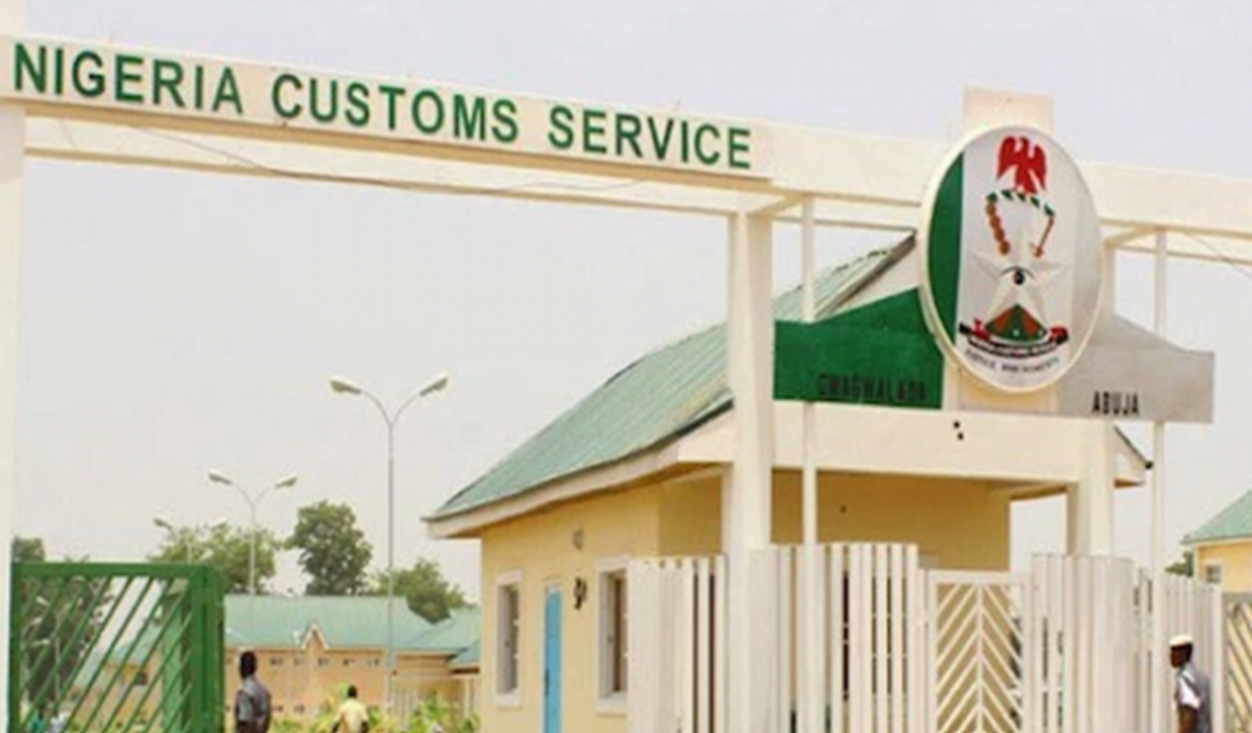
On February 5, 2025, the Nigeria Customs Service (NCS) said it was implementing a 4 percent charge on the Free On-Board value of imports. The service spokesman, Abdullahi explained that the directive was in line with the provisions of the Nigeria Customs Service Act (NCSA) 2023.
The Free On Board (FOB) value of imports refers to the cost of goods at the point of shipment, excluding costs like insurance, freight, or handling once the goods leave the port of origin.
Despite this new fee, the NCS said the1% Comprehensive Import Supervision Scheme (CISS) fee will be sustained as at that time. This generated several controversies from stakeholders who warned that the newly introduced 4 percent Customs Administration Charge will drive duty payments up by 80 percent for industries reliant on imported raw materials.
The implementation breached Section 23 of the Nigeria Customs Service Act 2023, which mandates public notification and stakeholder engagement before the introduction of new charges.
It was later suspended to allow for consultations with various experts, and five months later, it was reinstated.
Unified Import Charge with significant changes
Importing goods into Nigeria involves significant financial obligations. Regardless of the country of origin, importers are required to pay customs duties—a tariff imposed by the Federal Government of Nigeria through the Nigeria Customs Service (NCS)—to clear shipments at any Nigerian port.
Customs duty charges consist of multiple components, including Import Duty (typically 10% of the Cost, Insurance, and Freight [CIF] value), Surcharge (7% of the Import Duty), Comprehensive Import Supervision Scheme (CISS) fee (1% of the Free on Board [FOB] value), ECOWAS Trade Liberalisation Scheme (ETLS) levy (0.5% of FOB), and Value Added Tax (VAT) at 7.5% of the total charges. When combined, these fees determine the total amount payable to clear imported goods.
The newly introduced unified charge imposes a 4% FOB levy, which consolidates and replaces the former 1% CISS fee and 7% cost-of-collection. This creates a single, upfront payment aimed at streamlining the import process. However, other charges such as Import Duty, ETLS, and VAT, remain applicable.
According to the Comptroller-General of Customs (CGC), Adewale Adeniyi, once the 4% FOB takes effect, the 1% Comprehensive Import Supervision Scheme (CISS) will cease automatically. In addition, he said the 7% cost of collection currently charged will also be completely removed.
“Under the new Act, the 4% FOB is paid upfront—and that’s it. Thereafter, 100% of the revenue generated by Customs will go into the Federation Account. It’s a win-win for everyone,” he explained.
This development is possible through B’Odogwu clearance platform – NCS
CGC Adeniyi noted that this reform was possible through the B’Odogwu clearance platform, a homegrown digital solution designed to enhance trade facilitation.
In October 2024, NCS phased out the Nigeria Integrated Customs Information System (NICIS) II, replacing it with B’Odogwu, a home-grown, cutting-edge technology to address the glitches experienced during customs documentation by freight forwarders.
The B’Odogwu does this by incorporating sophisticated digital tools, including electronic cargo tracking, automated risk management and non-intrusive scanners, ensuring a more secure and efficient trade environment for port users.
In May 2025, the commission disclosed that commenced the capturing and processing of single goods declaration (SGD) on the indigenously developed B’Odogwu platform at the Tin Can Island Port. In the same month, the Nigeria Customs Service (NCS), Murtala Muhammed Area Command (MMAC), said the command achieved its first successful 24-hour cargo clearance using the locally developed B’Odogwu platform.