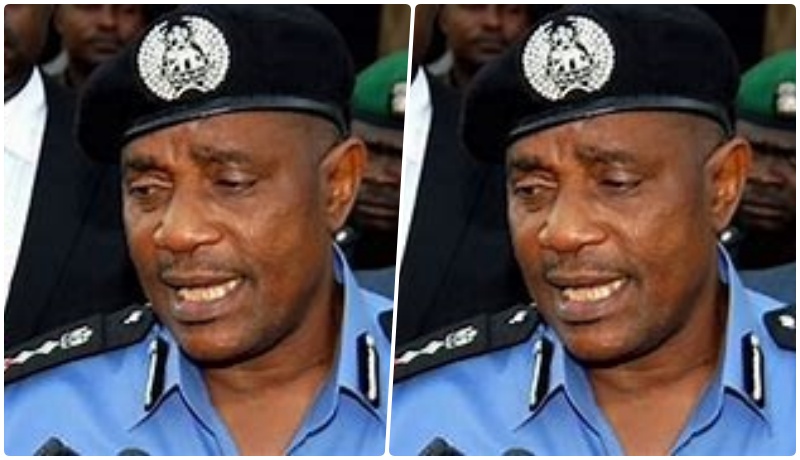
On August 31, 2025, the former Nigeria Inspector-General of Police, Solomon passed away.
According to the family source, the former IGP died in the early hour Sunday at Cedarcrest hospital, Abuja after a brief illness.
A press release confirming his death by Olumuyiwa Adejobi, Force Public Relations Officer on behalf of the Inspector-General of Police, expressed the Force deed grief over his death.


The release reads thus;”the Nigeria Police Force is deeply saddened to announce the passing of the 18th indigenous Inspector-General of Police of the Federal Republic of Nigeria and immediate Past Chairman of the Police Service Commission, IGP Solomon Ehigiator Arase, CFR, NPM, fdc, FCIA (Rtd.), who died in the early hours of Sunday, August 31, 2025 at Cedarcrest Hospital, Abuja after a brief illness.
“The news of the passing of IGP Arase was officially communicated to IGP Kayode
20 things you don’t know about late IGP
- The late Inspector was born on June 21st June 1956 in Owan West local government of Edo state, Federal Republic of Nigeria.
- He attended Ahmed Bello University where he bagged a Bachelor’s degree in political science in
- He was recruited into the Nigeria Police Force one year after, precisely on December 1, 1981.
- Some years later into his police service, he obtained a Bachelor’s Degree in Law from the University of Benin, a Master’s Degree in Law from the University of Lagos and a Ph.D in Public Law from the Ambrose Alli University Ekpoma, Edo State
- He served as the Commissioner of Police in Akwa Ibom State.
- Arase was also the Principal Secretary to the former Inspector-General of Police, Tarfa Balogun, at the Louis Edet House, under the President Olusegun Obasanjo administration.
- He was pioneer Assistant Inspector-General of Police in charge of Force Intelligence Bureau (FIB) and DIG Force Criminal Investigation Department (FCID) respectively.
- Before his appointment as IGP, Arase was head of the topmost intelligence gathering unit of the Nigerian police, the Criminal Intelligence and Investigation Bureau.
- He was appointed the 18th indigenous Inspector-General of Police in April 2015 and retired on the 21st of June 2016.
- After his retirement, he was appointed the Chairman Police Service Commission on the 24th January, 2023 by Late President Muhammadu Buhari, a post which he held until the 10th of June, 2024.
- He is also a Fellow of the Defence College and a member of the prestigious Body of Benchers.
- He is a Fellow of the Nigerian Defence Academy and had served in Namibia during the United Nations peacekeeping operation.
- He was the IG of police during the Agatu Massacre by armed Herdsmen in Benue State, to which President Goodluck Jonathan sent him to Agatu to assess the damage.
- After his retirement Arase was undertakings to legal practice, Security Consultancy with organizations such as the Office of the National Security Adviser (ONSA), the European Centre for Electoral Support, the Human Rights Centre at the University of Oslo, Public Speaking, Research and other Academic engagements.
- He is a member of the Committee on Prevention of Torture, Geneva Switzerland currently developing a universal protocol on Investigative Techniques.
- On 24 January 2023, Arase was appointed Chairman of the Nigeria Police Service Commission by President Muhammadu Buhari.
- In October 2022, a Nigerian national honour of Commander of the Order of the Federal Republic(CFR) was conferred on him by President Muhammadu Buhari.
- After his retirement, he established a Foundation, Solomon Ehigiator Arase Foundation (SEAF), through which he supported academic excellence by awarding scholarships to outstanding Nigerian students, with particular focus on children of deceased police officers and indigent students.
- The late IGP served as the chairman of a task force in Edo State enforcing anti-Community Development Association laws, ensuring accountability and compliance in local governance.
- He was known for promoting merit-based recruitment and transparency, aiming to professionalize and depoliticise police appointments and promotions.