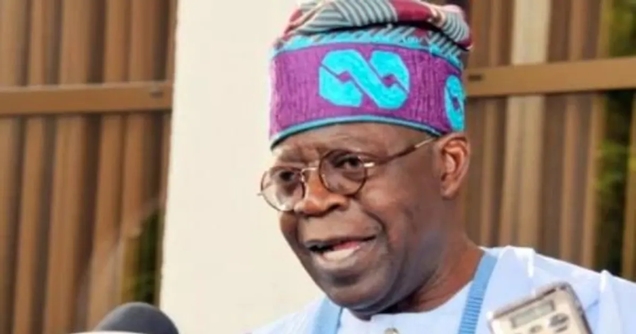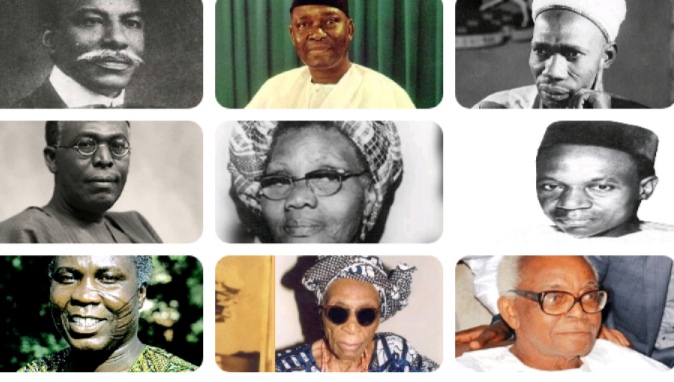
President Bola Tinubu, in his 65th Independence Day Broadcast, paid a glowing tribute to Nigeria’s founding fathers.
He honored leaders like Herbert Macaulay, Nnamdi Azikiwe, Obafemi Awolowo, and others and urged Nigerians to remember their sacrifice, devotion, and grand dream of a strong, prosperous, and united Nigeria that will lead Africa and be the beacon of light to the rest of the world.
Here are brief profiles of heroes of freedom that President Bola Tinubu mentioned in his statewide broadcast:
HERBERT MACAULAY
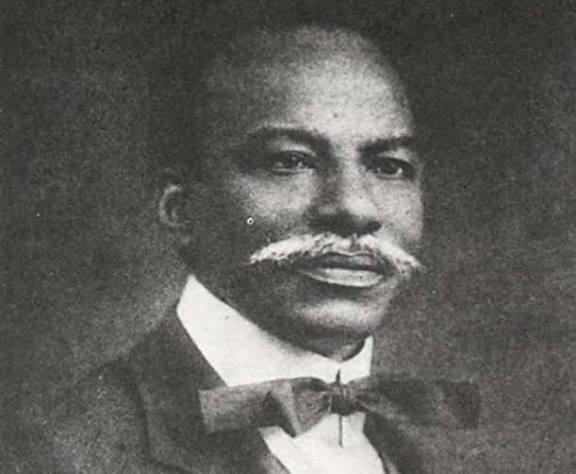

Olayinka Herbert Samuel Heelas Badmus Macaulay was born on the 14th of November, 1864. He died on the 7th of May, 1946, at the age of 82. He was a Nigerian nationalist, politician, surveyor, engineer, architect, journalist, and musician. He is considered by many to be the founder of Nigerian nationalism.
He started primary school in 1869. He attended St. Paul’s Breadfruit School, Lagos, and CMS Faji School, Lagos. He attended CMS Grammar School, Lagos, for his secondary education. He took a job as a clerical assistant and indexer at the Department of Public Works, Lagos.
Thereafter, with the support of the colonial administration, Macaulay left Lagos on 1 July 1890 to further his training in England. From 1891 to 1894, he studied civil engineering in Plymouth, England, and was also a pupil of G.D. Bellamy, a borough surveyor and water engineer in Plymouth.
In 1893, he became a graduate of the Royal Institute of British Architects, London. He was also an accomplished musician who received a certificate in music from Trinity College, London, and a certificate in violin playing from Music International College, London.
Upon his return to Lagos in September 1893, he resumed work with the colonial service as a surveyor of Crown Lands. He left the service as a land inspector in September 1898 due to a growing distaste for the British rule of the Lagos Colony and the position of Yorubaland and the Niger Coast Protectorate as British protectorates.
NNAMDI AZIKIWE
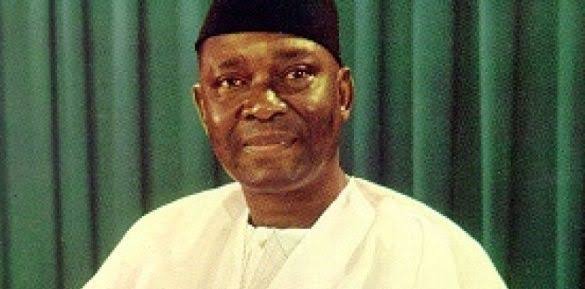

Nnamdi Benjamin Azikiwe, GCFR, was born on the 16th of November, 1904. He died on the 11th of May, 1996, at the age of 92. He was born in Zungeru in present-day Niger State to Igbo parents from Onitsha, Anambra State. He was commonly referred to as Zik of Africa.
He was a Nigerian politician and statesman who served as the 3rd and first Black governor-general of Nigeria from 1960 to 1963. He was the first president of Nigeria during the First Nigerian Republic (1963–1966). He was the father of Nigerian nationalism as well as one of the major driving forces behind the country’s independence in 1960.
He moved to the United States, where he was called Ben Azikiwe, and attended Storer College, Columbia University, the University of Pennsylvania, and Howard University. He contacted colonial authorities with a request to represent Nigeria at the 1932 Los Angeles Olympics since he was also an athlete. He returned to Africa in 1934, where he started working as a journalist in the Gold Coast (present-day Ghana).
ABUBAKAR TAFAWA BALEWA
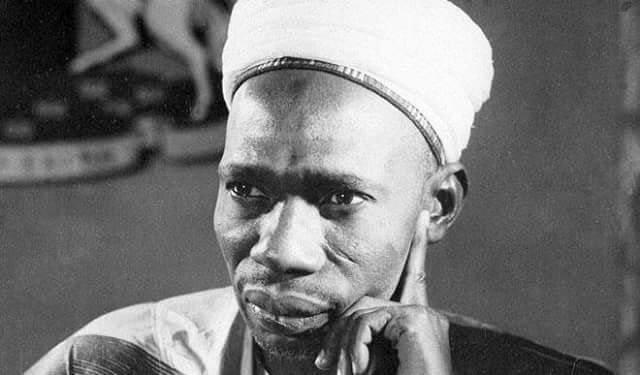

Sir Abubakar Tafawa Balewa KBE PC (December 1912 – 15 January 1966) was the first and only Prime Minister of Nigeria. A dominant figure of Nigerian Independence, he was a conservative Anglophile. His political career spanned almost a quarter of a century.Abubakar Tafawa Balewa was born in the village of Tafawa Balewa in the Lere district of Bauchi province, Northern Nigeria Protectorate, in December 1912. He is the eldest child. His father was Yakubu Dan Zalla, who married a Fulani woman, Fatima Inna.
Balewa studied in a Madrasa at Bauchi before proceeding to an elementary school in Tafawa Balewa village and completing at Bauchi Government Provincial School. He studied at Katsina Higher College (presently called Barewa College) from 1928 to 1932 and became a secondary school teacher thereafter.
In 1944 he became the headmaster of Bauchi Middle School. After two years, he moved to the University of London Institute of Education, where he obtained an overseas teacher’s certificate. Returning to Nigeria, he worked as a Bauchi native authority educational assistant and a member of the advisory council of Emir Yakubu III. Balewa was later made the inspector of schools in Bauchi Province.
OBAFEMI AWOLOWO
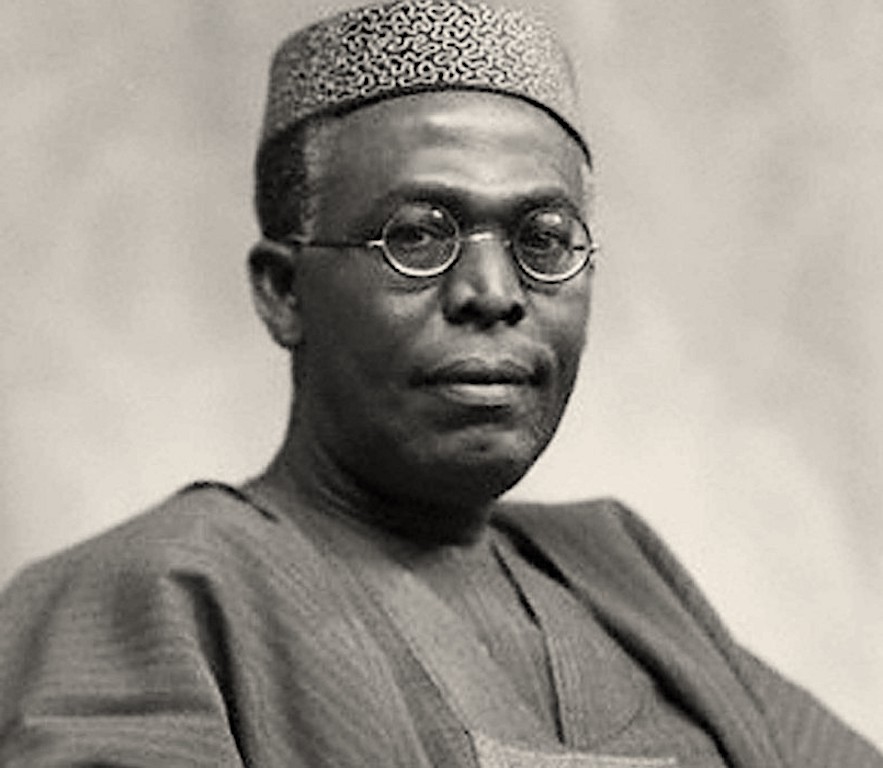

Obafemi Jeremiah Oyeniyi Awolowo was born on the 6th of March, 1909. He died on the 9th of May, 1987, at the age of 78. He was a Nigerian politician who served as the first premier of the Western region of Nigeria. He founded the Yoruba nationalist group Egbe Omo Oduduwa. He was the official opposition leader in the federal parliament to the Balewa government from 1959 to 1963.
As a young man he was an active journalist, editing publications such as the Nigerian Worker and the African Sentinel, among others as well. He later became the founder and publisher of the Nigerian Tribune of African Newspapers of Nigeria Ltd.
After receiving his bachelor of commerce degree in Nigeria, he traveled to London to pursue his degree in law. He served as a federal commissioner for finance and vice chairman of the Federal Executive Council during the Nigerian Civil War. He was thrice a major contender for the country’s highest office.
He started his career, like some of his well-known contemporaries, as a nationalist in the Nigerian Youth Movement, in which he rose to become Western Provincial Secretary. Awolowo was responsible for much of the progressive social legislation that has made Nigeria a modern nation.
In 1963, he was tried and jailed for 10 years on charges of sedition. He was pardoned by the government in 1966, after which he was appointed the Minister of Finance. In recognition of all of this, Awolowo was the first individual in the modern era to be named as the leader of the Yorubas (Yoruba: Asíwájú Àwọn Yorùbá or Asíwájú Ọmọ Oòduà).
AHMADU BELLO
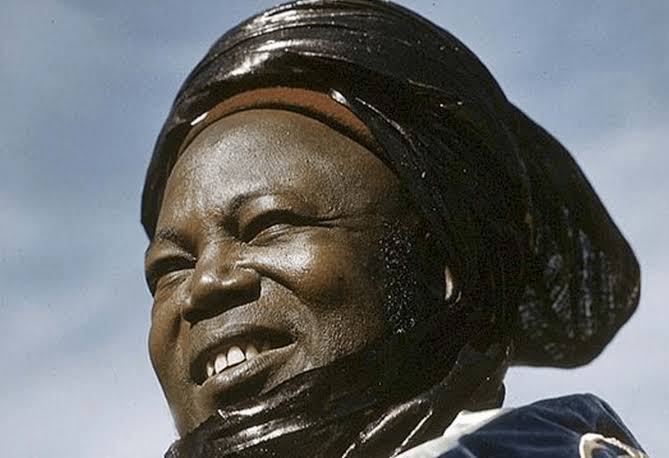

Sir Ahmadu Bello GCON was born on the 12th of June, 1910. He died on the 15th of January, 1966, at the age of 56. He was known by his title, Sarduana of Sokoto. He was a conservative Nigerian statesman who was one of the leading northern politicians in 1960 and served as its first and only premier from 1954 until his assassination in 1966.
He was also the leader of the Northern People’s Congress, the ruling party at the time, which was largely made up of the Hausa–Fulani elite. He had previously been elected into the regional legislature and later became a government minister. A member of the Sokoto Caliphate dynasty, he made attempts at becoming Sultan of Sokoto before later joining politics.
MARGARET EKPO
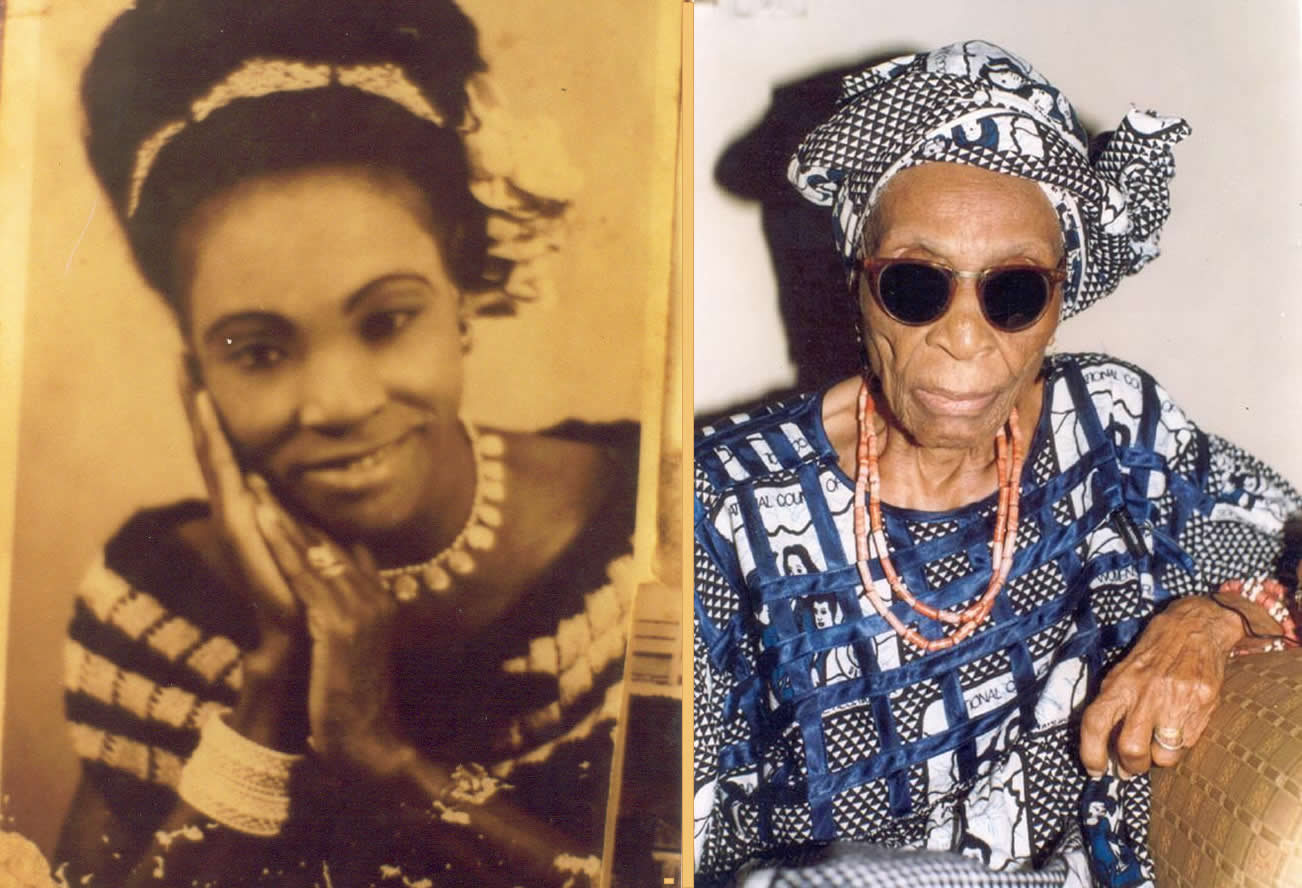

She was born in Creek Town, Cross River State, to the family of Okoroafor Obiasulor and Inyang Eyo Aniemikwe. She reached standard six of the school leaving certificate in 1934. She started working as a pupil-teacher in elementary schools. She married a doctor, John Udo Ekpo, in 1938. In 1946, she had the opportunity to study abroad at what is now Dublin Institute of Technology, Dublin, Ireland.
She earned a diploma in domestic science, and on her return to Nigeria, she established a Domestic Science and Sewing Institute in Aba. She then became a woman’s rights activist, a role in which she was mentored by Chief Funmilayo Ransome-Kuti.
ANTHONY ENAHORO
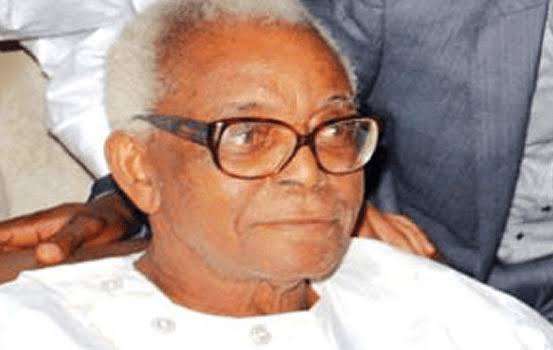

Chief Anthony Eromosele Enahoro CFR was born on the 22nd of July, 1923. He died at the age of 87 on the 15th of December, 2010. He was one of Nigeria’s foremost anti-colonial and pro-democracy activists. His Esan parents were Anastasius Okotako Enahoro (1900–1968) and Fidelia Victoria Inibokun née Ogbidi Okojie (1906–1969).
He had a long and distinguished career in the press, politics, civil service, and the pro-democracy movement. He was educated at the Government School, Uromi; the Government School, Owo; and King’s College, Lagos.Enahoro became the editor of Nnamdi Azikiwe’s newspaper, the Southern Nigerian Defender, Ibadan, in 1944 at the age of 21, thus becoming Nigeria’s youngest editor ever. He later became the editor of Zik’s Comet, Kano, 1945–49; associate editor of West African Pilot, Lagos; and editor-in-chief of Morning Star from 1950 to 1953.
In 1953, Enahoro became the first to move the motion for Nigeria’s independence, which was eventually granted in 1960, after several political setbacks and defeats in the parliament. Enahoro has been regarded by academics and many Nigerians as the “Father of Nigeria State.”
LADOKE AKINTOLA
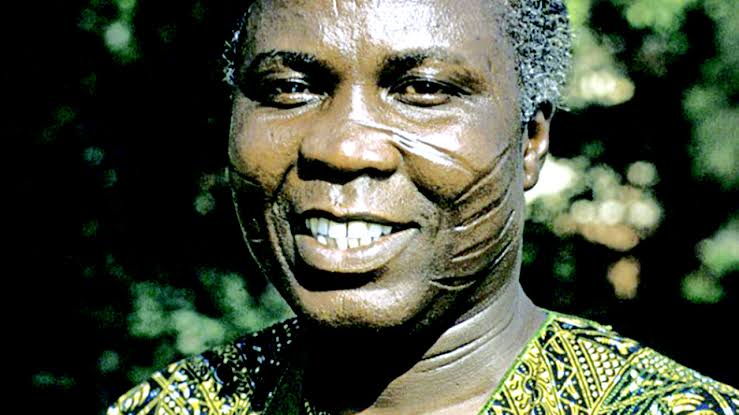

Chief Samuel Ladoke Akintola was born on the 6th of July, 1910. He died at the age of 56 on the 15th of January, 1966. He was a Nigerian politician, aristocrat, orator, and lawyer. He served as Oloye Aare Ona Kakanfo XIII of Yorubaland and served as premier of Western Nigeria from independence in 1960 until his assassination in 1966.
He was born in Ogbomosho to the family of Akintola Akinbola and Akanke. His father was a trader and descended from a family of traders. His family moved to Minna when he was young, and he was briefly educated at a Church Missionary Society school in the city. In 1922, he returned to Ogbomosho to live with his grandfather and subsequently attended a Baptist day school before proceeding to Baptist College in 1925. He was a teacher at the Baptist Academy, Lagos, from 1930 to 1942; he was a member of the Baptist teachers’ union and thereafter worked briefly with the Nigerian Railway Corporation.
He joined the staff of the Daily Service Newspaper and soon became the editor in 1943 with the support of Chief Akinola Maja, a shareholder, replacing Ernest Ikoli as editor. Akintola was also the founder of Iroyin Yoruba (a newspaper written in the Yoruba language).In 1946, he earned a British scholarship to study in the UK and completed legal studies by 1950.
He started his legal career working as a lawyer on land and civic matters. In 1952, he formed a partnership with Chief Chris Ogunbanjo, Chief Bode Thomas, and Michael Odesanya.After he was trained as a lawyer in the United Kingdom, Ladoke Akintola returned to Nigeria in 1949 and teamed up with other educated Nigerians from the Western Region to form the Action Group (AG) under the leadership of Chief Obafemi Awolowo. He was initially the legal adviser of the group before becoming the deputy leader in 1953 after the death of Bode Thomas. He defeated Arthur Prest in the primary to succeed Thomas.
As the deputy leader of the AG party, he did not serve in the Western Region Government headed by the premier Awolowo but was the Action Group Parliamentary Leader/Leader of Opposition in the House of Representatives of Nigeria. At the federal level he served as Minister for Health and later Minister for Communications and Aviation.
MICHEAL OKPARA
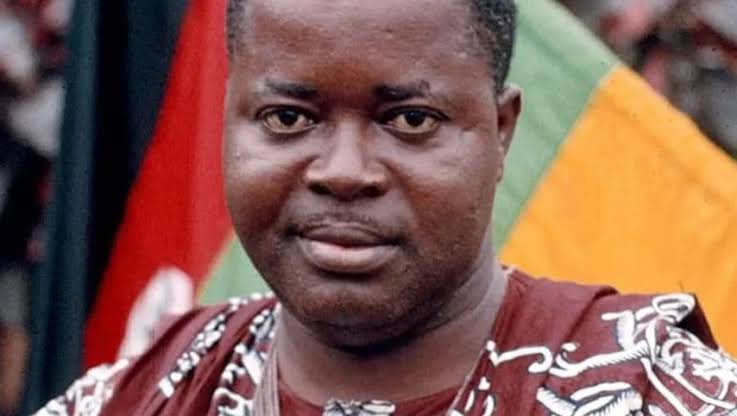

Michael Iheonukara Okpara was born on the 25th of December, 1920. He died on the 17th of December, 1984, at the age of 64. He was a Nigerian politician and premier of Eastern Nigeria during the First Republic, from 1959 to 1966.
He became a premier at the age of 39, breaking records as the youngest premier in the history of the country. He was a strong advocate of what he called “pragmatic socialism” and believed that agricultural reform was crucial to the ultimate success of Nigeria.
He was the son of a laborer who was privileged to attend mission schools and later went to Uzuakoli Methodist College, where he won a scholarship to study medicine at Yaba Higher College, Lagos. After completing his medical studies at the Nigerian School of Medicine, he worked briefly as a government medical officer before returning to Umuahia to set up a private practice.
While involved in this practice, Okpara developed an interest in the Zikist Movement (named after Nnamdi Azikiwe), a militant wing of the National Council of Nigeria and the Cameroons (NCNC). After rioting workers were shot by police at the Enugu coal mines in 1949, Okpara was arrested for his alleged complicity in inciting the riot, though he was soon released.
After the granting of internal self-rule in 1952, he was elected into the Eastern Nigerian House of Assembly on the NCNC platform. Between 1952 and 1959, he held various Cabinet positions in Eastern Nigeria, ranging from Minister of Health to Minister of Agriculture and Production.
AMINU KANO
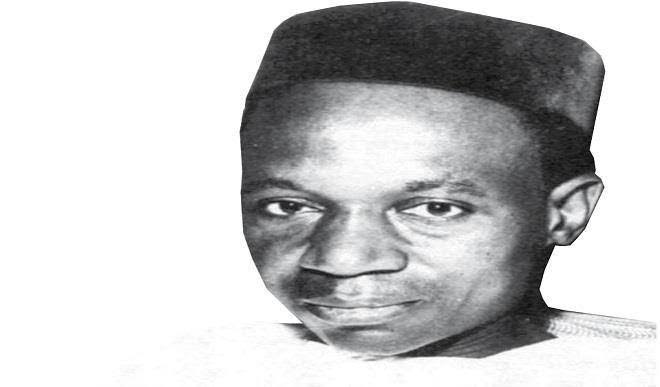

Mallam Aminu Kano GCON was born on the 9th of August, 1920. He died at the age of 63. He was a Nigerian politician, poet, playwright, and trade unionist. The Kano-born teacher was known for his opposition to colonialism, the dominance of traditional rulers, and the social inequalities in Northern Nigeria.He was a founding figure of the Northern Elements Progressive Union (NEPU) and later led the People’s Redemption Party (PRP), both of which were socialist parties that advocated for the emancipation of the talakawa (commoners) in Nigeria.
He began his career as a teacher. He emerged as an early critic of the British colonial government and publicly challenged the native aristocracy, denouncing the colonial system of indirect rule as oppressive and exploitative of the talakawa.In 1948, he founded the Northern Teachers’ Association, the first labor union in Northern Nigeria, and became a founding member of the Northern People’s Congress (NPC), which he later left due to its conservatism.
As leader of NEPU from 1953, he championed democratic socialism, women’s rights, and the empowerment of the talakawa, seeking to align Islamic principles with social justice.He served in the Federal House of Representatives from 1959 and held ministerial appointments during Nigeria’s military era, including as a Federal Commissioner under Yakubu Gowon’s administration.
As a parliamentarian and United Nations delegate, Aminu Kano supported liberation movements in Africa and promoted a non-aligned foreign policy. He later returned to party politics in the Second Republic as the presidential candidate of the PRP.
FUNMILAYO RANSOME KUTI
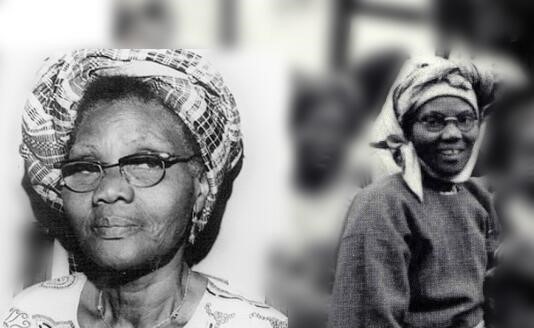

Chief Olufunmilayo Ransome Kuti was born on 25th of October 1900 in Abeokuta. She died at the age of 77 after being wounded in a military raid on family property. She was a Nigerian educator, political campaigner, and women’s rights activist. She was the first female student to attend the Abeokuta Grammar School.
She established the Abeokuta Women’s Union and advocated for women’s rights, demanding better representation of women in local governing bodies and an end to unfair taxes on market women.
She reportedly led 10,000 women in protest, forcing the ruling Alake to temporarily abdicate in 1949. She took part in the Nigerian independence movement, attending conferences and joining overseas delegations to discuss proposed national constitutions.
She spearheaded the creation of the Nigerian Women’s Union and the Federation of Nigerian Women’s Societies. She advocated for Nigerian women’s right to vote and became a noted member of international peace and women’s rights movements.
Ransome-Kuti received the Lenin Peace Prize and was awarded membership in the Order of the Niger for her work. In her later years, she supported her sons’ criticism of Nigeria’s military governments.
Her children included the musician Fela Kuti (born Olufela Ransome-Kuti), doctor and activist Beko Ransome-Kuti, and health minister Olikoye Ransome-Kuti.