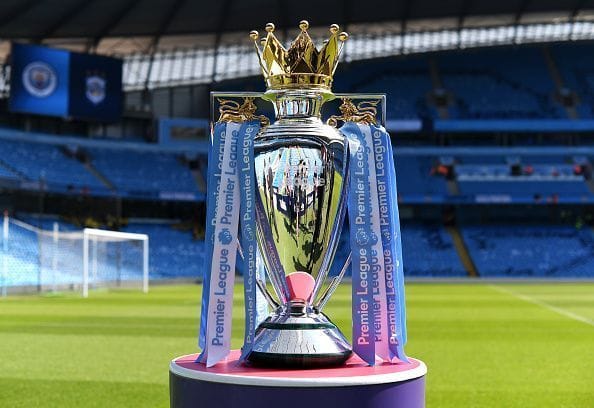
Arsenal enter the decisive phase of the Premier League season leading the table, advancing in Europe, and remaining active in domestic cups, a combination that places renewed focus on whether sustained progress can finally translate into a league title.
The Gunners’ position at the summit, coupled with qualification for the Champions League knockout stage and continued involvement in the FA Cup and League Cup, has fuelled optimism among supporters while also intensifying scrutiny of performance levels.
That scrutiny sharpened after a 3-2 home defeat to Manchester United, a result that revived familiar questions about Arsenal’s ability to manage decisive moments under pressure in the title run-in.
Despite the setback, Arsenal maintain a four-point advantage over Manchester City and Aston Villa with 15 league matches remaining, keeping control of their destiny as the season enters its final stretch.
The team’s European campaign has progressed smoothly so far, with qualification secured ahead of schedule, allowing the manager, Mikel Arteta, to rotate resources while keeping league ambitions intact.
In domestic competitions, Arsenal are positioned favourably, standing close to a League Cup final appearance and preparing for an FA Cup fourth-round tie against third-tier Wigan at the Emirates Stadium.
Concerns emerged, however, after the loss to Manchester United became Arsenal’s first home league defeat of the season, ending a long unbeaten run that had underpinned their title credentials.
The former Arsenal captain, Patrick Vieira, raised doubts over the side’s mentality, suggesting the performance lacked the assertiveness expected of a team seeking to end a prolonged league title drought.
“There are still questions about the mental strength of the team,” Vieira told Sky Sports.
“They need to understand when they are on the pitch they have to play with more energy and more risks, and they have the quality,” he added.
Arsenal’s recent history adds context to the debate, having finished second in each of the past three Premier League seasons without converting promise into silverware.
The club’s last major trophy came during Arteta’s debut season six years ago, heightening the sense that this campaign represents a critical opportunity.
Dropped points in consecutive goalless draws against Liverpool and Nottingham Forest had already narrowed Arsenal’s margin for error before the defeat to Manchester United intensified pressure.
The concession of three goals in one league match for the first time in nearly three years highlighted defensive vulnerabilities that had largely been absent during their rise to the top of the table.
Responding to questions about resilience, Arteta insisted that belief within the squad remains intact despite the disappointment of defeat.
“We have to show the mental strength that we have on the pitch when it comes to matchday,” Arteta said.
“We lost a game, and it’s how we react to that, and I am very convinced because I know those players in that dressing room and how much we want it that we’re going to react immediately,” he added.
Beyond mentality, Arsenal’s attacking output has attracted attention, with creativity in the final third proving inconsistent despite territorial dominance in many matches.
No Arsenal player has scored more than five league goals this season, a statistic that contrasts sharply with the output of leading forwards at rival clubs.
Several of Arsenal’s goals have originated from set-pieces or opposition errors, underlining the team’s efficiency in dead-ball situations while raising questions about open-play threat.
The recruitment of Viktor Gyokeres was expected to address the need for a reliable goalscorer, yet the search for a consistently prolific number nine remains unresolved.
Meanwhile, Bukayo Saka has endured a challenging spell, failing to score in his last 13 appearances across competitions, though his overall contribution remains significant.
Despite these concerns, Arsenal’s rivals have struggled for consistency, creating an opening that keeps the title firmly within reach.
Manchester City, after a run of five league matches without victory, returned to winning ways against bottom-placed Wolves but face demanding fixtures away to Tottenham and Liverpool.
Those venues have historically posed problems for the side of the manager, Pep Guardiola, even during their most successful periods.
Aston Villa continue to exceed expectations under the manager, Unai Emery, maintaining a place near the summit despite limited resources compared to traditional contenders.
Villa’s challenge represents one of the season’s notable storylines, though sustaining momentum deep into the campaign remains a test.
Within the Arsenal camp, players have acknowledged the need for composure as pressure intensifies, emphasising collective responsibility rather than individual blame.
“The journey’s not always going to be smooth, there’s going to be ups and downs,” Saka said.
“It’s up to us to show our character next week,” he added.
As the league season approaches its decisive weeks, Arsenal’s ability to manage expectation, refine attacking efficiency, and respond to setbacks will determine whether their advantage yields a long-awaited title.